How to Begin: A Proven Plan to Start Something That Matters
Michael Bungay Stanier
Discover how to transform leadership by asking powerful questions. This guide shows managers how to break the cycle of over-work and dependency by empowering teams through the art of curiosity and habitual coaching.
1 min 22 sec
Think back to the best mentors or leaders you’ve ever had in your life. Perhaps it was a teacher who saw potential you didn’t know you had, or a manager who didn’t just tell you what to do, but helped you figure out how to do it better. Those people weren’t just supervisors; they were coaches. They didn’t just transfer information; they built your capacity to think, act, and grow. Unfortunately, in the high-pressure environment of the modern workplace, this kind of coaching has become a lost art. Statistics show that the vast majority of employees feel that the coaching they receive at work is essentially useless. It’s often seen as a formal, HR-mandated chore rather than a living, breathing part of the daily workflow.
In these pages, we are going to explore how to bridge that gap. We’re moving away from the idea that coaching is a grueling hour-long session once a month. Instead, we’re looking at it as a habit—a series of small, ten-minute interventions that happen in the hallway, over email, or at the start of a quick meeting. The goal here is simple but profound: to help you say less and ask more. We will dive into a specific set of questions that can break the cycle of dependency in your team, free up your schedule, and refocus your energy on the work that actually matters. By the end of this journey, you’ll understand that being a great leader isn’t about having all the answers. It’s about having the right questions to help others find their own.
1 min 58 sec
Are you a bottleneck for your team’s progress? Discover why traditional management leads to burnout and how a shift toward coaching can restore autonomy to your employees.
1 min 47 sec
Starting a conversation can be the hardest part of coaching. Learn the specific phrases that cut through the noise and unlock deeper levels of communication.
1 min 46 sec
Venting is not the same as solving. Discover how to help your team move past complaints and identify the specific obstacles standing in their way.
1 min 46 sec
Effective coaching requires understanding what an employee actually needs. Learn how to stop guessing and start asking the questions that clarify expectations.
1 min 57 sec
Every choice has a cost. Discover the question that helps you and your team prioritize effectively, and the final step that ensures every lesson sticks.
1 min 47 sec
Knowledge alone doesn’t change behavior. Explore the behavioral science of habit formation and learn how to make these questions a permanent part of your leadership.
1 min 13 sec
In the end, the transition from being a traditional manager to becoming a great coach is a journey of humility and restraint. It requires you to tame your ‘Advice Monster’ and trust that your team has the capability to find their own way if given the right guidance. By mastering the seven questions we’ve discussed—from the ‘Kickstart’ to the ‘Learning’ question—you are doing more than just improving productivity. You are building a culture of empowerment, respect, and continuous growth.
Remember that you don’t have to do this alone. Change is easier when you have support, so consider finding a peer or a small group of colleagues who are also trying to develop their coaching habits. Check in with each other, share what’s working, and discuss the challenges of staying curious. This collective effort will reinforce your commitment and help you stay the course. The more you practice these questions, the more natural they will feel, and soon you will see the ripple effects throughout your entire organization. You will have more time, your team will have more confidence, and together, you will be doing the ‘Great Work’ that really matters. Now, go out there, ask that first question, and watch how it changes the way you lead forever.
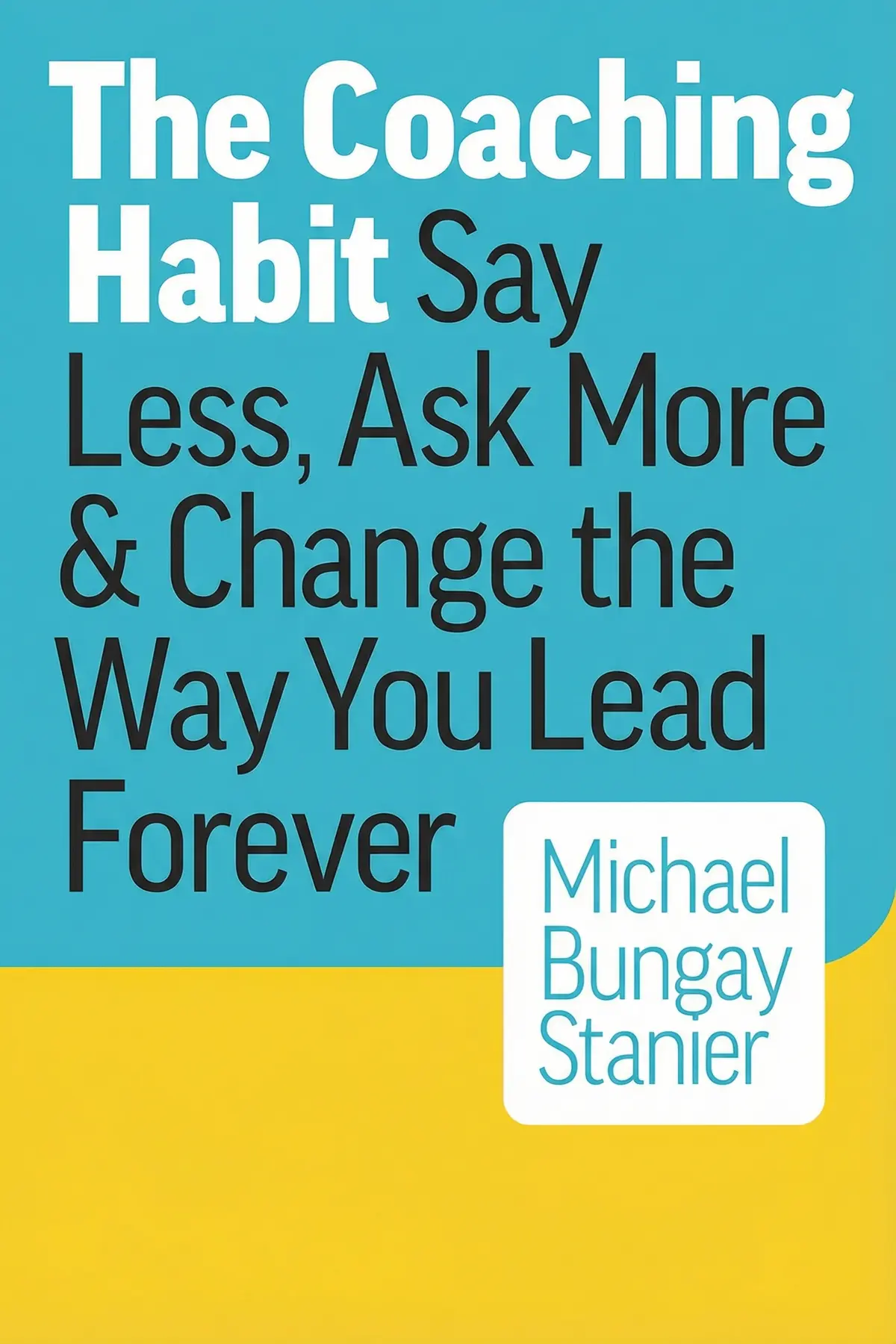
The Coaching Habit challenges the traditional management style of constant advice-giving and problem-solving. Michael Bungay Stanier argues that the most effective leaders are those who talk less and ask more, helping their team members find their own solutions rather than relying on the manager for every decision. The book identifies a common trap where leaders become bottlenecks, overwhelmed by minor crises and a lack of autonomy in their staff. To solve this, the book introduces a framework of seven essential questions designed to unlock potential and streamline productivity. By integrating these questions into daily interactions—rather than saving them for formal reviews—managers can foster a culture of self-sufficiency. This summary explores the psychology behind habit formation and provides a practical roadmap for shifting from a 'fixer' mindset to a coaching mindset, ultimately leading to better performance and more meaningful work for everyone involved.
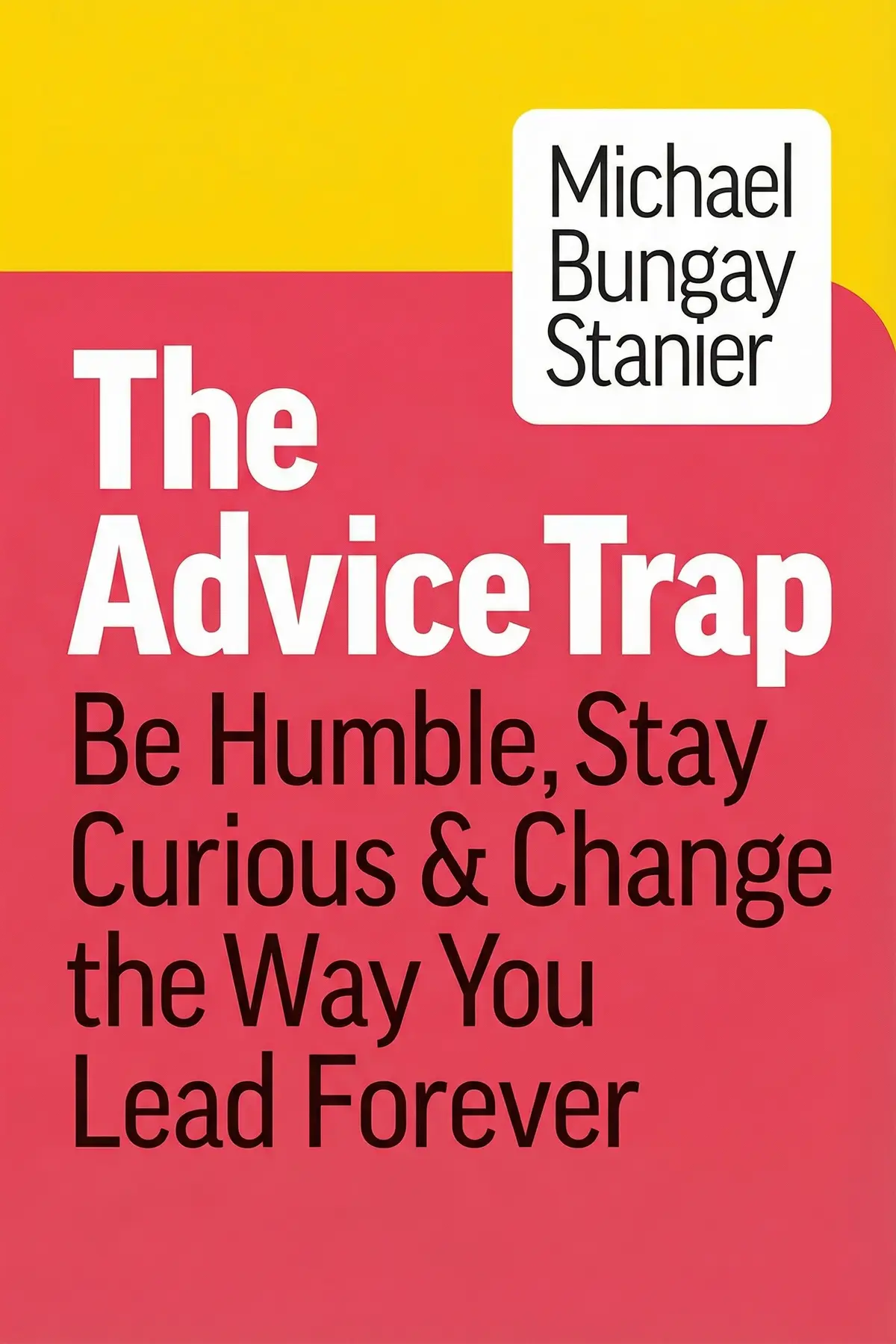
Michael Bungay Stanier is a recognized leader in the coaching field and the author of several influential works, including the hit title Do More Great Work. His expertise in professional development earned him the honor of being the first recipient of the Canadian Coach of the Year award.
Michael Bungay Stanier
Michael Bungay Stanier
Listeners find this coaching resource exceptionally accessible and useful, grounded in thorough research and implementable advice. The material is direct and moves quickly, enabling listeners to be more efficient while deepening the quality of their interactions. They value its significant influence, calling the work life-altering, and one listener highlights how it encourages simple shifts in perspective.
Finally got around to reading this, and I’m genuinely impressed by how Stanier distills complex leadership psychology into seven actionable questions. Most management books are bloated with anecdotes that go nowhere, but this is a punchy, direct guide that respects the reader's time. The concept of the 'Advice Monster' hit home for me because I’ve always felt the need to fix everyone’s problems immediately. By shifting to a coaching mindset, I’m learning that my silence is often more valuable than my suggestions. Frankly, the 'And what else?' question is a total game-changer for digging deeper into what’s actually bothering my team. It’s a quick read, maybe an afternoon at most, but the impact on my daily one-on-ones was instantaneous. If you want to stop being a bottleneck in your own organization, you need this.
Show moreWow, talk about a mindset shift that actually sticks. The core of this book is about kicking the habit of being the 'Hero' who saves everyone, which is a trap I fall into constantly. I love the distinction between 'wants' and 'needs' in the Foundation Question. It sounds so simple—just ask what they want—but in practice, it’s remarkably difficult to do without interrupting. Stanier’s writing style is conversational and witty, making it feel more like a chat with a mentor than a lecture. The 'Lazy Question' (How can I help?) is my new favorite tool for ensuring I’m not doing someone else’s job for them. It’s life-changing in its simplicity. I’ve already bought copies for the rest of my leadership team. It is fast-paced, research-backed, and devoid of the usual corporate jargon that makes most business books unreadable.
Show moreDirect, punchy, and actually actionable—exactly what a busy manager needs. I’ve read so many leadership books that are 300 pages of fluff, but Stanier gets right to the heart of why we fail as coaches. We like to give advice because it makes us feel important. Breaking that habit is painful, yet this book makes the transition feel achievable. The 'Learning Question' is a stroke of genius because it forces the coachee to do the work of summarizing their own takeaways. This ensures they actually remember the conversation. It’s a fast read, which is perfect for my schedule. Not gonna lie, I was skeptical about 'coaching in 10 minutes or less,' but these questions really do cut through the noise. Highly recommend for any new manager.
Show moreAs someone who has been in management for a decade, I didn't expect a short book to challenge my habits so effectively. The focus on neuroscience and how we actually build long-term memory through 'generation' was a highlight for me. I’ve started using the 'Learning Question'—asking what was most useful at the end of every meeting—and the feedback has been eye-opening. To be fair, some of the content feels a bit like a synthesis of other popular business books by authors like Dan Pink or the Heath brothers. You might recognize some of the mental models if you’re well-read in this genre. However, the way Stanier packages these ideas into a specific 'habit' framework makes them much easier to implement than a standard textbook. It’s a solid, practical tool for anyone trying to move from micro-managing to true leadership.
Show moreThe chapter on the AWE question changed how I handle my 1-on-1s immediately. It’s such a simple way to buy time and stay curious just a little bit longer. I appreciated the inclusion of the Karpman Drama Triangle; it perfectly illustrates why my previous attempts at 'helping' usually ended in frustration for both parties. Avoiding the roles of Rescuer or Prosecutor is a daily struggle, but this book provides a clear map for staying in the 'Coach' lane. I do think the author oversimplifies how easy it is to change these deep-seated triggers. Habits take more than just 'knowing' the right questions to ask. Still, the pragmatic lessons from neuroscience, like the AGES model for memory, give the advice some much-needed weight. It’s a great starting point for anyone who feels overwhelmed by the constant demands of their team.
Show moreAfter hearing several colleagues rave about this, I decided to see if the hype was real. It’s a very straightforward guide that focuses on one thing: asking better questions. I’ve found that the 'Strategic Question'—asking what you’re saying 'no' to if you say 'yes' to this—has saved my team hours of wasted effort already. It’s a great way to prevent over-commitment. Personally, I found the book a bit repetitive, but I suppose that’s the point when you’re trying to build a new habit. The layout is great with clear summaries, making it easy to refer back to when you're preparing for a meeting. It’s not a deep philosophical treatise on leadership, but it doesn’t try to be. It’s a functional, well-researched tool for people who want to be more effective without spending years in therapy or executive coaching.
Show moreEver wonder why your team stays so dependent on your input? This book finally explained to me that I was the problem all along. By always having the answer ready, I was training my team to stop thinking for themselves. The 'Focus Question' (What's the real challenge here for you?) has been a lifesaver for cutting through the rambling and getting to the heart of the matter. It’s a small book with a big impact. I liked the 'Masterclass' sections between chapters that deal with the 'how' of asking—like getting comfortable with silence. That’s a skill I didn't realize I was lacking. While some parts are a bit cheesy, the overall message is deeply practical. It’s a great resource for shifting from a 'command and control' style to something much more empowering and effective.
Show moreIs this a groundbreaking manual or just a very long magazine article that got expanded for the sake of a book deal? Look, the seven questions are definitely useful, especially the 'Focus Question' that forces people to identify the real challenge rather than just venting. But I found the constant name-dropping of other authors a bit distracting and, at times, it felt like a rehashing of better-known works. I was also disappointed by the 'Kickstart Question.' Asking 'What’s on your mind?' often leads to a blank stare from my direct reports or a twenty-minute rant about the coffee machine. It’s not the magic key the author promises it to be. The book is repetitive in parts, likely to drive the points home, but for a seasoned coach, there isn't much here that feels revolutionary. It’s okay as a refresher, just don’t expect a deep dive.
Show moreTo be fair, Stanier's writing style is engaging, but the content felt like it could have been a PDF instead of a book. The seven questions are definitely 'great,' but the surrounding text feels like filler. I struggled with the author’s insistence that coaching is 'simple.' In a high-stakes corporate environment, sometimes you just need to give the answer, and this book feels a bit dismissive of that reality. I also found the 'What's on your mind?' opener a bit too casual for some of my more structured employees. It felt a bit like a collection of wisdom already provided by other experts, just repackaged with better branding. It’s a decent enough primer if you’ve never thought about your management style before. If you’re already an experienced coach, you’ll probably find yourself skimming most of it.
Show moreMaybe I missed the point, but this felt incredibly thin for a full-length book. If you have ever had a normal human conversation, you probably already use half of these techniques without needing a 'masterclass' on them. The author takes about four years' worth of work and turns it into a trifold pamphlet’s worth of actual advice, then pads it with buzzwords and citations of Daniel Goleman. I found the 'And what else?' prompt to be useful, but did it really require an entire chapter? The truth is, my organization is trying to move toward a coaching culture, and I was hoping for deep insights into behavioral change. Instead, I got a list of seven questions that I could have found in a thirty-second Google search. It’s a quick read, yes, but that’s mostly because there isn't much substance to chew on. Disappointing.
Show more
Joseph A. Maciariello

Deborah Gruenfeld
Mike Michalowicz
Hamilton Helmer

Margaret Heffernan
AUDIO SUMMARY AVAILABLE
Get the key ideas from The Coaching Habit by Michael Bungay Stanier, plus 5,000+ more titles in English and Thai.