168 Hours: You Have More Time Than You Think
Laura Vanderkam
Discover how high-achieving women master their schedules by rethinking the 168-hour week, leveraging professional flexibility, and prioritizing quality over perfection in both their careers and their personal lives.
1 min 54 sec
In our modern world, we are surrounded by more convenience and wealth than any generation before us. We have access to global communication, stable jobs, and a bounty of consumer goods. On paper, we should be the most satisfied people in history. Yet, a cloud of exhaustion seems to hang over many high-achievers, particularly women. The common refrain is that there simply isn’t enough time to be a dedicated professional and a present, loving parent. We are told that we must choose one or the other, or risk burning out while trying to do both.
But what if that entire premise is a mistake? What if the stress we feel isn’t caused by a lack of hours, but by how we perceive and organize them? This is the core question explored in these insights. By moving away from the narrow view of a daily schedule and looking at the full landscape of a week, we can uncover hidden pockets of time that change everything.
We’re going to explore how successful women actually navigate their days. We will see that the most productive among us aren’t necessarily working more; they are working differently. They use flexibility as a tool, they prioritize tasks that truly move the needle, and they understand that a “perfect” home is often the enemy of a happy one. This journey isn’t just about getting more done; it’s about making sure that the things you do are the ones that actually matter to you. Through a blend of data-driven insights and practical shifts in habit, we can dismantle the myth of the “too busy” mother and replace it with a life that feels spacious, meaningful, and deeply fulfilling.
2 min 13 sec
Explore why our perception of being constantly overworked is often a trick of the mind and learn how a simple math shift reveals abundant hidden time.
2 min 11 sec
Discover how the modern workplace offers hidden opportunities for autonomy and how a ‘split shift’ can bridge the gap between career and home.
2 min 12 sec
Learn why the timing of your hardest tasks matters and how small adjustments to your meeting schedule can save hours every week.
2 min 15 sec
Avoid the common ‘Monday trap’ by shifting your planning habits and learn why reconnecting with your professional passion is a productivity tool.
2 min 15 sec
Shift your focus from ‘being around’ to ‘being with’ your children and discover why breakfast might be the new dinner for busy families.
2 min 09 sec
Uncover strategies for maintaining intimacy in a busy household and learn the vital difference between logistics and romance.
2 min 10 sec
Learn to let go of the ‘Supermom’ fantasy and understand why investing in help is a strategic career move, not a sign of failure.
2 min 15 sec
Break the cycle of passive leisure and discover how choosing creative hobbies over television can dramatically improve your life satisfaction.
1 min 42 sec
In the end, the secret to having it all isn’t about being a superhero; it’s about being a strategist. As we have seen, the ‘busy mom’ narrative is often a product of looking at our lives through a distorted lens. When we zoom out to the 168-hour week, the landscape changes. We find that there is room for a high-powered career, a deep connection with our children, a vibrant romance, and the pursuit of our own passions.
The throughline of a successful life is intentionality. It requires us to be brave enough to use flexibility, smart enough to protect our peak energy hours, and humble enough to ask for help. It means letting go of the need for a ‘perfect’ image and embracing a life that is ‘good enough’ in the domestic details so that it can be ‘extraordinary’ in the human experiences.
As you move forward, start by tracking your time for just one week. Look at where the hours actually go, not just where you think they go. You will likely find hidden gems of time that you can reclaim for the things you love. Remember that you have the power to redesign your schedule. By choosing quality over quantity and presence over perfection, you can build a life that doesn’t just look successful on the outside, but feels fulfilling on the inside. You don’t have to choose between your career and your family. You can do both, and you can do them with a sense of peace and joy.
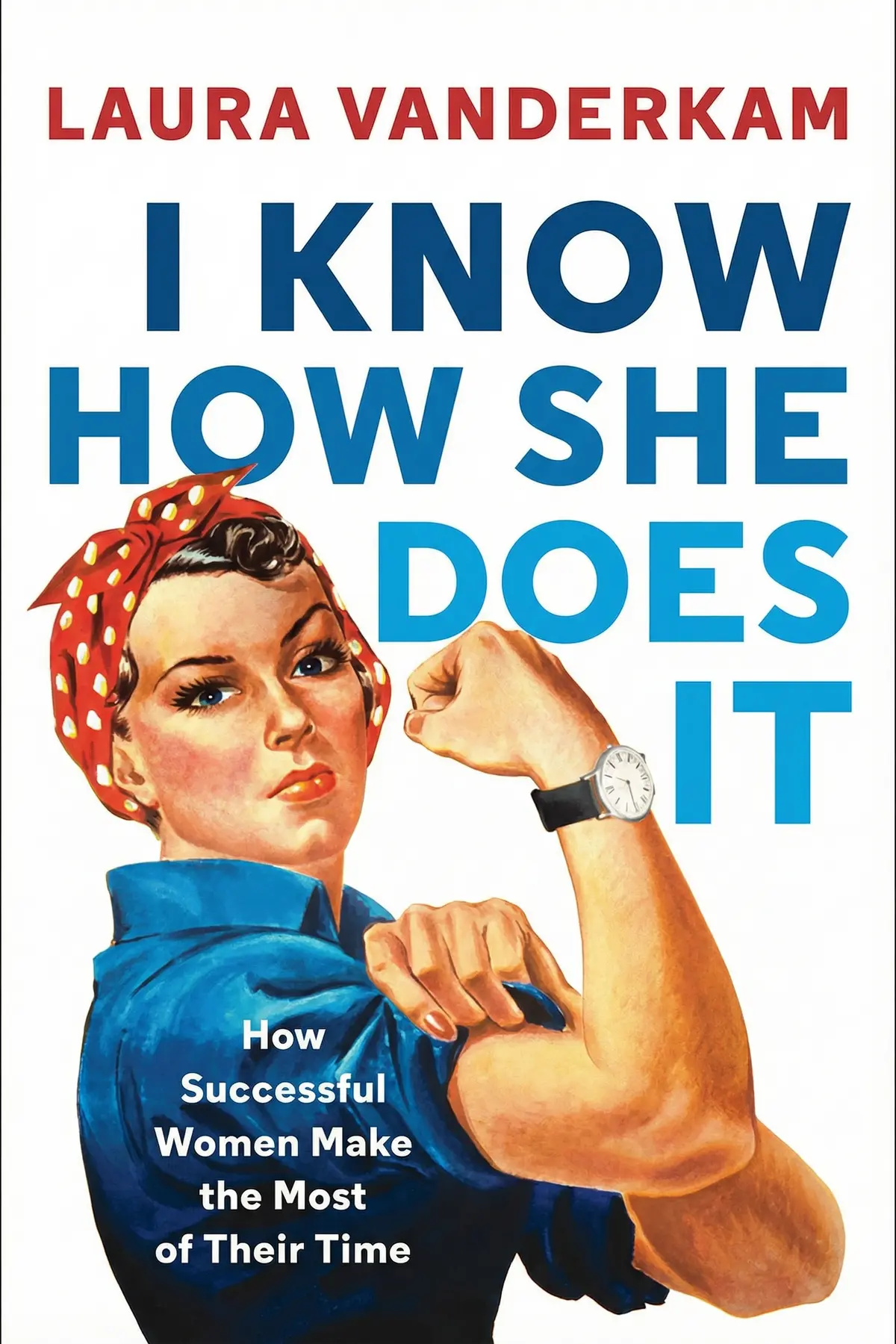
Many modern professionals feel trapped in a perpetual cycle of stress, convinced that a successful career and a vibrant family life are mutually exclusive goals. I Know How She Does It challenges this narrative by examining the actual time logs of women who earn six-figure salaries while raising families. It reveals that the "overworked" story we tell ourselves is often a matter of perception rather than objective reality. The book provides a roadmap for reclaiming your schedule through the lens of a 168-hour week. Instead of obsessing over the limitations of a single twenty-four-hour day, it encourages a broader perspective that finds room for work, relationships, and self-care. By utilizing strategic flexibility, such as split shifts and remote work, and by letting go of domestic perfectionism, anyone can design a life that feels both productive and sustainable. It is a promise of balance achieved not through sacrifice, but through smarter, more intentional time management.
Laura Vanderkam is a prominent author and speaker residing in the United States with her husband and four children. She is an expert on time management and productivity, having authored several influential books on the subject, including 168 Hours and What the Most Successful People Do Before Breakfast. Beyond her books, she frequently shares her insights through major media outlets, appearing on programs like The Today Show and contributing articles to various national newspapers.
Laura Vanderkam
Laura Vanderkam
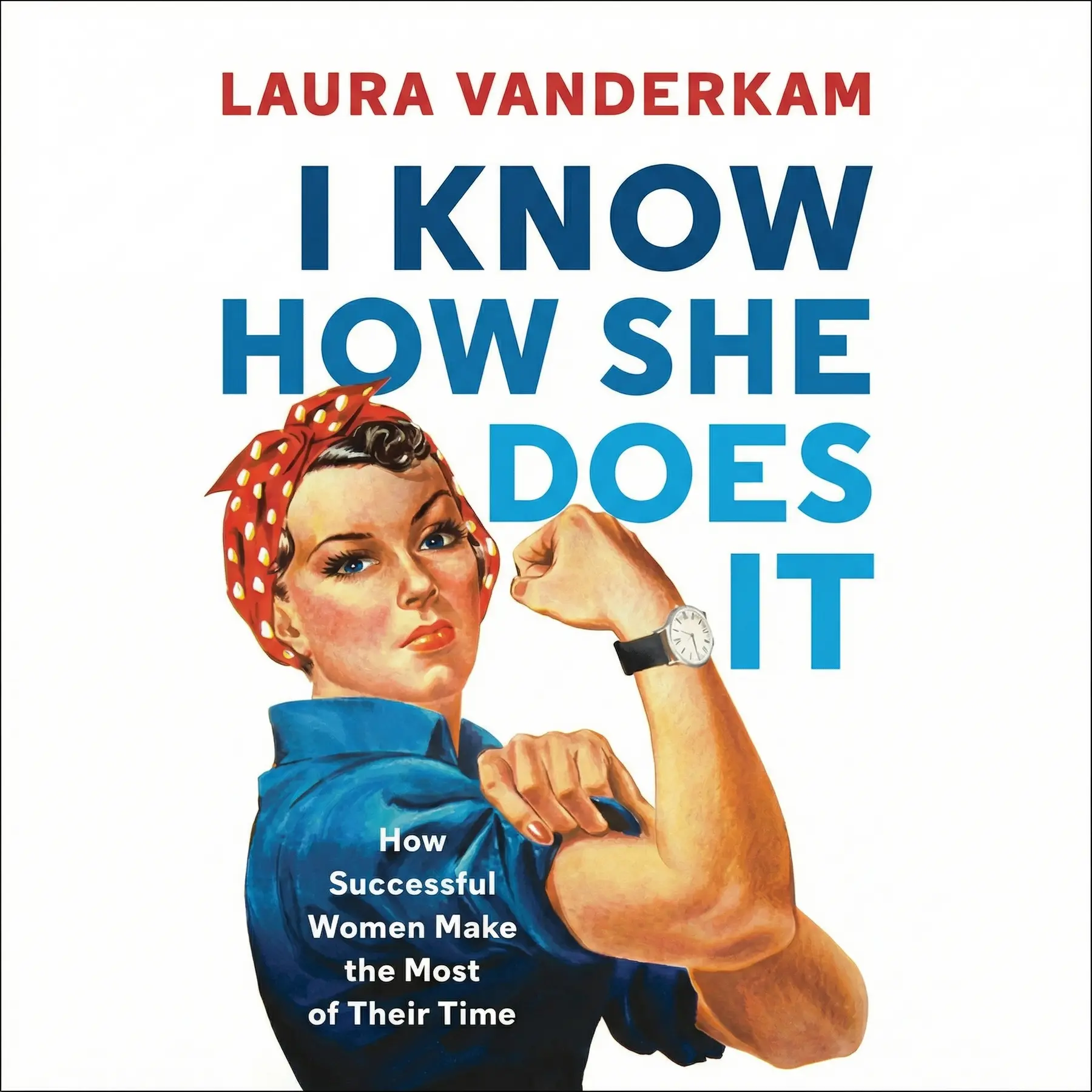
Listeners find this book an accessible read and value its practical, usable guidance, with one listener identifying it as a must-read for mothers in the workforce. This well-researched guide uses engaging stories and thorough time logs to help people carve out space for leisure and fun. Listeners appreciate the distinctive approaches to managing schedules, with one listener highlighting the importance of planning challenging tasks earlier in the day, and value the emphasis on family life and cohesive relationships.
Picked this up during a particularly stressful month, and Vanderkam’s approach to the "168 hours" concept really shifted my mindset. Instead of obsessing over a failing 24-hour cycle, looking at the whole week helped me see where my time actually went. The data from the time logs is fascinating, showing that even high-earning women often have more leisure time than they admit to themselves. Truth is, I started planning my hardest tasks for Monday mornings and suddenly felt way more in control. It's essential reading for any working mother who feels like she's drowning in a sea of 'shoulds.' Even if you don't make six figures, the strategy of finding small pockets of time is incredibly actionable and life-affirming. This isn't just another productivity book; it's a recalibration of how we value our minutes.
Show moreFinally got around to reading this, and even as a stay-at-home homeschooling mom of four, I found so much value in these pages that I didn't expect. You might think a book about six-figure earners wouldn't apply to my life, but the philosophy of evaluating time like a budget is universal and truly refreshing. Vanderkam encourages us to look at our lives as a mosaic, where even small pieces of leisure add up to a beautiful whole rather than a fragmented mess. I've started reclaiming my evenings by realizing that I don't actually have to achieve 'Inbox Zero' or have a spotless house every night to be successful in my role. The stories of these women are inspiring, and the author's tone is refreshing because she refuses to let us play the martyr. It helped me find time for my own hobbies again—something I thought was gone forever—which has made me a much better and more patient mother in the long run. I highly recommend this for anyone feeling lost in the daily grind.
Show moreThe chapter on work really challenged my assumptions about what a productive day actually looks like. Vanderkam suggests that we often inflate our work hours in our minds, and her analysis of 143 time logs backs that up quite convincingly. I’ve started implementing her 'split shift' idea—leaving work on time to see the kids and then doing an hour of emails after they go to bed. It sounds exhausting, but in practice, it’s much better than staying late and missing dinner every night. To be fair, she does assume you have a lot of control over your schedule, which isn't true for everyone. But the emphasis on planning leisure and fun as strictly as we plan meetings is a game-changer for my mental health. This is essential reading for mothers who love their careers but hate the guilt.
Show moreWow. This actually changed how I view my weekends. Vanderkam’s advice to 'plan challenging tasks earlier' helped me stop procrastinating on the big stuff, leaving my Saturdays actually free for the kids. I know some people struggle with her focus on high-earners, but if you look at the core strategies, they are applicable to anyone with a bit of agency over their schedule. The writing style is engaging and the anecdotes are actually relatable, even if the salaries aren't. Gotta say, I'm feeling much less 'harried' and much more 'intentional' since finishing this. It’s a great piece of research for anyone tired of the 'busy' cult. If you need permission to enjoy your life, this is it.
Show moreEver wonder why you feel like you're working 80 hours a week when the clock says something much lower? Vanderkam uses her 'mosaic' method to show how we often buy into a narrative of martyrdom that doesn't match our actual time logs. I loved the focus on energy management over strict hour-by-hour scheduling, especially the tip about front-loading the week with challenging projects. It’s well-researched and filled with interesting anecdotes from women who are actually making high-level careers and big families work together. Not gonna lie, some of the suggestions to just 'exercise during lunch' feel a bit simplistic for certain office environments. However, the core message—that we have more time for fun and family than we think—is a refreshing change from the usual doom-and-gloom parenting books. It’s practical, data-driven, and surprisingly hopeful.
Show moreAs someone who is a father trying to balance a demanding career with being present for my kids, I found these insights surprisingly applicable. The takeaway that we don't need to do something every single day to make it a 'habit' was a huge relief for my exercise routine. Instead of failing at a 5 AM gym session daily, I now look at my 168 hours and slot in a long run on the weekend and a walk during Tuesday's lunch. Vanderkam’s data shows that 'busy' is often a choice or a linguistic habit rather than a mathematical reality. My only gripe is that the book ignores the rigidness of many blue-collar or service jobs where flexibility isn't an option. Still, the focus on family life and building cohesive relationships through intentional planning is top-notch.
Show moreAfter hearing so much buzz about this productivity expert, I finally dove into her data-heavy look at the lives of successful women. The book is definitely easy to read and contains some perfect actionable advice regarding the 'scraps of time' we all waste on our phones. But I couldn't shake the feeling that the book is a bit soulless, focusing so much on the mechanics of time that it misses the emotional weight of being a parent. She claims that if you see your kids for 15 minutes in the morning and put them to bed twice a week, you’re spending 'plenty' of time with them. Frankly, that’s a hard pill to swallow for someone dealing with major mommy guilt. It's a useful resource for logistical planning, but it won't necessarily make you feel better about the choices you're making at work.
Show moreNot what I expected, but I’m glad I finished it for the sake of the different perspective it offers on 'having it all.' The book is basically productivity porn for the corporate elite, but if you can look past the privilege, there are some real gems here. I found the section on energy management much more useful than her actual time management tips, as it acknowledges that we aren't robots. Personally, I found Brigid Schulte’s 'Overwhelmed' to be a much more comprehensive look at why we feel harried, as she digs into the sociology of it all. Vanderkam is more of a 'fix it yourself' person, which is fine, but it can feel a bit dismissive of the genuine burnout people experience. It’s worth a read if you need a kick in the pants to start living, but take the stats with a grain of salt.
Show moreWhile the research on time diaries is definitely unique, I found the inclusion criteria for this study incredibly alienating. Vanderkam only focuses on women making over $100,000, which ignores the reality of the vast majority of working mothers who can't just 'outsource' their way out of a mess. To be fair, some of the advice on batching chores is helpful, but the tone feels like being cornered by a wealthy acquaintance at a country club. She suggests that we work less than we think because we take lunch breaks or doctor appointments, but that feels like a semantic trick to minimize real exhaustion. Look, if you have the resources for a twice-weekly cleaning service and flexible corporate hours, this book is a goldmine. For everyone else, it’s a bit of a slap in the face that ignores the systemic issues keeping women harried.
Show moreThis book made me incredibly frustrated because it feels like a collection of data points designed to gaslight overworked women. Vanderkam argues that we don't actually work 60-hour weeks because we count our vacation days and sick leave in the average, which is just bizarre logic. If I'm at the office until 8 PM four nights a week, I'm working long hours, regardless of whether I took a Friday off three months ago! The author seems to believe that success is only possible through these grueling schedules and that we should just 'make chores fun' to cope. It’s a narrow, boring view of what a successful life looks like, centered entirely around high salaries and professional prestige. I’m honestly surprised this is marketed as a helpful guide, as it mostly just made me feel judged for being tired.
Show moreAUDIO SUMMARY AVAILABLE
Get the key ideas from I Know How She Does It by Laura Vanderkam, plus 5,000+ more titles in English and Thai.