

15 min 14 sec
I Never Thought of It That Way: How to Have Fearlessly Curious Conversations in Dangerously Divided Times
Discover how radical curiosity can bridge deep political and social divides. This guide provides practical tools for navigating difficult conversations, moving past assumptions, and finding common ground in an increasingly polarized world.
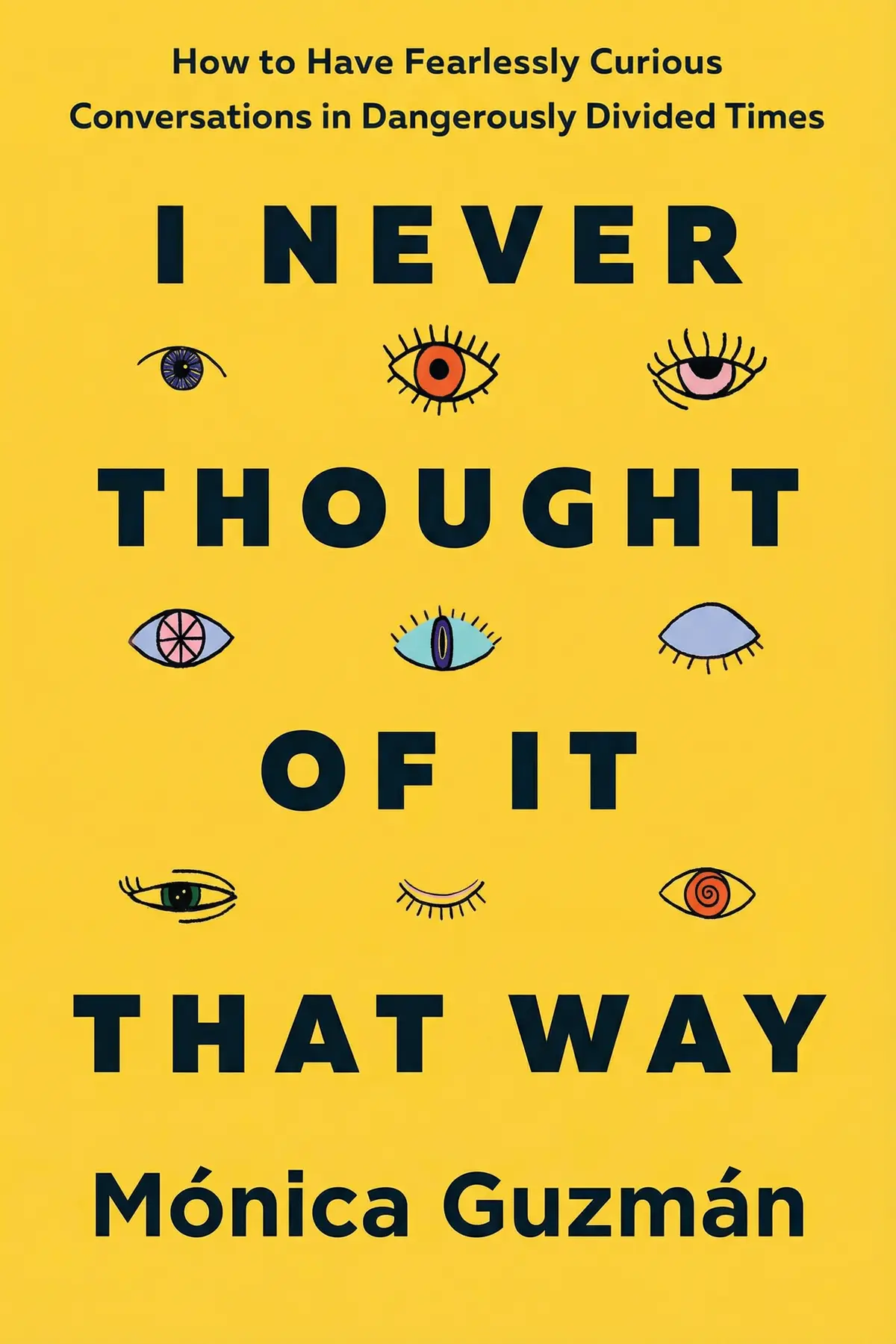
Table of Content
1. Introduction
1 min 53 sec
We have all felt it—that sudden, sharp tension that fills the room when someone mentions a hot-button political issue. Perhaps it’s a family dinner where a certain topic is now strictly off-limits, or a social media feed that feels more like a battlefield than a community. In these moments, it is tempting to believe that the world has simply gone mad or that the people who disagree with us are unreachable. Statistics back up this feeling of dread, showing that a massive majority of people believe we are more interested in beating the other side than in solving actual problems. It feels as though we are standing on opposite sides of a widening canyon, shouting across the void, and hearing only our own echoes.
But what if the problem isn’t that we disagree? What if the real issue is that we’ve lost the ability to be curious about why we disagree? This is the central premise we are exploring today. We are looking at a roadmap for navigating these dangerously divided times, not by ignoring our differences, but by leaning into them with a sense of wonder.
The journey ahead is about shifting from a posture of defense to one of discovery. It’s about moving past the labels that flatten our neighbors into caricatures and instead looking for the human experiences that gave birth to their beliefs. Over the next few segments, we will uncover the invisible walls that keep us apart—like sorting and siloing—and learn how to dismantle them using a powerful, forgotten tool: radical curiosity. We are going to explore how to have the kind of conversations that lead to those breakthrough moments where you can truly say, “I never thought of it that way.” This isn’t just about being polite; it’s about reclaiming the nuance and complexity of our shared life together. Let’s dive in and see how we can start building those bridges, one question at a time.
2. The Invisible Forces of Sorting and Siloing
2 min 22 sec
Explore how natural social tendencies and modern technology combine to trap us in echo chambers that distort our view of reality and the people around us.
3. The Question That Changes Everything
2 min 21 sec
Learn how one simple, humble question can break through defensive barriers and open the door to genuine understanding in any conversation.
4. Navigating Conversations with the Traction LOOP
2 min 29 sec
Discover a practical four-step framework for maintaining momentum and building trust during even the most difficult and heated discussions.
5. Finding the Whole Elephant
1 min 58 sec
Use an ancient parable to understand why your perspective is only one piece of a larger truth and how combining viewpoints leads to greater clarity.
6. The Art of the CARE Question
2 min 20 sec
Discover the framework for crafting questions that invite vulnerability and exploration rather than defensiveness and debate.
7. Conclusion
1 min 51 sec
As we reach the end of this journey, it is worth reflecting on the power of a single, honest conversation. We live in an era that pushes us to choose sides, to build walls, and to see our neighbors as enemies. It is easy to feel small and powerless in the face of such massive social trends. However, the tools we’ve explored—radical curiosity, the Traction LOOP, the CARE framework, and the quest for the ‘whole elephant’—remind us that we actually have a great deal of agency. We cannot control the national discourse, but we can control how we show up at our own kitchen tables, in our workplaces, and in our communities.
Bridging the divide does not require us to compromise our principles or give up on the things we believe are right. It simply asks us to be brave enough to wonder why someone else believes they are right, too. It asks us to look for the person beneath the label and the story beneath the slogan. The next time you find yourself in the middle of a heated disagreement, remember to take a breath and ask that transformative question: ‘What am I missing?’ Look for that INTOIT moment where the world becomes just a little bit bigger and a little bit more human.
This path isn’t easy. It requires patience, humility, and a willingness to sit with discomfort. But the reward is a world where we are no longer trapped in silos of our own making. It is a world where connection is possible across even the deepest canyons of belief. By choosing curiosity over contempt, you are not just having a better conversation; you are helping to weave the social fabric of our society back together. So, go out and be fearlessly curious. Ask the questions that no one else is asking, listen for the stories that are waiting to be told, and see if you don’t find yourself saying, more often than not, ‘I never thought of it that way.’
About this book
What is this book about?
Have you ever felt like you’re speaking a completely different language than someone else, even when you’re both using the same words? In a world that feels more fractured by the day, our natural tendency is to retreat into comfortable bubbles and view those on the 'other side' with suspicion or even contempt. This book is a manual for breaking that cycle. It isn’t about changing your mind or winning an argument; it’s about understanding the complex human stories that fuel our disagreements. Through the lens of journalism and community building, the author explores why we’ve become so divided—examining the psychological and social forces that sort us into silos. You will learn the 'how' of curiosity: the specific conversational techniques that turn a defensive debate into a discovery mission. The promise of this work is a path toward fearlessly curious interactions that restore our sense of shared humanity. By learning to ask better questions and listen for the values beneath the rhetoric, you can navigate even the most contentious topics with grace and insight.
Book Information
About the Author
Mónica Guzmán
Mónica Guzmán is a journalist, bridge builder, and senior fellow for public practice at Braver Angels, a nonprofit dedicated to depolarizing America. She is the founder of Reclaim Curiosity and cofounder of the Seattle newsletter The Evergrey. Her work has appeared in major publications like the New York Times and Reader’s Digest, and she has shared her insights on the Glenn Beck Podcast.
Ratings & Reviews
Ratings at a glance
What people think
Listeners find the work highly perceptive, delivering concrete strategies and valuable models for cultivating curiosity. Beyond that, the text functions as a primary resource for civic involvement, with one listener pointing out how timely it is given current political divisions. The prose is also approachable and interesting, allowing for a straightforward experience, and listeners praise the evocative ideas that serve as a reminder to stay mentally flexible.
Top reviews
Siriphen
This book serves as a definitive manual for anyone exhausted by the constant vitriol in our current political climate. Mónica Guzmán offers a refreshing perspective by focusing on curiosity as a bridge-building tool rather than a weapon for winning arguments. I found the 'SOS' framework—Sorting, Othering, and Siloing—to be an incredibly helpful way to visualize how we trap ourselves in echo chambers without even realizing it. While the writing is undeniably journalistic and fast-paced, it makes the heavy sociological concepts accessible for a general audience. Frankly, the advice to switch from the 'dance floor' to the 'balcony' during a heated debate is a game-changer for maintaining emotional regulation. It is a thought-provoking read that encourages us to remember the humanity of the 'other side' before we stop listening entirely. If you want to actually engage with people instead of just shouting into the void, this is your handbook.
Show moreHenry
Ever wonder why every political debate feels like a brick wall? Guzmán argues that the culprit isn't our values, but our lack of curiosity about how others reached their conclusions. I loved the distinction she made between the questions 'Can I believe it?' and 'Must I believe it?' because it perfectly illustrates our internal confirmation bias. The truth is, we often look for reasons to dismiss the other side rather than trying to understand their 'ken' or range of vision. This book isn't about changing minds; it's about keeping the bridge open so that communication remains possible in the future. I found the section on the ten fundamental values particularly enlightening for understanding why we prioritize things so differently. It’s a vital resource for anyone involved in civic engagement who is tired of the 'us versus them' narrative. Truly a breath of fresh air.
Show moreJai
Finally got around to reading this, and I feel like I can finally breathe when talking to people whose views used to just make me angry. The book is remarkably accessible and provides a toolkit that feels more like a superpower in today's polarized world. Guzmán’s emphasis on 'sharing your story' instead of just stating your opinion is a powerful way to bypass the immediate defensiveness we all feel. I’ve already started asking 'What's your most generous interpretation of why they disagree?' and it has completely shifted my mindset during work meetings. Truthfully, the world would be a much better place if everyone took the time to read the chapter on 'thought knots' and how to untie them. It’s not just a book about politics; it’s a book about how to be a better, more open-minded human being. Definitely worth the time and the price of admission!
Show moreDarawan
After hearing about Guzmán's work with Braver Angels, I was eager to see her specific frameworks for engagement, and she did not disappoint. The way she breaks down the ten basic values we all share but prioritize differently was a total 'lightbulb' moment for me. It’s so easy to assume the 'other side' is acting out of malice, but this book shows they are often just prioritizing tradition or security over universalism. I love how she uses her own immigrant parents as a case study, making the advice feel grounded and authentic rather than just theoretical. The writing is punchy and engaging, making it a very quick read despite the heavy subject matter. It’s an essential handbook for anyone who wants to stop being afraid of their neighbors and start talking again. I’ll be recommending this to everyone in my community center.
Show moreBank
Look, we all know the country is polarized, but finding concrete solutions is another story altogether, and that is exactly what Guzmán provides here. This isn't just another book complaining about the problem; it’s a practical guide on how to actually do the work of bridging divides. I found the section on 'embodying' our conversations—being physically present to read body language and tone—to be extremely relevant in our digital age. The advice to focus on 'why' someone believes something rather than just 'what' they believe is simple but transformative. frankly, the journalistic style kept me moving through the pages, and the anecdotes were both moving and instructive. It might not solve the systemic issues of gerrymandering or media bias, but it gives us the tools to fix our own social fabric. This is exactly the kind of civic engagement we need right now.
Show moreTod
Picked this up because my own family dinner table has become a bit of a minefield lately, and I needed strategies that didn't involve just staying silent. Guzmán’s personal stories about her Trump-supporting parents really resonated with me, as it’s a dynamic so many of us are navigating right now. I appreciated the concrete suggestions, like asking 'What do you mean?' instead of immediately jumping to a counter-argument. To be fair, some of the sample prompts felt a little like therapy-speak and might be met with an eye-roll in a real-world setting. However, the core message that proximity creates empathy is one we desperately need to hear. The book is light on systemic solutions, focusing almost entirely on individual interactions, which might frustrate those looking for political reform. Still, as a guide for personal relationships, it provides plenty of actionable takeaways that I’ve already started using.
Show moreKai
Mónica Guzmán writes with a relentlessly cheerful tone that helps digest some of the more academic concepts like confirmation bias and social siloing. I particularly liked the section exploring the origins of the word 'ken' as a range of vision; it’s a beautiful metaphor for how much we miss when we stay in our bubbles. The book provides a solid framework for civic engagement, urging us to prioritize understanding over winning at all costs. While I agree with other reviewers that some of her prompts are a bit therapy-heavy, the underlying logic is sound. We have lost the muscle for difficult conversations, and this book serves as a decent workout plan to get them back. My only real gripe is that it focuses so much on face-to-face interaction while ignoring the reality that most of our discourse happens in toxic online spaces. Still, it's a very thought-provoking and necessary read.
Show moreTariq
The audiobook version of this was pleasant enough, though I can't say it offered anything truly groundbreaking for those who already value empathy. Guzmán is clearly passionate about her work with Braver Angels, and her enthusiasm is contagious, even if her ideas are a bit repetitive. I appreciated the reminder that maintaining bridges is often more important than crossing them, as relationships shouldn't be casualties of a news cycle. However, the casual and action-oriented style meant that some of the more complex sociological ideas were handled with a bit too much brevity. It felt a little like a long-form magazine article stretched into a book, with some sections feeling much more substantial than others. It’s a good introduction for someone who has never considered the 'other side' as human, but for others, it might feel like common sense wrapped in fancy packaging.
Show moreKamol
To be fair, I really wanted to love this, but it felt like a relentlessly cheerful attempt to fix deep, systemic rot with mere conversation starters. Guzmán’s journalistic style is very easy to read, but it often glosses over the fact that some political differences have dangerous, real-world consequences for marginalized groups. I found it frustrating that the author treats the divide as a simple misunderstanding rather than a clash of fundamental rights. Look, asking someone 'How did you come to believe that?' is great in theory, but it feels naive when the person you're talking to isn't acting in good faith. Personally, I think this book puts too much pressure on the individual to fix a polarized society that was designed to be this way by powerful institutions. It’s a nice sentiment, but it feels a bit like bringing a squirt gun to a forest fire.
Show moreFelix
Honestly, this felt less like a bridge-building exercise and more like a journalist’s attempt to simplify the most dangerous political climate of our lives. I was constantly confronted with what felt like the author’s love for her own cleverness rather than a deep dive into the issues. The suggestions are often condescending, such as the prompt about 'still figuring things out' which would shut down any real conversation I’ve ever had. Furthermore, the book reads like a take from a conservative apologist disguised as a liberal, completely ignoring the power imbalances inherent in these discussions. It’s disappointing to see complex, dark, systemic problems reduced to 'just be more curious.' If you’re looking for a deep analysis of polarization, this isn't it. It’s a cheerful individual solution that ignores the reality of why we are so divided in the first place.
Show moreReaders also enjoyed
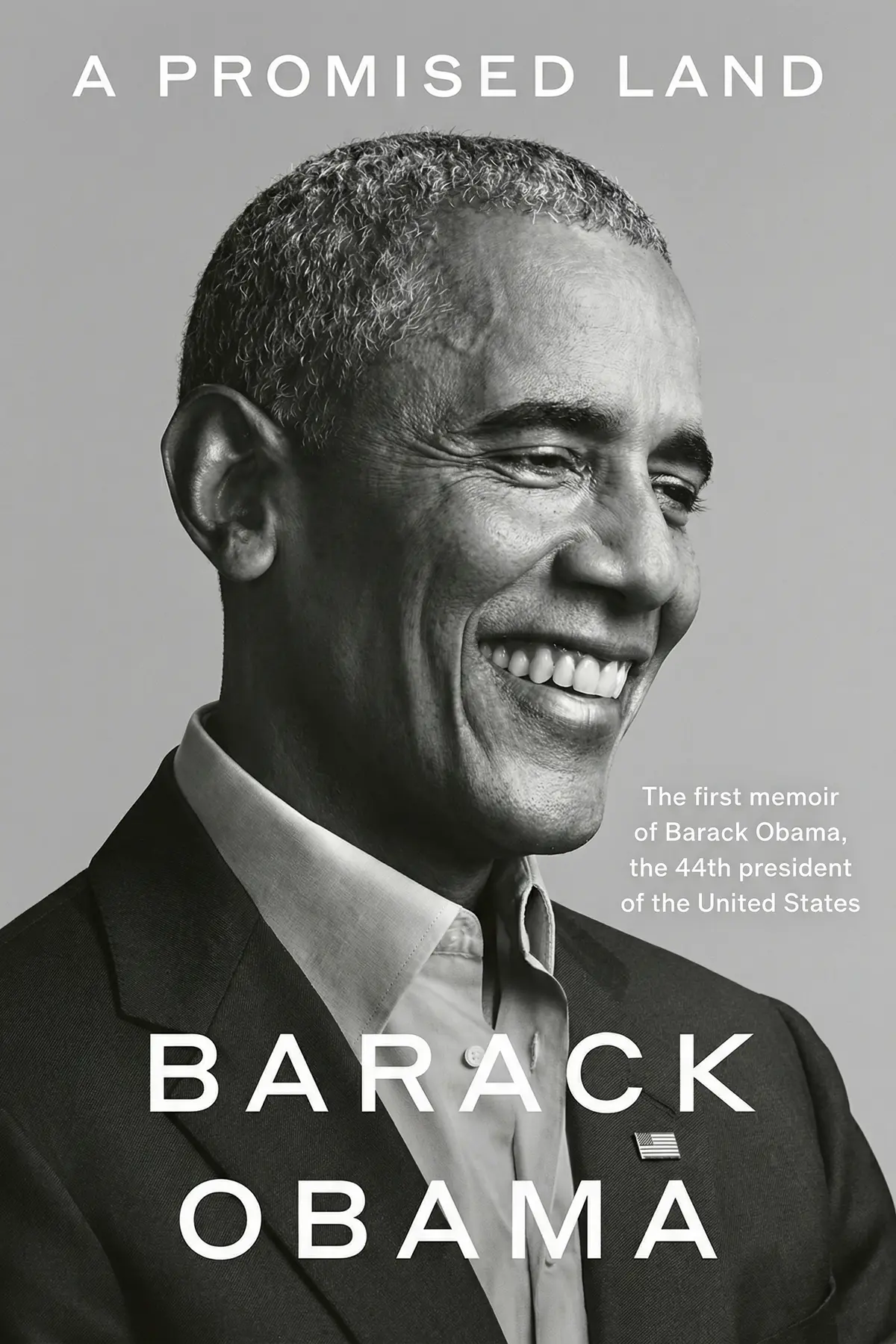
A Promised Land
Barack Obama

A River in Darkness: One Man’s Escape from North Korea
Masaji Ishikawa
A Theory of Justice
John Rawls

A Warning
Miles Taylor
AUDIO SUMMARY AVAILABLE
Listen to I Never Thought of It That Way in 15 minutes
Get the key ideas from I Never Thought of It That Way by Mónica Guzmán, plus 5,000+ more titles in English and Thai.
- 5,000+ titles
- Listen as much as you want
- 7-day free trial
- Cancel anytime







