
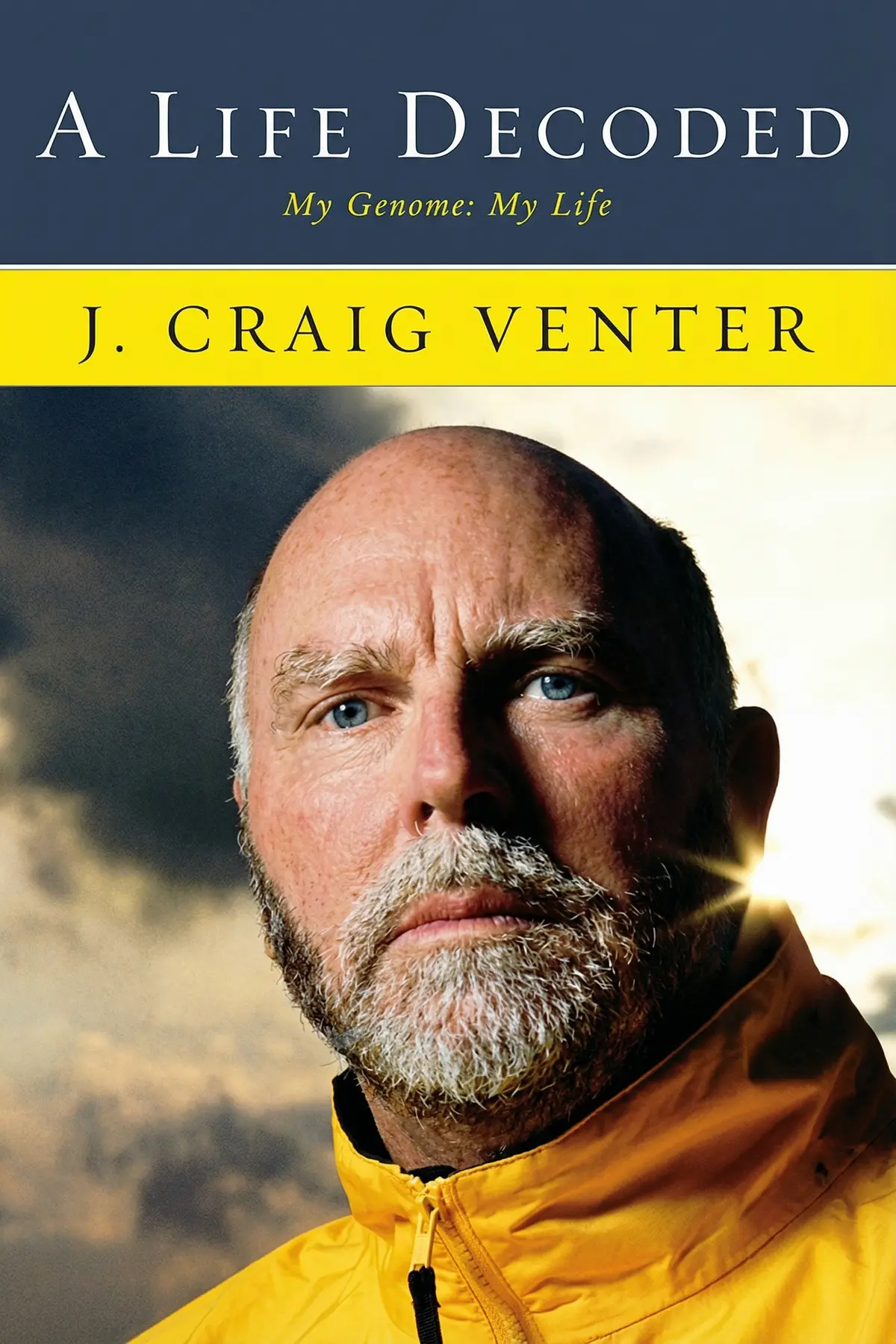
A Life Decoded: My Genome: My Life
J. Craig Venter
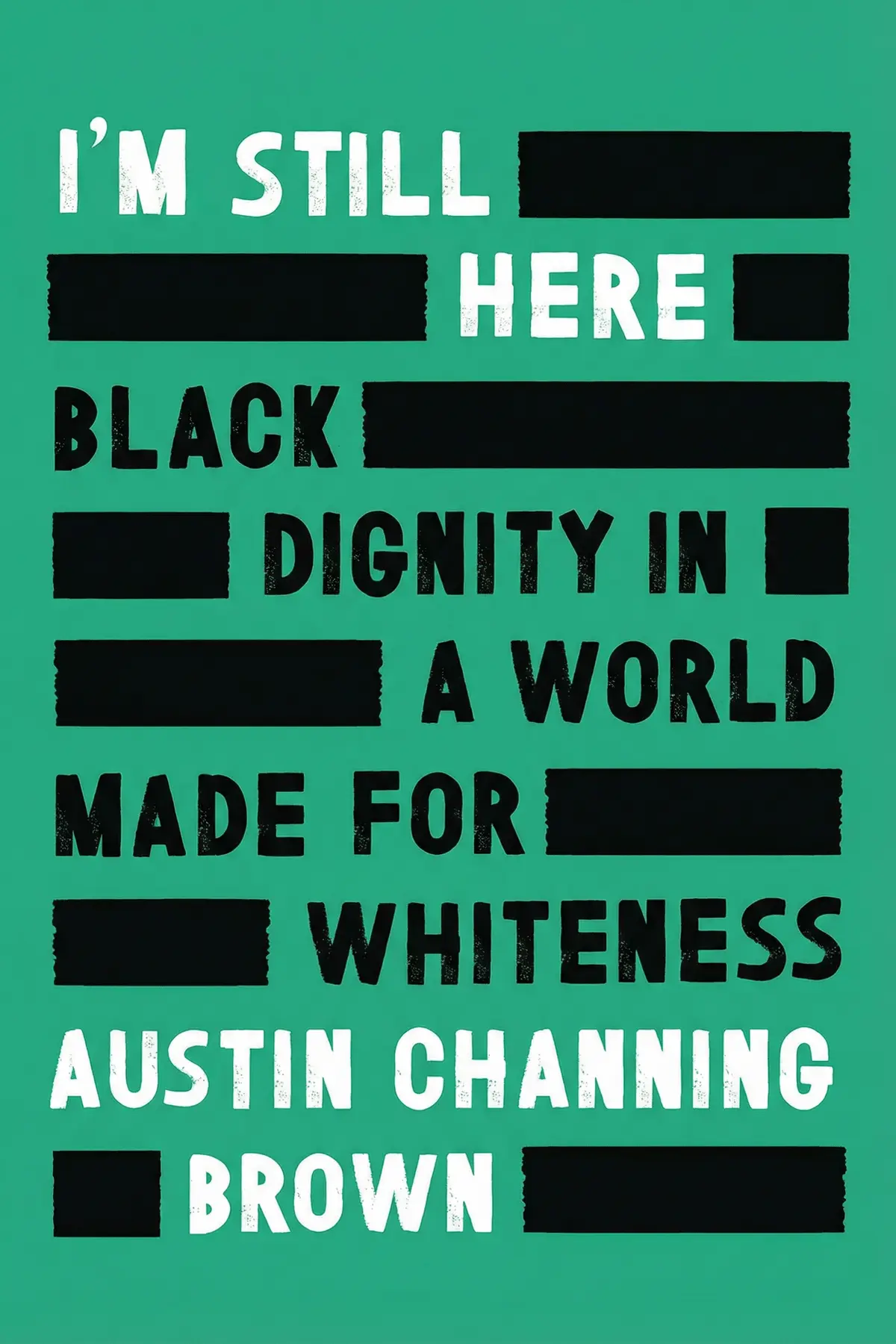
A profound exploration of the Black experience in modern America, Austin Channing Brown's memoir challenges readers to confront systemic injustice and find dignity within environments predominantly shaped by whiteness.
1 min 59 sec
Imagine standing at a library desk at seven years old, arms full of your favorite books, only to be met with a look of utter confusion from the librarian. She looks at your card, then at you, and back at the card. The name on the card is Austin. To the librarian, that name belongs to a white boy, not the young Black girl standing before her. This moment was one of the first times Austin Channing Brown realized that her very existence would constantly be filtered through the lens of other people’s expectations and biases. Her parents had chosen that name specifically to give her a head start in a world where a resume with a ‘Black’ name might be tossed aside. They wanted her to have the shadow of a white man’s privilege before she even walked into a room.
This story is the starting point for a deep, often uncomfortable, but necessary exploration of what it means to be Black in America today. We are often told that we live in a ‘post-racial’ society or that the best way to handle difference is to simply ignore it. But as we will see, this ‘color-blind’ approach often does more harm than good, masking the realities of systemic injustice under a thin layer of forced politeness. Through the course of this summary, we will look at how race shapes every corner of life, from the classroom to the corporate office, and even to the pews of a church.
Austin’s journey is one of navigating spaces that were not designed for her. It is a story about the exhaustion that comes from being the ‘only one’ in the room and the emotional toll of having to explain your humanity over and over again. But it is also a story about dignity. It is about finding strength in community, reclaiming the truth of history, and holding onto a hope that is grounded in reality rather than wishful thinking. By the end of this narrative, the goal is to move beyond simple awareness and toward a deeper understanding of what it takes to build a world where everyone can truly say, ‘I’m still here.’
2 min 13 sec
Explore how the well-intentioned philosophy of ignoring race often masks deep-seated prejudices and creates an environment where Black students feel constantly under surveillance.
2 min 22 sec
Witness the stark contrast in how students of different backgrounds process the brutal realities of American history during a transformative trip to the South.
2 min 20 sec
Step into the shoes of a Black professional navigating a minefield of microaggressions, tone policing, and constant identity mistakes.
2 min 21 sec
Examine the emotional labor required when white guilt becomes a barrier to progress, turning Black individuals into unwilling confessors for racial sins.
2 min 17 sec
Uncover why a sugar-coated version of history hinders progress and why anger can be a powerful, sacred tool for demanding justice.
2 min 28 sec
Understand the profound sense of vulnerability that comes from living in a world where safety is never guaranteed and the system often works against you.
2 min 18 sec
Discover why the fight for racial equality requires a shift from superficial diversity to deep structural change and the endurance of a long-term vision.
1 min 45 sec
As we reach the end of this journey through Austin Channing Brown’s experiences, we are left with a clearer, albeit more challenging, picture of the world we inhabit. We’ve seen how the simple act of naming a child can be a strategic move for survival, and how the halls of our schools and workplaces can be minefields of silent assumptions and exhausting microaggressions. We’ve explored the deep divide in how we remember our history and the visceral fear that many Black Americans live with every single day.
But the core message here isn’t one of despair. It is a call to a more honest and enduring form of action. True racial justice requires us to look past the superficial ‘color-blind’ approach and engage with the reality of systemic inequity. It demands that we move beyond the desire for easy absolution and instead do the hard emotional and structural work required to build real equity.
The throughline of this summary is the endurance of dignity. Despite the weight of history and the daily tolls of systemic racism, there is a persistent, defiant strength in the Black community. Hope, as we’ve learned, is a long-term commitment. It is the understanding that while we may not see the finish line in our own lives, every step we take toward justice is a victory. The path forward involves reclaiming the truth of our past, validating the righteous anger of the present, and refusing to settle for anything less than a world where every person’s dignity is absolute. Let this be an invitation to join that long-term work, with eyes wide open and a renewed sense of purpose. We are all still here, and the future we build depends on the honesty of our actions today.
I'm Still Here is an evocative and personal account of navigating life as a Black woman in the United States. Austin Channing Brown takes listeners through her journey from childhood to professional life, highlighting the pervasive nature of systemic racism that often hides behind a facade of politeness or 'color blindness.' The book serves as a mirror for society, particularly for organizations and individuals who claim to value diversity but fail to address the underlying structures of white supremacy. The promise of this work is not just to point out flaws, but to offer a path toward genuine racial justice. Through stories of workplace exhaustion, the emotional labor of educating others, and the deep-seated fear that accompanies life in a Black body, Brown provides a roadmap for what real reconciliation looks like. She argues that true progress requires more than just good intentions; it demands an unflinching look at history and a commitment to structural change that centers dignity and equity for everyone.
Austin Channing Brown is a speaker, writer, and producer, on the topic of racial justice. She executive produced the web series The Next Question and her work has featured in outlets including On Being, the Chicago Tribune, Christianity Today, and WNYC. I’m Still Here is her first book.

Listeners consider this book to be essential and revelatory, while one listener mentions it is an accessible read. The prose is deeply memorable, and listeners value the way the author uses relatable personal anecdotes to make the narrative feel vibrant. The text is praised for its honesty in facing difficult realities, with one review emphasizing how it weaves together family history and individual stories with modern-day events. Listeners call the work powerful, with one noting that the first-person perspective offers a refreshing outlook.
Finally got around to reading this after seeing it on so many 'must-read' lists, and it truly lived up to the hype. For me, as a woman of faith, Austin’s exploration of her journey within the church resonated on a level I wasn't expecting. She speaks so clearly about the exhaustion of being the 'bridge builder'—a metaphor that felt like a punch to the gut because of how accurate it is. The prose is beautiful and raw, managing to be both a memoir and a searing critique of modern American institutions. Truth is, I finished it in two days because her voice is just that engaging. It’s a profound look at what it means to claim your own dignity when the world around you seems designed to overlook it. Even if some of the concepts aren't strictly 'new' to you, the way she ties them to her own family life and childhood makes everything feel immediate and vital.
Show moreThe chapter titled 'Whiteness at Work' alone is worth the price of the book. Austin Channing Brown details the subtle, everyday dismissals she experienced at a Christian organization, and it was eye-opening to see how even 'diverse' spaces can be toxic. Frankly, it made me re-examine my own workplace interactions in a way that felt uncomfortable but necessary. Her writing is indelible, fusing personal anecdotes with a sharp analysis of systemic issues. I loved the section on her name and how the world reacts when they realize 'Austin' is a Black woman. It’s a powerful reminder that we all carry assumptions that need interrogating. My only minor gripe is that I wanted it to be longer! It’s quite short, and I feel like she has so much more to say, but what is here is pure gold. This should be required reading in every HR department and church leadership team.
Show moreAustin Channing Brown has a way of making you feel like you’re sitting across from her at a coffee shop, even when she’s dropping hard truths that make you want to look away. Her 'Letter to My Son' was the emotional peak for me; it brought the reality of her fears to life in a way that news reports never could. Look, this book isn't here to make white readers feel comfortable or 'fixed.' She explicitly states she isn't the priest for the white soul, and that boundary is so important. The stories about her childhood and the gifts of the Black church provided a beautiful balance to the more difficult chapters on white supremacy. It’s an honest, hard-hitting collection that refuses to offer easy answers or cheap hope. I found myself re-reading the final paragraph several times just to let it sink in. Masterful work.
Show moreNot what I expected, but exactly what I needed. I picked this up thinking it would be a standard biography, but it’s actually a series of sharp, interconnected essays that tackle everything from workplace dynamics to the concept of 'hope.' The way she describes the 'shadow of hope'—the idea of showing up even when you won't see the result—is something that will stay with me for a long time. Gotta say, her voice is incredibly clear and concise. She doesn't waste words. Some might find the book a bit too short, but I think the brevity adds to its power. It’s a refreshing first-person perspective that doesn't shy away from the 'bone-deep' exhaustion of existing in spaces that weren't made for you. I’ve already recommended this to three different friends. It’s the kind of book that starts conversations you didn’t know you needed to have.
Show moreWow. Just... wow. I finished this in one sitting because I literally couldn't put it down. Austin Channing Brown is a gifted communicator who knows how to weave personal family stories with current events in a way that feels seamless. The way she talks about her name and the 'white man' assumptions people make was such a clever way to introduce the theme of bias. This book is a powerful testament to Black dignity. It doesn't ask for permission to exist; it simply states, 'I'm still here.' I found her writing to be indelible and her perspective to be incredibly refreshing in a world full of academic jargon. This isn't just a book about racism; it's a book about the resilience of the human spirit. If you want to understand the reality of the Black experience in America today, this is essential. I'm buying copies for everyone I know.
Show morePicked this up after hearing her speak on a podcast and the book is just as engaging as her oral storytelling. The survival guide for organizations claiming to be 'antiracist' was particularly practical and, frankly, quite depressing in its accuracy. She brings stories to life with accessible examples that make systemic issues feel tangible rather than abstract. I appreciated that she didn't try to be groundbreaking with new theories; instead, she grounded existing concepts in the reality of her own skin. It's a short read, but the prose is so dense with meaning that you'll want to take your time. My only critique is that I felt a few chapters ended rather abruptly, leaving me wanting more of her analysis. Still, the honesty here is staggering. It’s a brave piece of writing that deserves all the attention it’s getting. Powerful stuff.
Show moreEver wonder why so many Black women feel exhausted in corporate America? This book provides the answer with surgical precision. Austin's account of the microaggressions she faced is a masterclass in showing, not just telling, what it feels like to be 'the only one' in the room. The fusion of her personal journey with the broader context of 'Whiteness' is handled with such grace and grit. I was especially moved by the interlude addressed to her son—it was a heart-wrenching moment of vulnerability. The book manages to be both realistic about the hurdles of racism and deeply full of love for the Black community. It’s not a comfortable read for everyone, and it’s not meant to be. But for those willing to listen, it’s a gift. The final chapter on hope is something I’ll be returning to whenever the world feels a bit too heavy. Truly phenomenal.
Show moreTo be fair, this wasn’t the academic tome I was expecting, which actually made it much more impactful. Brown writes in a very conversational, accessible style that makes the heavy subject matter feel like a necessary dialogue rather than a lecture. I especially appreciated how she broke down the microaggressions she faced in corporate and religious environments—it was staggering to see them all listed out. While I didn’t find every single essay to be groundbreaking, the cumulative effect of her storytelling is undeniable. Some sections felt a bit brief, and I wanted more depth on certain historical contexts, but as a primer on the Black experience in white-dominated spaces, it’s top-tier. It challenges you to look at your own biases without being needlessly dense. Definitely a solid recommendation for anyone wanting to understand the 'bone-deep tiredness' Austin describes.
Show moreAs someone who grew up in the 80s, I found Austin’s experiences in majority-white schools to be a surprising window into how little has changed. However, I struggled with the expectation that white teachers and students should instinctively know how to step outside their own cultural frame of reference. If I’m not Black, how can I treat you through that cultural lens? It felt a bit judgmental at times, as if the author was reading the minds of the white people around her and assuming the worst. To be fair, her outrage at being touched or stereotyped is 100% valid. No one should have to deal with that. But the book didn't really offer a way forward for those of us who want to help but feel like anything we say will be labeled 'fragile.' It’s a good memoir, and her personal story is compelling, but I left feeling like reconciliation is further away than I thought.
Show moreI'll be the contrarian here and say I found this book deeply frustrating. The author seems to view every single interaction through a lens of racial grievance, which felt more like a personal manifesto of resentment than a path toward reconciliation. I’m honestly confused by the praise for the term 'Black and brown bodies'—it feels clinical and dehumanizing rather than empowering. Are we not talking about people with souls? Throughout the essays, there's a recurring sense that the world revolves around the hatred of her, which is a very self-centered way to view society. It felt like no matter what a white person does, it will be labeled as 'fragility' or 'racism.' I read this hoping for a vision of equality, but instead, I found a book that seems to widen the divide. It’s well-written in terms of sentence structure, but the underlying message is incredibly divisive and harmful.
Show moreJ. Craig Venter

Ishmael Beah

James Herriot


Barack Obama

Masaji Ishikawa

Ben Macintyre
AUDIO SUMMARY AVAILABLE
Get the key ideas from I’m Still Here by Austin Channing Brown, plus 5,000+ more titles in English and Thai.







