

A Bigger Prize: How We Can Do Better Than the Competition
Margaret Heffernan
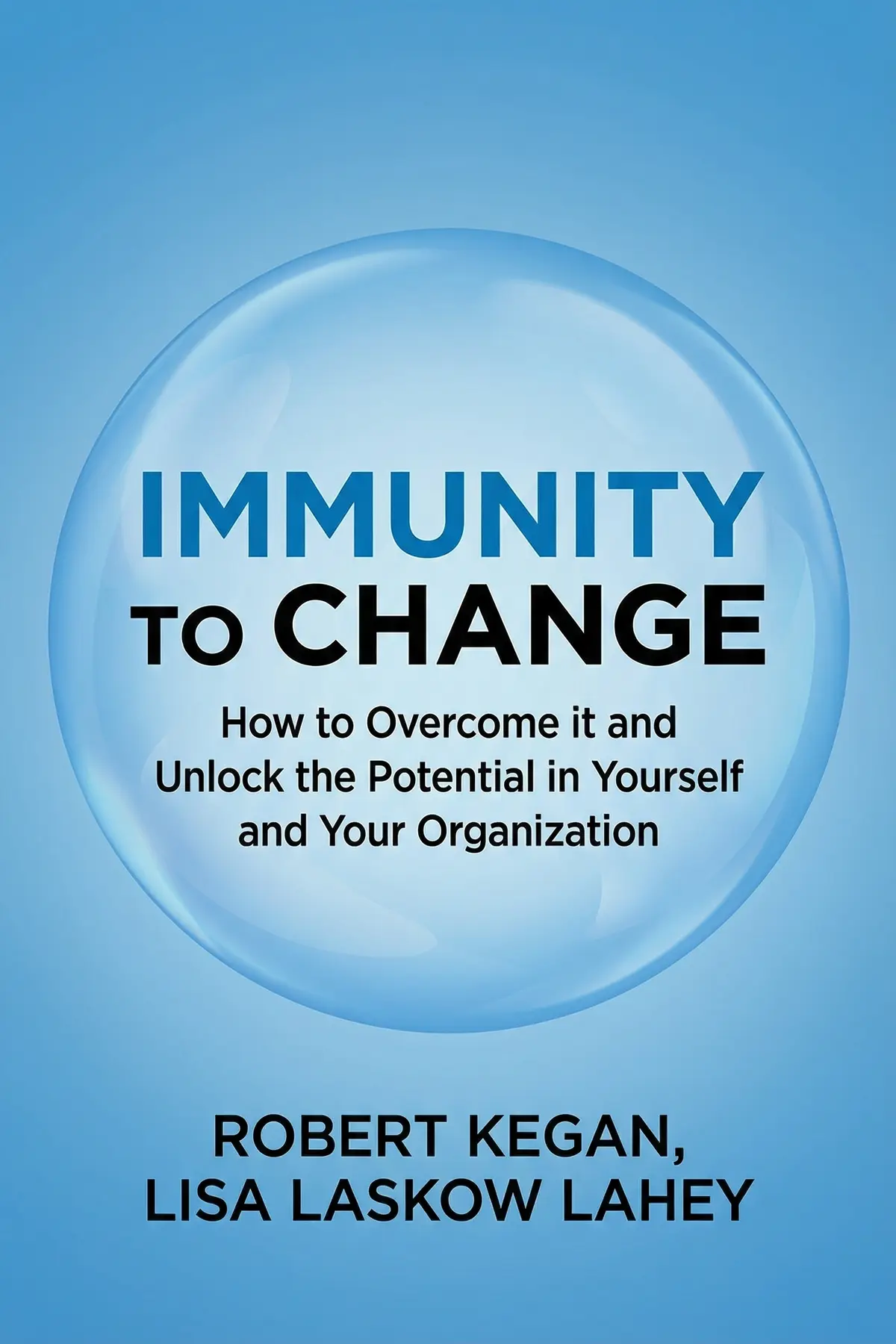
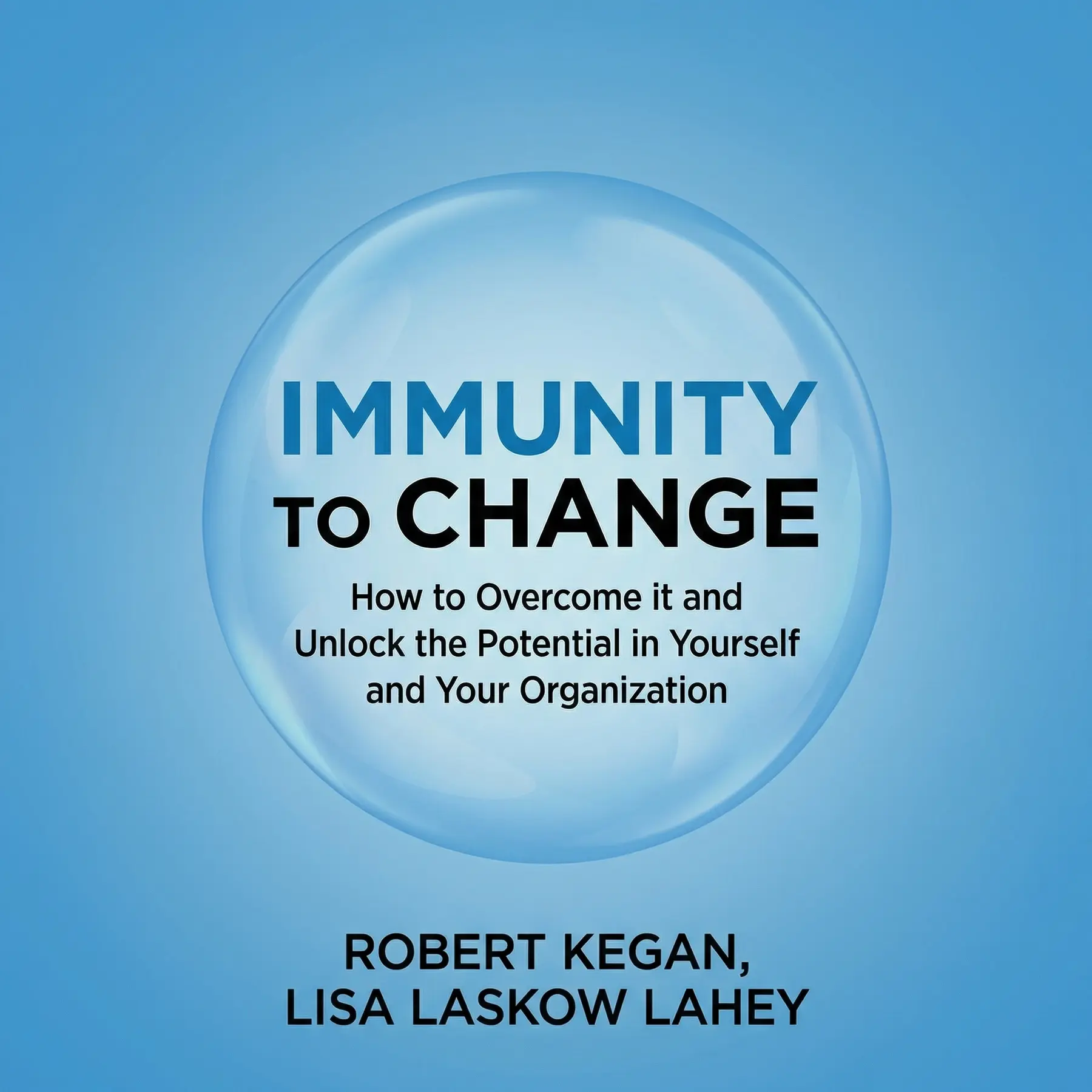
Discover why personal and professional transformation is so difficult. This guide explores the psychological forces that resist change and provides a practical framework for expanding your mental complexity and leadership potential.
1 min 05 sec
We often think of growth as something that happens during our formative years. We assume that by the time we reach adulthood, our psychological hardware is pretty much set, and all we need to do is download new software—new skills, new facts, or new strategies. But what if the biggest challenges we face in leadership and life can’t be solved with more information? What if the problem isn’t what we know, but how we process that knowledge?
In this exploration of the concepts presented in Robert Kegan and Lisa Laskow Lahey’s work, we are going to look at a fundamental human paradox: the fact that we can sincerely want to change, yet simultaneously work against our own progress. This is what the authors call an “immunity to change.” It is an internal protective system that keeps us safe but also keeps us stuck. Over the next few minutes, we’ll dive into why this happens and how you can map out your own internal resistance to finally break through the plateaus that have been holding you back. We will see that true transformation isn’t about trying harder; it’s about evolving the very way your mind works.
1 min 59 sec
Adult development isn’t a finished process; it’s a journey through distinct levels of mental complexity that redefine how we see ourselves and the world.
1 min 44 sec
Even when we are fully committed to a goal, a hidden internal system often works to protect us from the very change we seek.
1 min 57 sec
Using the Immunity X-ray tool allows you to visualize your internal contradictions and challenge the assumptions that block your growth.
1 min 01 sec
The journey toward significant change is rarely about acquiring a new set of skills. Instead, it is about the courageous act of evolving the way we think and perceive the world. By understanding the stages of mental complexity, we can see where we are on our developmental path and recognize that our current frustrations are often just the growing pains of a mind ready to expand.
The Immunity to Change framework reminds us that our resistance isn’t a flaw, but a protective system that has simply outlived its usefulness. When we use tools like the X-ray map to bring our competing commitments and big assumptions into the light, we gain the power to challenge them. This shift from the socialized or self-authoring mind toward a self-transforming one is what allows us to become the leaders and individuals we aspire to be. As you move forward, consider which hidden commitments might be acting as your internal brake, and remember that real growth begins the moment you decide to look behind the curtain of your own defense mechanisms.
Have you ever wondered why, despite your best intentions and clear goals, you find yourself stuck in the same old patterns? This summary explores the hidden psychological mechanisms that act as an internal defense system against change. It introduces the concept of mental complexity, showing that adult growth is a continuous ladder rather than a finished state. The book provides a diagnostic tool called the Immunity X-ray to help you identify the hidden commitments and assumptions that are holding you back. By moving from a socialized mindset to a self-transforming one, you can unlock a new level of leadership and personal effectiveness. It promises a roadmap for anyone looking to bridge the gap between their aspirations and their actual behavior.
Robert Kegan is a psychologist and a professor at the Harvard Graduate School of Education. He is a cofounder of Minds at Work and is renowned for his research on adult development, having written The Evolving Self and In Over Our Heads. Lisa Laskow Lahey is an educator and researcher who also cofounded Minds at Work. She has coauthored How the Way We Talk Can Change the Way We Work and specializes in applying developmental psychology to organizational and personal transformation.
Listeners consider this work a vital resource that provides impactful observations and functional advice for navigating transformation within themselves and their organizations. Offering an all-encompassing strategy for growth, the book enables people to broaden their self-development and implement lasting changes in their daily lives. They value the intellectually stimulating subject matter, with one listener depicting it as a guided tour of the human psyche. The manner of writing draws differing opinions, as some view it as perceptive while others point out its occasional complexity.
Finally, a framework that explains why willpower alone isn't enough to drive lasting change in organizations or ourselves. Kegan and Lahey have provided an essential roadmap for anyone navigating the complexity of 21st-century leadership. The truth is, most of us are using outdated 'software' to run our lives, and this book shows you how to upgrade your internal operating system. The concept of the 'self-transforming mind' is particularly inspiring—it's about becoming friendlier toward contradiction and realizing our own perspectives are always partial. It’s a deep, intellectual dive that manages to stay grounded in the messy reality of organizational life. This isn't just a book; it's a transformative journey that asks you to put in the work to see the results. Absolutely essential.
Show moreAs someone who has struggled with delegating for years, the concept of hidden commitments was a revelation for me. I’ve read dozens of books on productivity, but none of them addressed why I was actively sabotaging my own efforts to clear my plate. This book helped me realize that my 'immunity' was protecting me from the fear of no longer being indispensable. That kind of insight is worth its weight in gold. The authors' approach to adult development is sophisticated yet practical, offering a way to bridge the gap between who we are and who we need to become. It’s a dense read, and you shouldn't rush through it, but the payoff for your personal and professional life is immense.
Show moreWhile the writing style is definitely complex and 'Harvard-heavy' at times, the insights are profound enough to justify the effort. Kegan and Lahey move beyond the surface-level advice of most management books to explore the deep-rooted anxieties that keep us tethered to the status quo. The 'Immunity X-ray' is a powerful tool for uncovering the 'big assumptions' that limit our cognitive boundaries. By identifying these, you can actually start to test them and see if they're still true or just relics of a younger version of yourself. It’s a brilliant fusion of psychology and leadership theory that offers a truly comprehensive approach to making real change. If you're tired of 'snake oil' and want a serious look at how humans grow, this is it.
Show moreNot what I expected from a management book! I thought it would be a series of dry tips for improving efficiency, but it’s actually a profound look at the human soul and its capacity for evolution. The authors show that mental growth is a lifelong process, and they provide the 'X-ray' tool to help you see exactly where you're getting in your own way. The case studies are well-chosen and illustrate the struggle of moving between the socialized, self-authoring, and self-transforming mindsets. It has changed the way I look at conflict in my team and the way I approach my own personal goals. This is thought-provoking, practical, and ultimately very hopeful. It’s a must-read for anyone who feels stuck in a loop of failed resolutions.
Show moreThe core metaphor of having one foot on the gas and one on the brake is a total game-changer for understanding personal stagnation. I picked this up during a transition into a more senior leadership role and found the distinction between technical and adaptive challenges incredibly relevant. Most of us try to solve our problems with new skills (technical), when we actually need a shift in our mental complexity (adaptive). The 'Immunity X-ray' is a rigorous, even painful, process that forces you to look at the 'hidden commitments' you have that undermine your stated goals. It’s not a light read—the prose is dense and academic—but the depth of the inquiry is far superior to your average airport bookstore self-help. It requires real work and reflection.
Show morePicking this up for a professional development seminar was a surprisingly emotional experience. Unlike most business books that focus on 'hacks' or external systems, Kegan and Lahey go straight for the psyche. They argue that we don't just stop growing after adolescence, and that our 'mental complexity' needs to evolve to handle the modern world's demands. I particularly appreciated the breakdown of the three plateaus of adult development. It helped me realize I was stuck in a 'socialized mind,' constantly looking for external validation rather than setting my own internal course. My only gripe is that the book is quite repetitive; they could have made their point in half the length. Still, it provides a comprehensive approach to change that actually feels sustainable.
Show moreGotta say, the 'Immunity X-ray' process is much more uncomfortable than I anticipated. It’s one thing to say you want to be a better delegator, but it’s another thing entirely to admit you’re committed to being the smartest person in the room to protect your ego. This book provides a guided exploration of your own internal contradictions that most leadership manuals completely ignore. The authors' focus on 'One Big Thing' makes the daunting task of personal evolution feel much more manageable. While the writing can be a bit 'Harvard-heavy' and academic, the practical guidance for running small experiments to test your assumptions is gold. It’s a solid 4-star read for anyone serious about real, long-term growth rather than quick fixes.
Show moreEver wonder why you can't stick to a diet or a new management style despite your best intentions? This book attempts to answer that by looking at our 'competing commitments.' To be fair, the central concept is brilliant: we often have one foot on the gas and one on the brake. However, the experience of reading this is like being trapped in a boardroom with a very talkative consultant who won't get to the point. The authors spend an exhausting amount of time telling you how life-changing their process is before actually showing you how to do it. It’s a classic case of a great 20-page white paper stretched into a 300-page book. There are some profound insights about moving from a 'socialized mind' to a 'self-transforming mind,' but you have to wade through a lot of fluff to find them.
Show moreAfter hearing so much hype about the 'Immunity to Change' framework in leadership circles, I expected a more rigorous, evidence-based approach. What I got was a lot of anecdotes and very little hard data. The 'Immunity Map' is a useful tool for self-reflection, and I did find value in identifying my own hidden assumptions that keep me stuck in old patterns. But the writing is turgid and often feels like an infomercial for the authors' workshops. It’s a thought-provoking read if you’re interested in adult development, yet it feels disconnected from the realities of people who don't have the luxury of a Harvard-trained coach. Useful? Yes. Revolutionary? Probably not as much as the authors want you to believe.
Show moreThis book reads like a massive sales pitch for a high-priced Harvard consulting firm rather than a genuine scientific text. While Kegan and Lahey clearly know their way around developmental psychology, the tone here is unbearably smug, as if they've beamed down from 'planet boss' to fix the little people. The core premise—that we have an 'immune system' preventing us from changing—is an interesting metaphor, but it’s buried under mountains of anecdotal evidence and repetitive jargon. Frankly, I found the case studies, like the woman working herself into a breakdown, more concerning than inspiring; the authors treat systemic overwork as a personal psychological quirk to be 'mapped' rather than a toxic environment to be escaped. If you enjoy 300 pages of self-congratulatory management-speak, you'll love it. Otherwise, just Google the 'Immunity X-ray' worksheet and save yourself fifteen hours of frustration.
Show moreMargaret Heffernan



William B. Irvine
AUDIO SUMMARY AVAILABLE
Get the key ideas from Immunity to Change by Robert Kegan, plus 5,000+ more titles in English and Thai.







