

20 min 25 sec
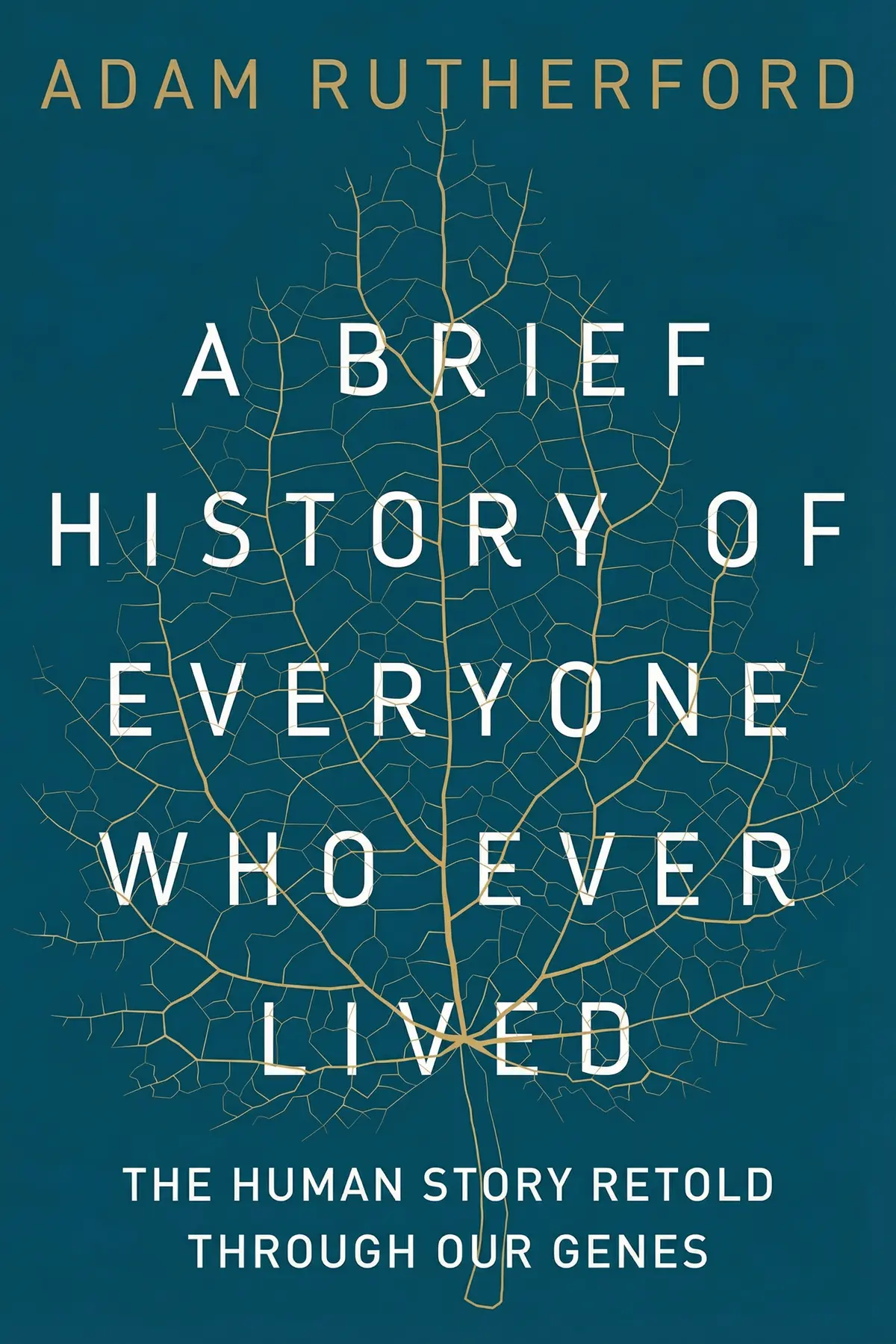
In Praise of Walking: The new science of how we walk and why it’s good for us
By Shane O'Mara
Explore the profound evolutionary, neurological, and social benefits of walking. This summary reveals how bipedalism shaped the human brain, fuels creativity, and remains essential for physical and mental well-being in the modern age.
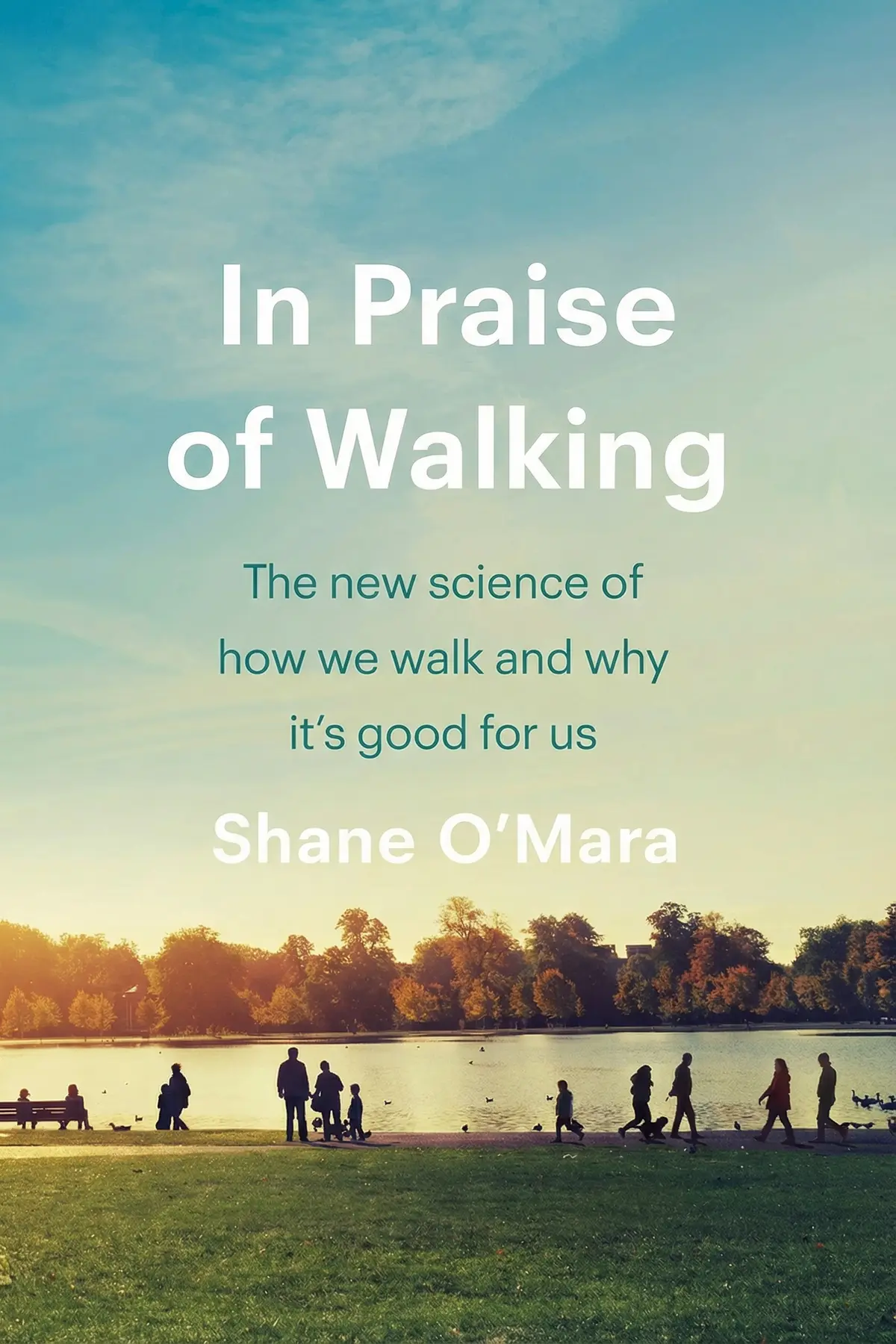
Table of Content
1. Introduction
2 min 11 sec
When we think about what truly separates humans from the rest of the animal kingdom, our minds often jump to our massive brains, our complex languages, or perhaps our nimble, tool-using thumbs. But there is a more fundamental trait that we often take for granted—a trait that literally shaped our evolution and continues to define our daily experience. That trait is our ability to walk upright on two legs. This unique form of locomotion, known as bipedalism, isn’t just a way to get from point A to point B; it is a sophisticated biological feat that requires an incredible amount of neural processing power.
In our modern world, however, we are witnessing a quiet crisis. We are walking less than ever before. We transition from our beds to our cars, from our office chairs to our sofas, effectively outsourcing our movement to machines. This shift isn’t just making us less fit; it’s fundamentally altering our brains and our psychological well-being. In this exploration of the science of walking, we are going to look at why this sedentary trend is such a dangerous mistake.
We’ll dive into the fascinating biology of movement, tracing our lineage back to ancient creatures and discovering why a brain is actually an evolutionary tool for navigation. We will explore how our brains act as internal GPS systems, using specialized cells to map our world. We’ll also look at the social and creative dimensions of a simple stroll, from the way walking together synchronizes our minds to the way a solitary walk can unlock mathematical breakthroughs.
By the end of this journey, you’ll understand that walking is much more than exercise. It is a vital nutrient for the human spirit and the human mind. The throughline here is simple: to be fully human is to move, and by reclaiming our walking lives, we can restore our health, our cities, and our connection to one another. Let’s start by looking at the very beginning of the movement story and what a tiny sea creature can teach us about the purpose of having a brain in the first place.
2. The Biological Link Between Movement and Mind
3 min 04 sec
Discover why the brain is essentially an organ designed for movement, and learn the cautionary tale of the sea squirt, a creature that literally consumes its own brain once it stops moving.
3. The Brain’s Internal GPS Network
2 min 44 sec
Explore the sophisticated ‘place cells’ and ‘head-direction cells’ that allow our brains to map the world around us, functioning as a natural, internal navigation system.
4. Why the Design of Our Cities Dictates Our Health
2 min 48 sec
Understand the vital importance of ‘walkable’ urban environments and why prioritizing pedestrians over traffic is essential for both the economy and our well-being.
5. Walking as a Biological and Mental Restorative
2 min 34 sec
Discover the scientific evidence showing that walking can prevent depression, grow new brain cells, and even prevent negative personality shifts caused by inactivity.
6. Unlocking the Creative Mind Through Motion
2 min 37 sec
Learn why some of history’s greatest thinkers relied on walking to solve complex problems and how the brain’s ‘default mode’ allows for breakthroughs during a stroll.
7. The Social Pulse of Walking
2 min 39 sec
Discover the deep social roots of walking, from the way it synchronizes our brain activity with others to its role in building community and solidarity.
8. Conclusion
1 min 48 sec
As we reach the end of this exploration into the science of walking, it becomes clear that this simple act is anything but mundane. Walking is a cornerstone of the human experience, a gift from our evolutionary past that continues to provide immense benefits for our modern lives. We’ve seen how movement is the very reason we have brains, and how those brains have evolved sophisticated internal maps to guide us through our world. We’ve explored how walking can be a literal fountain of youth for our minds, generating new neurons and protecting us from the dimming of our moods and personalities.
We’ve also seen how walking can be the key to unlocking our creative potential and how it serves as a social glue, binding us to our neighbors and our communities. The takeaway is that we cannot afford to neglect this part of our nature. In a world that is increasingly designed to keep us still, choosing to walk is an act of reclaiming our biological heritage.
So, the next time you find yourself staring at a computer screen, feeling stuck on a problem, or sensing a cloud over your mood, remember the sea squirt. Don’t let your brain become an unnecessary organ. Stand up, walk out the door, and let your legs take the lead. Whether it’s a short walk around the block or a long hike through the woods, every step you take is a vote for a healthier, more creative, and more connected version of yourself.
Make walking a non-negotiable part of your daily rhythm. Don’t just do it for your heart or your waistline—do it for your brain, your spirit, and your sense of place in the world. As we have seen, to walk is to be human, and there is no better time to start than right now. Grab your shoes, step outside, and rediscover the world—one step at a time.
About this book
What is this book about?
In Praise of Walking is an illuminating exploration of one of the most fundamental yet overlooked human abilities: our capacity to walk upright on two legs. Neuroscientist Shane O’Mara takes us on a journey from the deep evolutionary roots of movement to the intricate neural networks that allow us to navigate our world. The book promises to change how you view a simple stroll, showing that walking is not just a mode of transport but a biological necessity that preserves our brain health, sparks creative breakthroughs, and fosters social cohesion. By weaving together biology, psychology, and urban design, the summary illustrates why reclaiming our walking lives is crucial for individual health and the future of our cities. It offers a compelling argument for why we must stand up, step out, and rediscover the rhythm of the road.
Book Information
About the Author
Shane O'Mara
Shane O'Mara is a distinguished neuroscientist and a Professor of Experimental Brain Research at Trinity College Dublin. He serves as the Principal Investigator at the Institute of Neuroscience and holds the prestigious title of Wellcome Trust Senior Investigator. Beyond his academic research, O'Mara is an accomplished author whose previous works include Why Torture Doesn’t Work: The Neuroscience of Interrogation and A Brain for Business – A Brain for Life.
Ratings & Reviews
Ratings at a glance
What people think
Listeners find that although reactions are mixed concerning the book’s academic style and its lack of insight on safety for women, many value the thorough research into the neurobiology of human motion. Furthermore, the author’s exploration of bipedalism’s evolutionary roots is highly regarded, with one listener highlighting the captivating description of the brain acting as an "internal GPS" to maintain direction and balance. They also note that the work provides persuasive scientific evidence for the psychological benefits of walking, demonstrating how it can spark creativity and serve as a tool for clarity. Additionally, the "sea squirt" analogy remains a memorable example for listeners of the essential link between physical activity and a healthy brain.
Top reviews
Arjun
Wow. This was exactly the kind of deep dive I was looking for. As an avid walker, I always knew it made me feel better, but O’Mara provides the actual 'why' behind that feeling. The explanation of the brain as an internal GPS that constantly recalibrates our position to keep us balanced was absolutely mind-blowing. I loved how the book connected our evolutionary past—starting with those first bipedal ancestors—to our current mental well-being. It’s not just a health book; it’s a celebration of what makes us human. Despite what some other reviewers said, I found the technical details about brain plasticity and mood regulation to be the best part. It’s empowering to know that something as simple as a brisk walk can have such profound effects on our intelligence and longevity.
Show moreNarut
Finally, a book that gives walking the credit it deserves! O’Mara’s research into the link between movement and mental health is nothing short of brilliant. I was captivated by the idea of 'peripatetic' thinking—how the rhythm of our feet actually facilitates the rhythm of our thoughts. The book is a beautiful blend of neuroscience, history, and social commentary. It makes you want to lace up your shoes and go for a long stroll through the nearest park immediately. While it does dive deep into the biology, I found it accessible enough to follow, and the insights into how walking fosters social connection were particularly moving. This should be mandatory reading for urban planners and anyone interested in living a more vibrant, connected life. It’s truly a life-affirming read.
Show moreJiraporn
Ever wonder why you get your best ideas while pacing around the room? O’Mara does a fantastic job of explaining the cognitive mechanics behind that 'aha!' moment. As someone who struggles with a sedentary office job, I found the evidence linking physical movement to increased creativity and brain health to be incredibly convicting. The book goes deep into how walking acts as a natural antidepressant and helps prevent the mental decline associated with aging. While it does get a bit 'wordy' in the middle sections regarding brain anatomy, the overall message is powerful. It’s scientific proof that our bodies and minds were built to move in tandem. It’s certainly changed the way I view my daily commute—now I see it as a brain-boosting session rather than a chore.
Show moreArnav
Picked this up during a bit of a reading slump and found it surprisingly engaging. The author’s perspective on how bipedalism literally shaped the human brain is fascinating. He explains how our ability to walk upright freed our hands and changed our social structures in ways I’d never considered. I especially enjoyed the discussion on 'path integration' and how our brains navigate complex environments without even needing a map. My only real gripe is that it can be a bit rambling in places, and some of the data points feel like they’re being repeated just to fill space. Still, for anyone interested in the intersection of biology and daily habit, this is a very worthwhile read. It makes a compelling case for reclaiming our cities from motorized traffic.
Show moreSara
Frankly, I needed the scientific kick in the pants this book provided. We all know walking is 'good,' but understanding the neurochemistry behind why it works—the dopamine, the hippocampal growth, the structural changes—makes it much easier to stay motivated. O’Mara writes with a clear passion for the subject, even if he occasionally gets lost in the weeds of experimental data. I particularly liked the updated foreword about how COVID-19 impacted our social walking habits and what that loss of 'inadvertent touch' did to our collective psyche. It’s a smart, well-researched book that bridges the gap between hard science and lifestyle advice. It’s not a light read, but it’s an important one for anyone living in our increasingly sedentary modern world.
Show moreCharlotte
The sea squirt analogy is something that will stick with me forever—the idea that if you stop moving, your brain becomes redundant is a terrifyingly effective motivator. This book provides some solid scientific evidence for why we feel so much clearer after a stroll, and I appreciated the 'internal GPS' explanation regarding how our brains maintain balance. However, the tone fluctuates wildly between fascinating evolutionary history and incredibly dry descriptions of neural pathways that feel like they belong in a medical journal. It’s a bit of a mixed bag; some chapters fly by while others are a total grind. I’d recommend it for the insights into creativity and mental health, but be prepared to skim the more technical, receptor-heavy sections if you aren't a scientist.
Show moreAisha
After hearing so much buzz about this, I finally got around to reading it, and I’m torn. On one hand, the sections on urban planning were quite eye-opening; O’Mara makes a great case for why our cities need to be designed for people rather than just cars. On the other hand, the book feels quite repetitive and lacks a certain 'spark' in the writing. He spends a lot of time on the mechanics of how we walk without really diving into the joy of it as much as I’d hoped. It’s very much a scientist’s view—analytical and detached. It’s a decent read if you want the data to back up your habits, but don’t expect a lyrical or particularly inspiring tribute to the act of walking itself.
Show moreRoongsak
Look, I wanted to love this because I’m a dedicated hiker, but it was just so incredibly dense. I expected a 'popular science' book, yet I felt like I was back in a graduate-level neurobiology lecture I didn’t sign up for. O’Mara goes on forever about specific receptors and hippocampal place cells, making it feel like a slog rather than an engaging read. The core message is literally just 'walking is good for you,' which we all know, but the delivery is so rambling and wordy that it loses the plot. To be fair, the research is obviously thorough, but the accessibility is zero for a casual reader. I had to force myself through the final chapters just to say I finished it. It really defeats the purpose of the genre when it’s this much hard work.
Show moreCholada
Is it possible for a book about movement to feel this stagnant? The writing style is quite repetitive, and I found my mind wandering more than my feet ever did while reading it. While the author is clearly an expert, he lacks the storytelling ability of someone like Bill Bryson or Oliver Sacks. The 'technical' sections about our genetic ancestors and the transition to bipedalism were okay, but they were buried under mountains of dry data. I honestly felt like I was reading a textbook at times. The conclusion is basically 'walk more to feel better,' which is great, but did it really need 200+ pages of academic jargon to get there? If you’re not a science nerd, you might find this one a bit of a chore to get through.
Show moreKom
This book left a bitter taste in my mouth, primarily because of how blatantly it ignores the reality of being a woman in a city. While O’Mara waxes poetic about the 'social benefits' of urban strolling and praises sites like Central Park, he completely bypasses the safety concerns that dictate where and when half the population can actually walk. There is a glaring lack of discussion regarding street lighting, harassment, or the simple fear of being followed in those very underpasses he wants to make 'pedestrian friendly.' To claim walking is this universal panacea without acknowledging the structural dangers for women is a massive oversight. It’s a classic example of male-centric science that looks at data points while ignoring lived experiences. I found it incredibly frustrating and ultimately out of touch with modern urban life.
Show moreFeatured in
Readers also enjoyed


A Life Decoded: My Genome: My Life
J. Craig Venter

A Planet of Viruses
Carl Zimmer

A Short History of Nearly Everything
Bill Bryson

A Thousand Brains: A New Theory of Intelligence
Jeff Hawkins
AUDIO SUMMARY AVAILABLE
Listen to In Praise of Walking in 15 minutes
Get the key ideas from In Praise of Walking by Shane O'Mara, plus 5,000+ more titles in English and Thai.
- 5,000+ titles
- Listen as much as you want
- 7-day free trial
- Cancel anytime







