
18 min 14 sec
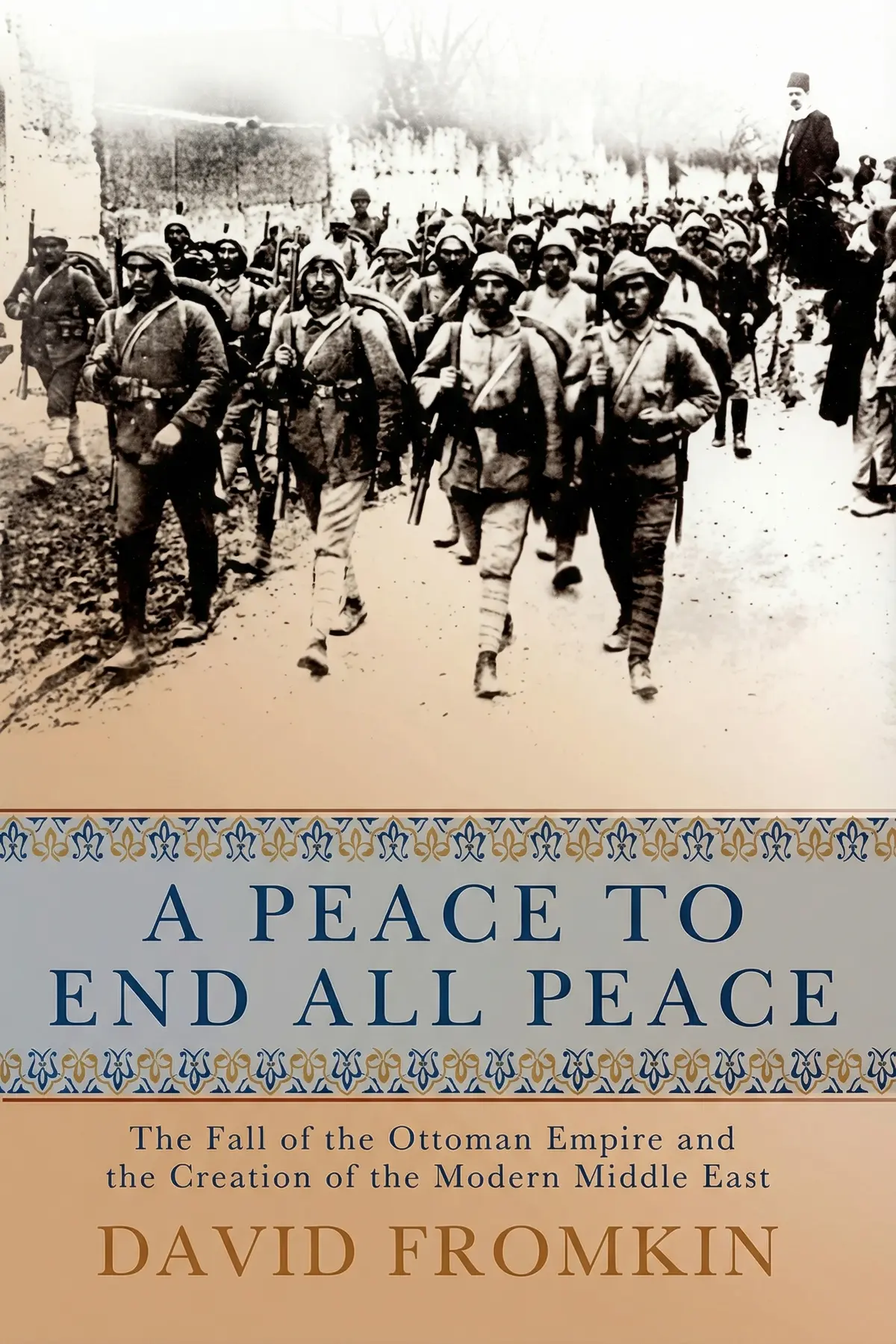
Iran’s Grand Strategy: A Political History
By Vali Nasr
Explore the historical and ideological roots of Iran's foreign policy. This summary reveals how a desire for independence and a strategy of forward defense shape Tehran’s regional ambitions and internal challenges.
Table of Content
1. Introduction
1 min 49 sec
When we look at the headlines coming out of the Middle East today, it is impossible to ignore the shadow cast by Iran. Whether it is through regional conflicts, drone technology, or the influence of various militia groups, the presence of Tehran is felt across every border. To many in the West, Iran’s actions often seem erratic or fueled purely by religious fervor. However, there is a much deeper and more consistent logic at work here. This is not just a series of random political maneuvers; it is a calculated grand strategy that has been decades in the making.
To understand why Iran acts the way it does, we have to look past the immediate news cycle and peer into the country’s historical psyche. We need to explore a narrative of a nation that sees itself as perpetually under siege, yet destined for regional leadership. This strategy is built on a foundation of fierce independence, a concept known as ‘esteqlal,’ which serves as the North Star for the Iranian leadership. It’s a vision that was forged in the fires of revolution and hardened by one of the longest conventional wars of the twentieth century.
In the pages that follow, we will unravel the layers of this strategy. We will see how Iran transitioned from a country that felt victimized by global superpowers to one that proactively projects power far beyond its own borders. We will explore the ‘Axis of Resistance,’ the network of allies that Iran has carefully cultivated to act as a buffer against its rivals. But we will also look at the internal friction this strategy creates. As we journey through the political history of the Islamic Republic, we’ll ask a central question: can a nation’s grand strategy survive if it becomes increasingly disconnected from the aspirations of its own citizens? Let’s begin by looking at the unique and often lonely position Iran occupies in the world.
2. A Nation Defined by Isolation and Identity
2 min 41 sec
Discover how Iran’s unique status as a Persian Shia state has created a lasting sense of vulnerability and a drive for total self-reliance.
3. The Quest for Sovereignty and the Revolutionary Pivot
2 min 51 sec
Trace the path from the 1953 coup to the 1979 Revolution, where the pursuit of ‘independence’ became the defining pillar of the state.
4. The Crucible of the Iran-Iraq War
2 min 34 sec
Explore how eight years of brutal conflict transformed Iran’s military thinking and birthed the concept of ‘Forward Defense.’
5. Building the Axis of Resistance
2 min 53 sec
Analyze Iran’s sophisticated network of regional proxies and why this ‘transnational security network’ is the backbone of its power.
6. The Hedgehog and the Fox: A Strategy at the Crossroads
3 min 23 sec
Examine the growing tension between Iran’s rigid geopolitical goals and the economic and social demands of its increasingly restless population.
7. Conclusion
2 min 03 sec
In concluding our exploration of Iran’s Grand Strategy, we find a nation that is both remarkably consistent and deeply conflicted. From the historical scars of foreign intervention to the modern-day complexities of the Axis of Resistance, Iran’s path has been defined by a relentless pursuit of ‘esteqlal’—true, unadulterated independence. We have seen how the trauma of the Iran-Iraq War birthed a doctrine of ‘Forward Defense,’ leading Tehran to build a transnational network of proxies that serves as both a sword and a shield. This strategy has undeniably increased Iran’s regional weight, allowing it to deter more powerful adversaries and exert influence from Baghdad to Beirut.
Yet, this summary also reveals the heavy toll of such a singular vision. The ‘hedgehog’ approach of the Iranian leadership has brought about strategic gains but at the cost of economic vitality and social cohesion. The domestic protests and the shrinking middle class serve as a stark reminder that a grand strategy cannot be built on security alone; it must also provide a future that its people believe in. Iran now stands at a historic crossroads. It has successfully created a regional order that challenges Western dominance, but it faces a domestic environment that is increasingly disillusioned with the price of that defiance.
Ultimately, the lesson of Vali Nasr’s analysis is that grand strategy is not just about military might or clever diplomacy; it is about the balance between a nation’s external ambitions and its internal health. As Iran moves forward, the world will be watching to see if it can adapt its revolutionary goals to the realities of the twenty-first century. Whether it embraces the flexibility of the fox or continues the stubborn path of the hedgehog, the choices made in Tehran will continue to resonate far beyond its borders. For anyone trying to understand the future of global politics, the evolution of Iran’s grand strategy remains one of the most vital stories of our time.
About this book
What is this book about?
Iran's Grand Strategy offers a deep dive into the complex motivations behind one of the most consequential players in Middle Eastern politics. It moves beyond simple labels of religious extremism to explain Iran’s actions as part of a calculated, long-term plan for survival and regional influence. The book traces Iran’s journey from a nation plagued by foreign intervention to a revolutionary power that uses a network of proxies to keep its enemies at bay. By examining historical turning points like the 1953 coup and the grueling Iran-Iraq War, the narrative illustrates how Tehran’s leadership developed a siege mentality that prioritizes security above all else. Readers will gain an understanding of the 'Axis of Resistance' and why Iran’s pursuit of sovereignty often leads to international isolation. Ultimately, the book presents a compelling look at the tension between a regime’s unwavering strategic vision and the evolving needs of its own people.
Book Information
About the Author
Vali Nasr
Vali Nasr is a prominent Iranian-American scholar and expert on Middle East politics, specializing in Iran and Islamic movements. He is a professor at Johns Hopkins University’s School of Advanced International Studies and has served as a senior advisor in the U.S. State Department. He is also the author of several influential books on the region, blending deep historical insight with current political analysis.
Ratings & Reviews
Ratings at a glance
What people think
Listeners find this work to be an insightful and transparent breakdown of Iran’s overarching strategy, praising its ability to frame national behavior through a history of trauma and a persistent drive for autonomy. Beyond that, listeners appreciate the in-depth analysis of "Sacred Defense" and "Forward Defense" concepts, which they believe offers a coherent rationale for contemporary proxy alliances and the "Axis of Resistance." The writing style is characterized as accessible and compelling, with one listener remarking that the book successfully dismantles several popular but flawed assessments of Iranian international relations. Additionally, some listeners point to the perceptive treatment of the Syrian war, viewing the volume as a revealing roadmap to the complexities of Middle Eastern power struggles.
Top reviews
Leah
Vali Nasr has written a masterclass in geopolitical storytelling that manages to be both academic and incredibly readable. He moves beyond the usual tropes of religious fanaticism to explain Iran’s behavior through the lens of survival and sovereignty. I was particularly struck by the sections on the 1953 coup and how that trauma still dictates current policy. It’s a dense read, sure, but the prose is remarkably clear. My only minor gripe is that it feels a bit repetitive in the middle sections when discussing 'Forward Defense.' Still, if you want to understand the 'Axis of Resistance' without the partisan spin, start here.
Show moreNam
Wow, this was a massive eye-opener regarding the internal logic of a country we usually only see through a Western lens. Nasr avoids the 'mad mullahs' caricature and instead presents a state obsessed with its own vulnerability. The writing is direct and punchy, making complex topics like the 2015 nuclear deal and its subsequent collapse easy to follow. I’ve been trying to understand why Iran supports the Houthis and Hezbollah so aggressively, and this book explains that these aren't just random alliances but pillars of a specific security doctrine. It’s a must-read for anyone who actually wants to know what’s going on in the news.
Show moreSawit
Essential reading for anyone trying to make sense of the news today. The way Nasr connects the dots between the Syrian conflict, the rise of ISIS, and the current state of the Axis of Resistance is nothing short of brilliant. It’s rare to find a scholar who can write with this much clarity without dumbing down the complexities of Shia-Sunni dynamics. Personally, I found the analysis of the 2018 US withdrawal from the nuclear deal particularly damning; it really shows how hardliners were proven 'right' in their cynicism. It’s an engaging, sobering account of a nation that views itself as a fortress.
Show moreCameron
After hearing so much about 'strategic patience' and 'asymmetric warfare,' I finally feel like I have the historical background to understand those terms in context. This isn't just a book about the Islamic Republic; it’s a book about Iran’s soul and its long-standing quest for sovereignty. Nasr writes with an authoritative yet balanced tone, providing a coherent vision of how a nation's past traumas dictate its future moves. Not gonna lie, some of the military history in the middle was a bit dry, but the overall argument is compelling. It’s easily one of the best books on Iranian foreign policy I’ve encountered in years.
Show moreThitima
The concept of 'Forward Defense' finally clicked for me after finishing this book. Nasr argues that Iran’s proxy networks aren't just about spreading revolution; they are a calculated buffer zone meant to keep conflict away from Iranian soil. It’s a chilling but logical framework. The history recap from the Safavids to the Pahlavis provides a much-needed foundation for the modern stuff. Truth be told, I expected more about the domestic protest movements like the 2022 uprising, which felt a little rushed toward the end. Regardless, the analysis of the Iran-Iraq war’s psychological impact is worth the price of admission alone.
Show morePierre
Picked this up after seeing Nasr on a podcast and it didn’t disappoint. Most books on Iran are either dry history or polemics, but this hits the sweet spot of being a 'political history' that actually explains current events. The deep dive into the 1906 Constitutional Revolution was a surprise highlight for me. It shows that the desire for independence isn't a 1979 invention but part of the Iranian DNA. To be fair, I think he downplays the role of Israel in some of these calculations, which felt like a weird omission at times. But for a general overview of why Iran does what it does, it's excellent.
Show moreWipawan
Ever wonder why Iran remains so distrustful of the West even when diplomacy seems possible? This book answers that by tracing centuries of foreign meddling. Nasr does a brilliant job explaining the 'Sacred Defense' doctrine born from the horrors of the Iraq invasion. It’s a visceral reminder that national strategy is often forged in blood, not just boardrooms. I appreciated the nuance regarding the different presidents, showing that Iran isn't a monolith even if the Supreme Leader has the final say. Some of the geopolitical theorizing got a little circular, but the historical context is invaluable.
Show moreRoo
As someone who has read a lot about Middle Eastern geopolitics, I found Nasr's 'hedgehog' metaphor—clinging to one big idea of resistance—to be a perfect summary. The book flows well, and the language is accessible for non-experts while still providing enough meat for those with more background. I did feel that the discussion of the 2024 election of Pezeshkian was a bit speculative, but given how recent these events are, that’s understandable. It’s a penetrating account that successfully refutes many of the lazy analyses we see in mainstream media. Definitely worth adding to your shelf if you want the full picture.
Show moreNoppadol
While the historical overview is stellar, I found Nasr’s refusal to take a hard critical stance on some of the regime’s human rights abuses a bit frustrating. He treats grand strategy as a cold game of chess, which is fine for policy wonks, but it lacks some of the human element I was hoping for. The repetition of 'Sacred Defense' terminology got a bit tiring after the fourth chapter. However, his explanation of why Iran aligns with Russia and China despite ideological differences was very enlightening. It’s a solid 3-star read that provides a necessary, if slightly dry, perspective on Middle Eastern power moves.
Show moreOlivia
There is no denying Nasr's expertise, but this book felt like a collection of essays that hadn't been fully edited for flow. I found myself reading the same points about 'Forward Defense' and the isolation of the Persian Shia state over and over again. It’s informative, yes, but also a bit of a slog if you’re already familiar with the basics of the Iran-Iraq war. I was hoping for more 'inside baseball' on the current leadership transition struggles. It provides a good logical framework, but it's not exactly a page-turner. If you're a student of the region, it's a solid reference, nothing more.
Show moreReaders also enjoyed

A Promised Land
Barack Obama
A River in Darkness: One Man’s Escape from North Korea
Masaji Ishikawa
A Splendid Exchange: How Trade Shaped the World
William J. Bernstein
A Theory of Justice
John Rawls

A Spy Among Friends: Philby and the Great Betrayal
Ben Macintyre


AUDIO SUMMARY AVAILABLE
Listen to Iran’s Grand Strategy in 15 minutes
Get the key ideas from Iran’s Grand Strategy by Vali Nasr, plus 5,000+ more titles in English and Thai.
- 5,000+ titles
- Listen as much as you want
- 7-day free trial
- Cancel anytime







