
18 min 06 sec
Joy on Demand: The Art of Discovering the Happiness Within
Discover a practical, engineering-minded approach to mindfulness. This summary reveals how simple mental exercises can rewire your brain for happiness, making joy an accessible and sustainable skill rather than a fleeting emotion.
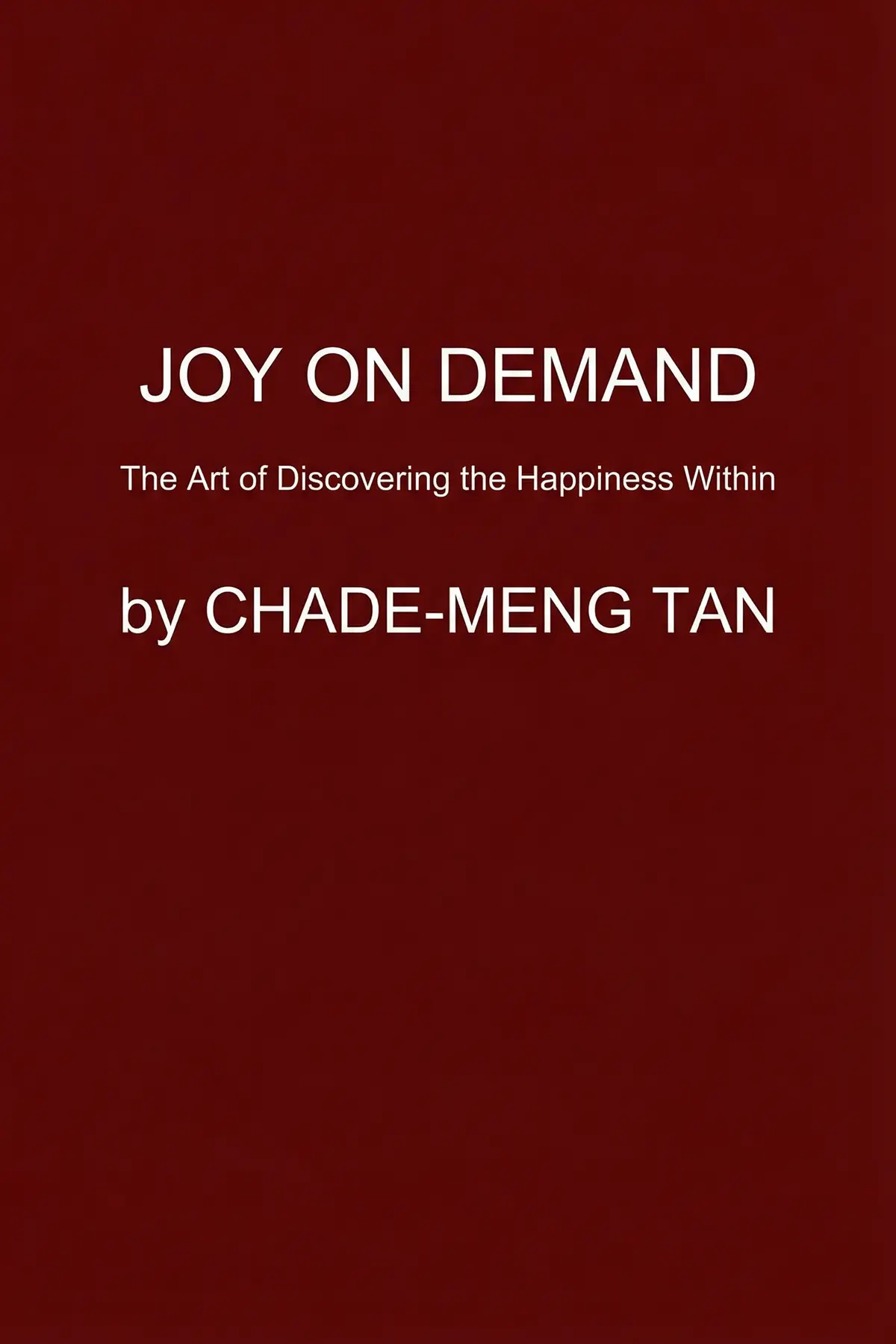
Table of Content
1. Introduction
1 min 22 sec
How would you describe your current state of happiness? For many, the answer depends entirely on how the morning started or whether work is going well. We often view joy as a visitor that arrives unannounced and leaves just as quickly. But what if joy wasn’t a guest, but a skill you could master? What if you could access a state of profound well-being as easily as you might flip a light switch?
In this exploration of Chade-Meng Tan’s insights, we dive into the idea that mindfulness is far more than a tool for managing stress or improving focus at the office. While those are certainly valuable outcomes, the deeper potential of meditation lies in its ability to fundamentally shift your baseline of happiness. It is about moving from a life where joy is accidental to a life where joy is on demand.
Throughout this journey, we will see how the mind functions much like the body. Just as you wouldn’t expect to run a marathon without training your muscles, you shouldn’t expect to live a life of bliss without training your brain. We will look at why our emotional levels often feel stuck, how the smallest moments of attention can trigger physiological changes, and why becoming familiar with the tiniest slices of happiness can lead to a massive transformation in your quality of life. By the end, you’ll see that the path to a more fulfilling existence doesn’t require a total life overhaul or a retreat to a mountain—it requires a new way of breathing, thinking, and noticing the world around you.
2. The Static Nature of Happiness and the Power of Training
2 min 23 sec
Why do we always seem to return to the same emotional baseline regardless of our life’s highs and lows? Explore the science of adaptation and the mental exercises that can break the cycle.
3. Building the Foundation of Calm and Resilience
2 min 21 sec
Meditation offers more than just a quiet moment; it builds the emotional armor needed to handle life’s inevitable setbacks with grace and clarity.
4. Reaching the Joy Point and the Path to Habituation
1 min 59 sec
Is it possible for meditation to become self-sustaining? Discover the ‘Joy Point’ and how quickly your brain can begin to benefit from consistent practice.
5. The Infinite Power of a Single Mindful Breath
2 min 05 sec
How much impact can one breath truly have? Learn how a few seconds of focus can reset your nervous system and boost your performance in high-pressure situations.
6. Anchoring the Mind and the Art of True Rest
2 min 09 sec
Learn the two primary methods for settling a busy mind: finding a focus point and the surprising challenge of doing absolutely nothing.
7. Familiarizing the Mind with Thin Slices of Joy
2 min 08 sec
Happiness is often hidden in plain sight. Discover how to train your brain to spot the small moments of delight that you usually ignore.
8. Healing the Heart through Compassion and Kindness
2 min 11 sec
Negative emotions don’t have to be suppressed. Learn how to transform your mood by wishing others well and befriending your inner ‘monsters.’
9. Conclusion
1 min 28 sec
As we conclude this journey through the principles of Joy on Demand, the most important takeaway is that your current level of happiness is not your destiny. Through the simple, consistent application of mindfulness, you have the power to reshape your internal world. We’ve seen that while genetics and life circumstances play a role, the real driver of long-term well-being is mental training. Like any other form of fitness, it requires a commitment to the process, but as we’ve explored, the ‘Joy Point’ makes that commitment increasingly easier to keep.
You now have several practical tools at your disposal. You can utilize the power of a single mindful breath to reset your nervous system during a stressful day. You can use anchors like your breath or sounds to settle the ‘snow globe’ of your mind. You can hunt for those thin slices of joy in the everyday moments of life, and you can transform your mood by wishing happiness for the strangers you pass on the street.
The final piece of advice to carry with you is to be gentle with yourself. Avoid the trap of approaching meditation with ‘iron discipline’ or as another task to be conquered. Joy cannot be forced; it must be invited. If you find your mind wandering or if you miss a day of practice, simply notice it and start again with the next breath. By letting go of the pressure to perform, you create the space for genuine happiness to arise. The joy you are seeking isn’t over the horizon; it is right here, waiting to be noticed, one breath at a time.
About this book
What is this book about?
Have you ever wondered if your level of happiness is fixed? Many of us feel like our moods are at the mercy of our circumstances, yet there is a profound way to reclaim control. Joy on Demand explores the intersection of mindfulness and emotional well-being, suggesting that happiness is not a lucky accident but a trainable skill. Drawing on the logic of an engineer and the wisdom of a meditation practitioner, the book provides a roadmap for accessing peace and delight at any moment. This summary breaks down the process of strengthening the mind’s natural capacity for joy. You will learn how to transition from a static baseline of happiness to an upward spiral of emotional health. By implementing brief but powerful exercises—some as short as a single breath—you can cultivate resilience against stress and develop a deep sense of calm. The promise is simple: by making joy familiar, you make it inevitable, transforming your daily life into a series of meaningful, joyful experiences.
Book Information
About the Author
Chade-Meng Tan
Chade-Meng Tan began his career as an engineer before gradually discovering his spiritual side. As a best-selling author and the creator of a number of wildly popular mindfulness courses, he now shares his insights about joy with people around the world.
Ratings & Reviews
Ratings at a glance

What people think
Listeners find the work an incredible and accessible guide that offers motivation for mindfulness and enhances their overall temperament and perspective. The content is infused with gentle wit and high utility, as one listener points out its ability to simplify intricate techniques. They further value the profound observations, with one listener emphasizing the clear descriptions and the book's capacity to produce instant life improvements; one listener specifically noted how the advice supported them through the sorrow and pain of a divorce.
Top reviews
Wacharapol
After hearing so much about the 'thin slices of joy' concept on various blogs, I finally picked this up to see if it lived up to the hype. It did. Chade-Meng Tan has this incredible ability to take the intimidating world of meditation and strip away all the mystical fluff. As an engineer, I love that he treats the mind like a system that can be optimized through simple, repeatable exercises. He doesn't demand hours of your time. Instead, he focuses on those tiny moments—like the first sip of tea or the feeling of a warm breeze—and shows you how to lean into them. The book is filled with a light-hearted humor that makes the practice feel less like a chore and more like a gift. It has genuinely improved my daily disposition.
Show moreSomchai
Wow, this was exactly what I needed while navigating the messy aftermath of a difficult divorce. I was drowning in grief and felt like joy was something that happened to other people, not me. Meng’s approach is so light-hearted and practical that it actually felt achievable even on my darkest days. He doesn't ask for much, just a few seconds to notice the good, and that small shift has changed my entire outlook. The way he distills complex practices into simple, engineer-style instructions is brilliant. It’s not about being a perfect monk or achieving total silence. It’s about being a happy human being in the middle of a chaotic world. I've already recommended it to three friends.
Show moreMatteo
Finally, a meditation book that doesn't demand you sit in a cave for three hours a day to see results! Meng’s 'minimum effort' philosophy is a breath of fresh air for those of us with busy lives and short attention spans. He focuses on 'accessing joy on demand' by training the mind to recognize the good that is already there. I loved the section on creativity and how a relaxed mind triggers alpha waves. It’s fascinating stuff. The book is filled with heart, and despite the Silicon Valley backdrop, Meng comes across as a truly sweet person who wants to help the world. It’s practical, it’s funny, and most importantly, it actually works. This book has definitely improved my mental health.
Show moreCaleb
Tan’s writing style is definitely unique, blending a high-tech Google background with ancient Buddhist practices in a way that feels surprisingly accessible. I appreciated how he distinguishes between different types of joy, specifically pamojja, piti, and sukha, without making it feel like a dry academic lecture. The humor is a nice touch, though I can see how his frequent references to his success at Google might rub some people the wrong way. To be fair, his 'engineering' perspective on mindfulness is what makes the book stand out in a crowded market. It’s a very practical guide that provides immediate rewards for your life. While some sections felt a bit like filler, the core message about inclining the mind toward happiness is incredibly powerful and well-worth the read.
Show moreSiriporn
Practicing mindfulness always felt like a chore until I stumbled upon the marathon analogy Tan uses to explain why we shouldn't get discouraged. He points out that you wouldn't expect to run 26 miles on your first day of training, so why expect a perfectly calm mind immediately? This insight alone was worth the price of the book. I really enjoyed the transition from his previous work, Search Inside Yourself, into this more joy-focused approach. The exercises are simple enough to do at a desk or while walking to your car. My only real complaint is that the writing can be a bit repetitive at times. However, for anyone who wants a more earthly, practical look at how to be happy, this is a solid choice for your nightstand.
Show moreSophia
As someone who finds most spiritual guides way too cryptic, I appreciated how Meng breaks down complex terms into plain English. He has this way of bringing clarity to the persistent ambiguity that often surrounds meditation teachers. The chapter on the temporal nature of joy and how to handle pain within a joyful framework was particularly eye-opening for me. I did find the over-emphasis on joy as the 'default' state of the mind a bit questionable, as I tend to value equanimity and peace more than high-vibrational joy. Still, the practical tips on cultivating loving-kindness and altruistic joy are excellent. It is a very amusing guide that succeeds in making the 'uncomfortable unknown' feel a lot less scary for a novice like me.
Show moreParichat
Picking up where 'Search Inside Yourself' left off, this sequel feels more personal and focused on the end state of happiness rather than just corporate productivity. I really appreciated the additional layer of research and the anecdotes from meditation masters that Meng has interviewed over the years. He has a knack for distilling their 'zen' answers into something an ordinary person can actually use. The book provides great inspiration for a daily mindfulness practice, especially the idea of 'inclining' the mind toward joy. It’s a very practical, easy read that has helped me manage stress much more effectively. If you can get past the occasional Silicon Valley name-dropping, there is a wealth of wisdom to be found in these pages.
Show moreSangduan
The audiobook version was a bit of a struggle because the narrator’s tone felt overly chirpy and disconnected from the depth of the material. It made the whole experience feel a bit like a cartoon, which is a shame because there are some genuinely insightful nuggets hidden in here. To be fair, the book feels like it could have been a long essay rather than a full-length publication. There is a lot of repetition that makes it hard to stay engaged for long periods. However, the breakdown of the three types of joy—gladness, uplifting joy, and wholesome joy—was actually quite useful for my personal practice. It’s a decent introductory text, but seasoned meditators might find it a bit too shallow and cluttered with anecdotes.
Show moreDaranee
To be fair, the core idea of noticing small positive moments is brilliant, but I’m not sure you need a whole book to explain it. I found myself skimming through a lot of the stories about Google and the author's wealth, which felt more like bragging than helpful context. There’s a lot of filler here. On the positive side, his explanation of 'effortless effort' is one of the better ones I’ve read. He manages to make the concept of anatta, or the 'self as a process,' feel less abstract and more relatable. It’s a mixed bag for me. While the exercises are helpful and the tone is friendly, the lack of tight editing makes it a frustrating read at times.
Show moreBae
Is it just me, or does this book feel like a massive brag-fest about being a wealthy engineer at Google? I really wanted to like the concept of 'thin slices of joy,' but the author spends so much time talking about his Silicon Valley status that the message gets totally lost. He even admits in one chapter that he didn't really 'write' the book, but that the layout just came to him in a flash of inspiration. Truth is, it shows; the structure is a complete mess. It’s neither a secular guide nor a deep dive into Buddhism, leaving it in this awkward middle ground that feels like fluff. If you are looking for actual meditation instruction, skip this and just search for a summary online.
Show moreReaders also enjoyed
A New Earth: Awakening to Your Life’s Purpose
Eckhart Tolle
Aflame: Learning from Silence
Pico Iyer

Aware: The Science and Practice of Presence
Daniel Siegel
Be Here Now
Ram Dass

AUDIO SUMMARY AVAILABLE
Listen to Joy on Demand in 15 minutes
Get the key ideas from Joy on Demand by Chade-Meng Tan, plus 5,000+ more titles in English and Thai.
- 5,000+ titles
- Listen as much as you want
- 7-day free trial
- Cancel anytime







