
1929: Inside the Greatest Crash in Wall Street History--and How It
Andrew Ross Sorkin
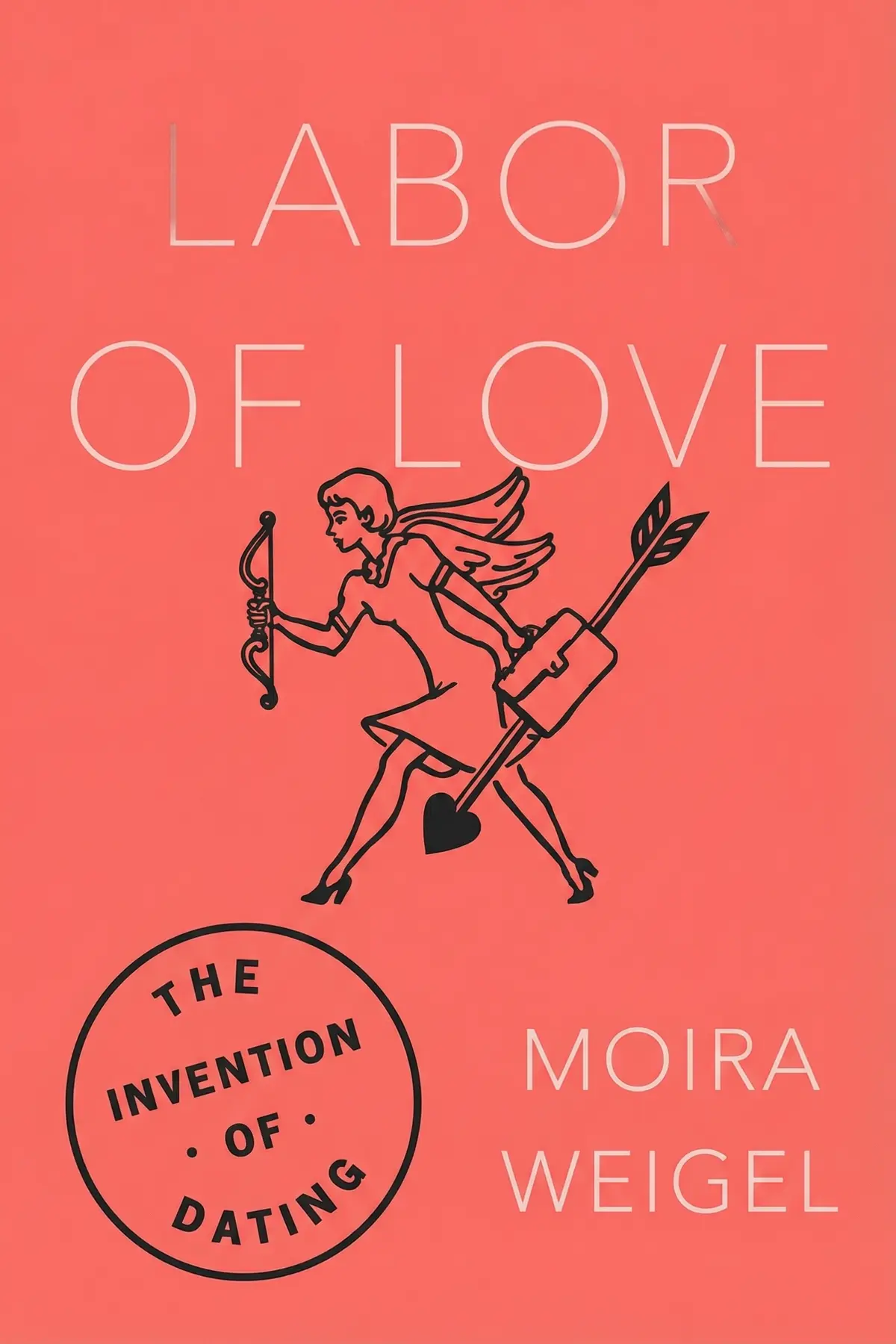
Labor of Love explores how dating evolved from a monitored ritual to a modern economic marketplace, revealing how social shifts and financial changes have reinvented the way we pursue romantic connections.
1 min 44 sec
When we pick up our phones today to scroll through a list of potential partners, we often feel like we are participating in something entirely new. We think of ourselves as the first generation to treat romance like a digital catalog, where a simple gesture can lead to a lifetime connection or just a brief encounter. But if we pull back the curtain on history, we find that the way humans find love has always been in a state of flux, constantly being reshaped by the tools, the economy, and the social pressures of the time. Dating, as we understand it, is actually a relatively modern invention—a form of labor that reflects the changing world around us.
In this exploration of the history of courtship, we are going to look at the throughline that connects the nineteenth-century parlor to the modern smartphone. We will see how the movement of people into bustling cities created the need for new social rules and how the rise of consumer culture turned our personal tastes into our romantic calling cards. We aren’t just looking at a timeline of who dated whom; we are examining how the very concept of love was industrialized, politicized, and eventually digitalized.
By understanding where these rituals came from, we can start to see our own romantic lives in a new light. We begin to realize that the anxiety of a first date or the confusion of a mixed signal isn’t just a personal failing—it’s part of a long-standing history of people trying to navigate the complex intersection of private feelings and public expectations. As we walk through these shifting eras, from the 1900s to the AIDS crisis and beyond, we will uncover why we call it the dating market and what that really says about the work we do for love.
2 min 05 sec
Discover how the migration of young women into urban centers during the Industrial Revolution moved courtship from the supervised home into the unpredictable public sphere.
1 min 55 sec
See how early twentieth-century department stores transformed romantic identity into a series of consumer choices, turning personalities into carefully curated brands.
2 min 06 sec
Explore how those excluded from traditional dating norms, including gay individuals and Black domestic workers, created ingenious secret languages and social events to find love.
1 min 58 sec
Learn why the mid-century trend of ‘going steady’ terrified parents and served as a rehearsal for adult life, mixing traditional values with new forms of intimacy.
2 min 04 sec
Examine how the 1960s and 70s dismantled old dating rules in favor of free love, and how magazines turned this new liberty into a marketable lifestyle.
2 min 16 sec
See how the AIDS crisis of the 1980s ended the era of casual sex and forced a new, life-or-death level of transparency into the dating world.
1 min 37 sec
As we look back over the century, it becomes clear that dating has never been a static or simple activity. It is a mirror held up to the economy and the social values of each era. We have seen it transform from a family-governed domestic ritual into a public urban adventure, then into a consumerist marketplace, and finally into a high-stakes arena of personal health and digital self-marketing. The throughline is unmistakable: dating is labor. It takes time, energy, and a constant adaptation to the world around us.
When you find yourself frustrated by a dating app or confused by modern relationship labels, it helps to remember that you are participating in a long tradition of people trying to find connection in a world that is often designed for production and consumption. The pressure we feel to brand ourselves or to treat our partners like products isn’t just a personal choice; it’s a result of over a hundred years of economic shifts.
The takeaway from this history is not that romance is dead or that the market has ruined love. Rather, it’s an invitation to be more conscious of the work we are doing. By understanding the forces that shaped our dating habits, we can start to reclaim our own agency. We can recognize when we are acting as consumers and when we are truly seeking connection. Ultimately, the history of dating teaches us that while the methods and the marketplaces will continue to change, the human desire to be seen and known remains the core motivation behind all that labor of love. As you move forward, consider how you can bring more intention and less ‘market’ into your own search for connection.
Have you ever wondered why we describe our romantic pursuits as being on the market? In Labor of Love, the history of courtship is peeled back to reveal that dating has never just been about chemistry; it has always been about economics and labor. From the industrial centers of the late nineteenth century to the digital interfaces of the twenty-first, the way we find partners is a reflection of the world’s shifting power structures. This summary provides a deep dive into the cultural milestones that changed romance forever. You will see how the rise of the city took courtship out of the family parlor and onto the streets, how the consumer boom turned personalities into products, and how various social revolutions redefined what it means to be steady or free. It is a journey through the evolution of intimacy, showing that the work we put into finding love is often a mirror of the work we do to survive in society.
Moira Weigel is an American writer and a PhD candidate at Yale University. Her insightful commentary and research have been featured in prominent publications such as The New York Times and The Guardian. She specializes in the intersection of culture, history, and social dynamics.
Listeners describe this book as a gripping listen that offers deep research and captivating anecdotes about the evolution of dating. The prose is quite immersive, with listeners often calling the material hilarious. When it comes to the specific vocabulary used, listeners express a variety of conflicting opinions.
This book is a revelation for anyone who has ever felt exhausted by the modern "romance" industry. Weigel argues that dating is essentially a form of unpaid labor, and her materialist perspective is absolutely brilliant. I loved how she skewered the self-help movement for turning relationships into a series of strategic maneuvers and marketing tactics. It’s hilarious in a dark way, especially when she details how early 20th-century authorities viewed women accepting dinner from men as a form of solicitation. The research is impeccable, covering everything from the rise of coed schools to the way the internet has carved out new lifestyle niches. Personally, I think this should be required reading for anyone before they’re allowed to download a dating app. It gives you the historical context to realize that the "good old days" were never actually that simple.
Show moreWow. I didn't think a book about the history of dating could be this profound. Weigel treats "love" not as some mystical force, but as something shaped by money, labor, and technology. The title "Labor of Love" is so clever once you realize she’s talking about the literal work women do to be "dateable." I found the sections on the 1950s "going steady" culture and the 1970s economic downturn particularly illuminating. She has this way of taking these everyday concepts and stripping them back to reveal the power structures underneath. Truth is, it’s refreshing to read something that isn’t trying to sell me a "method" for finding a husband. It’s just a sharp, critical, and often funny look at why we act the way we do. It’s intellectual but accessible, and the research feels incredibly thorough.
Show morePicked this up because the title caught my eye, and frankly, I’m glad I did. It’s an incredibly smart look at how dating shifted from supervised visits in parlors to "going out" in public spaces. Weigel connects the dots between economic changes and romantic habits in a way that feels fresh. It isn't just a list of dates and facts; she explores how dating became a literal marketplace where women had to market themselves. To be fair, it gets a bit bogged down in academic jargon toward the middle, which might slow some people down. However, the anecdotes about the first "daters" being treated like criminals by the police were eye-opening. If you want to understand why dating feels like a second job, this is the book for you. It’s light-years ahead of those mindless self-help guides that tell you how to play games.
Show moreAs someone who is currently wading through the nightmare that is online dating in my 30s, reading this was strangely cathartic. Moira Weigel has a great wit that shines through even when she’s discussing heavy topics like the wage gap or the AIDS epidemic. She makes a compelling case that dating has always been a reflection of the labor market. The transition from the "stay-at-home" courtship of the 19th century to the "shop girl" era was fascinating to read about. My only real gripe is that the book feels a little unfinished. She does a magnificent job explaining how we got to this point, but I was left waiting for a final "so what?" that never quite materialized. Still, it’s a very smart, well-researched book that makes you look at every dinner date you’ve ever been on through a completely different lens.
Show moreFinally finished this and it’s basically everything I wanted Aziz Ansari’s book to be but with more intellectual weight. It’s a fascinating blend of anthropology and history that focuses on how women’s roles in the workplace have shaped how we find partners. The way Weigel discusses "consumer pleasure" as a driver for romance is both cynical and incredibly accurate. I especially appreciated the inclusion of how African American women’s history offers a necessary counter-perspective to the typical "liberation" narrative of the 60s. That said, the book is quite U.S.-centric and stays mostly within middle-class boundaries. It’s a very polished, academic work that manages to be entertaining most of the time, even if it does get a little dry when discussing the technicalities of economic shifts. A strong four-star read for history buffs.
Show moreMoira Weigel has a sharp eye for detail, and she uses it to dismantle our romantic assumptions. This book isn't about giving advice; it’s about showing how the very idea of a "date" was a radical invention born out of women entering the workforce. Look, if you’re looking for a juicy tell-all or a spicy history, this isn't it. The tone is very much that of a social scientist. But if you want to understand the intersection of gender roles and the economy, it’s brilliant. The book highlights how women were often arrested just for being out in public with men, which is a wild piece of history I never knew. It drags a bit when she gets into the internet age, perhaps because we’re all living it and it feels less "historical," but the overall journey is well worth the time.
Show moreEver wonder why we call them "dates" in the first place? This book answers that, tracing the term back to calendar entries made by working women in the early 20th century. It’s a solid piece of social science, though I found the scope a bit too narrow for my liking. The author even admits that the research focuses primarily on white, middle-class, heterosexual couples, which leaves out so much of the American experience. While the sections on the 1960s sexual revolution and the impact of the AIDS crisis in the 80s were compelling, the writing style can be quite dry. Sometimes the sentences were so long and packed with academic vocabulary that I had to read them twice just to find the point. It’s informative, but definitely not a light history. I wanted more diverse perspectives and maybe a clearer conclusion on where we go from here.
Show moreThe chapter on the early 1900s was easily the most interesting part of this book. Seeing the direct historical link between dating and prostitution—where women traded their company for meals or movie tickets—was a total "aha" moment for me. It explains so much about the gender dynamics we still struggle with today. However, the book didn't maintain that level of engagement for the whole duration. Once it got into the later decades, it felt like it was just checking boxes of major historical events without adding enough new insight. The prose is definitely on the scholarly side, and there were several sections where I felt the author was being overly wordy just for the sake of it. It’s a good resource if you need the history, but it's not exactly a page-turner. I’d recommend it to people with a specific interest in feminism or sociology.
Show moreAfter hearing a lot of hype about this one, I have to say I’m a bit torn. On one hand, the research is top-notch and the premise is fascinating—treating dating as a form of labor is a great hook. On the other hand, the execution felt a bit uneven. Some chapters are vibrant and full of personality, while others feel like a chore to read through because of the dense vocabulary and academic framing. To be fair, she covers a lot of ground, from the 1900s to the present day, but the lack of a strong concluding argument left me feeling a bit unsatisfied. It felt like a collection of very good essays that didn't quite coalesce into a single, powerful message. It’s definitely a "thinker’s" book, but it could have benefited from a bit more editing to make the sentence structure more fluid.
Show moreNot what I expected at all, and to be honest, it was a bit of a slog. Based on the title and the subject matter, I was hoping for something a bit more scintillating or at least fast-paced. Instead, what I got was a very dense, dry academic treatise that felt more like a sociology textbook than a cultural history. The vocabulary is needlessly complex, and the author’s thoughts are occasionally difficult to follow due to poor phrasing and a lack of well-placed commas. While the historical facts about the origins of dating are interesting, they are buried under layers of theory that just didn't hold my attention. If you’re a graduate student in gender studies, you’ll probably love this, but for the casual reader looking for an engaging narrative, it misses the mark. It felt like work to get through—which I suppose fits the title—but not in a good way.
Show moreAndrew Ross Sorkin
Pankaj Mishra

Fay Bound Alberti

Ben Macintyre
Ron Chernow
Philip Freeman
Michael Axworthy
AUDIO SUMMARY AVAILABLE
Get the key ideas from Labor of Love by Moira Weigel, plus 5,000+ more titles in English and Thai.







