
27 min 45 sec
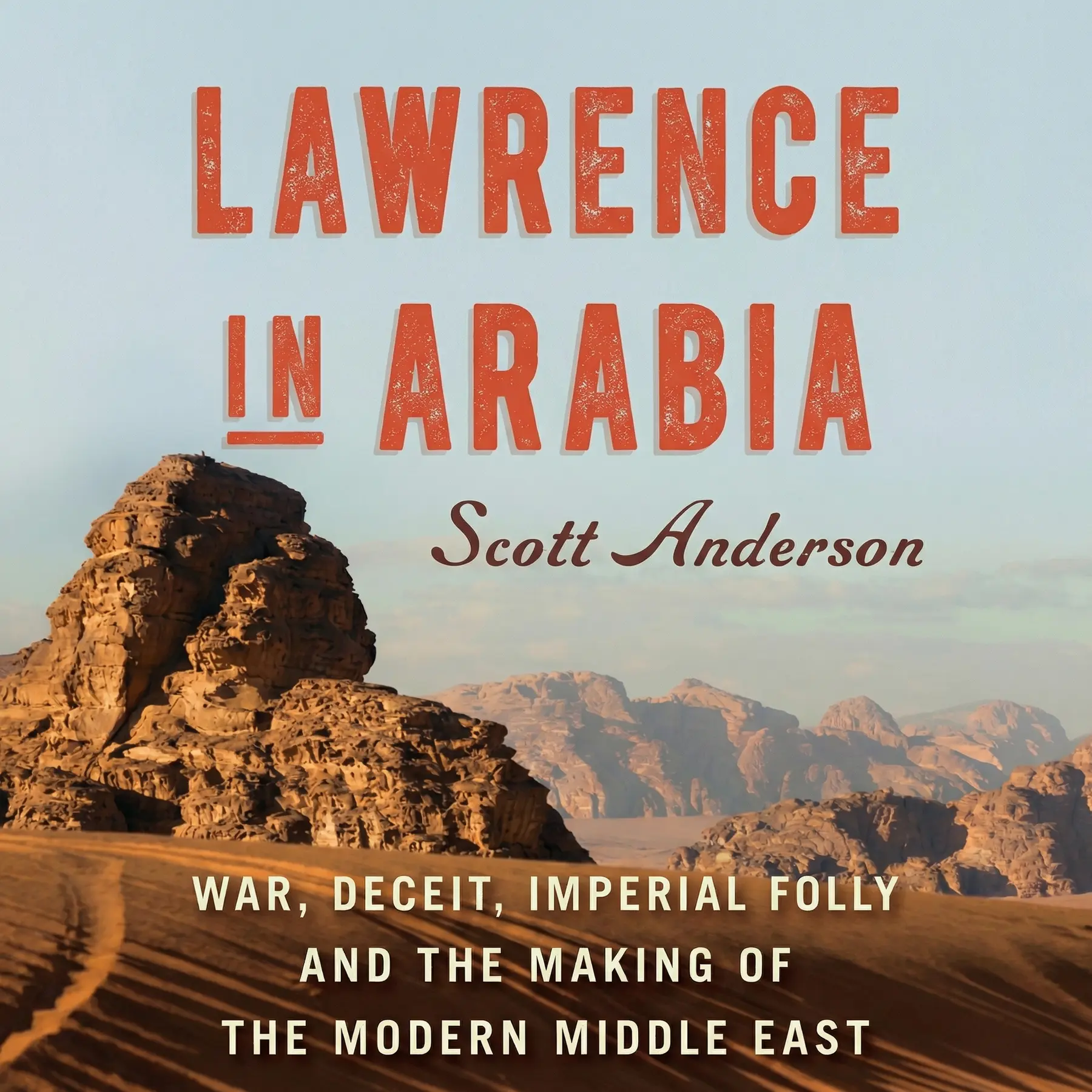
Lawrence in Arabia: War, Deceit, Imperial Folly and the Making of the Modern Middle East
A gripping historical narrative exploring how the clandestine actions of T.E. Lawrence and three other unlikely figures during World War I reshaped the Middle East, laying the groundwork for a century of conflict.
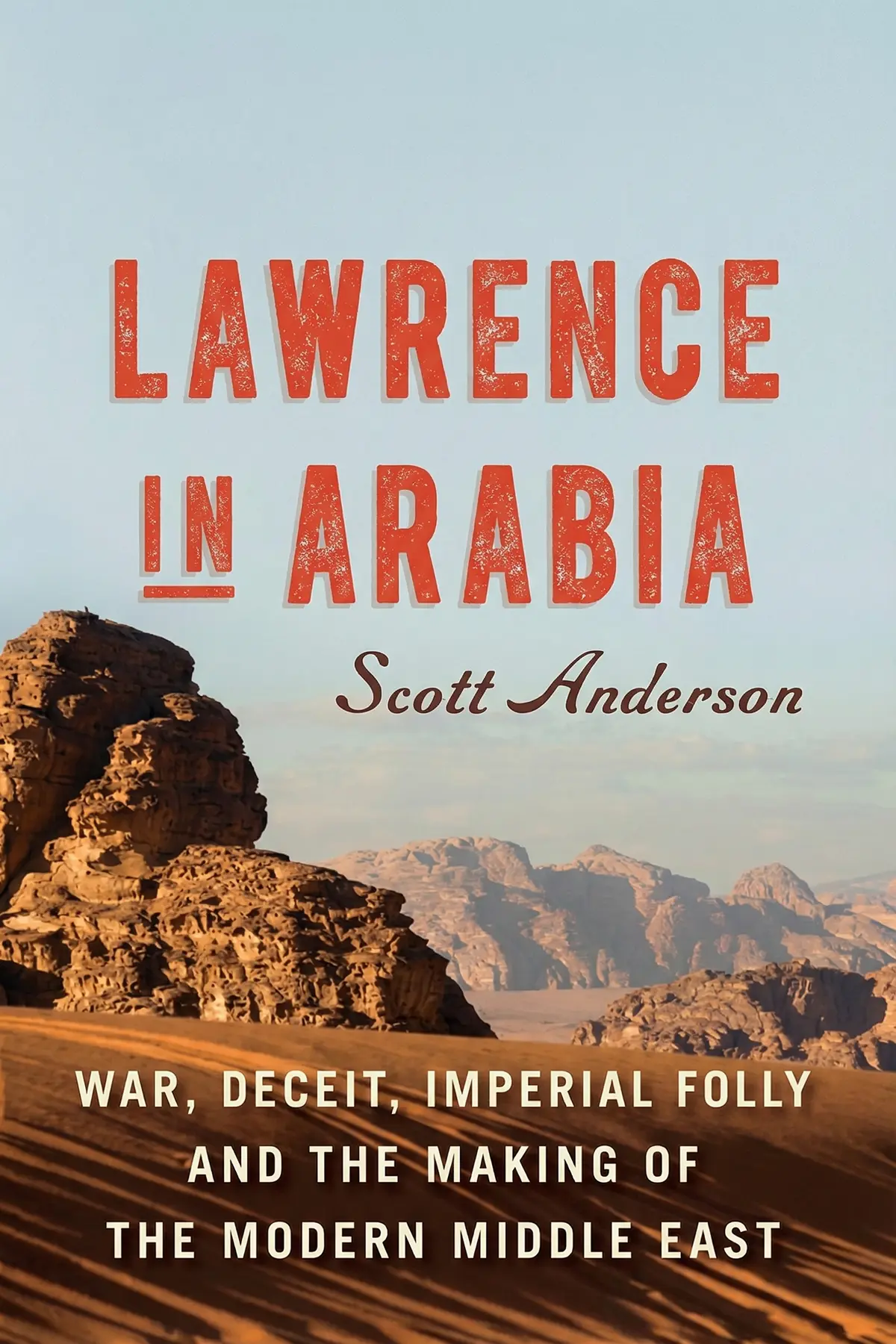
Table of Content
1. Introduction
1 min 44 sec
History is rarely the tidy progression of events found in schoolbooks; instead, it is a messy, unpredictable tapestry woven by individuals who often have no idea how their private obsessions will eventually alter the globe. When we look at the modern Middle East—a region defined by its complex borders, intense nationalisms, and long-standing grievances—we are seeing the aftereffects of a storm that broke a century ago. At the center of that storm was the First World War, a global cataclysm that saw the final collapse of the four-hundred-year-old Ottoman Empire.
In this exploration of Lawrence in Arabia, we are going to move past the cinematic myth of the lone hero in white robes to see a much larger and more intricate picture. While Thomas Edward Lawrence is certainly our primary guide, his story is inseparable from three other men who were operating in the same theater of war, each with their own secret agendas and conflicting loyalties. We will follow Curt Prüfer, the German academic who became a master of subversion; Aaron Aaronsohn, the brilliant agronomist who risked everything for a Jewish homeland; and William Yale, the American oil scout who became a spy by happenstance.
Through their eyes, we will witness the birth of modern insurgency, the cold calculations of imperial diplomacy, and the tragic betrayal of local aspirations. This is not just a story of battles in the sand; it is a story of how small, chance encounters and deeply personal traumas can snowball into the geopolitical realities that define our current world. As we navigate through these shifting sands, we will see how the foundations of the modern Middle East were laid not just with blood and steel, but with ink, deception, and the immense weight of colonial ambition.
2. The Academic Roots of a Desert Legend
2 min 05 sec
Before he was a warrior, T.E. Lawrence was an eccentric scholar whose obsession with medieval castles and Syrian history provided him with a unique advantage in the desert.
3. A Quartet of Differing Ambitions
2 min 20 sec
The destiny of the region was shaped not only by Lawrence, but also by a German spy, a Zionist scientist, and an American oil man.
4. The Fragile State of the Ottoman Empire
2 min 03 sec
Once a global superpower, the Ottoman Empire entered the twentieth century as a crumbling mosaic of ethnic and religious tensions.
5. The Ignored Warning and the Gallipoli Disaster
2 min 05 sec
Lawrence’s strategic foresight was initially dismissed by British high command, leading to one of the most tragic military failures in history.
6. A Web of Corporate and Political Deceit
2 min 00 sec
William Yale’s oil-seeking mission reveals the cynical marriage of business and war that characterized the era.
7. The Birth of the Arab Revolt
2 min 04 sec
Seeking an edge against the Turks, Britain entered into a delicate and ultimately dishonest negotiation with Arab leadership.
8. The Shadow of Sykes-Picot
1 min 50 sec
While Lawrence fought in the desert, a secret agreement between Britain and France was already carving up the future Middle East.
9. The Tragic Courage of the NILI Spy Ring
2 min 04 sec
In Palestine, Aaron Aaronsohn’s secret intelligence network provided the British with vital information at a terrible personal cost.
10. The Strategic Triumph at Aqaba
1 min 57 sec
By leading a daring and unconventional desert crossing, Lawrence proved that the Arab forces were a legitimate military power.
11. The Darkening Path to Damascus
2 min 05 sec
The final year of the war saw Lawrence descend into a cycle of violence and trauma that forever changed his character.
12. The Betrayal at the Peace Table
1 min 52 sec
The Paris Peace Conference of 1919 ignored the realities on the ground, favoring imperial interests over regional stability.
13. A Legacy of Broken Heroes
1 min 55 sec
The war’s end left Lawrence a broken man, a symbol of a generation haunted by the consequences of their actions.
14. Conclusion
1 min 41 sec
The story of T.E. Lawrence and his contemporaries in the Middle East is a profound case study in the unintended consequences of history. We see four men who entered the region with specific, often idealistic goals: a scholar looking for architectural truth, a scientist seeking a homeland for his people, a businessman looking for resources, and a spy seeking to serve his country. Yet, by the time the dust of World War I had settled, they had all been transformed by the brutal realities of power politics and the sheer scale of the human suffering they witnessed.
What this narrative really shows us is that the modern Middle East was not an inevitable creation, but the result of a series of choices—many of them made in bad faith or out of profound ignorance. The betrayal of the Arab Revolt and the subsequent partitioning of the region by Britain and France created a structural instability that has persisted for over a hundred years. The lesson for us today is that ignoring local realities in favor of grand strategic or economic interests rarely leads to a lasting peace.
As we reflect on the life of Lawrence, we are reminded of the heavy burden of responsibility that comes with intervention. He was a man who tried to play a double game, serving his country while also trying to protect his friends, only to realize that in the world of imperial diplomacy, such a balance is impossible to maintain. The ‘tragedy’ William Yale spoke of is still unfolding. By understanding the flawed foundations upon which the modern Middle East was built, we can perhaps gain a better perspective on the complexities of the current era. History, as Lawrence discovered, is not something we simply study; it is something that can consume us if we do not handle its power with care and honesty.
About this book
What is this book about?
Lawrence in Arabia explores the turbulent birth of the modern Middle East through the lives of four disparate men operating in the region during World War I. While the world remembers Thomas Edward Lawrence as the legendary desert warrior who united Arab tribes against the Ottoman Empire, he was not acting in a vacuum. Scott Anderson weaves Lawrence’s story together with three other figures: Curt Prüfer, a German scholar-turned-spy; Aaron Aaronsohn, a Zionist scientist running a risky intelligence ring; and William Yale, a fallen American aristocrat seeking oil and influence. This account moves beyond the myth-making of Hollywood to reveal a landscape defined by imperial greed, broken promises, and the clash of individual idealism against cold geopolitics. By examining the secret negotiations of the Sykes-Picot Agreement and the grueling military campaigns across the desert, the narrative explains how the decisions made by a handful of individuals—and the empires they served—transformed a decaying Ottoman territory into a volatile region of fractured states. It offers a profound look at how personal trauma and political deception forged the modern world’s most enduring geopolitical challenges.
Book Information
About the Author
Scott Anderson
Scott Anderson is a seasoned journalist and war correspondent with extensive experience reporting from global conflict zones, including Lebanon, Israel, Bosnia, and El Salvador. His deep expertise in international affairs is reflected in his contributions to high-profile publications such as The New York Times Magazine, Esquire, and Vanity Fair. In addition to Lawrence in Arabia, his body of work includes acclaimed titles like The Man Who Tried to Save the World and The 4 O’Clock Murders, reflecting his ongoing interest in the intersection of individual biography and historical crisis.
Ratings & Reviews
Ratings at a glance
What people think
Listeners find the book remarkably easy to read and value the extensive research that reveals fresh facts, with one noting it feels like a thriller novel. The writing is superbly composed; one listener specifically mentions how it illustrates the many contradictions surrounding the subject. It is hailed as an authoritative history of World War 1, featuring an engrossing narrative that keeps the audience engaged. This detailed report receives favorable reviews, especially for its in-depth look at specific individuals. While some listeners find the pacing swift, others observe that it can lag at times.
Top reviews
Satit
The sweeping scope of this narrative is nothing short of breathtaking. Most people know the movie, but Anderson reveals the gritty, duplicitous reality of the Arab Revolt that David Lean’s lens missed. By focusing on four wildly different characters—like the Zionist spy Aaronsohn and the oil man William Yale—we get a 360-degree view of the collapsing Ottoman Empire. Truth is, the book reads like a high-stakes political thriller rather than a dry academic text. The sentence structures are punchy, keeping the momentum alive even through complex diplomatic betrayals. I was particularly struck by how Lawrence’s own ego often collided with his genuine empathy for the Arab cause. This isn’t just a biography; it’s an autopsy of a region being torn apart by European greed. It is an essential read for anyone trying to understand why the Middle East remains a powder keg a century later.
Show moreDaranee
How is it possible for a non-fiction book to be this gripping? Anderson captures the immense contradictions of T.E. Lawrence—the man was simultaneously a hero and a liar, a strategist and a masochist. The storytelling is cinematic. I felt the heat of the desert and the tension of the raids on the Hejaz railway. What really sets this apart is the context; it explains how the sick man of Europe was carved up by powers that didn't understand the tribal loyalties they were disrupting. In my experience, most history books choose a side, but Anderson is savage toward everyone. He critiques British arrogance just as sharply as he details Ottoman atrocities like the Armenian Genocide. It is a massive undertaking that succeeds because it keeps the human element at the center. Truly, this is the definitive account of the war in the desert.
Show moreAria
Finally finished this beast and I am just stunned. It is rare to find a history book that manages to be both a definitive scholarly resource and a total page-turner. Anderson’s prose is elegant, oscillating between sweeping descriptions of the Arabian landscape and tight, claustrophobic scenes of backroom diplomacy. The way he juxtaposes the idealistic Lawrence with the pragmatic, almost cynical William Yale creates a fascinating tension throughout the narrative. You really feel the weight of the betrayal as the Sykes-Picot agreement comes to light. To be honest, I did not expect to be so moved by the ending, but seeing Lawrence’s decline after the Paris Peace Conference was genuinely affecting. This is a masterful work that treats its subjects as complex humans rather than historical chess pieces. If you only read one book on WWI this year, make it this one.
Show moreSirinat
Few books manage to balance the big picture of history with the intimate details of individual lives as well as this one does. Anderson takes the legendary figure of Lawrence and grounds him in a world of oil, espionage, and crumbling empires. I was fascinated by the story of Sarah Aaronsohn and the Nili spy ring, which added a layer of bravery and tragedy I had not encountered before. The writing style is vivid and descriptive, making the desert treks feel almost tactile. It is a long journey, but it never feels like a chore because the narrative voice is so compelling. You come away with a profound sense of what if regarding the post-war settlements. This book is a haunting, expertly crafted reminder that the past is never truly dead. It is a must-read for any serious student of the 20th century.
Show moreNatalie
Scott Anderson manages a rare feat by making a 500-page history book feel genuinely urgent. Instead of just rehashing the Seven Pillars of Wisdom, he cross-references Lawrence’s exploits with the movements of German spies and American oil interests. It’s a fascinating look at the sideshow of a sideshow. Gotta say, the inclusion of Curt Prüfer provided a much-needed perspective from the other side of the trenches. My only real gripe is that the narrative occasionally gets bogged down in the labyrinthine details of British bureaucracy, which can be a bit of a slog. However, the payoff is worth it. You see the tragedy of Faisal’s dreams and the cold-blooded math of Sykes-Picot in a way that feels visceral. Anderson’s journalistic background shines through in his ability to weave disparate threads into a cohesive, if heartbreaking, tapestry of imperial folly.
Show moreYindee
Ever wonder how the modern Middle East became such a knot? This book provides a clear, if depressing, road map of the wreckage. Anderson brilliantly illustrates the gap between what was promised to the Arabs and what was secretly signed away in London and Paris. The character of Aaron Aaronsohn was a revelation for me; his spy ring's impact on the British success in Palestine is often overlooked in favor of Lawrence’s more flamboyant exploits. Personally, I appreciated the nuanced take on Lawrence’s mental state and his eventual descent into depression. The book does a fine job showing how the trauma of war and the weight of his own deceits broke him. The sentence length varies nicely, keeping the reader on their toes. It is an excellent piece of narrative non-fiction, even if the ending is a foregone conclusion of lost opportunities.
Show moreDome
The research on display here is staggering. Anderson has clearly spent years sifting through primary documents to separate the myth of Lawrence from the reality of the man. What emerges is a portrait of a brilliant but deeply flawed individual who was essentially freelancing his way through a global conflict. Not gonna lie, some of the military maneuvers described were a bit difficult to visualize without a better set of maps. However, the political maneuvering is where the book really sings. The tragedy of Faisal and the blatant greed of the European powers are presented with a sharp, unforgiving clarity. It is a dense read, no doubt about it. But for those who want to see the gears of history turning, this provides a front-row seat. It is a sobering reminder that the decisions made by bored men in suits often have centuries of violent repercussions.
Show moreMethinee
While I am usually wary of journalistic history books, Anderson proves that a reporter’s eye for detail can elevate the genre. He does not just tell you what happened; he makes you feel the stakes of every blown bridge and every forged telegram. The structure is clever, shifting between Cairo, the desert, and the halls of power in London. It is not perfect—I agree with others who felt the narrative could have used a bit more focus on the Arab perspective—but as a study of imperial ego, it is top-tier. The truth is, the book is at its best when it's exposing the deceit and folly mentioned in the title. It is a fast-moving, often brutal account that does not shy away from the horrific realities of the period. A solid four stars for the sheer amount of information conveyed in such a readable fashion.
Show moreCarlos
As a history buff who appreciates deep dives, I found this volume to be a bit of a mixed bag. On one hand, the research is impeccable and Anderson uncovers some genuinely obscure facts about the era. On the other hand, the pacing is quite uneven. There were sections where the momentum stalled completely while we followed William Yale’s oil negotiations. Frankly, I would have traded those chapters for more insight into Faisal or even the inclusion of Gertrude Bell, which felt like a missed opportunity in a book of this scale. The prose is well-crafted, but the shifting perspectives occasionally make it hard to track the geographic layout of the revolt. If you already have a solid foundation in WWI history, you will likely enjoy the granular detail. If you are a novice, though, you might find yourself reaching for a map every ten minutes.
Show moreJack
I really wanted to love this, but it felt like a marathon through deep sand. While the writing is technically excellent, the author’s decision to follow four main protagonists was more distracting than enlightening. I found myself skimming the parts about William Yale just to get back to Lawrence. Look, the guy was a journalist, and it shows in the way he sensationalizes certain moments while glossing over larger geopolitical shifts. The lack of attention given to the actual Arab fighters—beyond their role as Lawrence's supporting cast—is a bit frustrating for a book published in this era. It feels very much like a Great Men history with a modern coat of paint. To be fair, if you want a thriller-style read, this might work for you. For me, it was a repetitive and overly long account that did not bring enough new analysis to the table.
Show moreReaders also enjoyed
A Splendid Exchange: How Trade Shaped the World
William J. Bernstein
A Spy Among Friends: Philby and the Great Betrayal
Ben Macintyre
1491: New Revelations of the Americas Before Columbus
Charles C. Mann
A Year in the Life of William Shakespeare: 1599
James Shapiro
1929: Inside the Greatest Crash in Wall Street History--and How It
Andrew Ross Sorkin
AUDIO SUMMARY AVAILABLE
Listen to Lawrence in Arabia in 15 minutes
Get the key ideas from Lawrence in Arabia by Scott Anderson, plus 5,000+ more titles in English and Thai.
- 5,000+ titles
- Listen as much as you want
- 7-day free trial
- Cancel anytime







