

18 min 03 sec
Leadership BS: Fixing Workplaces and Careers One Truth at a Time
Leadership BS exposes the vast discrepancy between the idealized myths of modern management and the harsh, pragmatic realities of how leaders actually attain and maintain power in the corporate world.
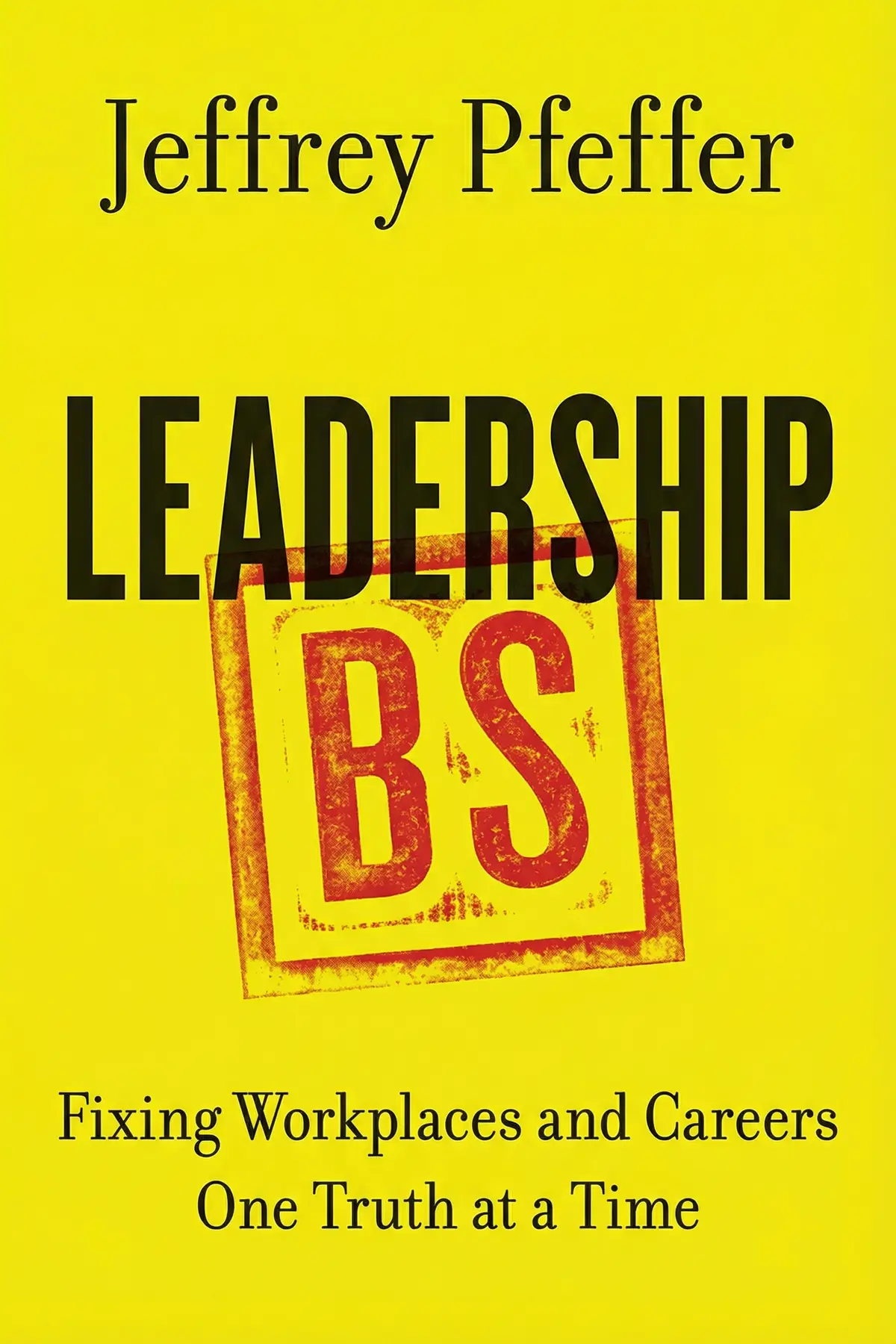
Table of Content
1. Introduction
1 min 53 sec
We live in an era that is obsessed with a very specific image of leadership. If you scan the shelves of any airport bookstore or scroll through business blogs, you will see the same buzzwords repeated over and over again: authenticity, empathy, servant leadership, and modesty. The narrative tells us that to be a great leader, one must be a fundamentally good person who puts others first and remains transparent at all times. It is a comforting, almost religious sentiment. But there is a glaring problem: if these virtues are the keys to success, why do so many workplaces feel dysfunctional, and why do so many leaders seem to behave in ways that are the exact opposite of these ideals?
This is the core question at the heart of our exploration today. We are looking at a perspective that challenges the entire ‘leadership industry’—a multi-billion dollar machine that generates myths rather than results. The reality of professional advancement and organizational survival is often much grittier than the sanitized stories of heroic CEOs. This isn’t about being cynical for the sake of it; it’s about being realistic. By understanding the gap between what we are told leadership should be and what it actually is, we can better protect ourselves and navigate our careers with eyes wide open.
In this summary, we will pull back the curtain on the ‘leadership BS’ that permeates modern business culture. We will examine why self-promotion and even narcissism can be more effective than humility, why the best leaders are often the best actors, and why trust might be a less essential trait than we’ve been led to believe. This throughline suggests that leadership is less about being a saint and more about mastering the pragmatic, sometimes uncomfortable tools of power and influence. Let’s get started by looking at how the myths of leadership are constructed and why they might actually be holding you back.
2. The Myth of the Flawless Leader
2 min 03 sec
Heroic biographies often omit the darker side of success, creating an impossible standard that discourages real growth and masks the reality of corporate life.
3. The Strategic Advantage of Narcissism
1 min 55 sec
Self-confidence and even a healthy dose of narcissism are frequently the qualities that propel individuals to the highest echelons of power.
4. The Theater of Leadership
1 min 58 sec
Authenticity is a popular buzzword, but successful leaders know that professional effectiveness often requires acting and emotional suppression.
5. The Pragmatic Use of Deception
1 min 47 sec
While we are taught that honesty is always the best policy, strategic lying often serves as a tool for managing complex interests and achieving goals.
6. Why Trust is Inessential for Success
1 min 44 sec
Despite the rhetoric surrounding the importance of trust, many successful organizations operate effectively even when the leader’s integrity is doubted.
7. The Self-Preservation of Power
1 min 39 sec
Leaders often prioritize their own job security and the protection of their status over the well-being of their subordinates.
8. The Death of Workplace Loyalty
1 min 35 sec
The traditional idea of reciprocal loyalty between a company and its employees is largely a myth in the modern economic landscape.
9. Watch Actions, Not Words
1 min 46 sec
To understand how leadership truly works, you must ignore the rhetoric and observe the strategic behavior of those in power.
10. Conclusion
1 min 43 sec
As we wrap up our look at the realities of leadership, the main takeaway is a call for realism over idealism. The leadership industry has spent decades selling us a version of management that is high on inspiration but low on actual evidence. By focusing on myths of authenticity and modesty, we’ve created a culture where people are unprepared for the actual dynamics of power. The truth is often uncomfortable: successful leadership frequently involves performance, strategic deception, and a primary focus on self-preservation.
However, understanding these ‘ugly’ truths isn’t about becoming a villain; it’s about becoming more effective. When you realize that leadership is often a role you play, you can learn to play it better. When you accept that loyalty is transactional, you can take better care of your own career. When you see through the sanitized biographies of the ‘greats,’ you realize that being human and having flaws doesn’t disqualify you from making an impact.
Moving forward, the most actionable advice you can take is to use distrust to your advantage. Stop listening to what leaders say and start looking at the data of their past behavior. If a colleague or a boss has a history of breaking commitments, assume they will do it again, regardless of how charming or ‘authentic’ they seem today. Do your homework. Look at the trends in their career and their organizations. By grounding your expectations in observable reality rather than inspiring rhetoric, you will be much better equipped to thrive in the complex, political, and often contradictory world of work. Leadership may not be as pretty as the books say, but once you strip away the BS, you are left with the tools you actually need to succeed.
About this book
What is this book about?
Have you ever wondered why the workplace feels so different from the inspiring stories you read in business magazines? Leadership BS dives deep into this disconnect, revealing that the qualities often praised by leadership gurus—like modesty, authenticity, and unwavering honesty—are frequently absent in those who actually reach the top. This summary explores the uncomfortable truth that successful leadership often requires a calculated use of power, politics, and even strategic deception. Instead of offering feel-good theories, the book relies on social science and historical examples to show how narcissism, theatrical performance, and a willingness to prioritize self-interest are often more effective for career advancement than being 'nice.' You will learn why the leadership industry is failing to improve workplaces and how a more realistic understanding of human behavior can help you navigate your own career. The promise is a grounded, pragmatic view of leadership that prepares you for the world as it is, rather than how we wish it to be.
Book Information
About the Author
Jeffrey Pfeffer
Jeffrey Pfeffer is a distinguished professor at the Stanford Graduate School of Business. With a career spanning nearly three decades, he is widely recognized as one of the world’s leading authorities on management and organizational power. His extensive research has shaped modern understanding of human-resource management and corporate influence. Pfeffer is also the author of the influential book Power, which provides a detailed roadmap for successfully navigating and wielding influence in professional life.
Ratings & Reviews
Ratings at a glance
What people think
Listeners value this leadership guide for its data-driven methodology and thoroughly researched concepts, and one listener points out that it offers specific statistics to support its claims. The author’s prose is notably honest, which many find creates an engrossing experience. There are varied responses concerning how useful the book is, as some do not find it beneficial, and the speed of the narrative draws split views, with some calling it detached. While the main title gets good reviews, one listener mentions that the subtitle is misleading.
Top reviews
Isabelle
Finally, a business book that doesn't treat you like a gullible child. Jeffrey Pfeffer strips away the veneer of the 'Leadership Industry' to show that what we are taught in seminars rarely aligns with how people actually climb the ladder. The truth is, the data he presents on narcissism and self-interest is genuinely unsettling but impossible to ignore. I appreciated how he used meticulously sourced data to debunk the 'leaders eat last' myth. It's a candid, evidence-based look at the messy reality of power. Some might find his tone a bit abrasive, but it’s a necessary antidote to the usual inspirational fluff. If you want to understand how organizations actually function rather than how they should function in a perfect world, this is essential reading. It provides the cold, hard numbers we often overlook in favor of feel-good anecdotes.
Show moreJom
Ever wonder why the most successful CEOs often behave like absolute jerks? Pfeffer explains this through the lens of psychology and raw data, rather than the usual fairy tales. Not gonna lie, the sections on the 'Stockdale paradox' and the reality of authenticity were eye-opening. We want our leaders to be modest and kind, but the world rewards those who are immodest and self-promoting. It is a bitter pill to swallow. The author’s writing is refreshingly blunt, cutting through the usual corporate jargon that clogs up most business shelves. My only gripe is that the book leans heavily on the dark side of leadership without offering enough of a roadmap for the 'good guys' to survive. Still, the evidence-based approach is a breath of fresh air. It is a must-read for anyone who feels like they are failing because they aren't 'authentic' enough.
Show moreJai
The evidence-based approach here is a breath of fresh air compared to the usual fluff found in the management section. Pfeffer doesn't just give opinions; he provides a wealth of documented cases and psychological principles like implicit egotism to explain why we fall for bad leaders. I loved the critique of 'charismatic leadership' and how it often masks a total lack of competence. The book is well-documented and offers a truly fascinating look at the 'leadership industry' as a profit-driven machine that rarely delivers results. Some readers might find the focus on figures like Bill Gates and Larry Ellison to be a bit much, but they serve as perfect examples of the 'before and after' delusion. This book will fundamentally change how you view your boss and your own career trajectory. It’s easily one of the most important business books of the last decade.
Show moreSamuel
As a veteran of the corporate grind, I found this to be a refreshing, if slightly cynical, splash of cold water. Frankly, the chapter on the cult of authenticity was worth the price of admission alone. Pfeffer argues that being your 'authentic self' is often a luxury that those in high-stakes roles simply cannot afford. While the book is a bit of a rant, it’s a well-documented one that connects back to his earlier work in 'Power.' The writing is sharp and fast-paced, though it occasionally feels like he's beating a dead horse regarding how much he dislikes TED-style talks. I did feel the pacing dragged slightly in the middle, but the conclusion ties the descriptive reality of the workplace together brilliantly. It’s not for the faint of heart or those who want a pep talk.
Show moreIngrid
Pfeffer takes a sledgehammer to the 'feel-good' industry, and it is absolutely fascinating to watch. He challenges the five sacred cows of leadership: modesty, authenticity, truthfulness, trustworthiness, and selfless concern for others. In my experience, he is right that there is a massive disconnect between what we say we want and who we actually promote. The book is empirically grounded and provides a much-needed reality check for anyone entering the workforce. However, the author can be quite repetitive. He makes his point in the first three chapters and then spends the rest of the book providing variations on the same theme. It’s a great read, but you could honestly get the gist of it by reading the intro and the conclusion. Regardless, the evidence-based approach makes it a standout in a crowded field of fluff.
Show moreYuki
Not what I expected from a Stanford professor, but in a mostly positive way. Most academic books are dry and overly cautious, but Pfeffer is out for blood here. He argues that we are failing to create good workplaces because we refuse to look at how leaders actually behave. The sections on how narcissistic CEOs often outlast their peers were particularly enlightening. Look, it’s an uncomfortable read because it forces you to acknowledge that 'behaving badly' is often a functional strategy for career advancement. I wish he had spent more time on how to improve the system rather than just describing its failures. The tone is very similar to 'Bullshit Jobs,' making it a great companion piece for anyone interested in the darker side of organizational psychology. It’s a solid four-star read for the honesty alone.
Show moreThanit
Few books manage to be this uncomfortable and this necessary at the same time. Pfeffer forces you to confront the reality that organizations are often political minefields where the 'nice guys' don't always win. I found the discussion on the 'endowment effect' and ownership to be a brilliant way to explain employee motivation. The writing is candid and fast, though I can see why some might describe the tone as disengaged. It’s as if the author is tired of seeing the same mistakes repeated for forty years. Got to say, the Stockdale Paradox section was a highlight for me. It reminds us that unfounded optimism is often a death sentence in high-pressure environments. If you’re tired of the 'leaders eat last' mantra and want the truth about how to survive your workplace, pick this up. It’s a fascinating, data-driven wake-up call.
Show moreBrooklyn
The title is catchy and the data is solid, but the execution left me feeling a bit disengaged by the halfway point. To be fair, Pfeffer makes an excellent case against the 'feel-good' literature that dominates the market today. He provides plenty of numbers to back up his claims, which is refreshing for a management book. However, the pacing feels repetitive, as if the same points are being hammered over and over in every chapter. I also found the subtitle a bit misleading; he’s much better at pointing out the BS than he is at actually 'fixing' anything. It’s a fascinating read for the first sixty pages, but then it turns into a seemingly endless-looping rant against his colleagues. It’s worth your time if you can skim the middle sections. I expected more actionable solutions from a Stanford professor.
Show moreRatchanee
While I agree with the core premise that most leadership advice is garbage, the author spends too much time throwing rocks at his own peers. Pfeffer is a part of the very system he is blasting, which makes some of his absolute statements feel a bit hypocritical. He rails against inspiration and fables, yet he uses plenty of his own anecdotes to prove his points. To be fair, the research he cites is interesting, especially regarding gender roles and immodesty in the workplace. But after a while, the negativity becomes draining. The book feels like a long-form version of a very good blog post. If you have no time, just read the first and last chapter and it would be enough to get the value. It’s a 3.5-star book for me, rounded down because it lacks a clear path forward for those of us who don't want to be Machiavellian.
Show moreRin
This book is basically just a 200-page rant that borders on being harmful to aspiring managers. Promoting the idea that a successful leader must be a lying, untrustworthy narcissist is a dangerous oversimplification of complex organizational dynamics. Personally, I think Pfeffer is cherry-picking specific scandals and high-profile outliers like Steve Jobs to justify a Machiavellian worldview that doesn't hold up in most professional settings. He engages in what I’d call 'definitionism,' beating down strawmen instead of engaging with the high-quality research that does exist. The writing style is certainly candid, but it feels more like an angry lecture than a scientific inquiry. While it’s good to be skeptical of 'inspirational' TED talks, this book goes too far in the opposite direction. It leaves you feeling cynical and confused rather than empowered. Skip the anecdotal negativity and find a book that offers a balanced perspective on human behavior.
Show moreFeatured in
Readers also enjoyed
A Year with Peter Drucker: 52 Weeks of Coaching for Leadership Effectiveness
Joseph A. Maciariello


Acting with Power: Why We Are More Powerful Than We Believe
Deborah Gruenfeld
60 Seconds & You’re Hired!
Robin Ryan
All In: How Great Leaders Build Unstoppable Teams
Mike Michalowicz
AUDIO SUMMARY AVAILABLE
Listen to Leadership BS in 15 minutes
Get the key ideas from Leadership BS by Jeffrey Pfeffer, plus 5,000+ more titles in English and Thai.
- 5,000+ titles
- Listen as much as you want
- 7-day free trial
- Cancel anytime







