


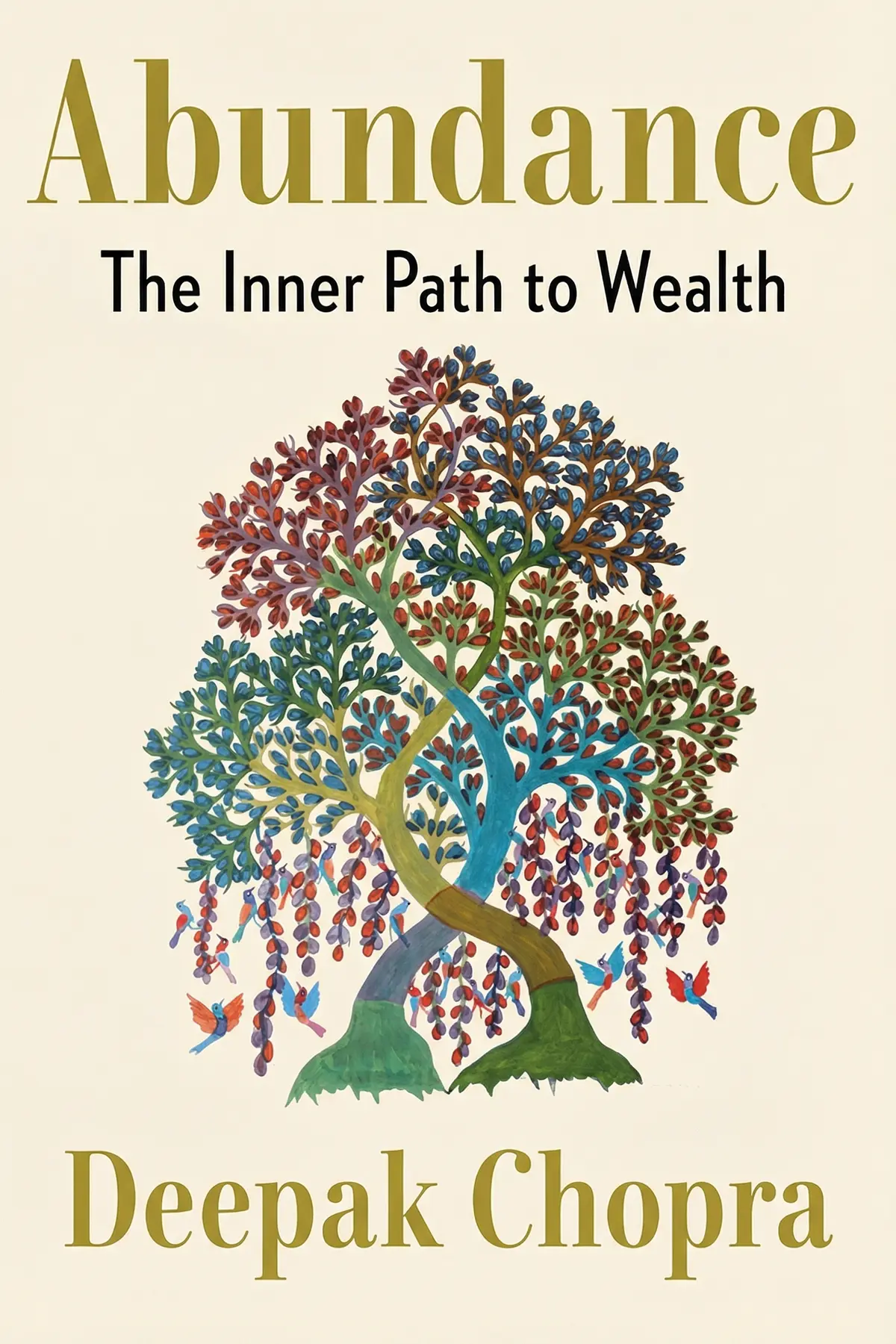
Abundance: The Inner Path to Wealth
Deepak Chopra
Discover a transformative approach to emotional well-being through the practice of radical self-love. Learn how intentional mental loops, forgiveness rituals, and daily commitments can rebuild your internal world from the ground up.
1 min 47 sec
Most of us are well-versed in the language of love when it’s directed outward. We know how to care for our families, how to support our friends through their darkest hours, and how to offer compassion to a stranger in need. We are experts at recognizing the beauty and potential in everyone else. But when we turn that same gaze inward, the language often changes. Suddenly, the compassion vanishes, replaced by a harsh, critical internal dialogue that focuses on every mistake, every perceived flaw, and every way we feel we’ve fallen short. We treat ourselves in ways we would never dream of treating someone we actually care about.
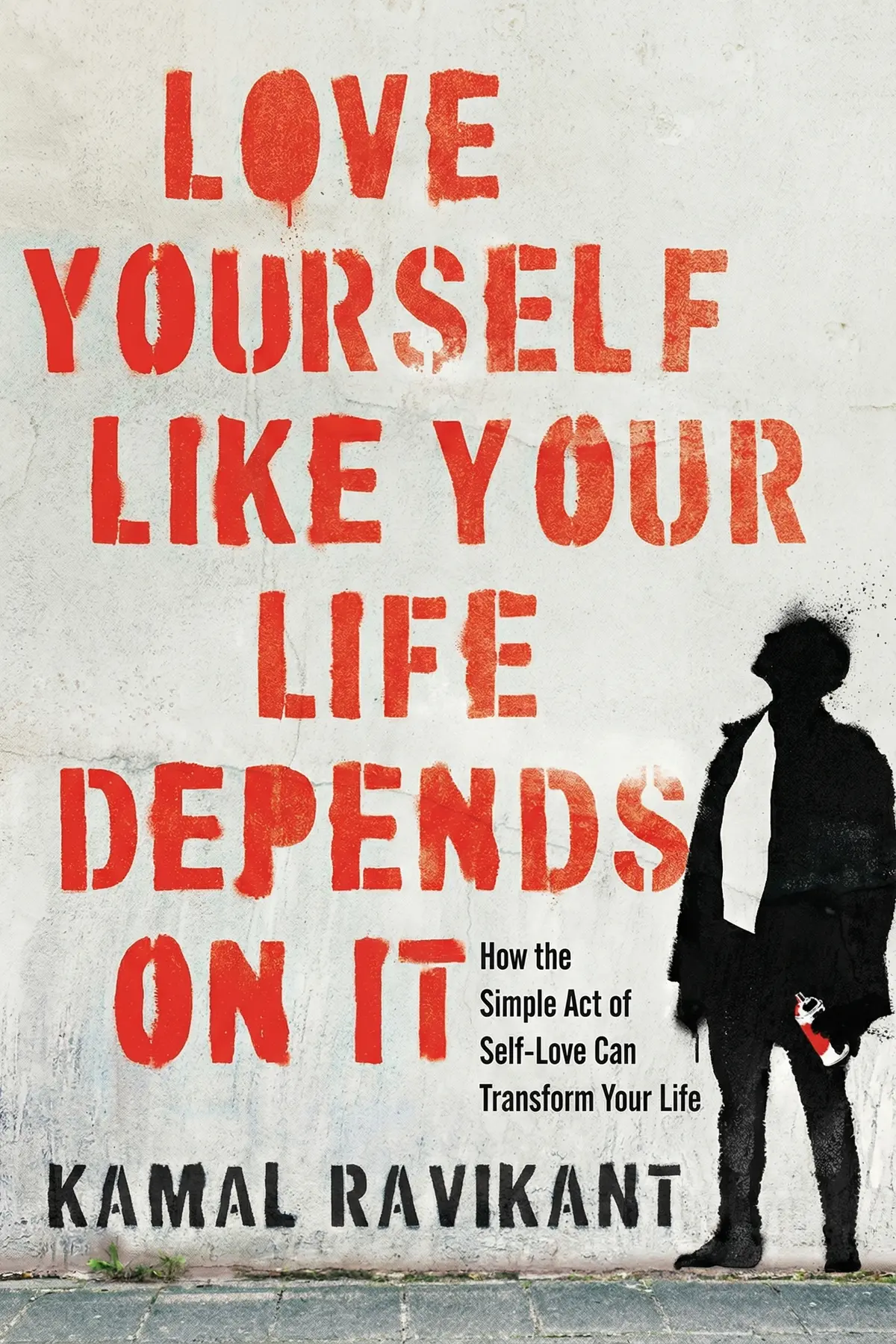
In Love Yourself Like Your Life Depends on It, author Kamal Ravikant suggests that this internal neglect is more than just a bad habit—it’s a crisis. He argues that we must learn to love ourselves not just as a casual exercise in self-help, but with the intensity of someone fighting for their survival. The core throughline of this work is that self-love is a choice and a practice, rather than a spontaneous feeling. It is a commitment that requires focus, repetition, and a willingness to forgive the past.
Ravikant’s approach isn’t based on complex psychological theories; it’s born from a period of personal darkness where he realized that his own recovery depended entirely on his ability to shift his internal state. This summary will guide you through the specific tools he developed—from mental loops to physical rituals—that can help you rebuild your self-worth from the foundation up. It’s about more than just ‘liking’ who you are; it’s about creating an unshakable core of self-acceptance that transforms how you interact with the entire world. Let’s explore how you can begin to treat your own well-being with the urgency and devotion it truly deserves.
1 min 56 sec
Your mind is governed by deep-seated habits of thought that act like channels in the earth, but you have the power to redirect the flow.
1 min 52 sec
Carrying the weight of past mistakes prevents you from moving forward; learn the ritual that allows you to finally set that burden down.
1 min 44 sec
Transformation requires more than a casual wish; it demands a solemn oath that bridges the gap between intent and action.
1 min 42 sec
Establish a daily practice of light and breath that turns self-care into an unbreakable habit and a source of inner peace.
1 min 50 sec
Facing yourself directly in the mirror can be a raw and revealing experience that anchors your self-love in physical reality.
1 min 47 sec
Combine self-love with a sense of thankfulness to create a sustainable and expansive emotional state.
1 min 37 sec
The journey of learning to love yourself is perhaps the most significant undertaking of a lifetime. As we’ve explored through Kamal Ravikant’s insights, this isn’t a destination you reach and then forget; it is a continuous, active process. It begins with the simple but revolutionary choice to stop being your own worst critic and start being your own most devoted ally. By utilizing the mental loop of ‘I love myself,’ you are literally re-wiring your brain to favor compassion over criticism.
We’ve seen that this transformation requires practical steps: the radical act of self-forgiveness to clear away the debris of the past, the solemnity of a written vow to anchor your commitment, and the daily rituals of meditation and mirror work to make self-love a physical reality. These tools are designed to be used when things are going well, but more importantly, they are lifelines for when things are difficult.
Remember that the relationship you have with yourself sets the template for every other relationship in your life. When you fill your own cup through these practices, you have more to give to others, not less. You move through the world with a sense of worth that isn’t dependent on external validation or temporary successes.
As you move forward from this summary, start small. Take those ten deep breaths. Look in the mirror for just a minute today and say the words. Forgive one small mistake. The momentum will build. Life has a way of responding to those who decide they are worthy of their own love. It is time to treat your well-being as if your very life depends on it—because, in the ways that matter most, it truly does.
Love Yourself Like Your Life Depends on It presents a simple but profound premise: that the most critical relationship you will ever have is the one you maintain with yourself. After reaching a personal low point, Kamal Ravikant realized that self-love isn’t a luxury or a vague concept, but a survival skill. The book provides a practical roadmap for shifting from a state of self-criticism and despair to one of self-appreciation and resilience. Through a series of actionable steps—including a mental mantra, a specific meditation practice, and mirror work—the author offers a way to overwrite the negative programming that often dominates our minds. This isn't just about feeling better in the moment; it’s about creating a permanent, foundational shift in how you perceive your worth. The promise of this journey is a life where self-compassion becomes as natural as breathing, leading to improved mental clarity, emotional strength, and the ability to navigate life’s challenges with newfound grace.
Kamal Ravikant is a self-made entrepreneur, investor, and author who has collaborated with some of Silicon Valley's most influential leaders. He served in the United States Army before writing popular nonfiction books, including Live Your Truth and Rebirth. His unique blend of military discipline and startup resilience informs his practical, direct approach to personal growth.
Listeners describe this book as a compelling read that is simple to incorporate into daily life, offering deep insights that act as a meaningful reminder of what truly matters. The text offers functional guidance that assists listeners in their routine activities, and listeners define the work as incredibly transformational and encouraging. They enjoy its brief style, with one listener mentioning that it addresses only the necessary elements, and find it uncomplicated to execute, given the three step-by-step instructions provided.
This tiny manual is a game-changer if you're actually willing to do the work. To be fair, it isn't some dense academic tome on psychology, but rather a raw, vulnerable account of how the author pulled himself out of a total tailspin. The simplicity of the 'I love myself' mantra might seem hokey to some, yet it acts as a powerful circuit breaker for the negative loops that usually run our lives. I’ve read plenty of self-help, but the focus on three specific, actionable steps makes this stick better than the rest. It’s succinct and doesn’t meander. You can finish it in an hour, but the practice takes a lifetime. Kamal doesn't try to hide behind complex theories; he just gives you the tools that saved him. If you are at rock bottom, this is the ladder you need to start climbing. It is practical, profound, and deeply moving.
Show morePicked this up during a particularly dark month, and it genuinely acted as a lifeline for my mental health. Personally, I think the 'Not useful' technique for halting negative thoughts is worth the price of the book alone. We all have these internal monologues that tear us down, and Ravikant provides a step-by-step framework to replace that garbage with something constructive. The simplicity is the point. When you are drowning, you don’t need a 500-page manual on fluid dynamics; you need a life vest. This book is that life vest. I loved the section on breathing in the light and the question: 'If I loved myself truly and deeply, would I let myself experience this?' That specific inquiry has changed how I approach my relationships and my work. It’s a very succinct, emotional read that doesn't waste a second of your time. Extremely life-changing if you actually apply the instructions.
Show moreWow, I didn't think sixty-some pages could pack such a punch. Gotta say, Ravikant's honesty is what sells this. He doesn't pretend to be a guru; he’s just a guy who was at his breaking point and found a way out. The athlete and monk analogy really stuck with me. We practice everything else in life—our jobs, our sports, our hobbies—but we rarely practice the mental state of being okay with ourselves. This book provides a practical, daily routine for that exact purpose. The 'loop' concept is brilliant. I’ve started using the 'I love myself' mantra during my morning commute, and it has noticeably shifted my mood. It’s a powerful read because it doesn't overcomplicate things. You don't need a PhD to understand these truths. You just need the willingness to try. It’s motivating, life-changing, and exactly what I needed to hear right now.
Show moreHonestly, the simplicity of this book is its greatest strength, even if some critics find it superficial. We live in a society that constantly tries to pull us down, and having a mental shield like the one Ravikant describes is essential. This isn't just a book; it's a focused practice. I’ve been doing the breathing meditation—inhaling 'I love myself' and exhaling the junk—and it has helped me cope with massive amounts of stress at work. Life is simple, but our minds make it complicated. Kamal reminds us that we have a choice in what we focus on. The results are that I feel naturally lighter and happier. It’s about living in the flow rather than fighting the current. It’s a beautiful, short, and extremely effective guide for anyone battling negative thoughts. I’ve already recommended it to three friends who were struggling.
Show moreEver wonder why the simplest advice is often the hardest to actually follow? Kamal Ravikant’s book is essentially a long-form version of a realization he had during a period of intense personal suffering, but there is something about the way he presents it that makes it feel fresh. Look, the book is incredibly short—barely 70 pages—and some might argue it could have been a blog post. However, there is a certain power in the brevity. He cuts straight to the chase with his mirror exercise and the 'not useful' trick for stopping intrusive thoughts. While I found the writing style a bit repetitive at times, the core message is vital. It’s about building a new groove in your brain. It requires the discipline of an athlete or a monk to maintain, but the results in mental clarity are undeniable. A solid four stars for the sheer utility of the exercises provided.
Show moreFinally got around to reading this after seeing it on several 'must-read' lists, and I have mixed feelings that ultimately lean positive. Truth is, the book is essentially a pamphlet, and the writing is very casual—almost like a series of journal entries. Some might find it a little too 'self-involved,' but the vulnerability makes the advice feel authentic. The core idea of treating self-love as a physical practice, like going to the gym, is what clicked for me. It’s not a feeling you wait for; it’s a choice you make. I do wish there was a bit more depth regarding the psychological mechanisms at play, but the three instructions are easy to implement immediately. Even if you’re a skeptic, the mirror exercise is a fascinating, if uncomfortable, experience. It’s a great reminder of what’s actually important in life. Not a masterpiece of literature, but a very effective tool for the daily grind.
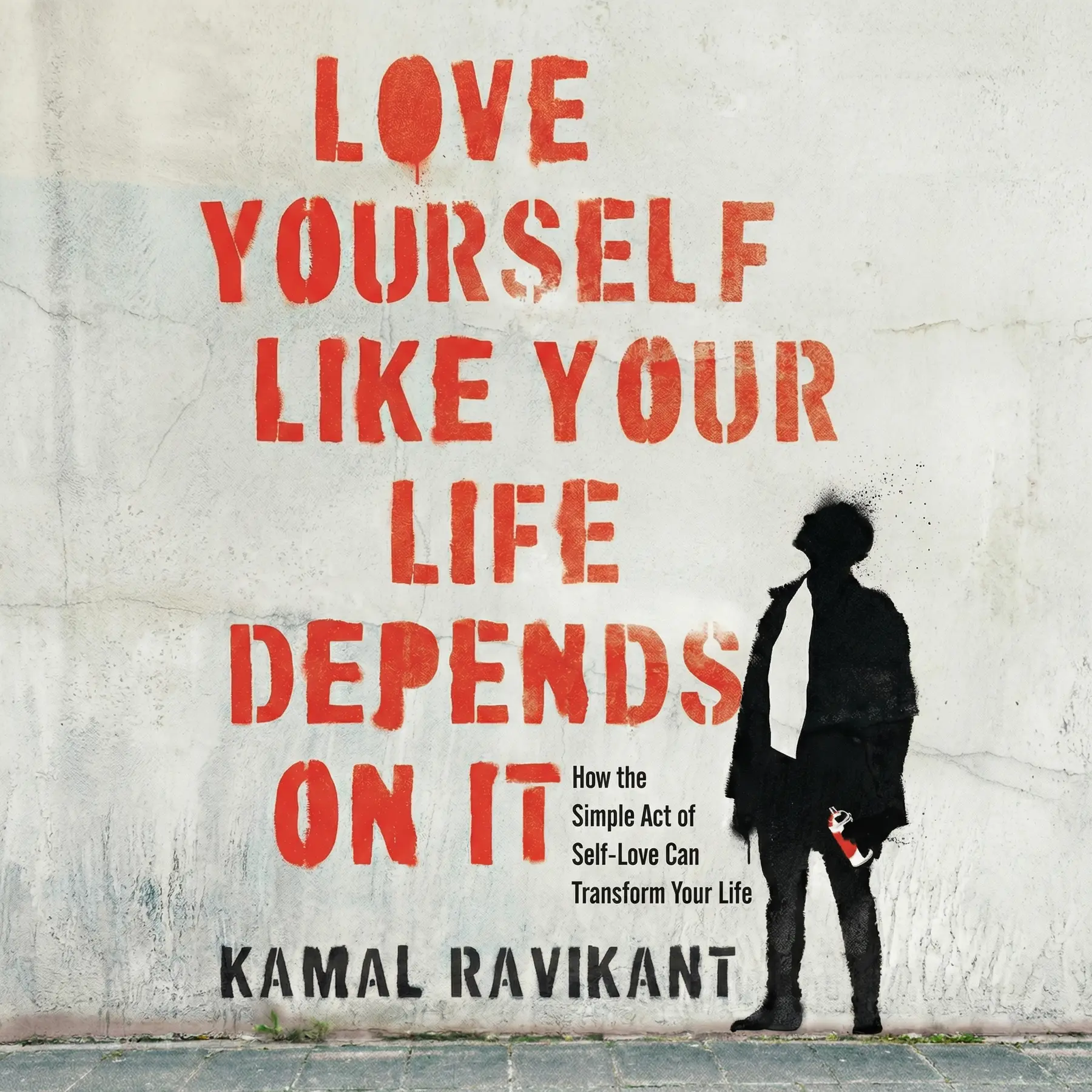
Show moreAs someone who has struggled with chronic anxiety for years, Ravikant's approach felt remarkably practical. In my experience, you can't just fight fear with logic; you have to shift your internal energy into something else entirely. Love is the opposite of fear, and this book teaches you how to lean into that. I appreciated that he didn't dumb it down or add unnecessary fluff. The words are soaked in genuine feeling. My only minor gripe is the cover art, which is a bit dark for the message inside, but the content itself is pure gold. The mirror exercise is particularly intense but effective. It forces you to confront the one person you usually spend your whole life avoiding: yourself. It’s a short format that covers the essentials without any meandering. If you need a quick, step-by-step guide to changing your mental loops, this is a very solid place to start.
Show moreAfter hearing Kamal on a podcast, I decided to give his 'loop' theory a try. The book is very short, almost like a long blog post, but the insights are profound. The truth is, we are all addicted to our own suffering in some way. We repeat the same negative stories until they become our reality. This book gives you a simple, three-step method to break those grooves and wear a new path in the brain. I liked that it wasn't overwhelming with self-help points. It’s just one main idea, practiced relentlessly. While some of the anecdotes felt a little brief, the overall message is motivating. It’s a great daily reminder to reconnect with 'The Why' of your own existence. If you're looking for a dense psychological study, look elsewhere. But if you want something you can put into practice before you even finish the last page, this is it.
Show moreNot what I expected given the massive hype from the Silicon Valley crowd. Not gonna lie, I felt like I was reading a collection of tweets expanded into a very thin volume. The premise is just too simple: say 'I love myself' over and over. Does it work? Maybe for some, but it felt a bit like diluted ideology borrowed from better traditions. I found the tone to be a bit too self-indulgent, and the constant mentions of his famous friends felt like name-dropping. While I agree that we are in control of our recurring thoughts, the 'pseudoscience' vibe here was hard to shake. It lacks the intellectual rigor I look for in personal development. It’s not a terrible read—you can finish it in twenty minutes—but it didn't offer the 'profound transformation' promised by the back cover. It’s okay as a reminder, but definitely overhyped for what it actually contains.
Show moreThe cover art alone is incredibly triggering and deeply irresponsible for a book marketed toward people in crisis. Frankly, seeing a silhouette with what looks like a gun to its head is the last thing someone battling depression needs. Beyond the aesthetics, I found the content to be an exercise in extreme narcissism. The author basically tells you to repeat a single phrase until you’ve brainwashed yourself. It feels like recycled pseudoscience wrapped in a self-indulgent narrative. It’s ironic that he calls this a book when it’s shorter than many newsletters. I don't care if James Altucher or Tim Ferriss promoted it; that doesn't make the content any less superficial. It lacks substance and ignores the complex realities of mental health. Repeating 'I love myself' while the world burns or your life falls apart feels absurdly reductive. This didn't resonate with me at all; it felt like fluff designed for the Silicon Valley elite.
Show moreDeepak Chopra
Richard Wiseman
William B. Irvine
Andrew D. Thompson
AUDIO SUMMARY AVAILABLE
Get the key ideas from Love Yourself Like Your Life Depends on It by Kamal Ravikant, plus 5,000+ more titles in English and Thai.







