
20 min 57 sec
Lucky Loser: How Donald Trump Squandered His Father's Fortune and Created the Illusion of Success
Explore the surprising financial history of Donald Trump, revealing how a legacy of family wealth and the power of media branding created the enduring myth of a self-made billionaire.
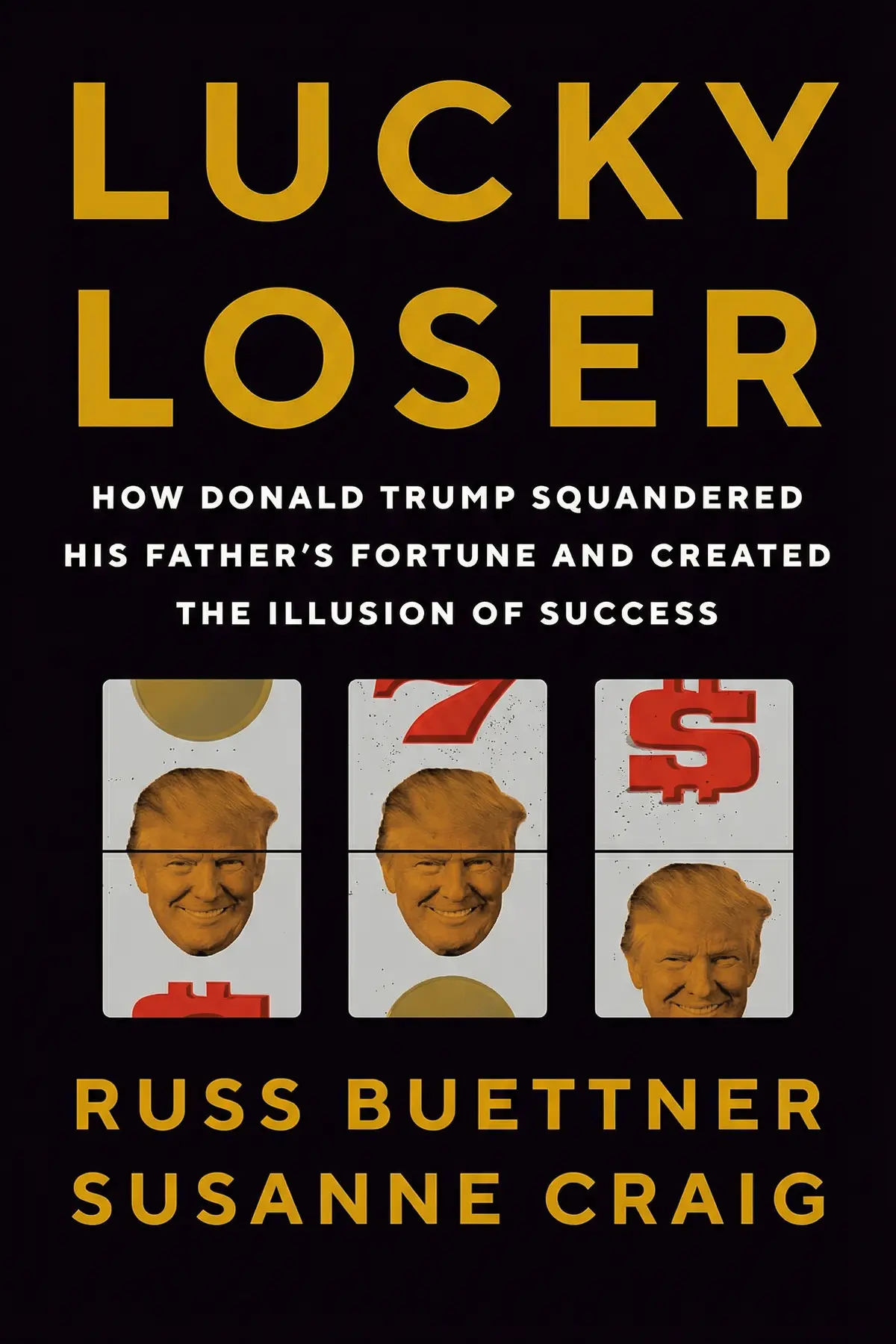
Table of Content
1. Introduction
1 min 41 sec
In the modern era, the name Donald Trump is synonymous with a specific kind of gold-plated success, a persona built on the foundations of hit television and a high-profile political career. We see the skyscrapers, the private clubs, and the rallies, all of which project the image of a man who conquered the business world through sheer force of will. But if we peel back the layers of this carefully curated brand, a much more complex and startling financial narrative emerges. The image of the ‘self-made man’ is a powerful one, yet the historical and financial records suggest a story that is less about solo triumph and more about the continuous support of a family fortune and the strategic use of media to mask repeated failures.
This exploration into the history of the Trump family finances isn’t just about numbers on a balance sheet; it’s about the creation of a myth. It’s a journey that begins in the outer boroughs of New York City with a father who mastered the art of government subsidies and ends with a son who learned to turn massive losses into a winning public image. By looking at the throughline of this career, we can see a pattern of impulsive decisions and financial misadventures that would have ended most business careers. However, for Donald Trump, these setbacks often served as the catalyst for his next great rebranding. In the following segments, we will examine the mechanisms of this unique trajectory, from the early inheritance of an empire to the television-fueled comeback that changed everything. We will see how a legacy of wealth and a talent for perception management allowed a businessman to persist even when his ventures were teetering on the edge of collapse.
2. The Architectural Blueprint of the Trump Fortune
2 min 54 sec
Uncover how Fred Trump built a massive real estate empire by mastering the world of government-backed loans and efficient construction in post-war New York City.
3. The Passing of the Torch and the Start of the Myth
3 min 03 sec
Follow the transition of power as Donald Trump enters the family business, rebranding it while navigating early legal challenges and political shifts.
4. The High-Stakes Gamble of the Casino Years
2 min 50 sec
Explore the era of debt-fueled expansion in Atlantic City, where massive investments in casinos led to a precarious financial standoff.
5. The Invention of the TV Billionaire
2 min 50 sec
Discover how a reality television show redefined Donald Trump’s public image, turning a struggling businessman into a global symbol of wealth.
6. The Strategic Use of Loss and Litigation
2 min 55 sec
Examine the unconventional financial strategies used to maintain an empire, from declaring massive losses to invoking rare legal clauses.
7. The Transition to the Political Arena
2 min 52 sec
See how the patterns of a lifetime in business—branding, defiance, and financial pressure—carried over into a historic run for the presidency.
8. Conclusion
1 min 52 sec
The saga of Donald Trump’s financial life offers a profound lesson in the power of branding and the resilience of inherited wealth. Throughout this exploration, we’ve seen that the image of the self-made tycoon was actually built on a foundation of government-subsidized housing and the tireless work of a father who ensured his children would never truly fail. Donald Trump’s career was defined not by steady growth, but by a series of high-stakes gambles that frequently resulted in massive debt and business collapse. Yet, time and again, he was saved—first by his father’s direct intervention, then by a tax code that rewarded failure, and finally by a television industry that found more value in the fiction of his success than in the reality of his losses.
Ultimately, the story of the ‘Lucky Loser’ is about the triumph of perception over substance. By the time he entered the political arena, the myth of the billionaire was so firmly established in the public consciousness that the underlying financial instability no longer seemed to matter to his supporters. He had learned that if you project enough confidence and maintain a high enough profile, you can navigate even the most dire financial straits. As we look back on this journey, the takeaway is clear: success is often less about what you build and more about the story you tell. In a world increasingly driven by media and image, the ability to maintain a persona of victory, even in the face of defeat, can be the most lucrative skill of all. Whether this narrative can sustain itself in the face of mounting legal and financial pressure is a question that continues to unfold, but the patterns of the past provide a clear guide to the strategies of the future.
About this book
What is this book about?
This investigation takes a deep dive into the financial foundations of the Trump empire, challenging the narrative of the self-made tycoon. It traces the trajectory of a man who inherited a massive real estate fortune and used it to fuel a series of high-stakes, often disastrous business ventures. From the early days of Fred Trump’s government-subsidized building boom in Queens to the high-glitz failures of Atlantic City casinos, the story reveals a persistent pattern: massive debts and business collapses followed by strategic rebranding. The core of the book examines how the television industry, specifically through the success of The Apprentice, transformed a struggling businessman into a global icon of prosperity. It details the mechanisms of wealth transfer, the creative use of tax laws, and the persistent interventions of family money that kept the Trump brand alive during its most precarious moments. Readers will gain a clearer understanding of the difference between actual financial performance and the carefully constructed illusion of success that eventually propelled a real estate heir into the highest office in the land.
Book Information
About the Author
Russ Buettner
Russ Buettner is an award-winning investigative journalist for the New York Times, where his reporting focuses on the intersection of business and politics. His extensive work uncovering the intricacies of Donald Trump’s finances has earned him several honors, including the George Polk Award. Susanne Craig is also a highly decorated investigative reporter at the New York Times with a focus on political and corporate reporting. She has received numerous accolades for her persistent and detailed coverage of the Trump family’s economic history, including the George Polk Award. Together, they have spent years analyzing thousands of pages of financial records to provide a factual account of one of the most famous business careers in American history.
Ratings & Reviews
Ratings at a glance
What people think
Listeners find the book highly accessible and meticulously researched, with one listener noting it dismantles the manufactured public image of Donald Trump. The writing is expertly handled, and listeners characterize it as both captivating and eye-opening, maintaining their engagement throughout. They value its verifiably factual content. The storytelling prompts varied responses, as some appreciate the thorough narrative while others find it a bit dull.
Top reviews
Wichai
Wow, this is the definitive takedown of the 'self-made man' myth that has surrounded Donald Trump for decades. Buettner and Craig leverage years of investigative reporting to show how Fred Trump's shadow actually loomed over every single success his son claimed. The breakdown of the four hundred million dollar inheritance—not a small million-dollar loan—is absolutely staggering to read in black and white. While the financial jargon regarding tax shelters and real estate swaps can get dense, the narrative remains surprisingly gripping throughout the entire book. It is a sobering look at how enough inherited capital can effectively mask a lifetime of terrible instincts and repeated bankruptcies. I came away feeling like the public has been sold a manufactured product rather than a legitimate businessman. This is essential reading for anyone trying to understand the intersection of American celebrity and the reality of modern wealth.
Show moreUbolwan
Ever wonder how someone can fail so many times and still be seen as a titan of industry by the public? This book provides the most comprehensive answer I have ever read by stripping away the veneer of the gold-plated Trump Tower image. The authors demonstrate with cold, hard facts that Donald was not just lucky; he was actively saved by his father’s fortune. Personally, I found the contrast between his actual tax returns and his public boasts to be the most revelatory part of the narrative. It is not just a biography; it is a forensic autopsy of a brand that was built on a foundation of shifting sand. The prose is sharp and fast-paced, making complex financial fraud feel like a high-stakes thriller that you cannot put down. It really makes you question why we value perceived wealth so much in this country over actual business competency.
Show moreTaweesak
Picked this up on audiobook and was completely floored by the sheer scale of the financial deception described by the investigative authors. It turns out that the art of the deal was actually just the art of having a wealthy father who would bail you out. Frankly, the most shocking part was learning that he likely would have been richer today if he had just invested in the stock market. The book does a fantastic job of illustrating his pathological need to lie about even the smallest things, like the fake paintings in his home. It is a riveting, well-executed piece of journalism that should be mandatory reading for every single voter before the next big election. I could not put it down even when the tax stuff got complicated because the luck factor was just so outrageous to witness.
Show moreNong
This book is a masterclass in investigative journalism and serves as a necessary reality check for the American public at large. Russ Buettner and Susanne Craig have managed to turn dry tax documents into a narrative that is both shocking and deeply sad. It paints a portrait of a man who is perpetually chasing a version of success that he never actually earned or sustained. The chapters on the small loan versus the actual four hundred million dollars are particularly damning and incredibly well-documented by the team. Sentence for sentence, it is some of the most compelling non-fiction I have picked up this year, even if the subject is frustrating. It really highlights the gullibility of a media landscape that allowed this persona to go unchallenged for such a long time. Highly recommend it to anyone who values truth over branding in our modern celebrity culture.
Show moreIsaiah
Frankly, the most important takeaway from this book is how easily a persona can be bought and sold in this country today. The authors do an incredible job of showing that the business genius we saw on TV was a carefully curated character. Reading about the reality of the Forty Wall Street deal and the constant bailouts from Fred really puts the last decade into perspective. Some might find the level of detail about the nineteen eighties real estate market a bit much, but I thought it was context. The book is well-executed, riveting, and honestly a bit frightening when you realize how much of his power is based on confidence. It is an essential piece of the puzzle for understanding how we got to where we are in this current mess. I recommend this to anyone who wants to see the data behind the man instead of just the tweets.
Show moreBun
After hearing so much hype about the New York Times investigation, I finally picked this up to see the full story. The level of detail here is truly insane, especially regarding the early days in Queens and the sheer volume of help Fred Trump provided. To be fair, some of the middle chapters regarding specific real estate tax maneuvers felt like they could have been trimmed for better pacing. I found my eyes glazing over a bit during the long descriptions of various bankruptcies and the specific mechanics of the casino failures. However, the sections on The Apprentice are fascinating because they reveal how television producers essentially built a set to create an image. It is a well-written, if sometimes exhausting, account of a massive financial illusion that has shaped our current political landscape today.
Show moreChanpen
Not what I expected at all, as I thought this would just be another political hit piece, but it is actually business history. The authors spend a lot of time on Fred Trump, which I initially thought would be boring, but it turns out to be crucial. You see exactly how the winner takes all mentality was drilled into him from a very young age by a cold, demanding father. My only gripe is that the book is quite long and the pacing stutters when they get into the weeds of casino settlements. Still, the revelation that his most lucrative deal was one he actually tried to stop is peak irony for any business reader. It is a fascinating study of how fame can be monetized even when the underlying business is crumbling under its own weight. This book provides necessary context for anyone curious about the reality behind the famous name and the golden buildings.
Show moreRatchanee
Finally got around to reading Lucky Loser and it certainly lives up to the title's promise of exposing a manufactured legacy of success. The reporting on how The Apprentice created a fictional version of a successful CEO is worth the price of the book alone. It is incredible how much of our modern history was shaped by a reality show set that was nicer than the actual office. While the writing is clear and the facts are solid, I found the sheer number of lawsuits mentioned to be overwhelming. You get the sense that his primary business was using the legal system to bully anyone who questioned the grand illusion. It is an eye-opening read that dispels the myth of the genius negotiator with brutal efficiency and plenty of verifiable evidence. Any reader interested in the mechanics of power and branding will find this to be a deeply rewarding experience.
Show moreSukit
As someone who has read several books on this administration, I found this one to be the most grounded in actual financial reality. It ignores the usual gossip to focus on the numbers, which are far more revealing than any anonymous source could ever be. I particularly appreciated the focus on the German shipping magnate story, which perfectly encapsulates the fake it till you make it ethos. The truth is, the book can be a bit dry in the middle sections when it discusses bankruptcy law and regulations. However, the overarching message about the fragility of the Trump empire is delivered with a lot of power and narrative clarity. It is a well-researched guide that helps explain why he is so defensive about his private records and financial history. This should be on the shelf of any serious student of American business or political history.
Show morePawinee
I finished this feeling quite conflicted about the narrative, although the research is undeniably top-tier and exhaustive for the most part. Look, the information about the inheritance is eye-opening, but the authors occasionally slip into a tone that feels a bit too personal. I wanted a purely objective financial history, yet sometimes it felt like I was reading a very long editorial about why voters were misled. The technical sections on depreciation and tax law are definitely not for the casual reader and could use more layman's terms. Also, I noticed a few typos in the later chapters that pulled me out of the experience momentarily while I was reading. It is a valuable resource for history, but it lacks the narrative punch of a truly great biography because it focuses so heavily on failures. It is a bit of a slog if you are not already obsessed with the specific topic.
Show moreReaders also enjoyed
Age of Anger: A History of the Present
Pankaj Mishra
A Promised Land
Barack Obama
Age of Propaganda: The Everyday Use and Abuse of Persuasion
Anthony Pratkanis

A River in Darkness: One Man’s Escape from North Korea
Masaji Ishikawa
A Spy Among Friends: Philby and the Great Betrayal
Ben Macintyre
21 Lessons for the 21st Century
Yuval Noah Harari
AUDIO SUMMARY AVAILABLE
Listen to Lucky Loser in 15 minutes
Get the key ideas from Lucky Loser by Russ Buettner, plus 5,000+ more titles in English and Thai.
- 5,000+ titles
- Listen as much as you want
- 7-day free trial
- Cancel anytime







