
15 min 46 sec
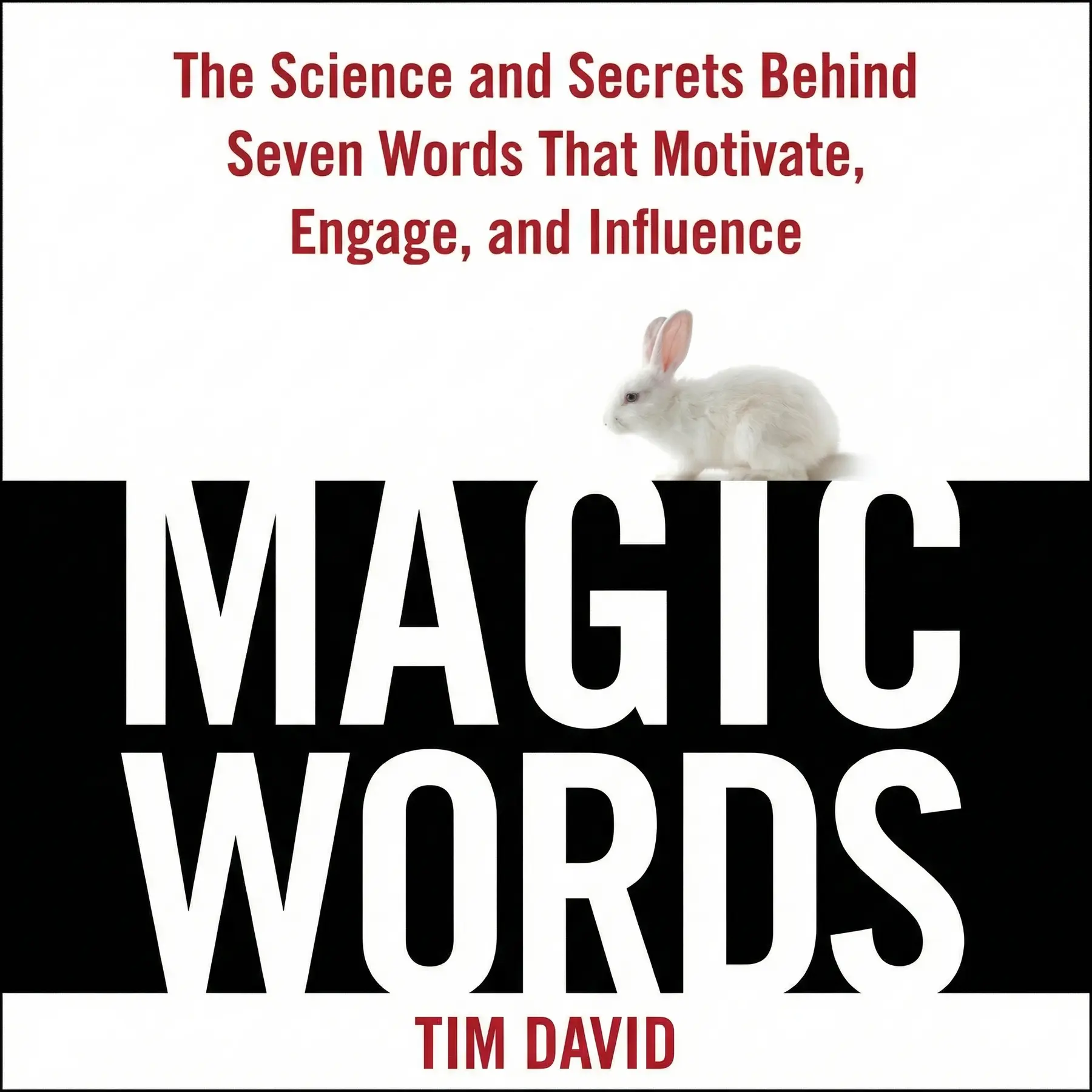
Magic Words: The Science and Secrets Behind 7 Words That Motivate, Engage, and Influence
By Tim David
Tim David reveals how seven specific words can bypass mental resistance, trigger psychological motivation, and transform everyday interactions into opportunities for deeper connection and effective persuasion in both personal and professional spheres.
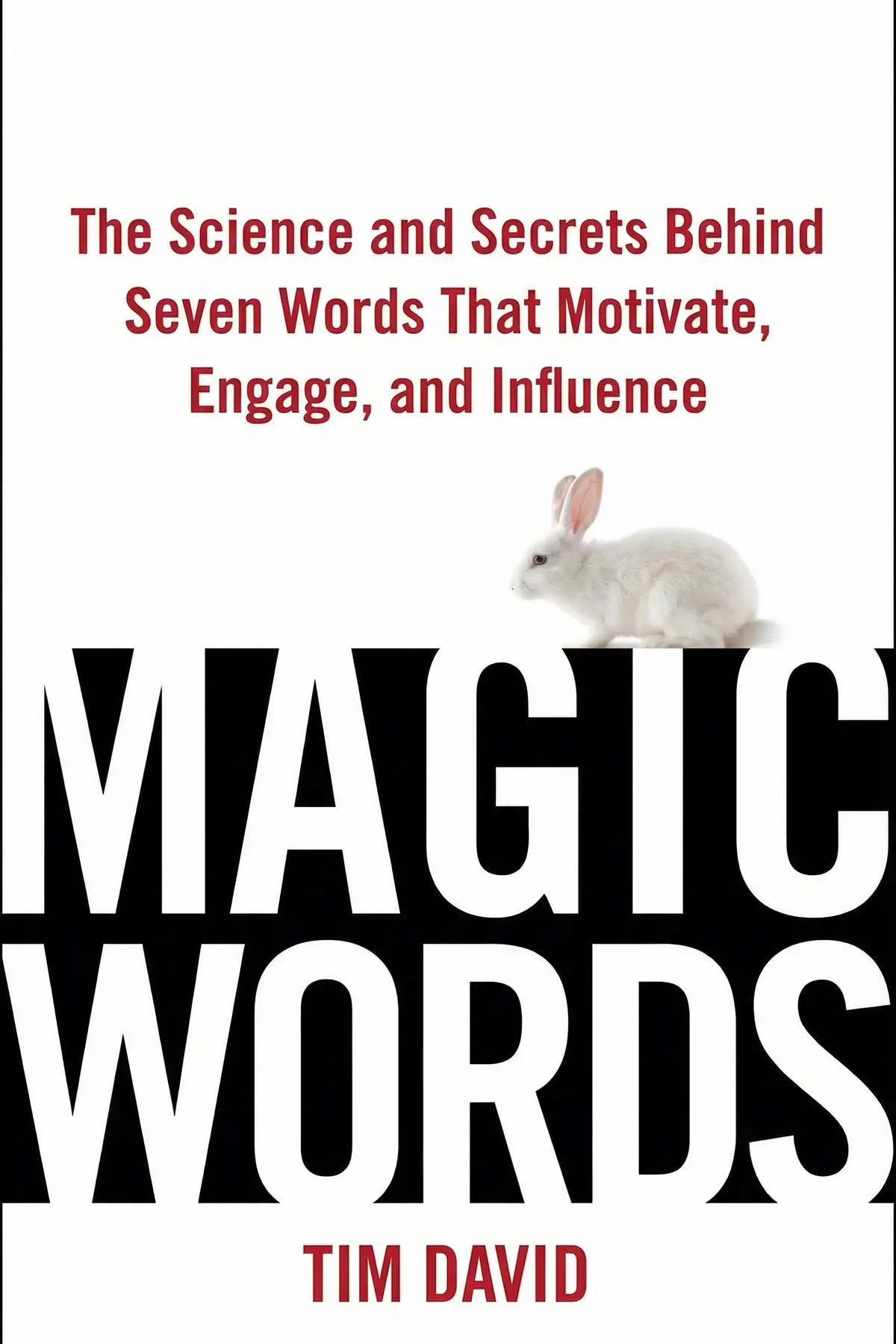
Table of Content
1. Introduction
1 min 39 sec
Imagine a typical Tuesday evening. Your teenage daughter has just returned home after hanging out with her friends, but there is a problem: she has a mountain of homework due tomorrow, and she has no intention of starting it. Instead, she reaches for the television remote, settling in for a long night of procrastination. If you are like most parents, your first instinct might be to raise your voice, demand she get to work, or perhaps issue a stern warning about her grades. But we all know where that usually leads. Voices get louder, doors get slammed, and the homework remains untouched. You are both left feeling frustrated and disconnected.
There is a different way to handle these moments of friction—one that does not rely on force or authority. The secret lies in the specific language we use to frame our requests and share our thoughts. In the following pages, we are going to explore a set of “magic words” that can help you navigate these exact scenarios with grace and effectiveness. These are not words from a fantasy novel; they are linguistic tools grounded in human psychology that can persuade and motivate others to see things from your perspective.
By the end of this journey, you will understand how these simple adjustments to your vocabulary can act as a bridge between your goals and the cooperation of others. We will look at how to command attention in a crowded room, how to erase negative impressions instantly, and why certain words can bypass the natural resistance people feel when they think they are being bossed around. We are setting out on a path to turn every interaction into a chance for connection rather than conflict. Let’s dive into the seven words that can change the way you lead, parent, and relate to the world.
2. The Foundation of Influence Through Connection
2 min 31 sec
Discover why effective communication is about far more than just the literal meaning of your words and how human connection serves as the essential power source.
3. Harnessing the Power of Affirmation and Agreement
2 min 28 sec
Explore the psychological drive for belonging and learn how leading with agreement can dramatically increase your chances of success in any negotiation.
4. Using Names to Grab Attention and 'But' to Redirect Focus
2 min 26 sec
Learn how the simple sound of a name can pierce through any distraction and how to use one specific conjunction to control what people remember.
5. Triggering Action with Reason and Possibility
2 min 30 sec
Unlock the secrets of ‘because’ to bypass resistance and use ‘if’ to overcome reverse psychology and spark creative problem-solving.
6. Creating a Culture of Collaboration and Appreciation
2 min 33 sec
See how asking for ‘help’ can empower others and why a simple ‘thanks’ is the most effective tool for long-term retention and morale.
7. Conclusion
1 min 39 sec
As we have seen, the words we choose to use are far more than just sounds; they are the keys to unlocking human potential and fostering deep connections. By mastering these seven magic words—Yes, But, Because, If, Help, Thanks, and the use of Names—you gain the ability to navigate complex social waters with much more ease. You have learned that ‘yes’ builds bridges, ‘names’ capture focus, and ‘but’ directs the mind’s eye. You’ve seen how ‘because’ provides the logic we crave, while ‘if’ opens the door to imagination. And finally, you have discovered that ‘help’ and ‘thanks’ are the foundations of any strong, lasting community.
The throughline here is that effective communication isn’t about manipulation; it’s about understanding the psychological needs of the people around you and meeting them where they are. When you speak in a way that respects their identity, validates their choices, and appreciates their efforts, you create an environment where everyone wants to succeed.
As you move forward, keep one actionable piece of advice in mind: while we have focused on the power of affirmation, do not be afraid to use a firm ‘no’ when it is truly necessary. Magic words are tools for connection, but they should never be used to allow yourself to be exploited. If someone is taking advantage of your kindness or crossing your boundaries, a clear and decisive ‘no’ is the most honest and protective word you can use. Use your new linguistic skills to build a better world around you, one conversation at a time.
About this book
What is this book about?
Have you ever wondered why some people seem to have a natural ability to get others to say yes, while others struggle to be heard? Magic Words explores the hidden mechanics of human communication, moving beyond mere logic to uncover the psychological triggers that drive our behavior. Drawing on his background as a professional magician and mentalist, Tim David identifies seven key words that have the power to influence, motivate, and connect with people on a subconscious level. This summary breaks down these linguistic tools, explaining why certain words command attention while others cause people to shut down. You will learn how to use these words to resolve conflicts, inspire your team, and build more resilient relationships. The promise of this book is simple: by making small, intentional shifts in your vocabulary, you can dramatically improve your ability to lead and collaborate. It provides a roadmap for turning communication from a source of frustration into a powerful asset for achieving your goals.
Book Information
About the Author
Tim David
Tim David is a professional magician, mentalist, and trainer. He runs a popular YouTube channel and focuses on helping others build more effective communication skills. By combining his performance background with behavioral insights, he teaches people how to use the principles of influence and connection to achieve better results in their careers and daily lives.
Ratings & Reviews
Ratings at a glance
What people think
Listeners find this work accessible and clear, featuring thoroughly researched material that provides impactful insights into the art of persuasion and influence. They also value the actionable tips and the author's direct way of writing, pointing out its effectiveness in enhancing personal connections and overall communication. Furthermore, the book earns praise for its focus on terminology, with one listener emphasizing how simple words can make a significant impact.
Top reviews
Elan
Wow, I didn't expect a book about seven simple words to be this impactful. It’s rare to find a business book that is actually fun to read, but David’s magician background shines through in his storytelling and pacing. I’ve already started using the "If" strategy with my kids, and it’s been a game-changer for getting chores done without the usual whining. Frankly, it’s all about how you frame things. The book explains that words are simple, but they have an incredible amount of power when used correctly. I loved the section on "Thanks" and how it validates the other person's effort. This isn't just for business; it's for anyone who wants to build stronger connections with the people in their lives. I’m seriously considering printing the seven words out and putting them on my office wall as a daily reminder to speak more mindfully.
Show moreSaengdao
Finally got around to reading this, and I’m kicking myself for waiting so long. If you enjoyed "How to Win Friends and Influence People," this is the natural modern successor. It takes those classic principles and distills them into seven words that you can start using today. The writing is straightforward and the advice is incredibly practical. I especially loved the part about eliciting "yeses" to build momentum in a difficult conversation. It’s a very fast read, but don't let the brevity fool you; there is a lot of psychological weight behind these suggestions. I've already shared several of these tips with my management team because the lessons on "Help" and "Thanks" are so vital for office morale. Words truly are the anchor of human interaction. This is a must-read for anyone in a leadership position who wants to improve their communication game immediately.
Show moreSirinat
The beauty of this book lies in its simplicity. Many business authors try to overcomplicate things with complex frameworks and confusing jargon, but David sticks to what actually works: the words we use every single day. I found the analysis of the word "If" to be a brilliant way to motivate others without being demanding. By creating a hypothetical scenario, you lower the other person's defenses and invite collaboration. Gotta say, the way he explains the word "But" as a way to bury a lead phrase changed how I frame constructive criticism. No longer do I say "You did great but...", because I know they will only hear the criticism. Now I flip it. The book is well-researched and delivers powerful messages about the impact of vocabulary. Even though it's a quick read, the insights are lasting and highly effective.
Show moreLuke
The chapter on the word "Because" alone makes this worth the read for any professional. David references some classic social psychology studies to show how just giving a reason—any reason—can increase compliance significantly. It’s a well-researched little book that avoids the typical academic boredom found in many communication guides. I appreciated the straightforward writing style; it gets straight to the point without meandering through endless personal stories. While it’s true that some of this information is available in broader books like 'Influence' by Cialdini, this specific focus on vocabulary is quite refreshing. One minor criticism is that the "magic" metaphor is laid on a bit thick at times, which can feel a little cheesy. Regardless, the core message about how communication is the anchor of human interaction is spot on. It provides a concise toolkit that almost anyone can use to improve their daily conversations.
Show moreTantipat
Not what I expected, but in a good way. When I saw the title and the author’s background as a magician, I thought it was going to be a book about card tricks or stage presence. Instead, it’s a smart look at how we influence others through basic vocabulary. Look, it’s not reinventing the wheel, but it packages communication theory in a way that is immediately actionable. I finished it in about ninety minutes and walked away with at least three new tactics I can use in my next sales meeting. The "But" technique for redirecting focus is particularly clever. It’s a quick, punchy read that delivers powerful messages without the fluff. My only complaint is that I wish there were more "magic" words included in the list, as seven feels a little short for a full book. Still, the quality of the content is undeniable.
Show moreFatou
Ever wonder why some people just seem to get what they want without being aggressive? This book answers that by looking at the micro-level of our daily speech. Tim David shows that influence isn't about being loud; it's about being precise. I found the section on using a person's name to be particularly enlightening, as it triggers a specific neurological response that makes them more attentive to your message. The book is easy to read and understand, which is a huge plus for busy people. Not gonna lie, I was skeptical at first, but after trying the "Because" technique at the store, I'm a believer. It’s a great resource for anyone looking to refine their persuasion skills without coming across as a manipulator. I just wish there was a bit more depth on how to handle situations where the other person is also using these tactics on you.
Show moreCholada
Picked this up on a whim after seeing it mentioned in a leadership forum online. The central premise is that seven specific words can drastically change how people respond to you in everyday situations. Truth is, the concept is fascinating, especially the section on how the word "but" can effectively erase everything said before it. I've started watching how I use it in emails, and it really does make a difference in how my team perceives constructive feedback. However, the writing style is a bit too "salesy" for my taste, and some of the examples felt a little dated or overly simplistic for modern workplace dynamics. It's a decent toolkit for basic communication, but don't expect it to solve every interpersonal conflict you have instantly. It works well as a primer for beginners, though more experienced managers might want something with more meat on the bones.
Show moreGift
As someone who struggles with making requests at work, this was a surprisingly helpful guide. I never realized how much weight the word "help" carries until David broke down the psychology behind human connection and cooperation. By framing a task as a request for help rather than a command, I've noticed people are much more willing to jump in without resentment. The book is short and punchy, which I appreciate because I don't have time for 400 pages of fluff. My only gripe is that some of the "magic" feels a little manipulative if you aren't careful with your intent. You have to use these tools ethically or people will see right through your tactics. Still, the practical advice on using someone's name to grab attention is solid gold. It’s a nice set of tools that uses words we all know but applies them with a more deliberate strategy.
Show moreFrida
After hearing several people recommend this for team building, I decided to give it a go. It’s a very accessible book, though it does feel a bit simplified compared to some of the heavier leadership literature out there. I agree with other reviewers that it might have felt more revolutionary back when it first hit the shelves. In today’s hyper-partisan world, sometimes just saying "Thanks" or "Help" isn't enough to bridge deep divides or change minds. To be fair, the author does provide research to back up his claims, which I appreciated. The advice is definitely actionable, but you have to keep in mind that these aren't literal magic spells; they are just tools to nudge people in the right direction. It's a solid 3-star read for me—good for a plane ride, but maybe not a permanent fixture on my "must-read" list.
Show moreNew
This book felt more like a long blog post than a fully fleshed-out resource. While Tim David has an interesting background as a magician, the transition to business psychology feels a bit thin in several chapters. Personally, I found most of the advice to be common sense masquerading as groundbreaking "magic" tactics. The seven words—like 'Yes' and 'Because'—are obviously important for communication, but the book doesn't offer enough deep research to back up its bolder claims about influence. It's a very quick read, taking maybe an hour, which makes it feel like it's lacking substance for the price point. To be fair, some of the anecdotes about rearranging sentences to change impact were okay, but overall it felt like a watered-down version of better interpersonal books. If you are brand new to the world of communication, you might find a nugget or two, but seasoned professionals will likely find it underwhelming and a bit repetitive.
Show moreReaders also enjoyed
AUDIO SUMMARY AVAILABLE
Listen to Magic Words in 15 minutes
Get the key ideas from Magic Words by Tim David, plus 5,000+ more titles in English and Thai.
- 5,000+ titles
- Listen as much as you want
- 7-day free trial
- Cancel anytime







