

A Bigger Prize: How We Can Do Better Than the Competition
Margaret Heffernan
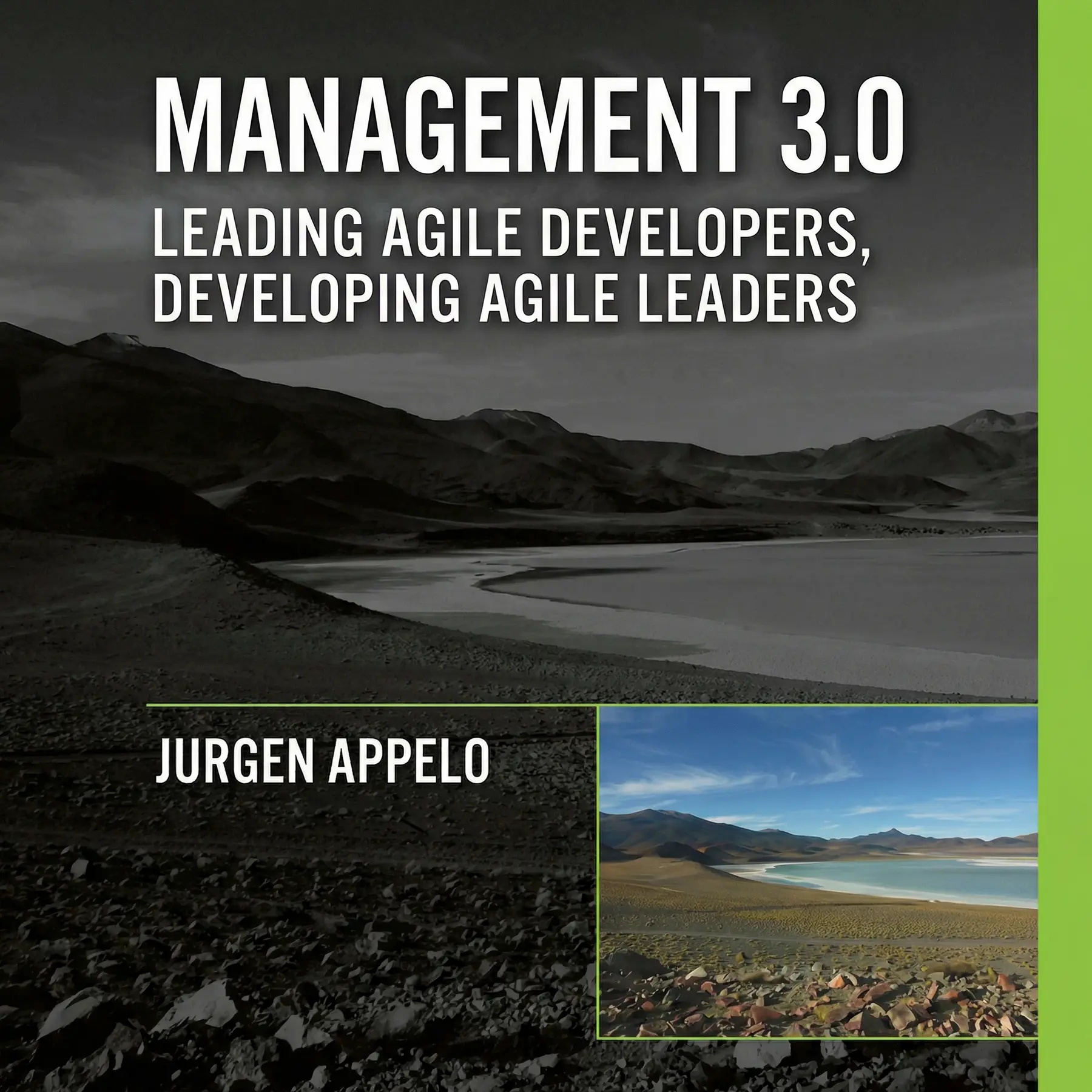
Management 3.0 redefines leadership for the modern era, treating organizations as complex, living systems. It moves beyond rigid hierarchies to focus on empowering teams, fostering intrinsic motivation, and embracing continuous, natural change.

1 min 46 sec
For a long time, we have been taught that a well-run business is like a finely tuned machine. In this worldview, managers are the operators, and employees are the individual components—the cogs and gears that must be carefully placed and periodically oiled with bonuses or tightened with deadlines. We were told that if we just got the assembly line of productivity right, success would be guaranteed. But if you’ve spent any time in a modern office, you know that’s not how things actually work. Projects stall for no apparent reason, teams find brilliant solutions in the cafeteria rather than the boardroom, and rigid plans often crumble the moment they meet reality.
The truth is that organizations aren’t machines at all. They are living, breathing ecosystems. They are more like gardens than factories, and more like social networks than blueprints. This realization is the heart of our exploration today. We are looking at a paradigm shift that recognizes the inherent complexity of human behavior and organizational dynamics. It’s an approach that moves away from the desire to control and toward the goal of enabling.
In this summary, we are going to walk through the journey of how management has evolved and where it is going. We will see why the old ways of carrot-and-stick motivation are failing and what actually drives people to do their best work. We will explore how setting the right kind of boundaries—not rigid rules, but helpful constraints—can actually set a team free. We’ll also look at how excellence isn’t a one-time achievement but a habit built through daily practice and how change can become a natural, painless part of your team’s rhythm. By the end, you’ll see the organization through a new lens: one where complexity isn’t an obstacle to be overcome, but a source of strength to be harnessed.
2 min 40 sec
Discover why treating a company like a machine is a recipe for failure and how the shift to viewing organizations as living ecosystems changes everything about leadership today.
2 min 14 sec
Traditional rewards and punishments often do more harm than good; learn why intrinsic motivation is the only sustainable engine for high-performing, creative teams.
2 min 09 sec
Complete freedom can lead to chaos, but the right boundaries provide the psychological safety and clarity teams need to innovate with confidence.
2 min 07 sec
Excellence isn’t a destination but a continuous process of building skills and habits through shared learning and disciplined, everyday execution.
2 min 39 sec
Stop treating change like a grand event and start viewing it as a series of small, manageable experiments that evolve your team every single day.
1 min 51 sec
As we wrap up our look at the Management 3.0 approach, the core message is clear: the era of the manager-as-mechanic is over. In a world that is increasingly complex, interconnected, and fast-paced, we need leaders who act more like gardeners. A gardener doesn’t actually ‘make’ the plants grow. Instead, they provide the right soil, ensure there is enough water and sunlight, and remove the weeds that get in the way. They create the conditions for growth, and then they step back and let the natural processes take over.
We’ve seen that this means moving away from the old tools of control and toward the new tools of enablement. It means trusting that people have a natural desire to do good work and providing them with the intrinsic motivation to do so. It means setting boundaries that provide safety rather than restriction. It means making the development of competence a daily habit rather than an annual event. And it means viewing change not as a disruption to be managed, but as a constant, healthy rhythm of adaptation and experimentation.
Transitioning to this mindset isn’t always easy. It requires a lot of humility and a willingness to let go of the illusion of control. But the rewards are immense. When you manage the system rather than the people, you unlock a level of creativity and commitment that is simply impossible in a traditional hierarchy. You build a team that can think for itself, solve its own problems, and continue to grow long after you’ve left the room.
So, as you head back to your own work, ask yourself: Am I trying to fix a machine, or am I tending to a garden? Start small. Find one boundary you can clarify, one experiment you can run, or one opportunity to help someone grow. By making these small shifts, you aren’t just improving your management style—you are helping to build a more resilient, human, and successful organization. That is the essence of leading in the modern world.
Management 3.0 is a deep dive into the evolution of organizational leadership, moving from the mechanical, command-and-control styles of the past toward a more organic, human-centric approach. The book addresses the reality that modern work—especially in software and creative industries—cannot be managed through simple inputs and outputs. Instead, it argues that organizations are complex adaptive systems where patterns emerge from the interactions of people rather than the directives of a few individuals at the top. The promise of this approach is a more resilient, innovative, and engaged workplace. By focusing on six key pillars—energizing people, empowering teams, aligning constraints, developing competence, growing structure, and improving everything—it provides a comprehensive framework for leaders who want to stop being micromanagers and start being facilitators. You will learn how to build trust, set effective boundaries that encourage rather than stifle creativity, and create a culture where learning is woven into the fabric of daily tasks. It is ultimately a guide for anyone looking to lead in a way that respects human complexity while driving high-performance results.
Jurgen Appelo is a pioneer in complexity-based management approaches and the creator of the Management 3.0 framework. After serving as CIO at ISM eCompany, one of the largest e-business solutions providers in The Netherlands, he now focuses on helping organizations adapt to modern management challenges. He is the author of How to Change the World and Managing for Happiness, and regularly conducts workshops on adaptive management practices worldwide.
Listeners find that this guide delivers actionable advice for succeeding as a manager, blending conceptual frameworks with real-world application. Additionally, the writing is engaging and thought-provoking, with one listener mentioning that it helped them approach challenges from a different perspective. They also value the emphasis on organizational flexibility through adaptive systems and the author's humorous tone. However, the substance of the book draws mixed responses from listeners.
This book changed how I view organizational structure by introducing the concept of adaptive systems into the management conversation. It’s rare to find a business book that manages to be both deeply theoretical and highly entertaining without losing its professional edge. Appelo challenges you to stop treating teams like machines and start viewing them as complex organisms that need the right environment to thrive. I loved the thought-provoking sections on how to nurture a culture of self-organization without letting things descend into total chaos. Honestly, the focus on people and relationships over rigid processes is exactly what the modern software industry needs right now. It is a long journey through the text, but the insights regarding intrinsic motivation and system boundaries are game-changers for any leader.
Show moreAppelo has a knack for taking the stuffiness out of management theory by injecting a healthy dose of humor and personality into every chapter. This isn't just another dry manual on how to run a stand-up meeting; it's a deep dive into what it actually means to lead in a non-linear world. The practical focus on developing competence—specifically the "skill plus discipline" formula—really resonated with my current challenges at work. I found myself highlighting dozens of sections where the author offers a way to look at old problems through a completely different lens. It’s a big book, and yes, it demands a certain level of commitment, but the payoff is a much deeper understanding of how to influence a system. If you’re tired of old-fashioned hierarchy, this is the upgrade you need.
Show moreThe first several sections are pure gold for anyone leading software teams, even if the momentum slows down slightly toward the end. Jurgen has clearly read everything there is to read on the subject, and he does a great job of synthesizing those ideas into a practical guide. I especially appreciated the value exercises and the focus on "energizing people" as the primary task of a modern manager. While the final few chapters felt a bit more theoretical compared to the carefully constructed practical arguments at the beginning of the book, they still offer great food for thought. The book stands out because it doesn't offer easy answers but instead teaches you how to think for yourself in a complex environment. It’s a stellar read that I’ll definitely keep nearby for reference during tough projects.
Show moreLook, if you want a shortcut through the mountain of management research out there, start here because this book is basically an executive summary of the best ideas in the field. Jurgen Appelo has done the heavy lifting of connecting various sciences to the art of leading software teams, and the result is quite efficient for the reader. I loved how he mixes personal anecdotes with hard data, making the "heavy" parts of the book much easier to digest than a standard textbook. The concept of the "Martie" model for the six views of management provides a fantastic mental framework that I've already started using in my weekly meetings. It’s a refreshing departure from the command-and-control style that still plagues so many corporate environments. Definitely a must-read for any aspiring Agile Master.
Show moreJurgen’s definition of competency—skill plus discipline—is the takeaway I’ll be using for years to help my team grow. This book isn't just a list of rules; it's a comprehensive philosophy that challenges you to be a better leader by understanding the invisible systems at play. I found the sections on self-organization particularly enlightening, especially the idea that a manager’s job is to grow the garden, not move the individual plants. The humor throughout kept me engaged, even when the topics shifted into more abstract territory like social complexity or non-linear change. It is truly a marvelously written piece that understands the maturity level of today’s organizations and the intensity required to succeed. If you want to move beyond the superficial aspects of Agile and actually change how your organization functions, this is the right place to start.
Show moreFinally got around to finishing this, and I have to say it’s a solid toolkit for any manager struggling with the transition to Agile. The way Appelo blends scientific theory with day-to-day team dynamics is genuinely refreshing, even if some of the complexity concepts feel a bit heavy-handed at times. I found the concrete tips on team empowerment especially useful, as they provide a clear roadmap instead of just vague philosophies. The writing style is definitely unique, leaning heavily into a witty, almost conversational tone that keeps the denser chapters from becoming too dry. While not every idea is revolutionary in today's market, the synthesis of various management schools into a cohesive framework is impressive. It’s a thick read, but the practical value hidden in these pages makes the effort worthwhile for those willing to dig.
Show moreAs someone navigating the messy transition to Agile leadership, I found this book to be an essential, if slightly overwhelming, companion. Jurgen Appelo successfully bridges the gap between high-level systems thinking and the gritty reality of managing a group of developers who hate being managed. The chapters on team empowerment and setting boundaries were particularly impactful for my own practice, giving me tools to trust my team more effectively. I will admit that some sections on the biology and mathematics of complexity felt like overkill for a management handbook. However, the overarching message that management is about the system rather than the individuals is a powerful one that every leader should hear. It’s a dense read that requires you to take your time and reflect on each view presented.
Show moreNot gonna lie, the deep dive into complexity theory was a bit much for me, even though I appreciate the attempt to ground management in science. I’ve been a manager for six years, and while I found some of the practical exercises very helpful, I often felt like the book was overcomplicating things that are essentially about human empathy. The witty tone that everyone mentions is a double-edged sword; sometimes it’s funny, but other times it just feels like the author is trying too hard to be the "cool" tech guy. I also had some issues with the 15th chapter where the focus on survival at all costs seemed to ignore the human toll of fixed-price contracts. It’s a good book with some great insights, but be prepared to skim through the parts that feel more like a science lecture than a guide.
Show moreEver wonder why some management books feel like a grueling marathon rather than a sprint? Management 3.0 has some incredible conclusions, but getting to them requires wading through a lot of overly theorized science that might alienate the average reader. While I agree with almost everything the author says about empowering teams, the delivery is often cluttered with "mental anti-shortcuts" that make simple truths feel unnecessarily complex. The first half of the book is much more engaging than the latter parts, which seem to get lost in a sea of references and heavy academic links. It’s clearly the work of a brilliant mind, and the humorous anecdotes do help lighten the mood, but I struggled to stay focused during the more abstract chapters. It's a decent resource for the shelf, though perhaps not the page-turner I was hoping for.
Show moreTo be fair, I might have caught this one a decade too late to appreciate the novelty it once supposedly had. While the initial chapters on complexity theory are interesting enough, the author's "witty" style and constant boyish jokes eventually became a major distraction for me. It’s hard to take a management philosophy seriously when you’re frequently interrupted by anecdotes about programming naked or other unnecessary personal quirks. Beyond the tone, some of the advice feels strangely dated, like the insistence that managers must be the ones to formulate a team's purpose. In an era where servant leadership has evolved so much further, this version feels like it has a thick layer of dust on it. I’d recommend looking for more contemporary Agile leadership resources unless you really enjoy dense, academic-adjacent writing with a weird sense of humor.
Show moreMargaret Heffernan
Joseph A. Maciariello

Deborah Gruenfeld
Mike Michalowicz
AUDIO SUMMARY AVAILABLE
Get the key ideas from Management 3.0 by Jurgen Appelo, plus 5,000+ more titles in English and Thai.







