

A Biography of Loneliness: The History of an Emotion
Fay Bound Alberti
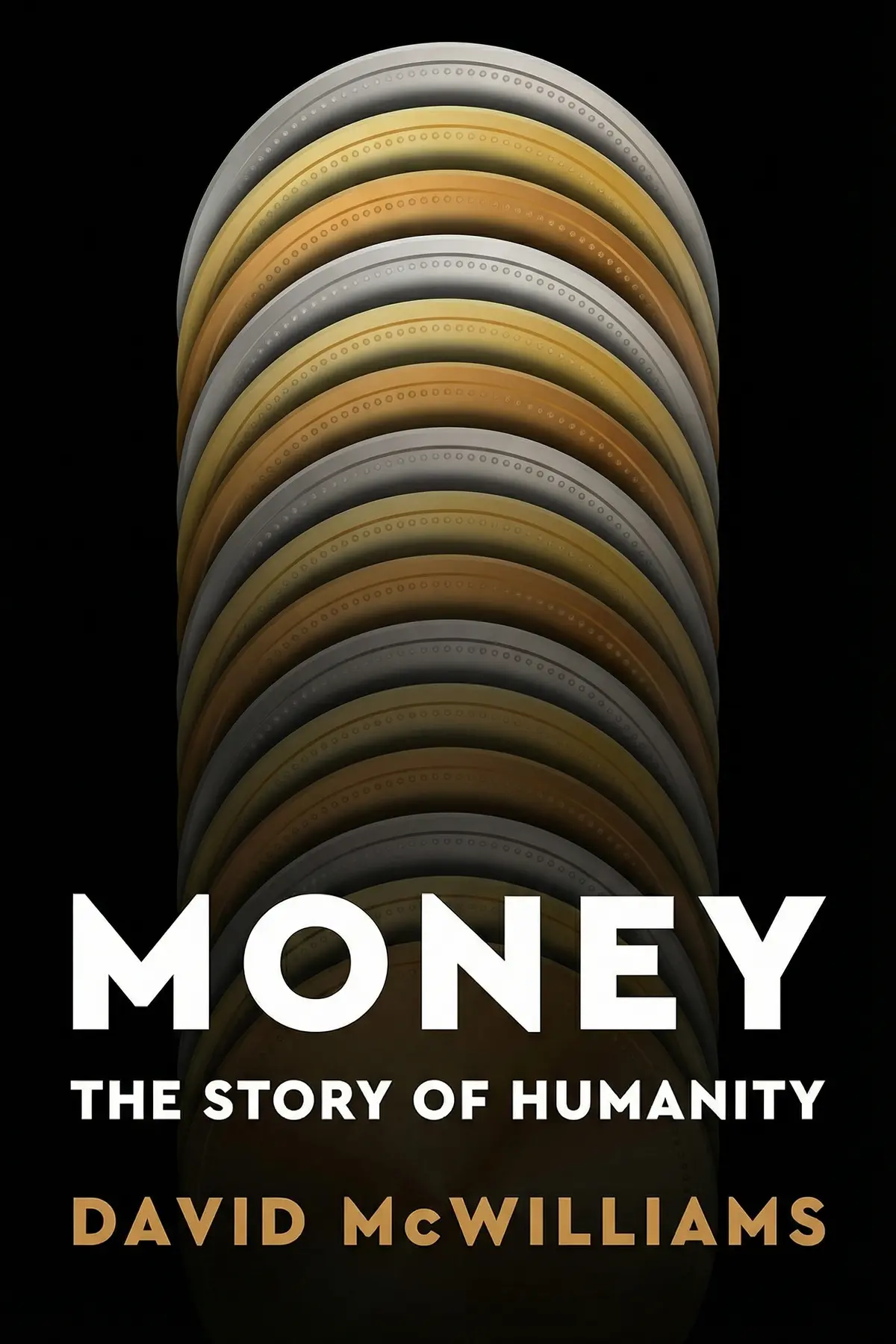
This exploration of financial history reveals how money serves as a vital social technology, evolving from ancient grain stores to modern digital credit to facilitate human cooperation, trust, and global economic growth.
1 min 54 sec
Every time you swipe your phone to pay for a coffee or check the balance of your savings account, you are participating in a ritual that spans thousands of years. It feels like a simple, mechanical part of modern life, yet beneath the surface of every transaction lies the most profound invention in human history. We often think of money as a physical object—a coin, a bill, or a digital entry—but in reality, it is something much more abstract and powerful. It is the invisible thread that weaves together the fabric of our civilization.
In this exploration, we are going to look at the story of our species through a different lens. We usually learn history through the rise and fall of kings or the outcome of great battles, but there is a parallel history that is just as significant: the history of how we measure, store, and exchange value. From the clay tablets of ancient Mesopotamia to the mobile phone networks of modern Kenya, the way we use money reveals the deepest truths about our ability to cooperate, our willingness to trust strangers, and our desire to build a future better than the present.
Author David McWilliams argues that money isn’t just a byproduct of the economy; it is a social technology. It is a tool we created to solve the problems of living together in large groups. As we walk through this history, you’ll see how money has evolved alongside our social structures, constantly adapting to meet new challenges. We’ll discover how the invention of interest rates changed our perception of time, how the rise of paper money signaled a revolution in public trust, and why the vast majority of the money in the world today is actually conjured out of thin air by banks. By the end of this journey, you’ll see that the story of money is, quite literally, the story of us.
3 min 09 sec
Discover how the shift from wandering tribes to settled farms forced us to invent a cognitive tool that could manage the complexity of large communities and shared resources.
3 min 11 sec
Explore how a simple loan for ancient beer-making forever altered our relationship with the future by putting a specific price on the passage of time itself.
3 min 12 sec
Learn why the move from heavy metal coins to flimsy slips of paper was less about chemistry and more about a profound cultural revolution in human trust.
3 min 02 sec
Peer into the invisible world of modern finance where the vast majority of our wealth is conjured into existence not by printing presses, but by keystrokes.
3 min 01 sec
See how a mobile phone in a rural village can teach us more about the future of finance than the most complex algorithms of Wall Street.
1 min 51 sec
As we reach the end of this journey through the history of money, we are left with a powerful new perspective on our daily lives. We have seen that money is not just a collection of coins or digits; it is a profound social technology that reflects our greatest strengths and our deepest vulnerabilities. From its origins as a way to track grain in ancient granaries to the invisible layers of credit that power our modern world, money has always been about one thing: the human ability to cooperate at scale.
The throughline of this story is trust. Every major leap in financial history—from the invention of interest to the introduction of paper currency—was actually a leap in our ability to trust strangers and believe in the stability of our institutions. When we pay for something today, we aren’t just exchanging value; we are participating in a massive, global system of shared faith. We are betting that the systems we’ve built will hold together and that the promises we make to one another will be kept.
The final takeaway is that money is a tool that we have the power to shape. It is not a law of nature; it is a human invention. Just as the creators of the Wisselbank or the founders of M-Pesa found new ways to make money work for their societies, we have the opportunity to ensure that our financial systems continue to evolve in ways that are inclusive, useful, and transparent. By understanding the history of how money made us, we gain the insight needed to decide how we want to make money work for our future. Remember that every transaction is a vote of confidence in our collective future, and the more we understand the logic of the system, the more empowered we are to navigate it.
Money offers a deep exploration into the ways our civilization has been built upon the concepts of value, exchange, and faith. Rather than viewing finance as a dry collection of numbers and charts, this narrative repositioning shows it as a vital social technology that allowed human beings to scale up from small tribal units to a global, interconnected society. By tracing the journey of currency from the ancient grain-filled storehouses of Mesopotamia to the digital wallets of contemporary Africa, the book reveals how every major leap in our economic systems was actually a leap in our ability to trust one another and plan for the future. The promise of this work is to strip away the jargon and complexity that often makes finance feel inaccessible. It empowers you to understand the underlying forces that shape your daily life, from the interest rates on your mortgage to the digital transactions on your phone. You will discover how money is less about what is in your wallet and more about the shared stories and contracts that hold our world together, providing a clear lens through which to view the past, present, and future of our collective human story.
David McWilliams is an economist, author, and journalist known for making complex economic ideas accessible to a broad audience. He writes a weekly column for the Irish Times and hosts The David McWilliams Podcast, where he breaks down economics in an engaging, conversational style. He is an Adjunct Professor at Trinity College Dublin and has worked as an economist with institutions including the Irish Central Bank and Banque Nationale de Paris.
Listeners find the book entertaining and value the historical information provided, while one listener specifically points out its unique economic viewpoint. Additionally, the work stimulates deep thought, as one listener mentions it offers a foundational grasp of today's financial systems. Nevertheless, opinions on its accessibility are varied, with one listener characterizing the content as heavy reading.
Finally got around to David McWilliams’ latest, and it’s a masterclass in narrative non-fiction. He turns what could be a dry, dusty subject into a vibrant saga of human ambition and ingenuity. I particularly loved the section on John Law and the Mississippi Bubble; it reads like a thriller rather than a financial lecture. McWilliams has this incredible knack for explaining how the concept of zero wasn't just a math thing, but a revolutionary pivot for trade and accounting. While some might find the jump from ancient Mesopotamia to modern crypto a bit jarring, the connective tissue is the author’s wit. It’s thought-provoking, fast-paced, and genuinely changed how I view the coins in my pocket. If you want a basic understanding of how the world actually spins, start here.
Show moreDavid McWilliams has a gift for making the complex feel intimate. He argues that money isn't just about greed; it’s the central nervous system of our civilization. I was hooked from the first chapter on the Lydians and the invention of coinage. The way he describes money as a "leap of mental abstraction" really resonates in our current era of digital transactions and NFTs. It’s not just a history book; it’s a philosophical inquiry into what we value and why. Some might say it’s pop-history, but frankly, we need more books that can translate these dense concepts for the average person. The writing is punchy, the anecdotes are colorful, and the perspective is refreshingly optimistic about commerce as a force for liberation.
Show moreWow, talk about a perspective shift. I never realized how much our social structures are dictated by the way we tally up debts. The section on the Greeks and the link between coinage and democracy was eye-opening, even if some historians might find it a bit simplistic. McWilliams has this way of weaving together sociology and economics that feels entirely fresh. He treats money as a "crowd phenomenon," much like language, which is a fascinating way to look at why we all agree these digital zeros in our bank accounts actually mean something. It’s entertaining, thought-provoking, and surprisingly funny for a book about finance. Definitely a must-read for anyone trying to make sense of the current economic chaos.
Show moreAfter hearing McWilliams on a podcast, I knew I had to grab this. It’s a brilliant companion to books like Guns, Germs, and Steel or Sapiens. The focus on how money acts as a "liberator" from birth-determined class systems is an interesting angle, though I think he plays down the cultural baggage that keeps people stuck. The highlight for me was the discussion on how the adoption of Arabic numerals via Sicily changed the time value of money forever. It’s a big, ambitious book that tries to cover five thousand years of history, and while it occasionally skims the surface, the insights it provides are invaluable. It’s accessible digital history at its best—highly recommended for your next long flight.
Show moreAs someone who usually finds economics about as exciting as watching paint dry, this was a pleasant surprise. McWilliams avoids the jargon-heavy trap that most economists fall into, focusing instead on "money as a social technology." The idea that Christianity rose as a response to the "uncoolness" of coinage was a fascinating, if slightly speculative, take. Truth is, the book does feel a bit Eurocentric at times, glancing over vast swathes of history to get back to the Dutch bourses. However, the analysis of the Roman Empire’s collapse due to silver debasement was genuinely illuminating. It’s heavy reading in spots—you can't just skim the chapters on MMT or bond markets—but the payoff is a much clearer picture of modern finance. Solid four stars for making me think.
Show moreThis book is basically a whirlwind tour of human history through the lens of a bank statement. It’s entertaining, though I’ll admit I was skeptical of some of the broader claims, like the heavy metallic plough being the primary driver out of the Dark Ages. McWilliams is a great storyteller, but his reliance on secondary sources makes some arguments feel a bit superficial compared to more academic tomes. I appreciated the sharp commentary on tech bros and the crypto world toward the end; he doesn't pull any punches regarding the volatility of Bitcoin. It’s a bit scattered in the middle, jumping between eras with dizzying speed, but the central thesis—that money is an imagined reality—is handled with much more flair than in typical pop-history.
Show moreThe chapter on the Lydians alone is worth the price of admission. McWilliams manages to connect ancient debt systems to modern-day fractional reserve banking without losing the reader in the weeds. I liked the historical facts—especially the bit about the Florentines and double-entry bookkeeping—but I did find the structure a bit messy toward the end. It feels like the author had a lot of opinions on current events and decided to tack them on as a series of random chapters. Still, his take on how money fuels social mobility is thought-provoking, even if it ignores some of the darker sides of capitalism like colonial conquest. It’s an engaging, if slightly flawed, exploration of why we trust pieces of paper.
Show morePicked this up because I wanted to understand the 2008 crisis better, and I ended up learning about Babylonian clay tablets instead. It’s a wide-ranging book that covers everything from the Mississippi Bubble to the rise of the Dutch bourses. McWilliams writes with a lot of energy, making the "dismal science" feel almost poetic. My only gripe is that it can be a bit heavy on the author's personal commentary, which sometimes borders on attacks against certain tech groups. However, the explanation of how banks create money "out of thin air" was the clearest I've ever read. It’s a great entry point for anyone looking for a basic understanding of modern finance through a historical lens.
Show moreEver wonder why a piece of paper has the power to start wars or build cities? This book dives deep into that mystery. McWilliams treats money as a story we all tell each other, and he tells that story very well. While it can be heavy reading during the technical sections on quantitative easing and MMT, the author’s analogies usually pull you through. I did feel the book danced around the actual "history" part at times to focus on quirky personalities, but those stories are what make it so readable. It’s a solid overview of monetary innovation, even if it has a noticeable Western bias. If you want a fun, informative look at our financial world, you won't be disappointed.
Show moreI really wanted to like this, but the book frustrated me more than it informed me. It promises a global history but spends about 90% of its time on Europe and the US, essentially ignoring huge chunks of Asian and African monetary history. Beyond that, the author’s tone can be quite patronizing when he starts ranting about "crypto bros" or social classes. It felt less like a rigorous historical analysis and more like a collection of personal essays and mini-biographies of "colorful characters." To be fair, the prose is decent, but the lack of primary sources and the constant digressions made it hard to take the bigger arguments seriously. If you've read Graeber’s Debt, this will feel like a superficial step backward.
Show moreFay Bound Alberti

Ron Chernow
Andrew Ross Sorkin

Philip Freeman

Ha-Joon Chang


Niall Kishtainy
AUDIO SUMMARY AVAILABLE
Get the key ideas from Money by David McWilliams, plus 5,000+ more titles in English and Thai.







