
26 min 49 sec
Moore’s Law: The Life of Gordon Moore, Silicon Valley’s Quiet Revolutionary
Explore the life of Gordon Moore, the visionary chemist and Intel co-founder whose prediction of exponential technological growth defined the digital age and transformed Silicon Valley into a global powerhouse.
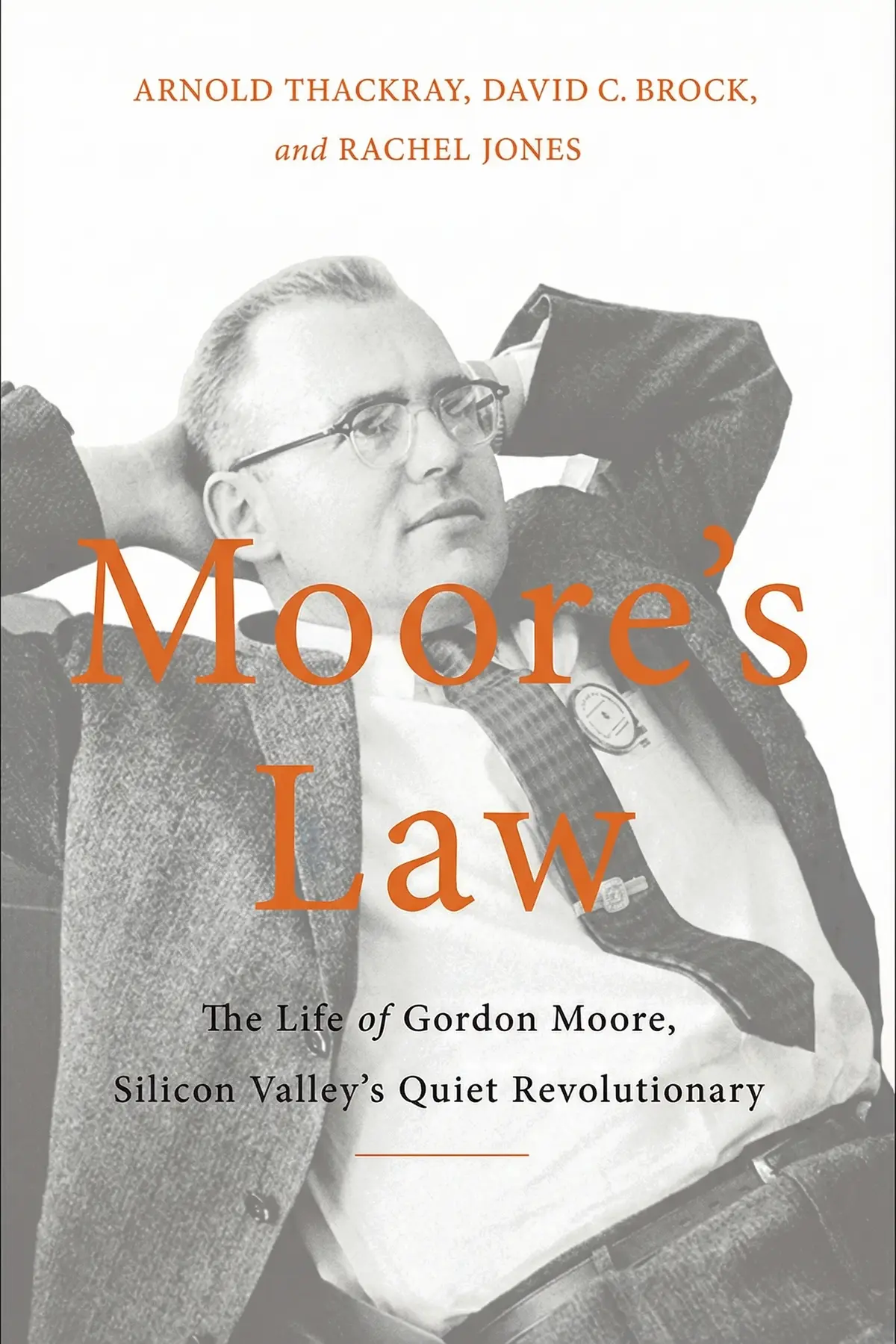
Table of Content
1. Introduction
1 min 55 sec
When we think about the architects of the digital revolution, names like Steve Jobs, Bill Gates, or perhaps Mark Zuckerberg often spring to mind. These figures represent the public face of tech—the charismatic leaders and marketing geniuses who brought personal computing and the internet into our homes. But if we peel back the layers of history to find the person who actually made the underlying hardware possible, one name stands above the rest: Gordon Moore.
Gordon Moore was not a man who sought the spotlight. He was a quiet, analytical chemist who preferred the steady progress of the laboratory to the roar of a press conference. Yet, his influence is woven into every smartphone, every laptop, and every server on the planet. As a co-founder of both Fairchild Semiconductor and Intel, Moore was present at the literal creation of Silicon Valley. More importantly, he possessed a rare kind of foresight. In 1965, he made a prediction about the future of integrated circuits that was so accurate and so foundational that it became known as a law—Moore’s Law.
This biography takes us on a journey through Moore’s life, from his humble beginnings in California to the pinnacle of the global tech industry. It is a story of how a passion for science, a series of bold risks, and a commitment to constant improvement created the technological landscape we inhabit today. By following the throughline of Moore’s career, we can understand not just how our gadgets were made, but why the world changed so rapidly in a single lifetime. We will explore how his early experiments with explosives foreshadowed a career of breaking boundaries, how a group of frustrated scientists changed the course of business history, and how a simple observation about transistors became the heartbeat of modern progress. This is the story of the quiet revolutionary who saw the future before it was even built.
2. A Spark of Scientific Curiosity
2 min 37 sec
From a childhood fascination with chemistry and explosives, Gordon Moore developed the analytical mindset that would eventually revolutionize the electronics industry.
3. The Path to Professional Mastery
2 min 39 sec
Moore’s academic journey through Berkeley and Caltech provided the rigorous training and influential mentors needed to excel in the burgeoning field of physical chemistry.
4. The Transistor Revolution
2 min 29 sec
A return to California and a job with William Shockley introduced Moore to the revolutionary potential of semiconductors and the challenges of early silicon technology.
5. Fairchild and the Birth of the Fast Switch
2 min 40 sec
As a leader of the ‘traitorous eight,’ Moore co-founded Fairchild Semiconductor and successfully brought the first fast-switching silicon transistor to the market.
6. Predicting the Future of the Microchip
2 min 39 sec
Through a simple yet profound observation, Moore formulated his famous law, predicting the exponential rise of computing power and the decline of manufacturing costs.
7. The Founding of Intel and the Memory Market
2 min 28 sec
Moore and Robert Noyce launched Intel to capitalize on the growing need for digital memory, leading to the creation of the first successful memory chips.
8. Hard Lessons in Consumer Electronics
2 min 28 sec
A failed venture into the electronic watch market taught Moore that technical superiority alone isn’t enough to succeed in the consumer goods industry.
9. The Rise of the Microprocessor
2 min 31 sec
Faced with intense competition in the memory market, Moore pivoted Intel toward microprocessors, leading to a historic partnership with Microsoft and PC dominance.
10. Retirement and a Legacy of Giving
2 min 30 sec
After decades of leading the digital revolution, Moore turned his attention to philanthropy, using his immense wealth to support education and scientific research.
11. Conclusion
1 min 53 sec
The life of Gordon Moore is a profound reminder that history isn’t just made by the loudest voices or the most visible leaders. Sometimes, the most significant changes are driven by the quietest person in the room—the one who is busy analyzing data, conducting experiments, and thinking decades into the future. From his early days blowing up mailboxes with home-made explosives to his final years as a global philanthropist, Moore’s throughline was always a deep, unwavering curiosity about the material world.
Through his work at Fairchild and Intel, Moore didn’t just build companies; he built the infrastructure of modern life. He took the abstract potential of the transistor and turned it into the ubiquitous microchips that power our world. His most famous legacy, Moore’s Law, was more than just a prediction; it was a challenge to humanity to keep pushing the boundaries of what is possible. It created a world where we expect progress to be constant and where the technology of tomorrow will always be better than the technology of today.
As we move into an era where traditional silicon technology reaches its physical limits, the lessons of Moore’s life are more relevant than ever. He showed us that innovation requires a mix of scientific rigor, the willingness to take risks, and the humility to learn from failure. He proved that even a quiet chemist from San Francisco could change the course of human history. The next great technological leap will likely come from someone who, like Moore, is currently working quietly in a lab, questioning the established literature, and looking for the next pattern that everyone else has missed. The challenge for us is to keep fostering that spirit of inquiry and to remember that the most powerful revolutions often start with a single, quiet observation.
About this book
What is this book about?
Moore’s Law offers a comprehensive look at the man behind the most famous principle in computing. While figures like Steve Jobs and Bill Gates became household names, Gordon Moore worked quietly in the background, fundamentally architecting the modern world. This biography traces his journey from a young boy fascinated by explosives to a PhD chemist who revolutionized how we think about semiconductors. The book promises to reveal how Moore’s unique blend of scientific rigor and entrepreneurial grit led to the founding of Fairchild Semiconductor and Intel. It explores the birth of the silicon transistor, the emergence of the microchip, and the creation of the microprocessor. Beyond the technical achievements, it delves into the personal philosophy and business lessons of a man who preferred the laboratory to the limelight, providing a rare glimpse into the quiet revolutionary who predicted our high-tech future decades before it arrived.
Book Information
About the Author
Arnold Thackray
Arnold Thackray is an accomplished writer and served as the CEO of the Chemical Heritage Foundation. David Brock is recognized globally as a leading expert on the history of electronics. Rachel Jones is a veteran journalist who focuses her reporting on the intersections of technology and entrepreneurship.
Ratings & Reviews
Ratings at a glance
What people think
Listeners find the work clear and comprehensive, with one noting it covers much of the early history. The account earns favorable feedback, with one listener describing it as providing a much broader narrative.
Top reviews
Rung
As someone who has followed the semiconductor industry for years, I found this biography to be an essential, definitive account of Gordon Moore’s life. It is a sweeping narrative that successfully links his quiet, methodical personality to the explosive growth of Intel. Many people focus on Andy Grove’s intensity, but this book correctly elevates Moore’s technical brilliance and manufacturing insights. The explanation of the economics behind Moore’s Law—how scale and 'learning by doing' drove prices down—was particularly enlightening. While it’s a hefty read, the depth of research is staggering. Truly an outstanding look at the man who essentially architected our digital age.
Show moreMia
Picked this up on a whim at the library and was blown away by the sheer depth of the research provided by Thackray and his team. Gordon Moore is often overshadowed by bigger personalities, but this book proves he was the real engine behind the microprocessor market. The authors don't just explain what Moore's Law is; they explain why it happened, highlighting the crucial role of government demand and the Cold War in scaling the industry. It’s a phenomenal piece of history that makes you appreciate the microchips in your pocket. It is long, but every page feels necessary to understand the scale of his influence.
Show moreTanyaporn
Finally got around to this massive tome, and it is a masterpiece of corporate and personal history. The authors provide a much broader narrative than I expected, reaching all the way back to the Moore family's journey during the California gold rush. While some readers might find the ancestral history a bit much, it sets the stage for Gordon’s own pioneering spirit in the tech world. The book is strongest when it dives into the infancy of Silicon Valley and the high-stakes manufacturing battles at Intel. I was particularly fascinated by the discussion of how the Cold War and government demand provided the necessary scale for Moore's Law to actually function in the real world. It wasn't just magic; it was economics and hardware. My only minor gripe is that the environmental impact is mostly glossed over, but it’s still a phenomenal, detailed achievement.
Show moreSomrutai
Look, if you want to understand how the modern world was built, you have to understand Gordon Moore. This is a very readable, surprisingly emotional journey from his early days as a chemist to his time leading the microprocessor revolution. I loved the focus on his personal character—how he stayed consistent and dedicated for decades without the ego you usually find in Silicon Valley. The book beautifully illustrates how he turned a simple observation about transistors into a global mandate for innovation. It’s detailed, it’s insightful, and it’s a fitting tribute to a man who changed everything. Highly recommended for any tech fan or history buff.
Show moreHemp
This book offers a remarkably detailed look at the man behind the most famous 'law' in computing. It’s more than just a dry business history; it’s a comprehensive look at the infancy of Silicon Valley. I was struck by how Moore remained a consistent, stabilizing presence at Intel for decades without getting bored or losing his edge. The authors do a great job of showing how his background in chemistry led him to rethink what was possible with silicon. My only real complaint is that the early chapters about his ancestors felt a bit disconnected from the rest of the story. Once it gets into the Fairchild and Intel years, however, it’s hard to put down.
Show morePraepimon
The early chapters regarding Moore’s family history in the American West felt a bit unnecessary, but the narrative hits its stride once the silicon starts flowing. It is a quite enjoyable combined history of Intel and the man who founded it. I appreciated the technical depth regarding the manufacturing process; it wasn't just 'business talk,' but actual science. You really get a sense of how Moore’s passion for chemistry revolutionized memory processing. The book is very readable despite its length, though the ending drags slightly as it shifts toward his later charitable work. It’s a solid 4-star read for anyone interested in tech history.
Show moreNora
After hearing 'Moore's Law' cited in nearly every tech podcast I listen to, I finally decided to learn about the man himself. This book is a deep dive into how Gordon Moore followed his talents from chemistry into the world of microchips. It was fascinating to see how Intel dominated the market through sheer innovation and intellectual discipline. The authors provide great insights into the role of returns to scale and how manufacturing improvements actually worked. It does start slow with the pioneer heritage stuff, which didn't really land for me, but the rest of the book is a goldmine of information. Highly recommended for techies.
Show moreWorawit
Ever wonder if a biography can actually be too thorough? This book is an absolute unit. Moore’s Law is obviously a cornerstone of modern life, and the authors do a great job explaining the chemistry and the microchips, but the pacing is a struggle. We start with the family in the 1800s and don't hit the semiconductors for a long time. To be fair, Gordon Moore is a fascinating, underrated figure compared to the flashy CEOs we see today. His move into philanthropy is touching, but I really had to push myself through the middle sections. It’s a good book, just incredibly long.
Show moreFon
Truth is, I appreciated the information in this book more than the presentation. It’s an incredibly broad narrative that covers everything from the 19th century to modern day philanthropy. While it’s detailed, the authors sometimes lose the forest for the trees. I wanted more about the rivalry between companies and maybe a bit more about the 'dirty business' of chip making, which was only briefly mentioned. Gordon Moore is a legend, and he deserves a biography of this scale, but you definitely need a lot of patience to finish it. It’s a very informative read, but definitely not a fast one.
Show moreWipawan
Not what I expected, and frankly, a bit of a slog to get through. While Gordon Moore is undoubtedly a titan of industry, this biography feels like it was written more for an archive than for a casual reader. The authors spend an exhausting amount of time on his family's genealogy dating back to the Gold Rush before even mentioning a transistor. The technical details of Intel's rise are there, but they are buried under mountains of dry prose. I also found the lack of critical focus on the environmental toll of semiconductor manufacturing to be a massive oversight. It’s too long and too reverent for my taste.
Show moreReaders also enjoyed

A River in Darkness: One Man’s Escape from North Korea
Masaji Ishikawa

A Spy Among Friends: Philby and the Great Betrayal
Ben Macintyre

A Year in the Life of William Shakespeare: 1599
James Shapiro

7 Powers: The Foundations of Business Strategy
Hamilton Helmer

Agent Sonya: The Spy Next Door
Ben Macintyre
AUDIO SUMMARY AVAILABLE
Listen to Moore’s Law in 15 minutes
Get the key ideas from Moore’s Law by Arnold Thackray, plus 5,000+ more titles in English and Thai.
- 5,000+ titles
- Listen as much as you want
- 7-day free trial
- Cancel anytime







