

A Spy Among Friends: Philby and the Great Betrayal
Ben Macintyre
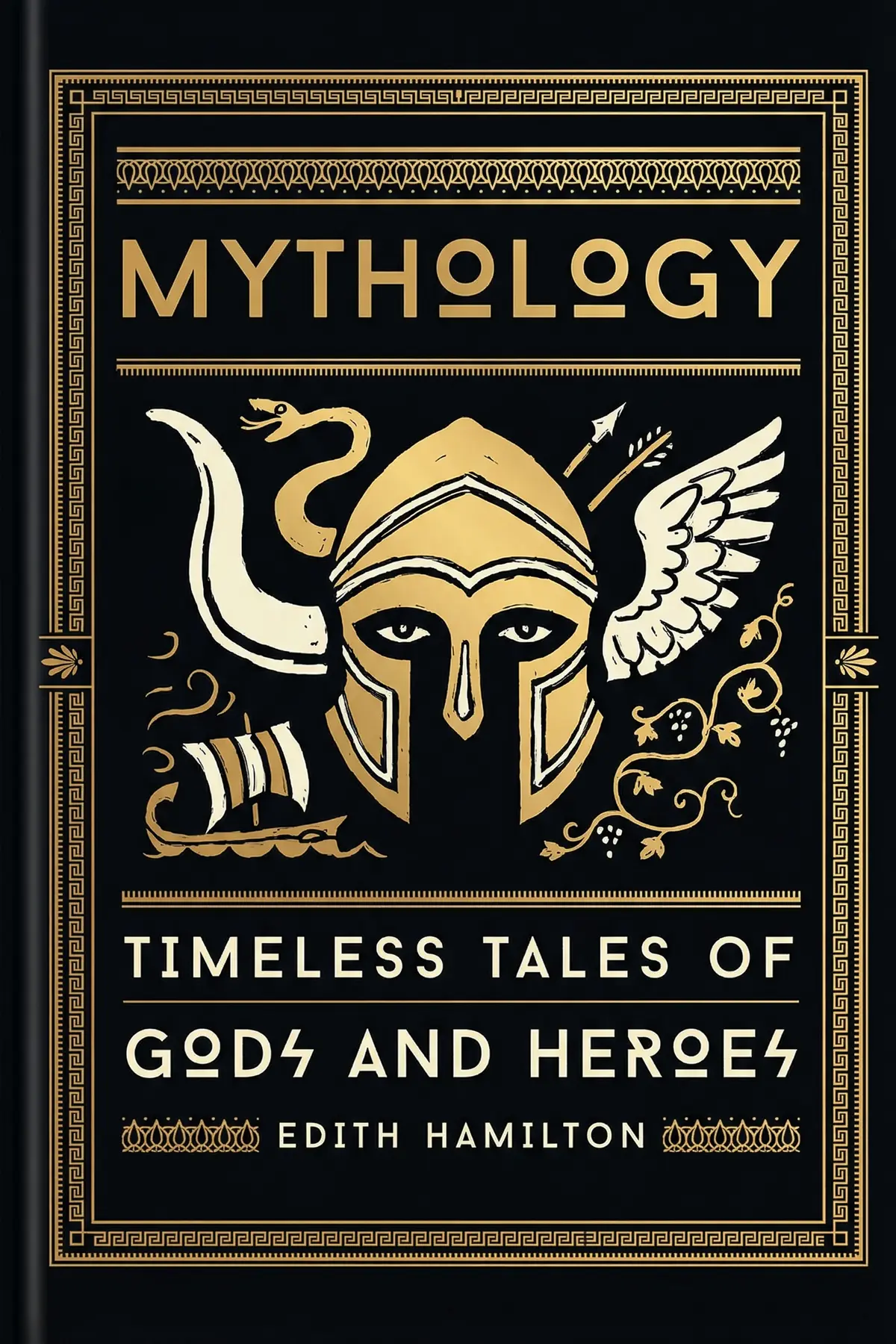
Explore the foundational narratives of Western civilization through Edith Hamilton's definitive guide to Greek and Roman mythology, uncovering the timeless tales of gods, heroes, and the human condition.
1 min 36 sec
Step back into an era where the world was young, and the line between the natural and the supernatural was as thin as a morning mist. For centuries, the stories of ancient Greece and Rome have done more than just entertain; they have provided the very blueprints for Western art, literature, and philosophy. Whether you are walking through a prestigious museum or reading a modern novel, you are likely standing in the shadow of these ancient giants. To truly understand our cultural landscape, one must understand the myths that built it.
In this journey through Edith Hamilton’s classic work, we are going to move beyond the surface-level names you might recognize and dive into the heart of these narratives. We will explore how the Greeks reimagined the divine in their own image, creating gods who were as flawed, jealous, and passionate as any mortal. This wasn’t just religion; it was a way of making sense of a chaotic universe. From the terrifying birth of the Titans to the long, salt-sprayed voyage of Odysseus, these stories offer a mirror to the human soul.
As we navigate these tales, keep an eye on the throughline: the transition from a world of formless darkness and monstrous entities to a structured, rationalized universe governed by gods who, while powerful, felt remarkably familiar. We will see how these stories explain the change of the seasons, the dangers of pride, and the enduring power of love. So, prepare yourself to meet the figures who have shaped our collective imagination for millennia. This is the story of where we came from and how the ancient world continues to speak to us today.
1 min 56 sec
Before the gods claimed their thrones, the universe began in total silence and darkness, slowly giving rise to the forces of love and light.
1 min 55 sec
The rise of the gods was not a peaceful transition but a violent struggle between fathers and sons that spanned generations.
2 min 12 sec
Unlike the distant and alien deities of other ancient cultures, the Greek gods were crafted in the image of humanity, making the divine world relatable.
2 min 12 sec
The twelve major gods of Greece formed a volatile family, each overseeing a specific aspect of human existence from their mountain home.
1 min 58 sec
Through the poignant story of a mother’s grief, the Greeks explained the changing seasons and the necessity of life and death.
1 min 48 sec
Dionysus represented both the ecstasy and the danger of wine, reflecting the irrational side of the human experience.
2 min 16 sec
The greatest hero of Greece was a man of immense power and equally immense flaws, whose life was defined by a quest for redemption.
2 min 09 sec
From the self-obsession of Narcissus to the tragic devotion of Orpheus, the Greeks used myth to explore the depths of human emotion.
1 min 58 sec
The quest for the Golden Fleece combined the excitement of exploration with a dark tale of sorcery and broken promises.
1 min 53 sec
The Trojan War was not just a battle between nations, but a decade-long drama fueled by divine whims and the pride of heroes.
1 min 52 sec
The end of Troy came not through the strength of warriors, but through a legendary act of deception that changed the course of history.
1 min 57 sec
Odysseus’s ten-year struggle to return home serves as the ultimate metaphor for the human journey through life’s trials and temptations.
1 min 45 sec
As we close this exploration of the ancient myths, it becomes clear why these stories have persisted for thousands of years. They are not merely dusty relics of a forgotten religion; they are the fundamental building blocks of how we understand our world. The Greeks and Romans gave us a vocabulary for our own experiences—naming our vanities after Narcissus, our struggles after Hercules, and our long journeys after Odysseus. They took the terrifying, chaotic forces of nature and turned them into characters we could talk to, bargain with, and learn from.
The throughline of these myths is the constant tension between order and chaos, fate and free will. We’ve seen gods who behave like children and humans who display the courage of the divine. We’ve watched as the world was carved out of darkness and as great cities were burned to the ground. Through it all, the underlying message is that the human condition is a complex tapestry of strength and weakness, and that our stories are the only thing that can truly transcend time.
To carry these lessons forward, consider the myths as a lens through which to view your own life. When you face a daunting challenge, remember the ingenuity of Odysseus or the persistence of Hercules. When you feel the pull of ego or the weight of grief, look to Narcissus or Demeter. These narratives remind us that while the gods may have faded from the mountaintops, the human emotions they represented remain exactly the same. By understanding the myths of the past, we gain a deeper insight into the reality of our present, recognizing that we are all part of a long, continuing story that began long before us and will continue long after we are gone.
This exploration of ancient mythology serves as a comprehensive bridge between the modern world and the classical past. It traces the origins of the universe from the formless void of Chaos to the rise of the Olympian gods, detailing the complex family dynamics of the divine and the legendary trials of human heroes. The summary provides a deep dive into the most significant myths, including the tragic labors of Hercules, the perilous quest for the Golden Fleece, and the epic ten-year siege of Troy. Beyond mere storytelling, the book promises to reveal how these ancient cultures used mythology as a rational system to explain the natural world and the complexities of human nature, from the cycles of the seasons to the duality of inspiration and madness.
Edith Hamilton was a distinguished classicist and educator who remained active in her field until her passing at the age of 95 in 1963. She gained widespread renown for her unique ability to translate the complexities of ancient literature for a general audience. Her work is celebrated for distilling the intricate details of antiquity into clear, engaging narratives that resonate with modern readers, making the world of Greece and Rome accessible and exciting.
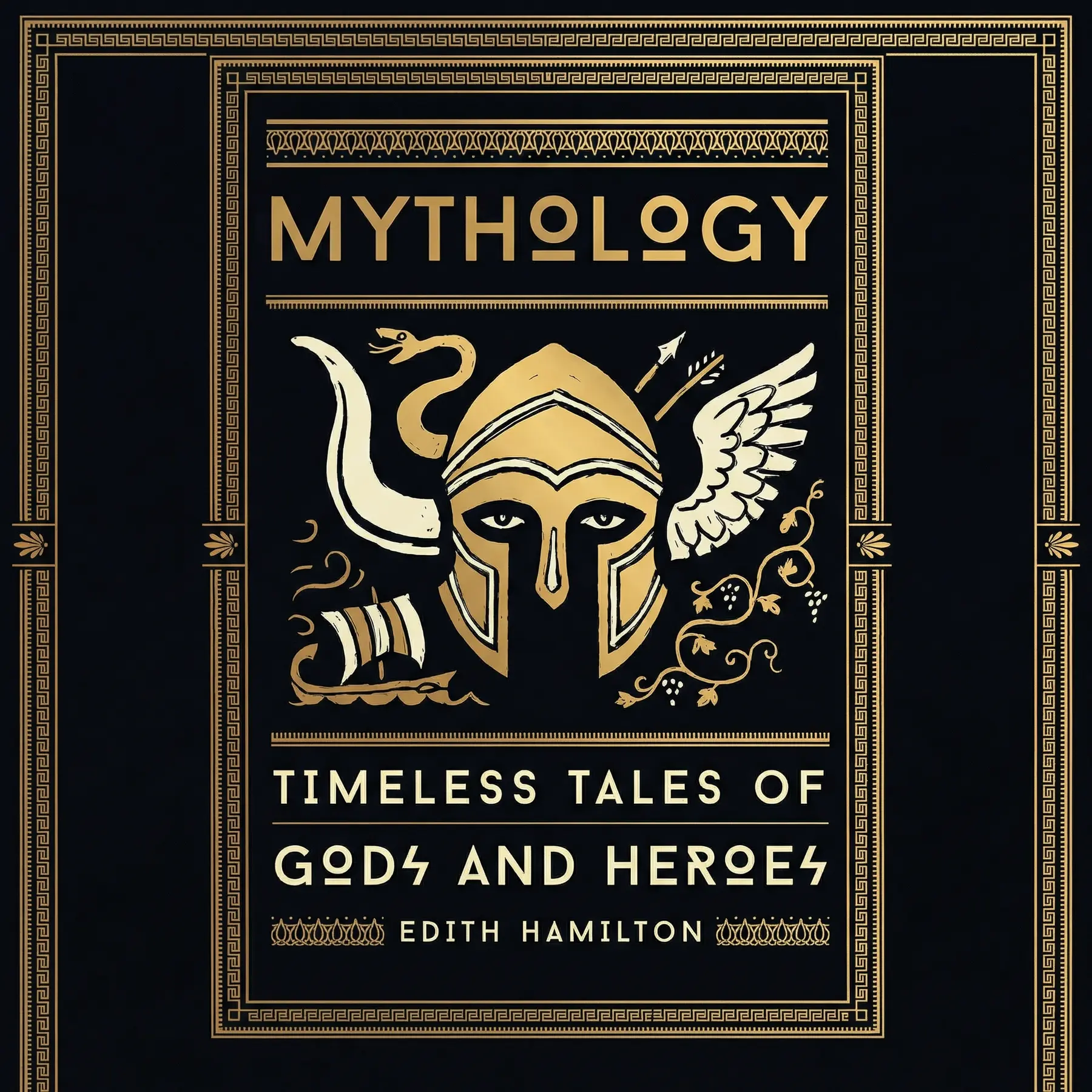
Listeners find this illustrated volume impressive due to its striking gold hardcover and remarkable artwork, which help create a thorough exploration of Greek and Norse myths. The content is accessible and clear, featuring extensive information and elegant writing that gives a fresh perspective to classic narratives. However, several listeners have mentioned that their editions arrived with smudges and odd fingerprint stains on the front cover.
Finally got around to picking up the 75th-anniversary edition, and it is a total showstopper on my coffee table. The gold hardcover is absolutely gorgeous, although I must admit it picks up fingerprints and smudges way too easily. Hamilton's writing strikes a perfect balance between scholarly authority and accessible storytelling, making it feel less like a textbook and more like a collection of epic tales. I especially appreciated how she identifies her sources like Ovid or Hesiod right at the start of each section. It gives the whole book a sense of historical weight that you just don't get from modern retellings. The family trees are an absolute lifesaver when the Greek lineages start getting messy and incestuous. If you're coming from Percy Jackson, be prepared for a much darker and more violent reality, but one that is well worth exploring.
Show moreWow. I spent nearly a year slowly savoring this book and I don’t regret a single second of that time. The 75th-anniversary edition is a work of art, featuring stunning illustrations that really capture the epic, terrifying scale of the gods. I found the chapter on the "Great Families of Mythology" to be the most compelling part, especially the tragic and bloody arc of the House of Atreus. Hamilton has this incredible ability to distill complex oral traditions into coherent, beautiful narratives that still feel fresh today. It is the kind of book you keep forever and eventually pass down to your kids. It makes the ancient world feel vibrant, dangerous, and very much alive.
Show moreHonestly, I didn't expect to be so moved by the story of Orpheus and Eurydice, but Hamilton’s retelling is hauntingly beautiful. She manages to breathe fresh life into these ancient characters, making their grief and triumphs feel incredibly immediate to a modern reader. I love the physical feel of the 75th-anniversary book; the gold accents make it feel like an ancient treasure you've discovered in a library. While some people find the Steele Savage illustrations a bit weird, I think they add a unique, atmospheric charm to the text that fits the period it was written. This isn't just a reference book; it's a journey into the foundations of all Western storytelling. Every home library needs a copy.
Show moreEver wonder why Greek mythology remains so popular when almost every single god belongs to the streets? Zeus is basically a walking red flag, and Hera’s vengeful streaks against his mistresses are absolutely legendary. Hamilton doesn't shy away from the sheer, unhinged chaos of these ancient families, covering everything from cannibalism to the most bizarre affairs imaginable. I particularly enjoyed her take on Dionysus, who is portrayed as a complex figure of both mindless joy and terrifying madness. The book is well-organized, making it easy to jump between the Trojan War and the stories of individual heroes like Perseus. My only real complaint is that the Norse section feels like a rushed afterthought tagged onto the very end of a Greek-heavy book.
Show moreAs someone who grew up watching the Disney version of Hercules, reading the actual myths here was a massive reality check. Hamilton’s description of him as a hero whose intelligence was "conspicuously absent" made me laugh out loud because it's so bluntly honest. The writing style is definitely a product of its time—slightly formal and dated—but it remains very approachable for a modern audience. I listened to a portion on audio and found the episodic nature of the chapters perfect for short commutes. It’s a great way to brush up on the classics without feeling like you're drowning in academic jargon or dry archaeological data. Just keep an eye on the physical cover quality if you buy the hardcover; mine arrived with some weird oily smears.
Show moreThe chapter on the Norsemen was a nice change of pace, even if it was a bit too brief compared to the Greek sections. I’ve always been fascinated by the concept of Ragnarok, and Hamilton captures that grim, heroic spirit quite well in her summary. Her prose is clear and disciplined, which helps when you’re trying to keep track of the dozen different names for the same Roman/Greek deity. I did notice some minor printing issues on the gold hardcover version, specifically some fingerprint marks that wouldn't wipe off. However, the internal layout and the helpful family trees make this the best version of the text to own. It’s an essential classic for a reason, even with its small flaws.
Show moreAfter hearing so much about this book in my literature classes, I finally decided to give it a go. I was surprised by how much I actually liked the section on the "Less Important Myths" because those stories are so rarely adapted into big-budget movies. Hamilton’s dedication to her sources is really what sets this apart from other collections you might find. She tells you exactly where she’s getting her information, which makes the stories feel more like history than just random fairy tales. The prose is dignified without being stuffy, though it does require some concentration to follow the tangled family lines of the gods. It is a definite win for any mythology lover's shelf.
Show moreThis book is frequently cited as the gold standard for mythology, but frankly, it feels a bit like a glorified textbook for high schoolers. While Hamilton is clearly a superior scholar compared to Bulfinch, her prose never truly takes flight for me. It lacks the lyrical magic I expected from such legendary stories. The "Reader’s Digest" condensation style makes the pacing move quickly, yet I often felt like I was missing the emotional core of these ancient figures. Also, the Steele Savage illustrations are definitely an acquired taste, featuring lots of dramatic clouds and frantic-looking characters with double-jointed limbs. It is a solid, reliable resource for academic study, but it didn't ignite my imagination the way I hoped it would.
Show morePicked this up to find a better alternative to Bulfinch, and while it is certainly more scholarly, I still found the tone a bit dry. Truth is, Hamilton’s background as a headmistress really shines through in her writing; she can be quite opinionated about which versions of myths are "correct" and which writers are inferior. I missed the raw, earthy violence and sexual tension that some more modern translators manage to capture. It feels a bit sanitized, likely for a 1940s classroom setting. It’s a perfect introductory text for a student, but seasoned mythology buffs might find it a little too basic for their needs. The illustrations also felt a bit dated and cheesy for my personal taste.
Show moreNot what I expected given the rave reviews this classic usually receives from everyone. To be fair, Hamilton’s knowledge is impressive, but the scope of this book is frustratingly narrow and eurocentric. The title suggests a broad look at world mythology, yet it is about 95% Greek and Roman with a tiny, rushed section on Norse myths at the finish. Where are the Egyptian, Celtic, or Eastern stories? Additionally, the author's dismissal of Ovid and her total lack of interest in the psychological or anthropological aspects of these tales felt incredibly dated to me. It is a collection of plot summaries rather than a deep dive into what these myths actually meant to the culture. It feels more like a study guide than a piece of literature.
Show moreBen Macintyre

Charles C. Mann

James Shapiro

Andrew Ross Sorkin
Pankaj Mishra

Fay Bound Alberti

Ben Macintyre
AUDIO SUMMARY AVAILABLE
Get the key ideas from Mythology by Edith Hamilton, plus 5,000+ more titles in English and Thai.







