

A Long Way Gone: Memoirs of a Boy Soldier
Ishmael Beah
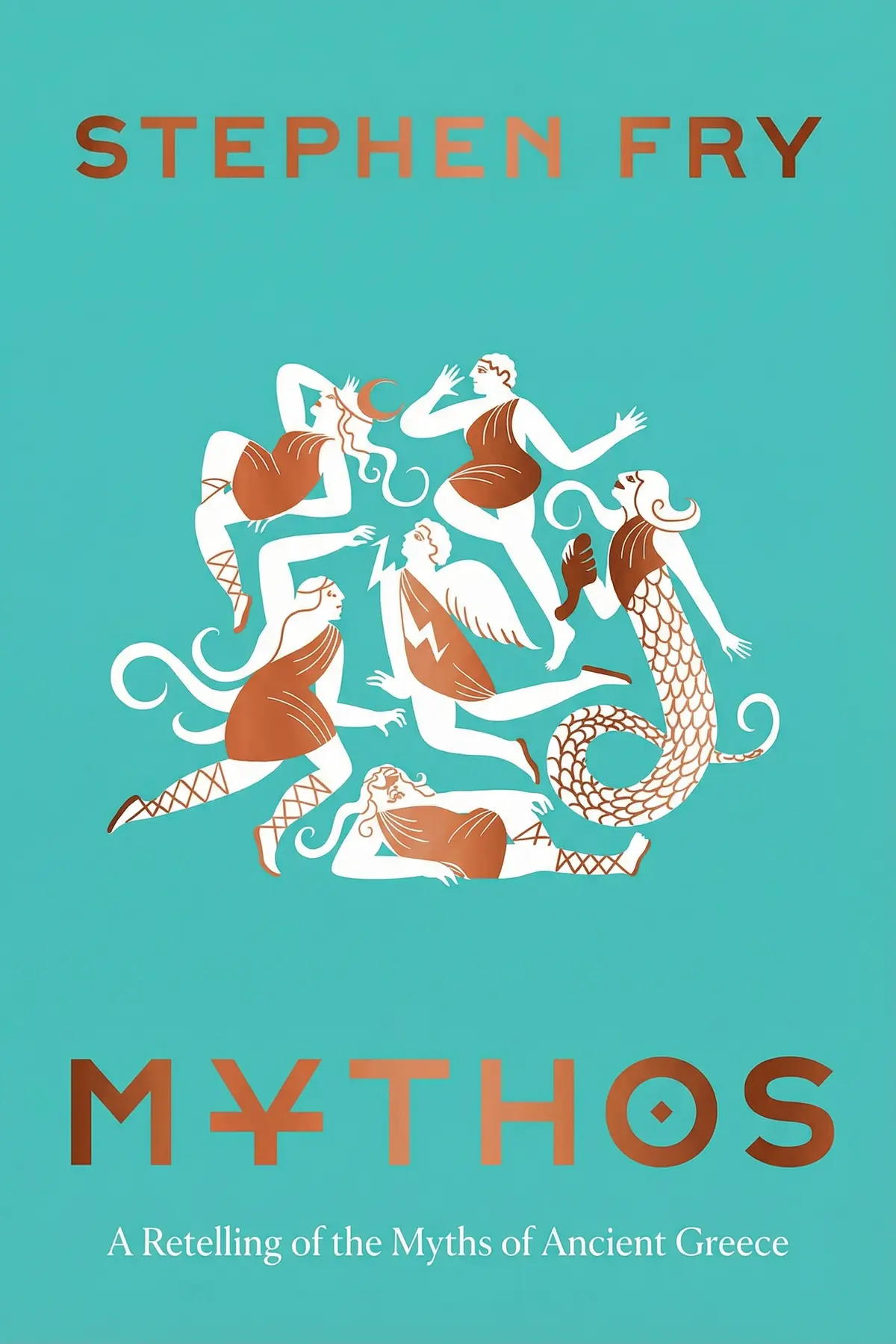
A vibrant retelling of Greek mythology, Mythos breathes modern life into the ancient tales of the gods, from the birth of the universe to the dramatic rise and fall of the Titans.
1 min 31 sec
Greek mythology has a way of lingering in the collective human consciousness unlike almost any other ancient tradition. While many cultures have stories of creation and divine intervention, the Greeks infused their legends with a particular brand of vitality, humor, and visceral emotion that makes their gods feel remarkably like us—only much more powerful and infinitely more dangerous. This journey into the heart of these myths doesn’t just look at the stories as dusty relics of the past; instead, it approaches them as living, breathing narratives that explain the very fabric of our reality.
In the following exploration, we are going to travel back to the absolute beginning—to a time before time, when the universe was nothing more than a vast, silent void. We will witness the birth of the first primordial forces, the violent coups that defined the early hierarchy of the cosmos, and the eventual rise of the famous Olympian gods who would come to rule from the heights of Mount Olympus.
But this isn’t just a story about gods. It is also the story of us. We will look at how humanity was crafted from the earth, the high price paid for the gift of fire, and how curiosity—both a blessing and a curse—forever changed the human condition. Through the lens of these ancient tales, we can see the origins of our own virtues and vices, reflected in the petty squabbles and grand designs of the immortals. So, let’s settle in and prepare to meet the creative, the vengeful, the wise, and the brutal figures who populated the imagination of the ancient Greeks.
1 min 51 sec
Before the world had shape or substance, there was only a vast emptiness that held the potential for everything yet to come.
1 min 36 sec
The union of Earth and Sky brought forth the first generation of true characters, but it also sparked a cycle of paternal cruelty.
1 min 37 sec
A hidden weapon and a son’s cold ambition lead to a violent shift in the cosmic hierarchy.
1 min 38 sec
To escape a prophecy, a king resorts to the unthinkable, but a mother’s clever deception saves the future.
1 min 47 sec
Through wisdom and a powerful potion, the youngest god forces a reckoning with the past.
1 min 34 sec
The victors divide the world and establish a council to govern the universe with a semblance of law.
1 min 38 sec
From simple clay and divine breath, a new race is born to inhabit the earth and amuse the gods.
1 min 40 sec
A bold act of rebellion brings warmth and technology to man, but ignites a divine fury.
2 min 03 sec
A beautiful creation and a mysterious jar become the vessels for the world’s first true hardships.
1 min 41 sec
The stories of the Greek gods are a cycle of power, rebellion, and the inevitable consequences of both. We have seen how the universe moved from the silent void of Chaos to the complex, noisy, and often chaotic world of the Olympians and their human subjects. The transition from Ouranos to Kronos, and finally to Zeus, reflects a movement toward order, yet it is an order built on the foundations of conflict and the suppression of those who came before.
What makes these myths stay with us isn’t just the spectacle of thunderbolts and sea monsters; it’s the profound way they mirror the human experience. Through Prometheus, we see our own drive for innovation and the heavy responsibility that comes with knowledge. Through Pandora, we see the dual nature of our curiosity—the force that drives us to discover but also leads us into unforeseen dangers. And in the image of Hope remaining in the jar, we find a reflection of our own resilience in a world that is often filled with the very hardships the gods unleashed.
As we leave these ancient peaks and primordial voids, it’s worth remembering that these tales were never meant to be static history. They are psychological blueprints. They remind us that power must be tempered with wisdom, that every gift has its price, and that even in the face of divine wrath or cosmic indifference, the human spirit—born of clay and fire—persists. The myths may be ancient, but the questions they ask about our origins and our nature are as fresh as the light of a new day. Whether you see them as literal legends or poetic metaphors, the stories of Mythos remind us that we are all, in some way, part of this grand, ongoing drama.
Mythos is a comprehensive and witty exploration of the Greek myths, starting from the very first moments of existence. It moves through the chaotic primordial era, where darkness and light first emerged, to the violent struggles for power among the earliest divine orders. The book centers on the transition from the Titans to the Olympian gods, led by the rise of Zeus. Beyond the divine politics, the narrative delves into the complex relationship between the gods and their creations. It explores the origins of humanity through the hands of Prometheus and the unintended consequences of the first woman, Pandora. By framing these ancient stories with modern sensibilities, the book promises to make the often-confusing Greek pantheon accessible, engaging, and deeply human, illustrating how these ancient archetypes still resonate in our world today.
Stephen Fry is a multitalented phenomenon. A director, actor, broadcaster, comedian, and writer, he first became well-known in the 1980s as half of a comedy duo with Hugh Laurie and then in the late 1980s in Blackadder with Rowan Atkinson. Since then, he’s appeared in many films including Wilde, The Hobbit, and Alice in Wonderland as well as many TV series, theater productions, and quiz shows. Fry’s writing is similarly prolific. Since his first novel, The Liar, he’s gone on to write more fiction and several nonfiction titles. He’s also been a columnist for the Listener, the Daily Telegraph, and the Guardian.
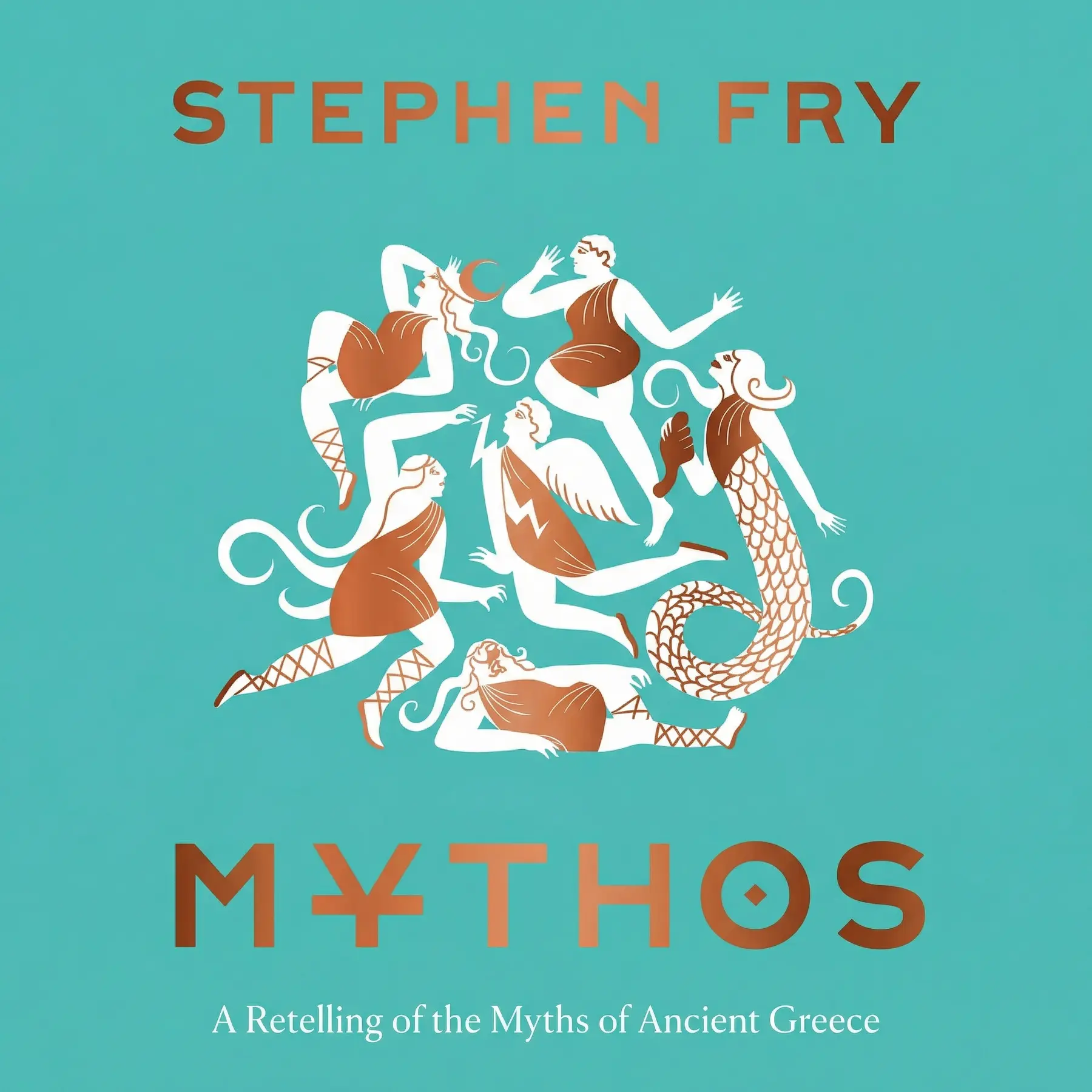
Listeners find this reimagining of Greek mythology charming and absorbing, highlighting Stephen Fry’s expert storytelling and clever wit. The work is simple to follow and beautifully composed, acting as an excellent resource. They value the stunning layout, with one listener mentioning that the illustrations far exceeded their expectations.
Stephen Fry’s voice practically leaps off the page in this delightful collection. If you have ever found Greek mythology a bit dry or overwhelming, this is the remedy you didn't know you needed. Fry takes these ancient, often brutal tales—like the bizarre birth of Aphrodite from sea foam and severed parts—and injects them with a very British, very clever wit. It feels less like a history lesson and more like a chat with a particularly erudite friend over a few drinks. I was particularly impressed by the physical quality of the book; the illustrations and photographs included are far better than I anticipated for a standard hardcover. While some purists might find his modern asides a bit much, I think they add a necessary layer of accessibility. It’s a masterful retelling that manages to be both informative and genuinely hilarious.
Show morePicked this up after finishing Gaiman’s Norse Mythology and I have to say, Fry brings a much bigger personality to the table. He doesn't just retell the myths; he roasts them, celebrates them, and inhabits them. The way he describes Zeus’s headache leading to the birth of Athena is pure comedy gold, yet he still manages to convey the awe-inspiring power of these figures. I actually listened to the audiobook while following along with the physical copy, and hearing Fry’s cadence makes the experience even better. He has this knack for making the weirdness of the Greek gods feel perfectly logical in their own twisted way. It’s a gorgeous book that looks stunning on a shelf, especially with those high-quality plates inside. Truly, it’s a must-read for anyone who loves a good story told by a master of the craft.
Show moreAfter hearing so much hype, I finally dived into Mythos and it is absolutely brilliant. Fry turns these distant, marble-statue gods into relatable, bickering, and fascinating characters. The stories are easy to comprehend without losing the "brutal weirdness" that makes Greek mythology so unique. I loved the little details, like how he explains the origin of certain words or the specific dynamics between Zeus and his five regurgitated siblings. It’s witty, it’s educational, and it’s just plain fun to read. The book itself is a work of art—the cover and the internal illustrations are top-notch. It’s definitely earned a permanent spot on my favorites list, and I'm already looking forward to reading the sequels, Heroes and Troy.
Show moreGotta say, this book is good enough to eat! I’ve spent the last week savouring every chapter, and it’s been an absolute joy. Stephen Fry has this incredible ability to make you feel like you’re sitting by a fire listening to these tales for the first time. The humor is spot on—especially the parts about Cronos and his digestive issues with his children. It’s rare to find a book that is this informative while also making you laugh out loud. The quality of the physical book is also worth mentioning; the pictures are beautiful and really add to the experience. It’s an absolute masterpiece of a retelling. If you have even a passing interest in the gods of Olympus, you need this on your nightstand immediately. My kind of ending!
Show moreFinally got around to reading Mythos and it’s a winner. Fry breathes life into these well-known tales without being patronizing. He assumes the reader is intelligent but doesn't require you to be a scholar of the classics to enjoy it. The way he handles the "absolute brutal weirdness" of the gods is perfect; he leans into the absurdity rather than trying to sanitize it. It serves as a great reference book but reads like a novel. I was pleasantly surprised by how much I learned about the origins of common phrases and words. It’s a delightful, engaging read that I’ll likely return to many times. Plus, the book itself is just beautiful. Five stars all the way.
Show moreEver wonder why we use the word "tantalize" or how the Greeks explained something as simple as a bee’s sting? Fry weaves these etymological nuggets throughout his narrative, making the myths feel relevant to our modern tongue. He structures the book chronologically, starting with the sheer chaos of the Primordials and moving into the reign of the Olympians. It’s a great reference for anyone wanting to get their bearings in the complex web of Greek genealogy. To be fair, his dismissal of the deeper religious significance of these stories might rub some scholars the wrong way. He treats them more as entertainment than sacred texts, which is a specific choice that colors the whole experience. However, the sheer readability makes it a winner for the average reader. The chapter on Prometheus was a personal highlight, capturing the tension between him and Zeus perfectly.
Show moreThe chapter on Prometheus alone makes this book worth the price of admission. Fry captures the tragic friendship between the fire-bringer and Zeus with surprising emotional depth, moving beyond the usual surface-level retelling. Throughout the book, he strikes a fine balance between humor and heart. To be fair, he does sacrifice some breadth for depth, cherry-picking specific myths rather than providing an exhaustive encyclopedia. But the ones he chooses are told with such panache that you hardly mind what’s missing. I did find myself wishing for a more detailed table of contents to navigate the various stories more easily. Despite that small gripe, the writing is effortlessly engaging and the presentation is superb. It’s a wonderful way to brush up on your classics without feeling like you're back in a stuffy classroom.
Show moreAs someone who has read a fair share of mythology retellings, I appreciated how Fry acknowledges the variations in these stories. He openly admits to taking liberties, which is necessary when you’re dealing with myths that shifted for over a thousand years. His modern references mostly work, though a couple felt a bit dated already. The book is remarkably easy to follow, even when the family trees get complicated. I particularly liked the section on Eros and Psyche—it was beautifully written and really showcased his more poetic side. My only real complaint is that his personal views on religion occasionally bleed into the text in a way that feels a bit jarring. Still, the storytelling is so masterful that it’s easy to overlook those moments. It’s an engaging, witty, and thoroughly modern take on the classics.
Show moreWhile I can't deny that Fry is a talented writer, I found the pacing of Mythos a bit too frantic for my liking. There is an absolute deluge of names and relationships to keep track of, and by the halfway mark, I was struggling to remember who was a Titan and who was an Olympian. The writing style is undeniably charming, but at times it feels a bit self-indulgent with its witty asides that don't always land. Truth is, if you already know these stories well, you might find yourself wishing he’d just get on with the plot instead of pausing for another linguistic joke. It’s a beautiful object to hold, and the pictures are lovely, but the content felt a bit like a "Greatest Hits" album that skips over the more nuanced b-sides. It's a solid introduction for beginners, but perhaps not the definitive version for everyone.
Show moreNot what I expected given all the glowing praise surrounding this release. Frankly, the tone felt a bit too patronizing for me. Fry’s insistence on reducing these complex cultural symbols to "primitive explanations" for natural phenomena feels incredibly dated and frankly a bit arrogant. It ignores the deep spiritual and psychological layers that make these myths endure for millennia. The humor also felt quite forced in several places, breaking the immersion of what could have been a powerful narrative. I found the structure a bit messy too; it jumps around so much that the epic scale of the Titanomachy gets lost in a sea of footnotes and clever remarks. If you want a serious look at mythology, look elsewhere. This is more of a light comedy routine that happens to use Greek names.
Show moreIshmael Beah
William J. Bernstein
Ben Macintyre

Charles C. Mann
James Shapiro
AUDIO SUMMARY AVAILABLE
Get the key ideas from Mythos by Stephen Fry, plus 5,000+ more titles in English and Thai.







