
14 min 22 sec
New Cold Wars: China's Rise, Russia's Invasion, and America's Struggle to Defend the West
New Cold Wars explores the breakdown of the post-Cold War peace, revealing how Russia’s aggression and China’s technological rise have forced the United States into a complex, multi-front struggle for global influence.
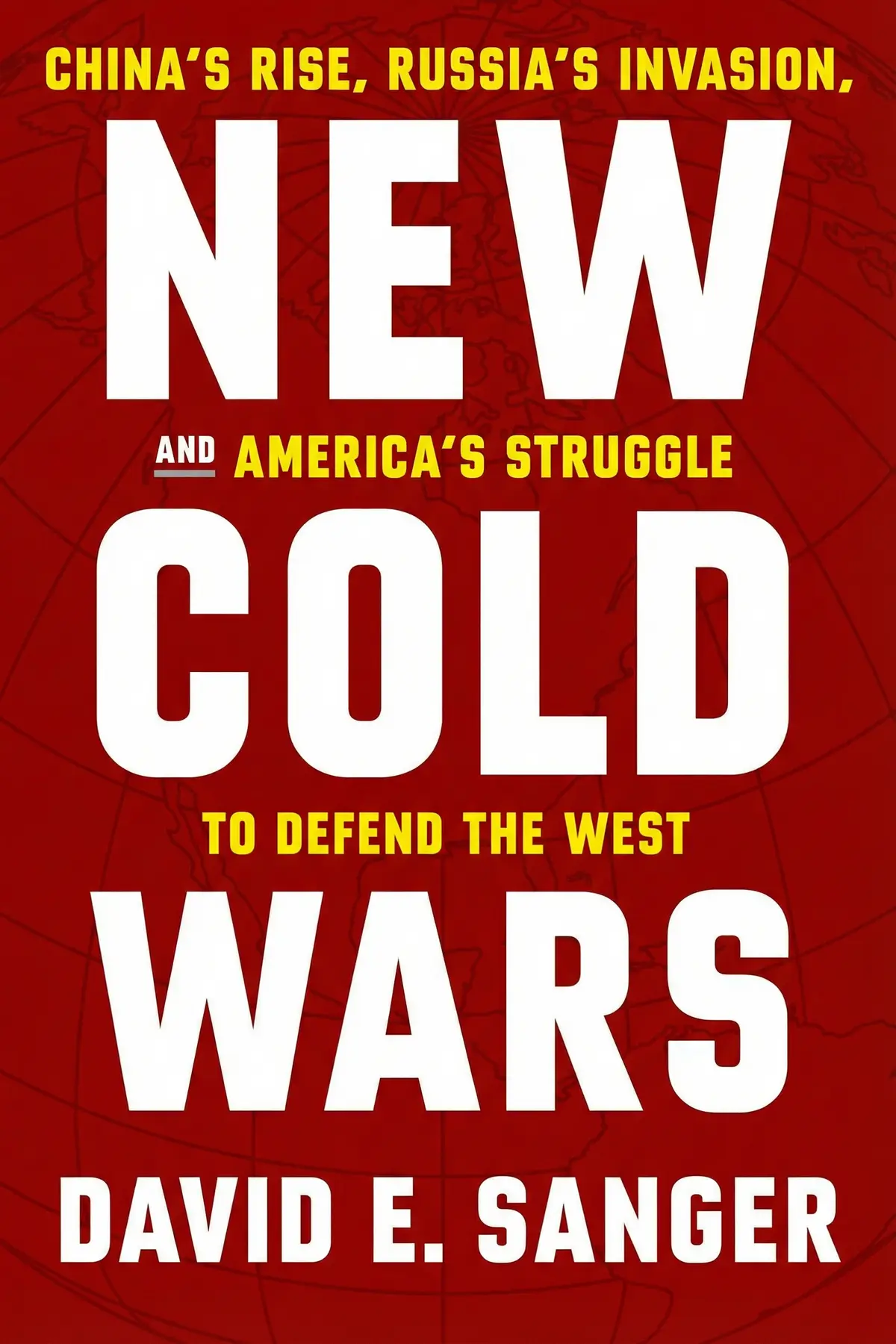
Table of Content
1. Introduction
1 min 43 sec
In the early 1990s, the world felt like it was on the brink of a permanent era of peace. The Berlin Wall had fallen, the Soviet Union had dissolved, and there was a widespread belief that the ‘End of History’ was upon us. The logic was simple: by inviting our former adversaries into the global marketplace, we would inevitably turn them into democratic partners. We thought that if we traded enough with Russia and China, their political systems would naturally soften, and conflict would become a thing of the past. It was a comforting vision, but as we now know, it was based on a fundamental misunderstanding of our rivals’ true intentions.
In this summary of David E. Sanger’s New Cold Wars, we are going to look at why that post-Cold War dream failed so spectacularly. We will explore how the United States finds itself once again in a period of intense global competition, though this time the rules of engagement have completely changed. Unlike the original Cold War, which was primarily a military and ideological standoff with a single superpower, these new conflicts are being fought across computer networks, through sophisticated economic leverage, and in the shadow of a three-way nuclear rivalry.
We’ll trace the rise of Vladimir Putin’s grievances, the hardening of China’s global ambitions under Xi Jinping, and the way technology has turned the entire world into a potential battlefield. This isn’t just a story about distant wars; it’s a story about the changing nature of power in the twenty-first century and how the West is scrambling to defend its way of life in an increasingly volatile world. By the time we’re finished, you’ll have a much clearer picture of the new geopolitical reality and what the future might hold for American influence on the global stage.
2. The Failure of Economic Integration
1 min 51 sec
The West long believed that trade would lead to democracy, but this assumption underestimated the power of autocratic survival and the depth of historical grievances.
3. The Resurgence of Russian Imperialism
1 min 49 sec
Explore how Vladimir Putin’s long-standing resentment toward the West transformed from a cooperative facade into a violent quest to rebuild a lost empire.
4. China as a Systemic Rival
1 min 47 sec
China’s rise represents a unique challenge because it combines massive economic influence with an authoritarian model that seeks to redefine global rules.
5. The Digital Battlefield and Cyber Warfare
1 min 52 sec
Modern warfare is no longer confined to physical borders; it now involves constant, invisible attacks on the digital infrastructure that powers our societies.
6. Global Entanglements and Regional Flashpoints
1 min 42 sec
The U.S. must manage simultaneous crises in Ukraine, Taiwan, and the Middle East, each of which carries the risk of escalating into a broader conflict.
7. The Return of the Nuclear Shadow
1 min 49 sec
After years of decline, nuclear weapons are once again central to global strategy as three major powers engage in a new, more complex arms race.
8. Conclusion
1 min 49 sec
As we wrap up our look at David E. Sanger’s New Cold Wars, it is clear that the optimistic era of the post-Cold War years is officially over. We have entered a period of history that is far more unpredictable and dangerous than the one we left behind. The central challenge for the West today is to acknowledge that the old strategies of pure economic engagement and diplomatic ‘resets’ are no longer sufficient. Russia has shown it is willing to use brute force to reclaim its past glory, and China has demonstrated that it has the economic and technological power to challenge the very foundations of the global order.
However, this new era also provides an opportunity for clarity. By recognizing the reality of these ‘new cold wars,’ the United States and its allies can begin to build the resilience needed for the long haul. This means hardening our digital infrastructure, diversifying our supply chains, and reinvesting in the technological innovation that has always been the West’s greatest strength. The path forward will require a difficult balance: we must be firm enough to deter aggression, yet wise enough to avoid a catastrophic escalation into a ‘hot’ war.
Ultimately, the throughline of this story is that the struggle for democracy and global stability is never truly ‘won.’ It is a constant process that requires vigilance, adaptability, and a clear-eyed understanding of our rivals. As you move forward, keep in mind that the world is no longer a place of guaranteed peace, but a theater of ongoing competition. Understanding these dynamics isn’t just for politicians and generals; it’s essential for anyone who wants to understand the forces shaping our modern world. Thank you for listening to this summary of New Cold Wars. If you enjoyed it, please leave us a rating—we value your feedback and look forward to seeing you next time.
About this book
What is this book about?
For decades, the West operated under the assumption that the collapse of the Soviet Union signaled a permanent victory for democratic values. The prevailing theory was that through economic integration and diplomatic outreach, rivals like Russia and China would eventually join the liberal global order. However, David E. Sanger argues that this dream has been decisively shattered. Today, the world finds itself in a new era of friction characterized by assertive nationalism, digital sabotage, and a renewed nuclear arms race. This summary provides a deep dive into the strategic shifts that have redefined international relations. It explores how Vladimir Putin’s resentment toward the West culminated in the invasion of Ukraine and how Xi Jinping transformed China from a cautious trade partner into a formidable ideological and technological competitor. By examining the United States' struggle to adapt to these dual threats, the text highlights the transition from a period of globalization to a new age of high-stakes confrontation. You will learn about the role of cyber warfare, the delicate balance of power in the Taiwan Strait, and why domestic industrial policy is now considered a vital pillar of national security.
Book Information
About the Author
David E. Sanger
David E. Sanger is a highly distinguished national security correspondent for the New York Times and a three-time Pulitzer Prize winner. In addition to his reporting, he serves as a contributor for CNN and shares his expertise as a teacher of national security policy at Harvard’s Kennedy School of Government. He is also the best-selling author of several influential works, including The Inheritance and Confront and Conceal.
Ratings & Reviews
Ratings at a glance
What people think
Listeners find the writing accessible and polished, with one review mentioning that it offers new perspectives on world affairs. The quality of the information is also highly regarded; specifically, one listener emphasizes how thoroughly the content is sourced. Conversely, reactions to the narrative style are varied, with some considering it an easy read while others do not share that view. Opinions are similarly divided regarding potential slant, as several listeners label the book as biased.
Top reviews
Dek
Sanger’s latest is an absolute masterclass in narrative non-fiction. Truth is, I haven't seen a better breakdown of how the 'end of history' optimism of the 90s curdled into our current geopolitical nightmare. The reporting here is deeply sourced, drawing on the author's decades of access to the highest levels of the White House and National Security Council. I found the sections regarding the semiconductor supply chain particularly gripping; it makes the stakes in Taiwan feel incredibly immediate and physical rather than just abstract policy. While some might find it a bit stressful to read about the re-emergence of nuclear threats, it’s a necessary wake-up call for anyone paying attention to the world today. The prose is crisp and moves at a fast clip, even when detailing complex trade restrictions or cyber warfare tactics. It’s easily one of the most comprehensive accounts of the dual-front challenge we face with Moscow and Beijing. Essential reading for 2024.
Show moreVera
The chapter on the semiconductor supply chain alone is worth the price of admission. Frankly, I never realized how precarious our technological edge really is until reading Sanger’s account of TSMC and the 'silicon shield.' He has this incredible ability to take dry policy papers and turn them into a high-stakes drama. The book covers everything from the botched withdrawal from Afghanistan to the secret intelligence reports that predicted the invasion of Ukraine with eerie accuracy. It’s a sobering look at how the West was distracted by the War on Terror while China was quietly wiring the world with its 5G networks. Some might call it biased, but I think it’s just a clear-eyed assessment of American interests in an increasingly hostile global environment. The level of detail regarding cyber warfare and the shifting alliances between Putin and Xi is simply unmatched. I’ve recommended this to three different people already.
Show moreSamart
Wow, what a sobering look at the 'New Cold War' we’ve found ourselves in. Sanger’s writing is so engaging that I finished the whole thing in just three sittings. He captures the global shock of 2022 perfectly, detailing how Western capitals were caught off guard despite the mounting evidence. The way he juxtaposes the rise of Xi Jinping with the revanchism of Vladimir Putin creates a terrifyingly clear picture of the challenges ahead. I particularly liked the sections on 'debt-trap diplomacy' and how China uses economic leverage to win over developing nations. It’s a stressful read at times—especially the parts about the potential for a hot war over Taiwan—but it’s written with such clarity that you can’t help but keep turning the pages. This isn't just a book about politics; it’s a book about the future of our world. A must-read for anyone who wants to understand the new rules of global power.
Show moreDarius
Sanger has the unique ability to make high-level diplomatic cables read like a political thriller. I was hooked from the first chapter on the invasion of Ukraine. The way he weaves together the different threads—cyber attacks, trade wars, and old-school military posturing—is truly impressive. It’s a deeply reported work that benefits from his decades at the New York Times, giving us a perspective that few other writers could provide. In my experience, books on geopolitics can be dry, but this one has real emotional weight. You feel the frustration of the officials trying to warn about Putin's intentions and the mounting tension as China ramps up its threats against Taiwan. It’s a comprehensive, detailed account of a world in transition. While it might be a bit alarmist for some, I think Sanger is simply reporting the reality of the situation. Five stars for the depth of research alone.
Show moreTitiluck
Finally got around to reading this, and I’m struck by how Sanger connects the dots between the chip wars and the front lines in Ukraine. The book does a fantastic job of explaining the transition from a unipolar world to this new, messy multipolar reality. Personally, I appreciated the deep dive into the Biden administration’s internal debates over which weapons to send to Kyiv—it felt like a real behind-the-scenes look at history in the making. My only minor gripe is that it can feel quite American-centric at times, almost ignoring the perspectives of smaller NATO allies or the internal logic of the Kremlin beyond just 'madness.' However, the narrative is so well-constructed that it’s hard to put down. It’s a bit lengthy, but every page feels like it’s contributing to a larger, more frightening picture. If you want to understand why 5G and hypersonic missiles are the new battlegrounds, this is the book for you.
Show moreBo
As someone who follows foreign policy closely, I appreciated the continuity Sanger highlights between the Trump and Biden approaches to China. We often think of these two administrations as polar opposites, but this book shows how the struggle against Beijing has become a rare point of bipartisan consensus. The reporting on the 'nuclear paradox' was especially chilling, reminding us that the old rules of deterrence might not apply in a world of hypersonic drones and AI-driven conflict. Gotta say, the length is a bit intimidating, and the jumping back and forth in time can be slightly confusing if you aren't paying close attention. Still, the storytelling is top-notch. Sanger manages to capture the tension of the final flights out of Kabul while simultaneously explaining the long-term strategic shift toward the Indo-Pacific. It’s a dense read but incredibly rewarding if you’re looking for a comprehensive overview of our current global standing.
Show moreRod
Picked this up on a recommendation and found it remarkably easy to digest despite the heavy subject matter. Sanger avoids the overly academic jargon that usually plagues foreign policy books, making this accessible for a general audience. The truth is, most of us don't understand how close we came to a nuclear escalation over Ukraine, and this book lays it all out in stark detail. I found the analysis of the 'chip wars' fascinating, though it did make me worry about my next phone upgrade! One minor critique: the book can feel a bit repetitive in its warnings about China's technological dominance. We get it, they're ahead in 5G. Still, the anecdotes about various diplomats and world leaders add a human element that keeps the narrative grounded. It’s a great recap of recent history, even if it doesn't offer many solutions for how to actually win these new cold wars.
Show moreTuck
Does the world really need another book on the US-China rivalry right now? After reading Sanger's take, I'd say yes. He brings a fresh perspective by linking the conflict in Europe directly to the tensions in the Pacific. Not gonna lie, I was surprised by how much I learned about the history of microchips and why they've become the most important resource on the planet. The writing is crisp, and the pacing is generally good, though the middle sections on trade policy dragged a little bit. It’s definitely an American-centric view, which some might find off-putting, but as a summary of the 'view from Washington,' it’s unbeatable. I also appreciated that he included very recent events, like the fallout from the Afghanistan withdrawal and the beginning of the Israel-Gaza war. It makes the book feel very current and relevant. A solid four stars for a well-written, if slightly biased, piece of journalism.
Show moreGabriel
To be fair, this is a solid recap of recent headlines, but I didn't find much here that felt like a genuine revelation. For someone who keeps up with the New York Times or the Economist, a lot of this material—the Belt and Road Initiative, the chip shortage, Putin’s obsession with Peter the Great—will feel like a refresher course rather than new information. The writing style is definitely readable, but Sanger occasionally slips into a tone that feels a bit too alarmist for my liking. He spends a lot of time criticizing the government for not seeing things coming, which is always easier to do with the benefit of hindsight. I also noticed that he barely mentions the perspectives of Eastern European countries like Estonia, treating them more like pawns on a chessboard than active players. It’s a decent enough summary of the last decade, but it didn't quite live up to the 'page-turner' hype for me.
Show moreEleanor
Look, I wanted to like this more, but the unabashedly partisan slant made it a difficult journey. It feels very much like a book written for the Washington elite, by a Washington insider, with all the biases that entails. It’s quite US-centric, and I felt Sanger didn't bother much with trying to understand the actual narratives coming out of Russia or China. Instead, he paints them as cartoonish villains without much nuance regarding their legitimate security concerns or historical grievances. That being said, the information quality is high, and his access to sources is clearly superior to your average journalist. It serves as a good chronological recap of the last few years, including a surprising bit about the Israel-Gaza conflict toward the end. If you can get past the 'America is always right' undertone, there’s some good history here. It just isn't the objective, earth-shattering masterpiece I was hoping for.
Show moreReaders also enjoyed
A Warning
Miles Taylor
Abolish Rent: How Tenants Can End the Housing Crisis
Tracy Rosenthal
Abortion: Our Bodies, Their Lies, and the Truths We Use to
Jessica Valenti

Adults in The Room: My Battle With Europe’s Deep Establishment
Yanis Varoufakis
21 Lessons for the 21st Century
Yuval Noah Harari

A Different Kind of Power: A Memoir
Jacinda Ardern
AUDIO SUMMARY AVAILABLE
Listen to New Cold Wars in 15 minutes
Get the key ideas from New Cold Wars by David E. Sanger, plus 5,000+ more titles in English and Thai.
- 5,000+ titles
- Listen as much as you want
- 7-day free trial
- Cancel anytime







