
16 min 05 sec
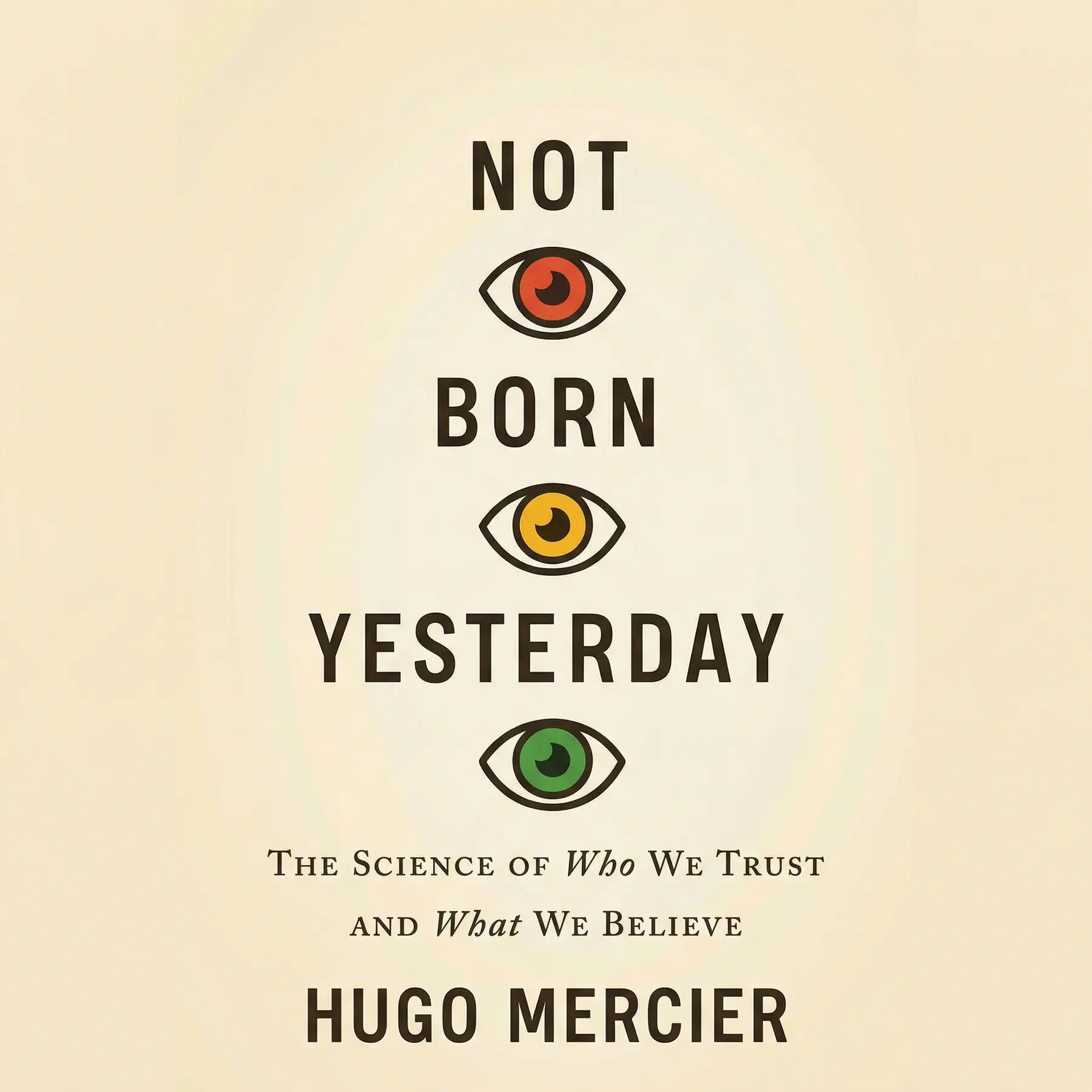
Not Born Yesterday: The Science of Who We Trust and What We Believe
By Hugo Mercier
A deep dive into human skepticism, exploring why we aren't as gullible as we think and how our minds evolved to filter information through a lens of open vigilance.
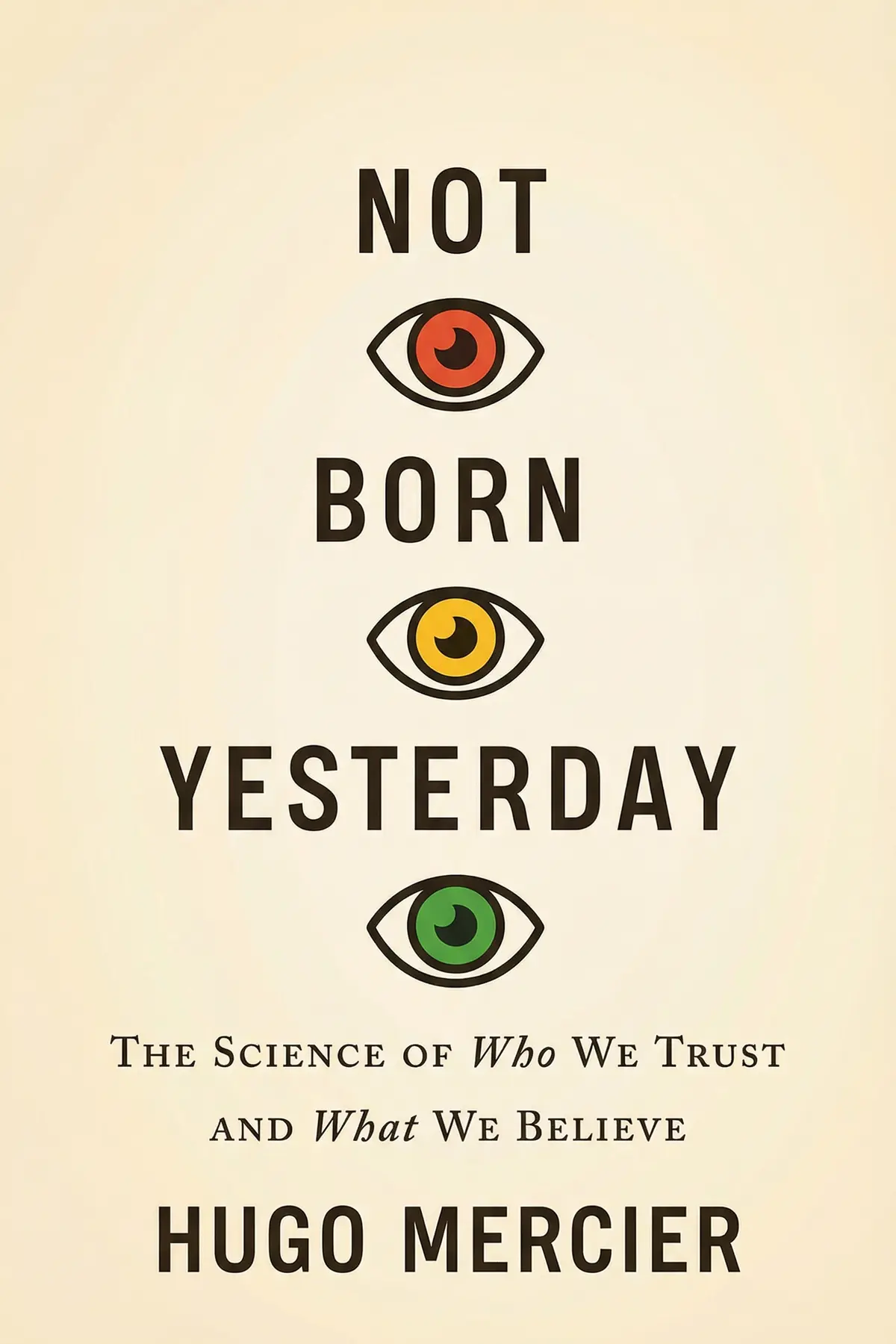
Table of Content
1. Introduction
1 min 52 sec
In our current era of digital noise and viral misinformation, it is very common to hear that humanity is facing a crisis of gullibility. We see headlines about fake news, concerns about social media echo chambers, and the general fear that people are easily led astray by charismatic leaders or clever advertisements. There is an old assumption that humans are basically like sponges, soaking up whatever culture or propaganda happens to be surrounding them. But what if that entire premise is wrong? What if we are actually much harder to fool than we give ourselves credit for?
This is the central puzzle we are going to explore. We often look at others—especially those we disagree with—and assume they are simply being brainwashed. We imagine that their minds are vulnerable and that they lack the critical thinking skills to see through a lie. However, cognitive science suggests a much more interesting reality. We have evolved a specific set of tools, which we can call open vigilance, that act as a sophisticated gatekeeper for our minds. These tools allow us to remain open to learning from others—which is essential for human progress—while simultaneously protecting us from being manipulated.
Over the course of this summary, we will look at how these mechanisms work in our daily lives. We’ll see why we sometimes fall for a well-crafted story, like a stranger asking for cab fare, but why we are remarkably resistant to large-scale attempts at mind control. We will dive into the history of persuasion, the biology of cooperation, and the surprising reason why even children are expert judges of who is actually an expert. By the end, you’ll have a new perspective on why you believe what you believe, and why the real challenge of communication isn’t just about spotting lies, but about figuring out how to let the right information in. Let’s start by looking at why the idea of the easily manipulated mass of people might be one of the biggest myths of all.
2. The Myth of Total Persuasion
2 min 10 sec
Think back to the most powerful propaganda in history. Was it actually as effective as we are told, or were people already leaning in that direction?
3. The Evolutionary Price of Honesty
2 min 20 sec
Communication isn’t just about talking; it is a biological gamble. Discover why nature rewards those who tell the truth and punishes the deceivers.
4. The Shield of Open Vigilance
2 min 03 sec
We often worry about mind control, but the human brain has spent thousands of years developing a defense system that is harder to bypass than you think.
5. Filtering Truth through Logic and Experience
1 min 55 sec
How do we decide what is plausible? It’s not just about who is talking, but how their message fits into the world we already know.
6. Judging the Source of Knowledge
1 min 54 sec
We are naturally drawn to experts, but how do we define an expert? Even small children have a sophisticated way of spotting the real deal.
7. The Reality of the Misinformation Crisis
1 min 55 sec
Fake news is a buzzword, but is it really changing the way we vote and think, or is it just a tool for the already convinced?
8. Conclusion
1 min 56 sec
As we wrap up our journey through the science of trust and belief, the main takeaway is quite empowering: you are much more discerning than you might think. We are not the gullible, easily manipulated creatures that popular culture often portrays. We have spent millions of years refining a cognitive toolkit that allows us to cooperate, share knowledge, and build a collective understanding of the world without being constantly led astray by every deceptive signal. Our ability to check for plausibility, our skill at evaluating arguments, and our instinct for tracking the competence of others all work together to create a robust defense system.
What this means for our daily lives is that we can afford to be a bit more strategic about how we use our skepticism. Since we know that we naturally become more stubborn and closed-off when we are overwhelmed, we can consciously try to stay open when we are in a safe environment. One of the most actionable pieces of advice from this research is to ‘trust better by trusting more.’ It sounds counterintuitive, but think about it this way: if you never take a chance on a new source of information, you never give your vigilance mechanisms the chance to learn and calibrate.
By occasionally stepping outside your comfort zone and engaging with different perspectives, you actually sharpen your ability to tell the difference between a credible expert and a sophisticated liar. You learn the nuances of how different people communicate and where their interests might lie. The real danger in our modern world isn’t that we will all be brainwashed by a single lie; it’s that we will become so cynical and so closed-off that we stop benefiting from the incredible wealth of human knowledge that surrounds us. So, the next time you hear a worrying story about a crisis of gullibility, remember that you—and the people around you—were not born yesterday. You have the tools to find the truth; you just have to be willing to use them.
About this book
What is this book about?
Have you ever wondered why some people fall for scams while others seem immune to even the most polished propaganda? This exploration of human belief systems challenges the long-standing myth that humans are naturally gullible. Instead of being blank slates that soak up whatever they are told, our minds are equipped with a sophisticated suite of cognitive filters. Hugo Mercier takes us through the evolution of communication, explaining that our ability to reason didn't just appear by accident—it developed as a way to navigate a social world filled with both helpful information and potential deception. By looking at everything from honeybee behavior to modern political fake news, this summary reveals the mechanics of trust. You will learn how we evaluate the competence of others, why we are often more stubborn than we are suggestible, and why the real danger in society isn't that we trust too much, but that we sometimes don't trust enough.
Book Information
About the Author
Hugo Mercier
Hugo Mercier is a leading cognitive scientist stationed at the Jean Nicod Institute in Paris. His professional work is deeply rooted in the study of cognitive reasoning and what he calls epistemic vigilance—or open vigilance. This refers to the way humans remain open to new ideas while simultaneously guarding against misinformation. In addition to his research on trust, he is the coauthor of The Enigma of Reason, a book that investigates the evolutionary purpose of human reasoning and why it sets us apart from the rest of the animal kingdom.
Ratings & Reviews
Ratings at a glance
What people think
Listeners view this work as a fresh and stimulating investigation into human logic that disputes the typical belief that humans are inherently easy to fool. Even though some listeners believe the writer at times selects specific studies to bolster his arguments, they value the way he combines data with evolutionary psychology to present the idea of "open vigilance." Furthermore, they find his breakdown of the frequent failure of widespread propaganda very persuasive, as one listener points out the clever differentiation between intuitive convictions and the "mind candy" associated with rumors. Also, they remark that the volume offers a distinctive and positive perspective on misinformation, with one listener emphasizing the intriguing rationale for why fraudsters employ purposefully ridiculous methods to identify victims.
Top reviews
Sam
This book completely flipped my understanding of why we believe what we do. Mercier presents a refreshing, optimistic take on human nature by arguing that we aren't just mindless sponges soaking up misinformation. Instead, he introduces the concept of "open vigilance," suggesting that our cognitive mechanisms are actually quite sophisticated at filtering out bunk. I found his analysis of why mass propaganda—even in Nazi Germany—often fails to change minds to be absolutely gripping. It challenges the common hysteria surrounding "fake news" by showing that people usually only accept messages that align with their pre-existing views. The writing is clear enough for a layperson while remaining deeply rooted in evolutionary biology. If you're tired of hearing how "sheep-like" society is, this is a must-read.
Show moreDek
As someone who has always been skeptical of the "default to truth" theory, I found this to be an incredibly validating read. Mercier uses rigorous data to show that humans are naturally untrusting, not naturally gullible. The way he blends evolutionary history with modern examples of social media rumors is masterclass level. Personally, the most striking part was his explanation of "friction and flooding" in state censorship—it makes so much more sense than the idea of simple brainwashing. The book is optimistic without being naive, suggesting that we have the tools to navigate a world of misinformation if we just understand how our own skepticism works. It's one of those rare books that changes how you view every conversation you have. I've already recommended it to several colleagues in the psych department.
Show moreRoydao
Picked this up because I was tired of the "everyone is stupid" narrative in modern non-fiction. Mercier’s work is a breath of fresh air. He explains that we have "open vigilance" mechanisms—like plausibility checking and reputation tracking—that keep us safe from most scams and lies. The idea that we are actually *too* skeptical sometimes is a fascinating flip on the usual discourse. I loved the breakdown of why some rumors spread like wildfire while others die out; it usually comes down to how much the information actually matters to our daily lives. The prose is engaging and the research feels cutting-edge. This is easily the most important book on human communication I’ve read in the last five years. Highly recommended for anyone interested in why we trust who we trust.
Show moreWit
Ever wonder why people seem to fall for the most ridiculous internet rumors? Mercier’s distinction between intuitive and "reflective" beliefs explains this beautifully. He argues that most people don't actually act on the crazy things they claim to believe; it’s more like "mind candy" or a social signal for their in-group. To be fair, I felt he was a bit dismissive of the real-world harm some of these fringe beliefs cause, but his logic is hard to argue with. The chapter on how scammers use intentionally absurd emails to filter for the most vulnerable targets was a total lightbulb moment for me. It’s a dense read at times, but the unique perspective on trust and communication makes it worth the effort. I’ll be thinking about his arguments on mass persuasion for a long time.
Show moreManika
Finally got around to reading this after hearing so much about it in skeptical circles. It’s a solid, well-reasoned look at why we aren't as easily misled as we fear. Mercier’s point that if we were truly gullible, we would have been wiped out by evolution long ago is a simple but powerful observation. I particularly enjoyed the sections on how we evaluate sources based on competence and shared interests rather than just blindly following authority figures. Look, it’s a bit academic in parts, and I think he oversimplifies the influence of demagogues, but the overall framework is incredibly helpful. It’s a great antidote to the constant doom-scrolling about the end of truth. We aren't born yesterday, and Mercier proves it through a very clever lens of cognitive science.
Show moreThida
The premise is deceptively simple: we aren't the easy targets for manipulation that the media makes us out to be. Mercier argues that the real problem isn't that people are too trusting, but that we often have very specific, rational reasons for who we choose to listen to. I liked how he tackled the Pizzagate conspiracy, showing that while thousands of people talked about it online, only one person actually showed up with a gun. This suggests most "believers" didn't actually hold the belief as an intuitive reality. My only gripe is that the writing can be a bit dry in the middle chapters. However, the insights into how we use bad information for social gain are brilliant. It's an essential read for anyone trying to understand the current political climate.
Show moreVilaiporn
After hearing Mercier on a podcast, I had to dive into the full text. He does a great job of debunking the myth that we’re all just a bunch of biases in a trench coat. Instead, he portrays humans as cautious information consumers who are quite difficult to move unless the argument is solid. I found the section on "reflective beliefs" particularly useful for understanding why people post crazy things on social media without actually changing their behavior. Not gonna lie, some of the evolutionary biology gets a bit technical, but he usually brings it back to a relatable example quickly. It's a very unique, data-driven defense of human intelligence that we desperately need right now. A bit repetitive toward the end, but the core thesis is rock solid.
Show moreTee
While Mercier presents a compelling case against human gullibility, I couldn't shake the feeling that he was being a bit selective with his data. The evolutionary psychology behind our "open vigilance" mechanisms is fascinating, but the author often avoids confronting significant counterarguments like the sunk-cost fallacy or repetition bias. Frankly, it felt like he was cherry-picking studies to make his own contribution appear more revolutionary than it might actually be. There were several moments where I found myself asking, "But what about x?" only to find a vague dismissal in a footnote. It’s a thought-provoking essay, but it probably should have been either 30% longer to address these gaps or more humble in its scope. Still, it's a useful read for anyone in the cognitive science field.
Show moreDimitri
Not what I expected, but interesting nonetheless. The book tries to prove that mass persuasion doesn't work, which is a bold claim in the age of Cambridge Analytica. While I appreciate the attempt to go against the grain, some of the historical examples felt a bit stretched to fit the narrative. For instance, his take on the Crusades as a rational choice for starving peasants was fascinating but felt like it ignored the massive religious and cultural pressures of the time. Truth is, the book is at its best when discussing individual cognitive mechanisms and at its weakest when trying to explain away large-scale social movements. It’s a fun, albeit occasionally annoying, intellectual exercise. If you like challenging your own biases, give it a go, but don't expect a perfect argument.
Show moreSau
I really wanted to like this, but the author's tendency to tear down other researchers felt unnecessarily aggressive and, at times, a little dishonest. Mercier seems to depict accomplished experts as incompetent charlatans just because they disagree with his specific thesis on gullibility. As I progressed, I ironically lost trust in his ability to provide a charitable review of the literature. For example, when he argues that propaganda is ineffective, he almost entirely ignores the power of belief bias and confirmation bias. It’s a very frustrating reading experience because the core ideas are actually quite brilliant, but the execution feels like a series of missed opportunities to engage with the actual complexity of human reasoning. I’d recommend it only if you’re prepared to take every claim with a massive grain of salt.
Show moreReaders also enjoyed
59 Seconds: Change Your Life in Under a Minute
Richard Wiseman
A Liberated Mind: How to Pivot Toward What Matters
Steven C. Hayes
Acting with Power: Why We Are More Powerful Than We Believe
Deborah Gruenfeld
Age of Propaganda: The Everyday Use and Abuse of Persuasion
Anthony Pratkanis
AUDIO SUMMARY AVAILABLE
Listen to Not Born Yesterday in 15 minutes
Get the key ideas from Not Born Yesterday by Hugo Mercier, plus 5,000+ more titles in English and Thai.
- 5,000+ titles
- Listen as much as you want
- 7-day free trial
- Cancel anytime







