
15 min 48 sec
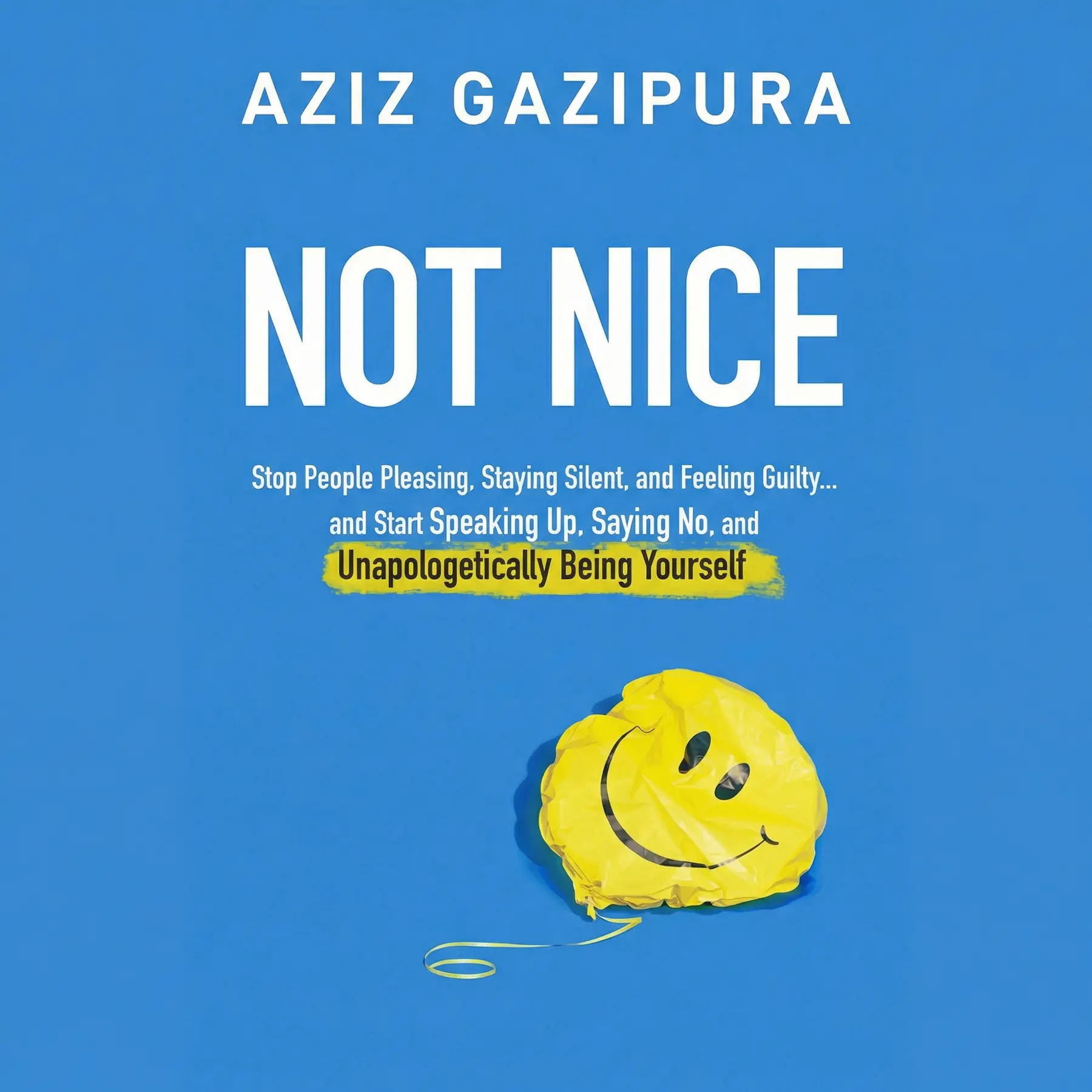
Not Nice: Stop People Pleasing, Staying Silent, and Feeling Guilty... . and Start Speaking Up, Saying No, and Unapologetically Being Yourself
Break free from the suffocating cycle of people-pleasing. This guide reveals how to stop seeking external approval, set firm boundaries, and reclaim your authentic voice to live a life of bold confidence.
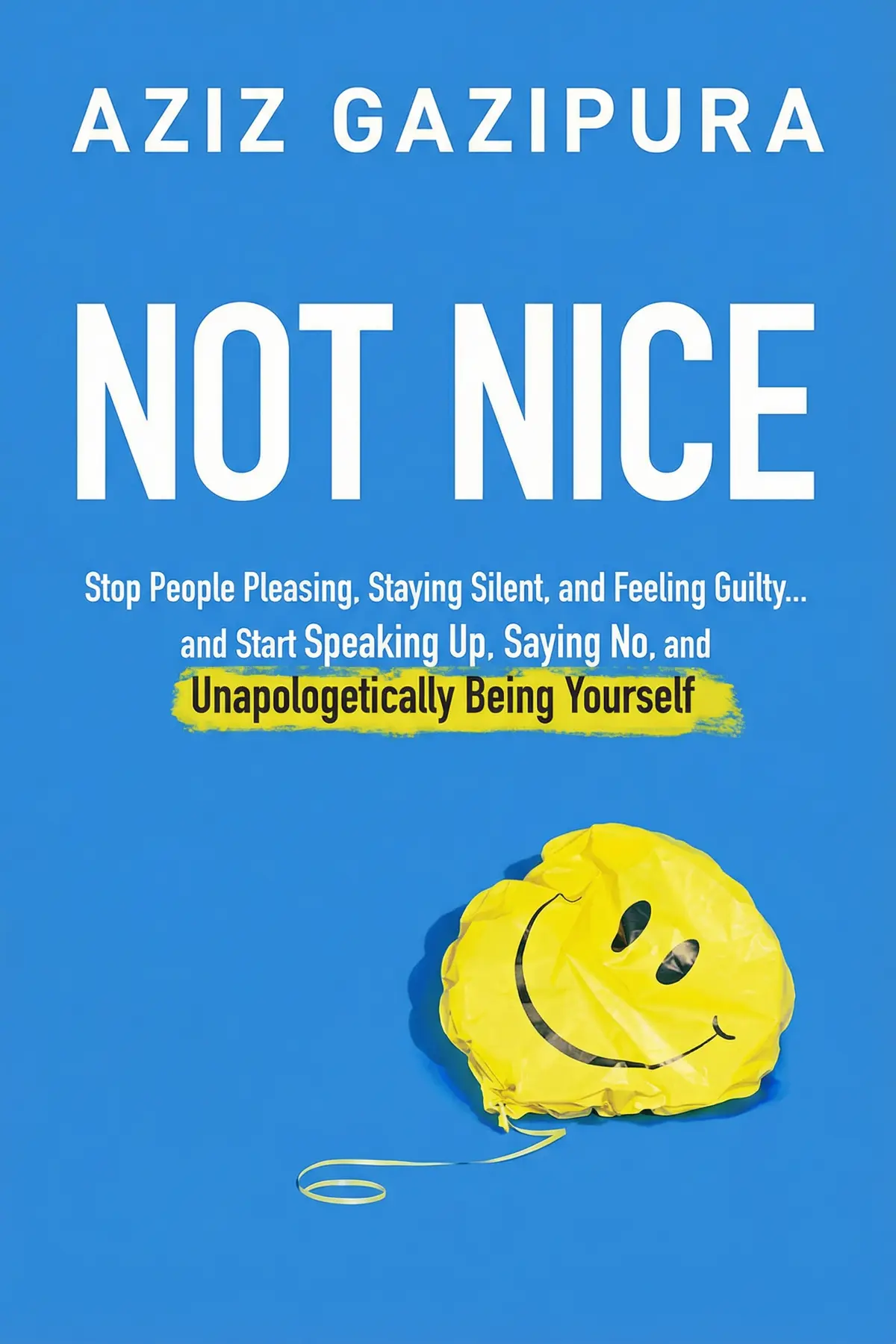
Table of Content
1. Introduction
1 min 32 sec
Imagine a life where every interaction is a performance. You smile when you’re tired, you agree when you’re skeptical, and you apologize for things that aren’t your fault. This is the ‘niceness trap,’ a subtle but pervasive way of living that prioritizes external harmony over internal truth. We are often taught from a young age that being nice is a virtue, the ultimate social lubricant that ensures we are liked and accepted. But there is a massive difference between being a kind, compassionate human and being a ‘nice’ person who is terrified of ruffling feathers.
In this BookBits summary, we are diving deep into the psychology of assertiveness and the liberation that comes from shedding the need for constant approval. This isn’t about becoming a jerk or being intentionally cruel; it’s about finding the courage to be real. We’ll explore why our brains are wired to fear disapproval and how that biological impulse is manipulated by modern social expectations. You’ll learn how to identify the silent resentment that builds up when you never say no, and why your health might actually be suffering because you’re too polite.
The throughline of our journey today is the transition from a ‘safety-first’ social strategy to an ‘authenticity-first’ lifestyle. We will walk through the mechanics of setting boundaries that actually stick and look at a roadmap for training your ‘boldness muscle.’ By the end of this session, the goal is to shift your perspective so that your own needs and desires have a seat at the table, allowing you to stop living for the ‘likes’ of others and start living for yourself.
2. The True Definition of the Niceness Trap
1 min 50 sec
Explore why being ‘nice’ is often a mask for social anxiety and a strategy for survival rather than a genuine expression of character or kindness.
3. Unpacking the Addictive Need for Approval
1 min 45 sec
Delve into the psychological roots of approval-seeking and how early life conditioning creates a persistent, often invisible, hunger for external validation.
4. Recognizing the High Price of Being Overly Accommodating
1 min 46 sec
Identify the hidden physical and emotional tolls of excessive niceness, from chronic stress and anxiety to the surprising ways suppressed emotions manifest in the body.
5. The Art and Necessity of Setting Firm Boundaries
1 min 51 sec
Learn how to define your personal space and understand why asserting your own needs is an act of integrity rather than an act of aggression.
6. Mastering Assertive Communication and Resilience
1 min 45 sec
Discover the middle path between being a doormat and a bully, and why speaking your mind actually strengthens your social connections.
7. Embracing Healthy Selfishness as a Virtue
1 min 45 sec
Dismantle the guilt associated with putting yourself first and see how self-care is the foundation for genuine, non-resentful generosity.
8. A Systematic Plan for Developing Radical Boldness
1 min 55 sec
Learn a practical, 30-day approach to building your ‘boldness muscle’ through intentional discomfort and the systematic rejection of lukewarm obligations.
9. Conclusion
1 min 39 sec
As we wrap up this exploration of moving beyond ‘nice,’ it’s important to reflect on the freedom that comes with authenticity. Throughout this BookBits summary, we’ve seen that the habit of being overly nice is often a shield we use to protect ourselves from the perceived dangers of social friction. But that shield eventually becomes a cage, trapping us in a life of performance and resentment. By understanding the roots of our approval-seeking and witnessing the physical and emotional toll it takes, we can finally see that ‘nice’ is not the same as ‘good.’
The throughline here is empowerment. Setting boundaries, mastering assertive communication, and embracing healthy self-interest are not acts of hostility—they are acts of self-respect. When you stop being nice and start being real, you give the people in your life a great gift: the chance to know the actual you. You replace shallow, polite interactions with deep, meaningful connections. You move from being a passenger in your life, driven by the whims and expectations of others, to being the driver who knows exactly where they are going and what they value.
Your takeaway today is to find one small area where you can stop being ‘nice’ and start being honest. Maybe it’s a ‘no’ you’ve been avoiding, or an opinion you’ve been keeping to yourself. Start there. Feel the discomfort, lean into it, and realize that you are strong enough to handle it. The path to a confident, unapologetic life isn’t paved with the approval of everyone you meet; it’s paved with the integrity of being true to yourself. Thank you for listening to this BookBits summary of Not Nice by Aziz Gazipura. Start living your truth today.
About this book
What is this book about?
Have you ever felt trapped by your own kindness? Many people suffer from a chronic need to be 'nice,' a habit that often leads to suppressed emotions, secret resentment, and a life lived for others' approval rather than personal fulfillment. This exploration of social psychology and personal empowerment dismantles the myth that being nice is the same as being good. It exposes the hidden costs of avoiding conflict and the psychological roots of why we fear rejection so intensely. The promise of this journey is a complete transformation of your social identity. By moving away from a passive, approval-seeking existence, you will learn the art of 'healthy selfishness' and the power of the word 'no.' You'll discover practical frameworks for assertive communication and a step-by-step approach to building the courage needed to stand your ground. Ultimately, it provides the tools to replace the exhausting performance of niceness with a grounded, authentic way of being that fosters deeper, more honest connections with the world around you.
Book Information
About the Author
Aziz Gazipura
Dr. Aziz Gazipura is a clinical psychologist and confidence expert known for his work in helping individuals overcome social anxiety and self-doubt. His main merits lie in his ability to translate psychological concepts into practical strategies for building self-esteem and assertiveness. He is the author of other best-selling books including The Solution to Social Anxiety and On My Own Side, which focus on empowering people to live more confidently and authentically.
Ratings & Reviews
Ratings at a glance
What people think
Listeners consider this book an essential read for people pleasers, commending the deep insights drawn from comprehensive research. It delivers actionable strategies and helps audiences shift their life outlook, with one listener highlighting the effective tools it offers for self-improvement. They also value the relatability found in the personal stories and the clear, uncomplicated writing that makes the information simple to digest.
Top reviews
Praepimon
This book acts like a mirror for anyone who has spent their entire life trying to be the "nice one." Aziz Gazipura dives deep into the internal rulebook we all carry, exposing the lies we tell ourselves to avoid conflict. Truth is, I never realized how much my "Bag of Ones"—that one person who might react poorly—was dictating my entire social life. The exercises are intense and require real courage. You can’t just read this; you have to do the work. The concept of the five-lane freeway of relationships completely changed how I view connection. It isn't a tightrope act anymore. It's a wide road where I’m allowed to veer left or right without everything falling apart. This is a must-read for the chronically polite.
Show morePetch
Ever wonder why you apologize to a chair when you bump into it? This book finally gave me the permission to stop. Personally, the most transformative part was the exercise on writing down my internal rules. I realized I was living by a set of laws I never even signed up for. The writing is relatable and feels like a conversation with a friend who is tired of seeing you get walked on. I’ve started saying "no" to social invites without a paragraph-long excuse, and the world hasn't ended. It’s a terrifying process at first—those first few assertive conversations are incredibly uncomfortable—but the freedom on the other side is worth every bit of anxiety. My confidence has spiked dramatically.
Show moreSupatra
Wow, the "Bill of Rights" section alone is worth the price of admission. Not what I expected at all. I thought it would be a generic "be yourself" book, but it’s a systematic dismantling of the social anxiety that keeps you small. Look, the transformation isn't instant. You have to be willing to be the "jerk" for a minute to find your actual self. I’ve stopped apologizing for things that don't warrant it and started asking for what I want directly. My relationships actually feel more real now because I’m not hiding behind a mask of politeness. It’s a thick book, but I found myself highlighting something on almost every page. Truly a life-changing resource for those ready to stop hiding.
Show morePensri
As a chronic people-pleaser, reading this felt like a punch to the gut in the best way possible. Not gonna lie, I was skeptical of the length, but Gazipura’s straightforward writing style makes the psychological concepts accessible. He focuses heavily on the "how-to" rather than just the childhood trauma aspect. The section on speaking with a tone of certainty was a game-changer for my career. I used to hesitate, waiting for the perfect moment to speak, which usually meant I stayed silent. Now, I understand that my needs matter just as much as anyone else's. While it leans a bit into the "bro-help" genre at times, the practical tools for setting boundaries and handling guilt are some of the best I’ve encountered.
Show moreNit
After hearing Gazipura’s work mentioned in self-help circles, I decided to tackle this massive volume. It is a toolbox, plain and simple. Gotta say, the concept of "Radical Honesty" and the quotes from Brad Blanton really hit home. I used to think being nice was a virtue, but this book helps you see it’s often just a defense mechanism. I appreciate that he includes specific scripts for uncomfortable conversations. However, the book meanders a lot. He tends to circle the same point for twenty pages when five would have sufficed. If you can get past the repetitive nature and the frequent mentions of his other books, the core message is life-changing. It taught me that I’m not responsible for everyone else's feelings.
Show moreYam
Picked this up on a whim during a particularly draining month at work where I couldn't say no to anyone. In my experience, most self-help is fluff, but this provides concrete action steps. The chapter on workplace assertiveness is particularly strong. I’ve started viewing my relationships as a two-way street rather than a service I provide to others. Look, it’s not perfect—it’s way too long and the author’s humor isn't always my cup of tea. But the insight that "boldness is always rewarded" has stuck with me. I journaled through the prompts and found things about my childhood I hadn't considered. It’s an effective guide for anyone feeling stuck in a cycle of guilt and silence.
Show moreBae
Finally got around to finishing this beast, and while it definitely needed a more ruthless editor, the psychological tools provided are gold. Truthfully, the section on the "ripest, juiciest peach" really helped my social anxiety. You can be perfect and some people will still hate peaches. That perspective shift was huge for me. The book is very practical, focusing on everyday risks and honest connection rather than just abstract theory. I do think the author’s style is a bit gimmicky at times—very "Tony Robbins-esque"—which might turn off more academic readers. However, for someone who just needs to know how to say "no" without a panic attack, this is a goldmine. It’s a concrete step toward healing.
Show moreJackson
Could someone please explain why a 500-page book needs to spend so much time pitching the author's other courses? Frankly, the constant self-promotion and the repetitive personal anecdotes about his life-coaching groups made this a slog to finish. There is a great 150-page book hidden inside this massive volume. I found the "Rights" list incredibly helpful, but getting there required wading through chapters that felt like a transcript of a Ted Talk on loop. Also, some of the advice—like the dare to interrupt a stranger on her phone—felt more like being a jerk than being authentic. Take what works for you and leave the rest. It’s useful but desperately needs a more ruthless editor to trim the fat.
Show moreRatthapong
The core philosophy here is undeniably solid, yet the execution is buried under mountains of repetitive anecdotes and constant self-promotion. Admittedly, the advice on overcoming the fear of disapproval is gold. But did we really need 500 pages of it? It feels like the author is trying to hit a word count. The stories about his clients all follow the same format and feel a bit shallow, like they were edited to make the "change" seem easier than it is. To be honest, I preferred the first half. The second half felt like recycled material from other productivity gurus. It’s a good book to skim for the exercises, but reading it cover-to-cover is an exercise in patience.
Show moreSiriphen
I really wanted to vibe with this, but the tone felt off-puttingly "bro-science" at times. To be fair, there is some solid advice about boundaries, but it’s buried under weirdly gendered relationship advice. His history in men's groups really leaks through when he talks about "owning" the masculine/feminine dynamic. It made me cringe. Also, despite being a trained psychologist, he rarely cites clinical research to support his claims. Instead, we get endless stories about his personal trainer or clients who magically change after one conversation. The book is bloated and the formatting is repetitive. If you want a deep, nuanced psychological analysis of people-pleasing, keep looking. This felt more like a very long, very expensive sales pitch for his coaching programs.
Show moreReaders also enjoyed
A Guide to the Good Life: The Ancient Art of Stoic Joy
William B. Irvine
A High-Performing Mind: Strengthen Your Mind and Live Your Best Life
Andrew D. Thompson
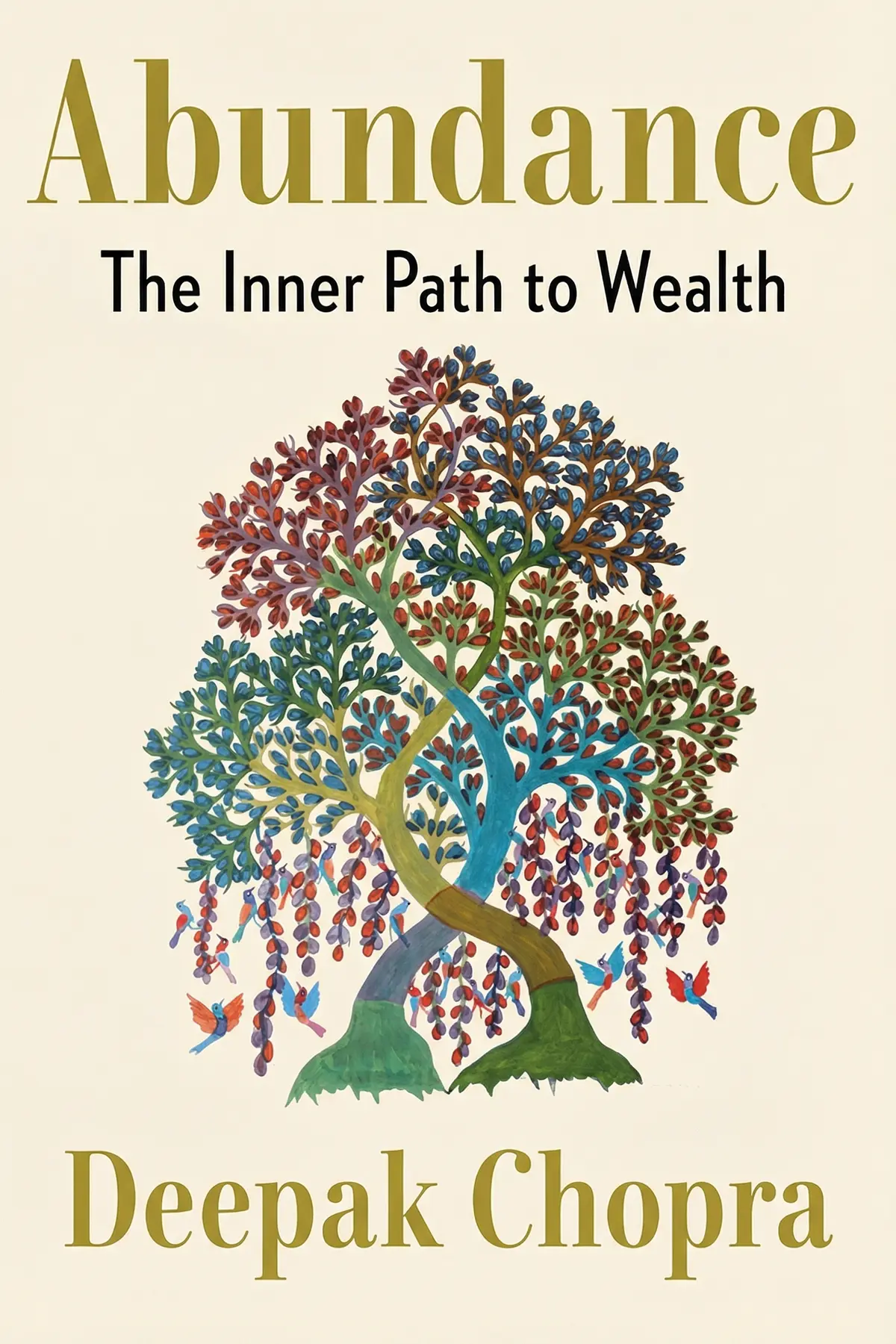
Abundance: The Inner Path to Wealth
Deepak Chopra
AUDIO SUMMARY AVAILABLE
Listen to Not Nice in 15 minutes
Get the key ideas from Not Nice by Aziz Gazipura, plus 5,000+ more titles in English and Thai.
- 5,000+ titles
- Listen as much as you want
- 7-day free trial
- Cancel anytime







