

15 min 30 sec
Nothing But Net: 10 Timeless Lessons for Picking Tech Stocks
By Mark Mahaney
Discover the blueprint for identifying high-growth internet stocks. Mark Mahaney shares ten essential lessons for navigating the tech market, emphasizing long-term strategies, revenue growth, and the traits of legendary tech leadership.
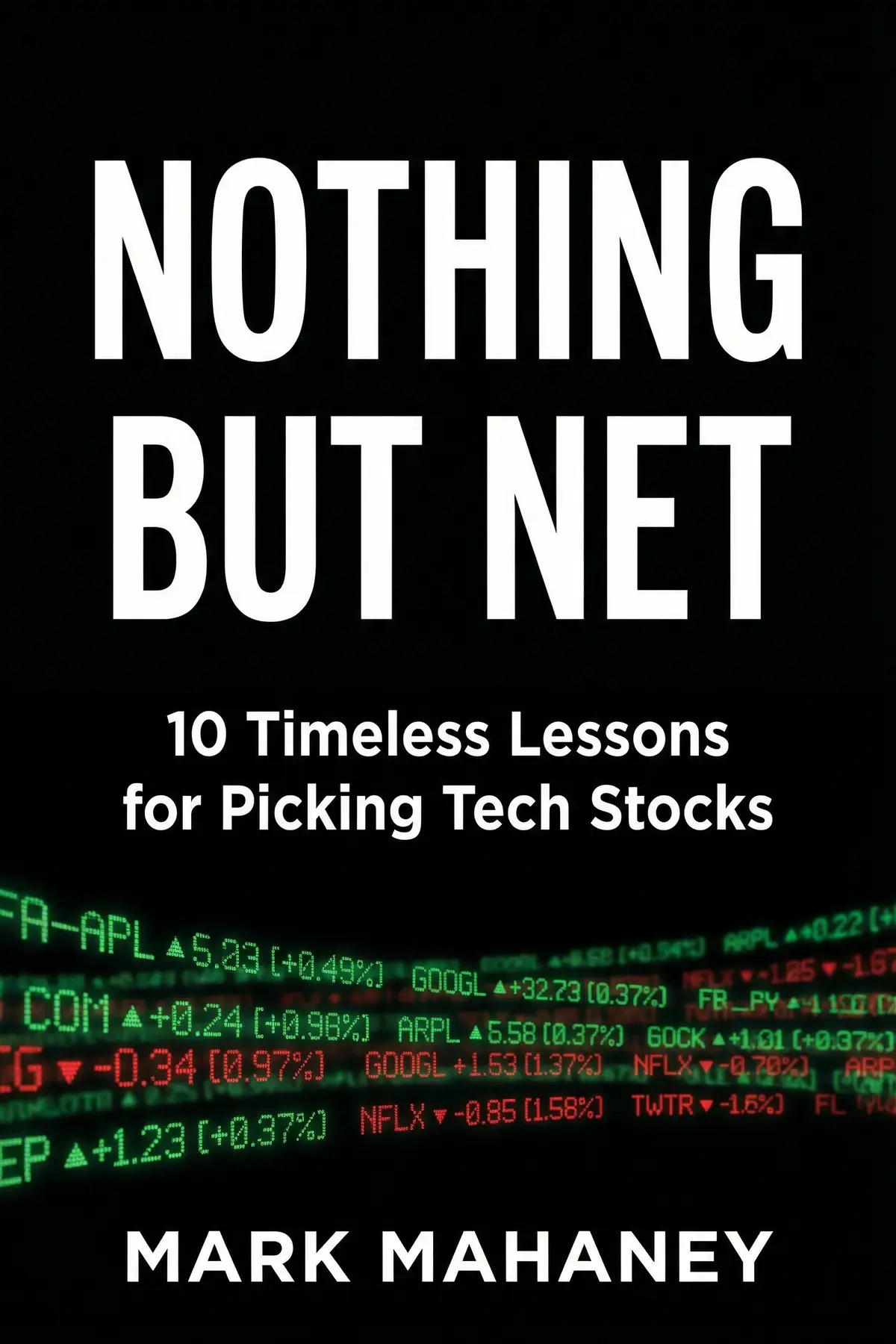
Table of Content
1. Introduction
1 min 41 sec
Every year, in the middle of the desolate Black Rock Desert in Nevada, a temporary city emerges for a mere nine days. It is a place of neon lights, rhythmic beats, and radical self-expression known as Burning Man. You might wonder what a counter-culture festival in the dust has to do with the high-stakes world of Wall Street and the valuation of Silicon Valley giants. As it turns out, there is a fascinating correlation between those who attend this gathering and the leadership of the world’s most successful internet companies.
In our exploration of Mark Mahaney’s insights, we dive into a decade of lessons learned from the front lines of internet research. Mahaney has spent nearly a quarter-century watching the rise and fall of digital empires, and he has identified a clear set of principles that separate the legendary winners from the flash-in-the-pan failures. This isn’t just about finding the next big thing; it’s about understanding the mechanics of high-quality tech stocks and why names like Amazon, Google, and Netflix continue to dominate our portfolios and our lives.
Over the course of this summary, we will look at why chasing short-term gains is a recipe for disaster and why revenue remains the single most important metric for any growth-oriented investor. We’ll examine the specific drivers of success—from product innovation to the size of the market a company can potentially conquer. We will also touch on the importance of humility, the necessity of a long-term perspective, and the reality that even the most seasoned experts can get it wrong. Whether you are a seasoned investor or someone just looking to make sense of the digital economy, these lessons provide a blueprint for identifying the companies that have nothing but net when it comes to their business goals.
2. Embracing the Inevitability of Market Setbacks
2 min 08 sec
Even the most dominant tech giants are susceptible to sudden and dramatic price drops, proving that risk is an inherent part of the game.
3. The Superiority of the Long-Term Perspective
2 min 02 sec
Short-term trading is often a distraction that leads to missed opportunities, as the real wealth in tech is built over years, not quarters.
4. Prioritizing Consistent Revenue Growth
2 min 07 sec
For internet stocks, the ultimate indicator of health isn’t just profit—it’s the ability to consistently grow revenue at a high rate.
5. Identifying the Drivers of Scalable Success
1 min 54 sec
Innovation and a massive potential market are the twin engines that propel small tech companies into global powerhouses.
6. The Value of Customer-Centricity and Visionary Leadership
1 min 56 sec
Winning companies often prioritize the user experience over short-term profits, led by founders who think years into the future.
7. Applying Logic Over Complex Mathematical Models
2 min 11 sec
In a world as unpredictable as tech, simple logic often outperforms complex valuation formulas when deciding if a stock is worth the price.
8. Conclusion
1 min 31 sec
The world of internet stocks is fast-paced, often volatile, and full of both immense promise and significant peril. As we have seen through Mark Mahaney’s decades of research, the key to navigating this landscape isn’t finding a magic formula, but rather sticking to a set of timeless principles. By prioritizing companies with consistent revenue growth, strong product innovation, and a massive addressable market, you align yourself with the forces that drive the digital economy.
Remember that leadership matters—look for the founders and visionaries who are obsessed with the customer experience rather than just the quarterly bottom line. Stay away from the distractions of short-term trading and the siren song of meme stocks. Instead, use a logic-based approach to valuation, acknowledging that while you can’t predict the future with mathematical certainty, you can make informed bets on quality and scale.
Ultimately, the most important trait for a tech investor is the ability to stay the course. Market corrections will happen, and even the best companies will face setbacks. If you have done your research and invested in businesses with strong fundamentals, those downturns are merely opportunities to remain patient. The internet revolution is far from over, and by staying humble and focused on the long term, you can find the companies that aren’t just playing the game, but are hitting ‘nothing but net’ year after year. As you move forward with your own investment journey, keep these ten lessons in mind, do your homework, and prepare for an exciting ride in the ever-evolving tech sector.
About this book
What is this book about?
Investing in the digital age requires more than just following the latest trends; it demands a disciplined approach to identifying the next generation of market leaders. Nothing But Net provides a comprehensive roadmap for navigating the volatile world of technology stocks, drawing on decades of professional analysis. The book moves beyond simple stock picks to explore the fundamental qualities that allow companies like Amazon, Google, and Netflix to redefine the global economy. Mark Mahaney offers a clear set of criteria for evaluating tech companies, focusing on consistent revenue growth, product innovation, and the power of expanding into massive addressable markets. Readers will learn why long-term holding is superior to short-term trading and how to spot the 'repeatable offenses' of innovation that signal a company's staying power. By the end, the promise is a more logical, research-driven perspective on growth investing that prioritizes business fundamentals over market hype, helping investors remain steady through inevitable market corrections.
Book Information
About the Author
Mark Mahaney
Mark Mahaney is a prominent figure on Wall Street, currently serving as the Senior Managing Director and Head of Internet Research at Evercore ISI. With nearly twenty-five years of experience in the field, he is recognized as one of the industry's most respected internet analysts, consistently earning top rankings from Institutional Investor magazine. Nothing But Net represents his debut as an author, distilling his vast professional expertise into actionable lessons for the modern investor.
Ratings & Reviews
Ratings at a glance
What people think
Listeners consider this title exceptionally useful, and one listener suggests it is mandatory reading for both value and growth investors. The quality of the material is consistently praised, with listeners pointing out its great detail.
Top reviews
Rose
Finally, a guide that demystifies why some tech companies skyrocket while others fizzle out. Mahaney provides an incredible look inside the mind of a top-tier analyst, and I found the focus on 'revenue, revenue, and revenue' to be a massive wake-up call for my portfolio. Many value investors get stuck looking at P/E ratios and miss the boat on massive growth stories because they don't understand how a large Total Addressable Market functions. This book changes that perspective entirely. It is absolutely packed with case studies that show how product innovation acts as a 'repeatable offense.' Look, the writing is casual and easy to digest, making it mandatory reading for both retail and seasoned investors. I particularly appreciated the sections on staying humble and avoiding the trap of meme stocks. It’s rare to find an investment book that balances technical metrics with such practical, real-world wisdom. Five stars.
Show moreDaranee
Mahaney brings a level of humility that is rare in the high-stakes world of Wall Street analysts. He doesn't just talk about his wins with Amazon; he openly discusses the 'pains and gains' of his career, which makes the advice feel much more authentic. The chapter on how to identify 'dislocated' stocks during a selloff was worth the price of the book alone. Personally, I think this is mandatory reading for anyone trying to navigate the volatility of the tech sector. He breaks down complex ideas like network effects and economies of scale into plain English that any retail investor can understand. The focus on consistent, five-to-six quarter revenue growth is a practical metric I can actually use in my own research. It’s detailed, honest, and incredibly insightful. If you want to stop gambling on meme stocks and start actually investing, buy this book today.
Show moreJirapat
Ever wonder why a stock with zero profits keeps climbing? It’s about revenue. Pure, unadulterated, 20-percent-plus revenue growth sustained over five or six quarters. Mahaney explains that in the tech world, high growth rates can eventually transform an expensive stock into a reasonable one. In my experience, most books ignore this reality in favor of old-school metrics that just don't apply to the internet age. The detail provided on companies like Booking and Chewy is fascinating. You get to see the thought process of someone who has been doing this for 25 years. Not gonna lie, I’ve already changed how I screen for stocks after finishing this. It’s an easy read but it contains some very heavy truths about market dynamics and the power of a large TAM. Truly excellent work.
Show morePawinee
The chapter on Total Addressable Market (TAM) alone justifies the purchase price of this book. Mahaney explains how scale leads to competitive moats in a way that is both intuitive and analytically rigorous. I especially like the humble way the author explains everything—his mistakes are just as prominent as his wins. This makes the book feel like a real conversation with a mentor rather than a lecture from a titan. For anyone who felt confused by the wild price swings of tech stocks during COVID, this provides a much-needed anchor. It’s packed with practical examples and clear metrics. Whether you are a value purist or a growth seeker, there is wisdom to be found in these pages. It is a great resource that I will likely return to every few years to keep my head straight.
Show moreMai
As someone who has dabbled in tech stocks for years, I found Mahaney's focus on revenue over profitability refreshing yet slightly terrifying in the current market. He argues that 20% premium growth is the gold standard, and his comparison between eBay’s stagnation and Netflix’s rise is particularly enlightening. The information quality is high, providing great detail on 'Growth Curve Initiatives' that I hadn't considered before. However, to be fair, the book leans very heavily on the recent past. I would have liked more examples from his twenty-year career that didn't just involve the obvious FAANG winners. Still, it’s a decent start for anyone wanting to understand how Wall Street evaluates the internet sector. The advice to avoid day trading and focus on fundamentals is timeless, even if the specific stock picks might be sensitive to interest rate hikes. Definitely worth a spot on the shelf.
Show moreWachira
Picked this up on a whim and was pleasantly surprised by the 'Growth Curve Initiatives' framework. Mahaney explains that innovation isn't just about a new gadget; it’s about geographic expansion and price increases that drive the top line. The comparison between eBay and Netflix was a highlight for me. It perfectly illustrates why some companies fail to scale despite being profitable. My only real gripe is that the book feels a bit repetitive in the middle sections. He hammers home the '20% growth' rule so many times that it starts to feel like a mantra rather than an analysis. Regardless, the information is highly valuable for those of us trying to bridge the gap between value and growth investing. It’s a solid 4-star effort that provides a lot of clarity on how to value companies that don't yet have traditional earnings.
Show moreOmar
Is this the next Peter Lynch classic? Not quite. While the book is billed as a masterclass for tech investors, it feels a bit shallow in parts. Mahaney is clearly brilliant—the guy is a top-ranked analyst for a reason—but the writing style is a little grating at times. He uses the phrase 'Nothing But Net' a bit too much for my taste. The frameworks for identifying high-quality companies are solid, focusing on TAM and management, but they benefit greatly from looking backward. It’s easy to say Netflix was a great buy now, but the book doesn't give you enough tools to find the next one before it becomes a household name. In my experience, this is a good 'airport read' for a quick flight. It’s a 5-hour investment that will give you the basics, but don't expect it to turn you into a hedge fund manager overnight.
Show moreZoey
To be fair, the advice here is solid for beginners, but I found the case studies a bit too reliant on historical cherry-picking. The author's career trajectory is impressive, yet the book feels like it was written during a period of record-low interest rates. Now that the market has shifted, some of these 'high quality' companies have seen their valuations crater. Mahaney does touch on the risks of trading around earnings reports, which is a good lesson for the Robinhood crowd. But for more experienced investors, the book lacks the mathematical depth you might find in a textbook. It’s more of a memoir mixed with a basic primer. I’d recommend it to someone who is brand new to the internet sector, but if you’ve been through the Dot-com bubble or the 2008 crash, you might find it a bit elementary.
Show moreSuthida
This book felt more like a series of CNBC segments than a deep dive into serious investment philosophy. Frankly, I was expecting something with the weight of 'Lessons from the Titans,' but Mahaney delivers a much lighter touch that often feels like hindsight bias in action. He focuses heavily on the 20% revenue growth rule, using winners like Netflix to prove his point while glossing over the nuances of the losers. For a retail investor just starting out, there might be some value here, but for anyone with a professional background, it feels thin. The tone also tries too hard to be folksy, occasionally veering into being slightly unlikeable. Truth is, you’ll probably skim this in an hour and realize you already knew most of it. It is not a bad primer for a teenager, perhaps, but it certainly isn’t the definitive text on tech investing I wanted. Disappointing.
Show moreEvelyn
Not what I expected from an analyst of this caliber. The tone is often condescending to retail investors, even though he claims to be writing for them. I was looking for a deep dive into unit economics and competitive moats, but instead, I got a lot of anecdotes about Netflix. The problem is that his 'rules' are mostly just observations of what worked in the last bull market. Will 20% revenue growth save you when interest rates are 5%? The book barely scratches the surface of macro factors. Honestly, it felt more like a promotional tool for his firm than a teaching text. If you want to learn about investing, read Peter Lynch or Benjamin Graham instead. This one will likely be forgotten in a few years as the market cycle continues to turn. Not worth the time.
Show moreReaders also enjoyed







AUDIO SUMMARY AVAILABLE
Listen to Nothing But Net in 15 minutes
Get the key ideas from Nothing But Net by Mark Mahaney, plus 5,000+ more titles in English and Thai.
- 5,000+ titles
- Listen as much as you want
- 7-day free trial
- Cancel anytime







