
19 min 05 sec
On Being: A Scientist’s Exploration of the Great Questions of Existence
By Peter Atkins
On Being examines the profound mysteries of existence through a scientific lens, challenging traditional spiritual narratives and revealing how physical laws, evolution, and chemical processes explain our origins, our lives, and our inevitable end.
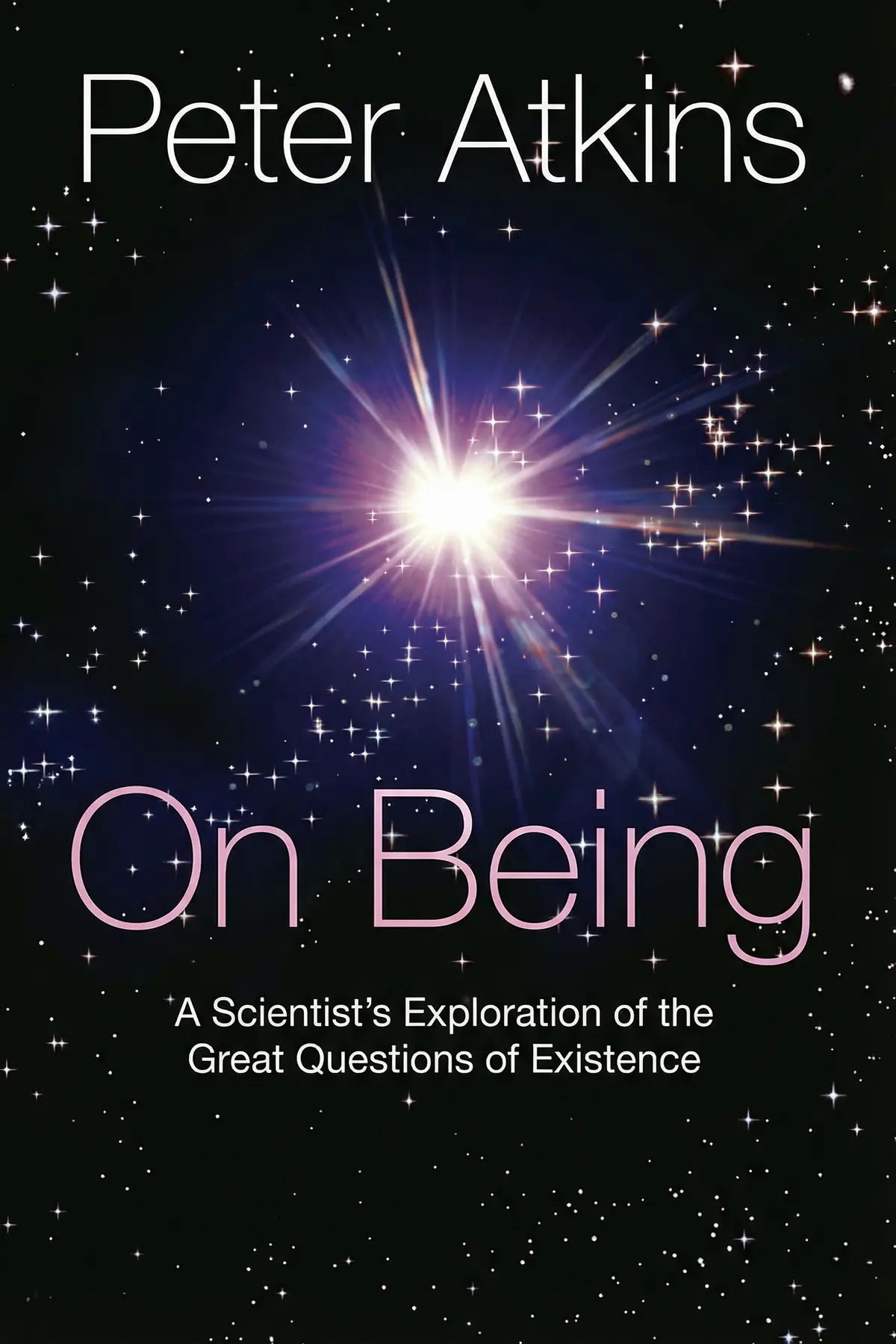
Table of Content
1. Introduction
1 min 51 sec
Every human culture throughout history has wrestled with the same profound mysteries. We look at the stars and wonder about the origin of the cosmos. We look at our own hands and wonder why we are built this way. We face the reality of loss and wonder what happens to the spark of life after it leaves the body. Traditionally, these have been the territories of religion. For thousands of years, spiritual leaders and ancient texts have claimed a monopoly on these answers, suggesting that only through faith and the supernatural can we truly understand our place in the world.
However, a significant shift has occurred. Over the last few centuries, the tools we use to interrogate reality have undergone a radical transformation. We no longer have to rely on stories of gods or mystical forces to explain the rain, the stars, or the birth of a child. Instead, we have the scientific method—a systematic, skeptical, and evidence-based approach that has proven itself to be the most powerful engine for discovery ever devised by our species.
In this journey through the core themes of Peter Atkins’s work, we will explore why science is the only reliable guide for those seeking truth. We will move beyond the idea that the universe requires a supernatural creator and instead look at the physical theories that explain how order can emerge from nothingness. We will see how our bodies are not the product of divine design, but the result of a chaotic and fascinating genetic struggle spanning eons. We will even tackle the most uncomfortable question of all: the physical reality of what follows death. By the end of this exploration, the throughline will be clear. The universe does not need magic to be awe-inspiring. The simple, observable laws of physics and chemistry provide a far more intricate and rewarding explanation for everything it means to be alive.
2. The Supremacy of Scientific Inquiry
2 min 35 sec
Discover why the rigorous pursuit of evidence and the constant challenging of authority make the scientific method the only credible tool for uncovering the truth.
3. A Universe Born of Natural Law
2 min 27 sec
Examine the scientific alternatives to creation myths, where the origins of everything we see may lie in the complex properties of matter and the possibility of infinite cycles.
4. The Biological Tapestry of Life
2 min 37 sec
Uncover the reality of our biological history, moving past creationist stories to see how life emerged from inorganic matter through a process of random mutations.
5. The Genetic Logic of Sexual Reproduction
2 min 29 sec
Explore why the complexities of sex and genetic inheritance are vital for our species’ ability to adapt and survive in an ever-changing world.
6. The Physical Reality of the Final Transition
2 min 35 sec
Take a courageous look at the biological and chemical processes that occur when life ends, stripping away the myths of an afterlife to reveal the cycle of matter.
7. The Finitude of Our Cosmic Home
2 min 36 sec
Understand why nothing in the universe, from our consciousness to our solar system, is truly eternal, and why this finitude gives our existence its true weight.
8. Conclusion
1 min 55 sec
As we conclude this exploration into the nature of existence, the contrast between the old ways of thinking and the new is stark. For thousands of years, we were content with stories that placed us at the center of a divine drama, overseen by supernatural forces. These stories offered comfort, but they offered very little in the way of actual explanation. They could not tell us how our cells replicate, how the stars burn, or what actually happens to our bodies when we die. They asked us to stop asking questions and to simply believe.
Science offers a different, more courageous path. It tells us that we are part of a purely physical universe, governed by laws that we can discover and understand. It shows us that we are the products of an incredible evolutionary journey, driven by the random but beautiful mechanics of genetic variability. It reveals that death is not a supernatural transition but a natural return to chemical equilibrium. While some may find the absence of a creator or an afterlife unsettling, there is a far deeper wonder to be found in the truth.
By choosing the scientific method as our guide, we trade comfortable illusions for rigorous clarity. We learn that we don’t need a deity to breathe life into us because the universe itself has the inherent capacity to generate complexity and consciousness. This perspective empowers us. It places the responsibility for our meaning and our future squarely in our own hands. We are the observers and the narrators of the cosmic story. Understanding our origins, our biology, and our end through the lens of science doesn’t diminish our existence; it elevates it, grounding our sense of awe in the reality of the world as it truly is. In the search for truth, science is not just one tool among many—it is the only one that truly delivers.
About this book
What is this book about?
For centuries, humanity has turned to mythology and religion to answer the most daunting questions of our existence. We have asked where we come from, why we possess certain traits, and what happens when the light of consciousness finally fades. In this exploration, the focus shifts away from ancient dogmas and toward the rigorous, evidence-based world of science. On Being argues that the scientific method is not just a tool for professional researchers, but the only reliable pathway to understanding the true nature of reality. By examining the mechanics of the universe’s birth, the competitive struggle of our genetic history, and the physical reality of death, this summary provides a comprehensive look at what it means to exist in a purely physical world. It promises a journey through the evolution of life, the chemistry of the human body, and the eventual fate of our solar system, offering a perspective that finds wonder in facts rather than fables.
Book Information
About the Author
Peter Atkins
Peter Atkins is a distinguished British chemist and a professor emeritus at the University of Oxford. His extensive career includes the authorship of numerous standard chemistry textbooks alongside popular science works that aim to make complex concepts accessible to the public. Atkins is well-known for his humanist and atheist perspectives, serving as the first Senior Member of the Oxford University Secular Society.
Ratings & Reviews
Ratings at a glance
What people think
Listeners find the book’s scientific method for addressing deep human inquiries appealing, with one listener pointing out the sound reasoning and organization into five subject areas. It is generally viewed as an eloquent and worthwhile read; in fact, one listener describes it as a breathtaking view of reality. However, several listeners struggle to comprehend the text, particularly those who are less fluent readers.
Top reviews
Ava
Atkins manages to make the most complex chemical reactions feel like poetry. The way he describes the transition from 'nothing' to the physical universe is nothing short of breathtaking, even if you lack a PhD in physics. To be fair, his tone is unapologetically pro-science, which I found refreshing in an age of constant equivocation. He breaks the book down into five distinct subject areas that guide the reader from the cosmic dawn to the biological reality of our own cellular replication. It is a very short read, yet it carries the weight of a much larger volume because every sentence is packed with intellectual density. I particularly loved the section on DNA as the 'heavy lifter' of our existence, driven by the energy of the sun. It is a stunning view of reality that reminds us how miraculous the natural world truly is without needing supernatural garnishes.
Show moreIvan
Wow. Peter Atkins has written a breathtaking view of reality that makes the heart of a science lover sing. In just five chapters, he manages to summarize the entirety of our existence, from the Big Bang to the final heat death of the universe. Not gonna lie, the descriptions of cellular replication and enzymatic reactions made my brain feel like it was running a marathon. It’s rare to find a writer who can combine such rigorous scientific accuracy with a sense of profound awe. He doesn't shy away from the 'gory details' of death either, which I found surprisingly grounding. While some might call his tone harsh toward religion, I found his intellectual honesty refreshing. He isn't here to offer false comfort; he is here to show us the incredible truth of our chemical heritage. This is a short, sharp shock of a book that every rational person should read.
Show moreAim
After finishing the chapter on birth, I had to sit in silence for a few minutes just to process the sheer complexity of our biological machinery. Peter Atkins has a gift for highlighting the intricate detail of molecular chemistry that keeps us alive every second. He approaches existence through the lens of a chemist, focusing on ATP, enzymes, and the flux of energy with a sense of genuine wonder. Look, the book isn't perfect; it can be quite difficult to understand if you aren't already familiar with basic cosmology or biology. Some of the math-heavy concepts are explained only in prose, which ironically makes them harder to visualize. However, the logical progression from the origin of the universe to our eventual ending is incredibly sound. It is an eloquent write that challenges the reader to find beauty in the hard-won facts of the laboratory rather than ancient fairytales.
Show moreWittaya
The structure of this treatise—moving from the beginning of the universe to the grim reality of death—is logically sound and meticulously organized. Atkins is a master of the physical sciences, and he uses that authority to dismantle 'vitalism' and other outdated concepts with surgical precision. I was particularly impressed by his ability to explain how the universe could emerge from 'nothing' by balancing opposite charges to a net zero. It’s a mind-bender! Personally, I found the chapter on death to be the most compelling, as he describes the chemical breakdown of the body with a cold, fascinating honesty. The writing is definitely didactic, and at times the vocabulary feels a bit performative, which might alienate some readers. If you can push through the academic stiffness, you’ll find a wealth of sound reasoning and a truly grand perspective on what it means to be a physical entity in a cold cosmos.
Show moreLek
The chapter on death is not for the faint of heart, but it offers a strangely comforting look at the decomposition of the human body as a return to the Earth. Atkins doesn't sugarcoat anything. He uses sound reasoning to explain how our atoms are recycled back into the chaos of the universe. I found his description of the 'nothing from nothing' origin of the cosmos to be one of the most lucid explanations I've ever read, even if the math behind it was omitted. Got to say, the writing can be a bit 'didactic' and heavy, which makes it a slow read despite the low page count. He is a firm believer in science's ability to eventually answer every question, and that confidence shines through every page. It’s an eloquent defense of the materialist worldview that managed to leave me feeling both small and incredibly significant at the same time.
Show moreWoravit
As someone who already leans heavily toward a secular worldview, this felt a bit like being told what I already know. It’s a very short treatise—barely 100 pages—and while the prose is elegant, it often feels like Atkins is preaching to the choir. He provides a basic scientific tour of the universe's origins and human evolution, but there isn't much new information here if you’ve already read Hawking or Dawkins. My main gripe is the one-dimensional view he takes on religion; he treats it as a simple lack of intelligence rather than a complex sociological phenomenon. Still, I can't deny his passion for the subject. His description of how entropy and disorder actually create the order we see in life is a fascinating perspective. It’s a decent primer for a science geek, but it lacks the depth required to truly persuade anyone on the other side of the fence.
Show moreAraya
I’ll be the first to admit that some of the physics here went straight over my head. Atkins is clearly a brilliant man, but he doesn't always make it easy for the layperson to follow his 'formulaic' descriptions of the cosmos. The sentences are often winding and filled with technical terminology that requires a dictionary nearby. I appreciated the scientific approach to the 'great questions,' but the book often felt more like a lecture than a journey of discovery. One minute he's talking about the wonder of the sun as a heavy lifter, and the next he's savaging creationism with a tone that feels a bit unnecessary. I think if you have a solid background in STEM, you’ll enjoy the nuance, but for less fluent readers, it might feel a bit exclusionary. It’s a good read, just be prepared to do some mental heavy lifting to keep up with his pace.
Show moreWipawan
Ever wonder how the universe maintains order despite the constant pull of entropy? Peter Atkins tackles this and other massive ontological questions in this slim volume. He brings his decades of experience as a chemist to the table, offering a unique perspective on the 'miraculous' mechanisms underlying a single cell. However, the book feels a bit disjointed at times. It jumps from the birth of the universe to forensic details about rigor mortis with a clinical detachment that might make some readers' skin crawl. I enjoyed the references to John Updike and the occasional literary flourish, but the overall tone is very rigid. It’s a short read, and while it covers the five major subject areas of existence, it feels like it only scratches the surface of each. It’s a fine summary of the scientific worldview, but it doesn't quite live up to the 'thriller' quality of his previous textbooks.
Show moreLuckana
Is it too much to ask for a science book that doesn't talk down to its audience? I picked this up hoping for an exploration of the great questions of existence, but instead, I felt like I was being scolded by a rigid professor. The truth is, Atkins' writing style is incredibly dense and full of those 'kilometer-long' sentences that make you forget how a phrase started by the time you reach the period. While I appreciate his scientific expertise, the tone is often derogatory toward anyone who finds comfort in spiritual or philosophical traditions. He dismisses thousands of years of human culture as mere 'myth' with a cynicism that feels unnecessary. Frankly, the book is too short to do justice to the massive topics it raises, leaving the reader with incomplete ideas wrapped in overly complex jargon. It felt like a struggle rather than an enlightenment.
Show moreRoongsak
Look, I enjoy a good science read as much as the next person, but the way Atkins treats religious belief is frankly exhausting. He seems more interested in belittling people's values than actually explaining the science of 'being.' The book is touted as an exploration of the great questions, yet it feels more like a 100-page rant against anything that isn't strictly empirical. His views on human nature are incredibly narrow, ignoring the cultural and emotional viscera that have driven humanity for millennia. To be fair, he does provide some interesting insights into entropy and the origin of life, but they are buried under so much cynicism that it's hard to enjoy them. If you value your spiritual beliefs or even just a balanced philosophical discussion, you might want to avoid this one. It’s too derogatory for my taste and lacks the 'wonder' it claims to promote.
Show moreReaders also enjoyed
Alien Earths: The New Science of Planet Hunting in the Cosmos
Lisa Kaltenegger
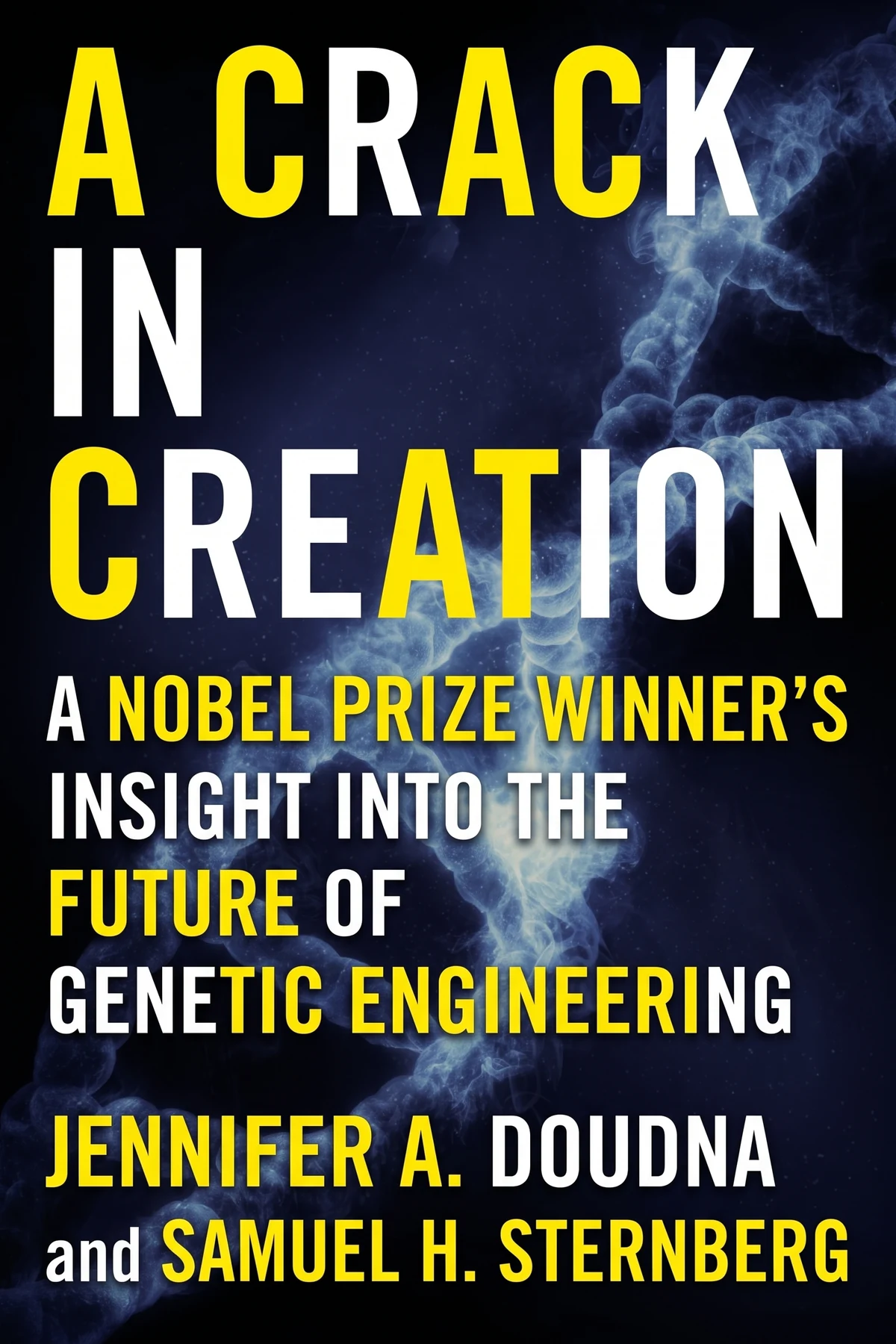
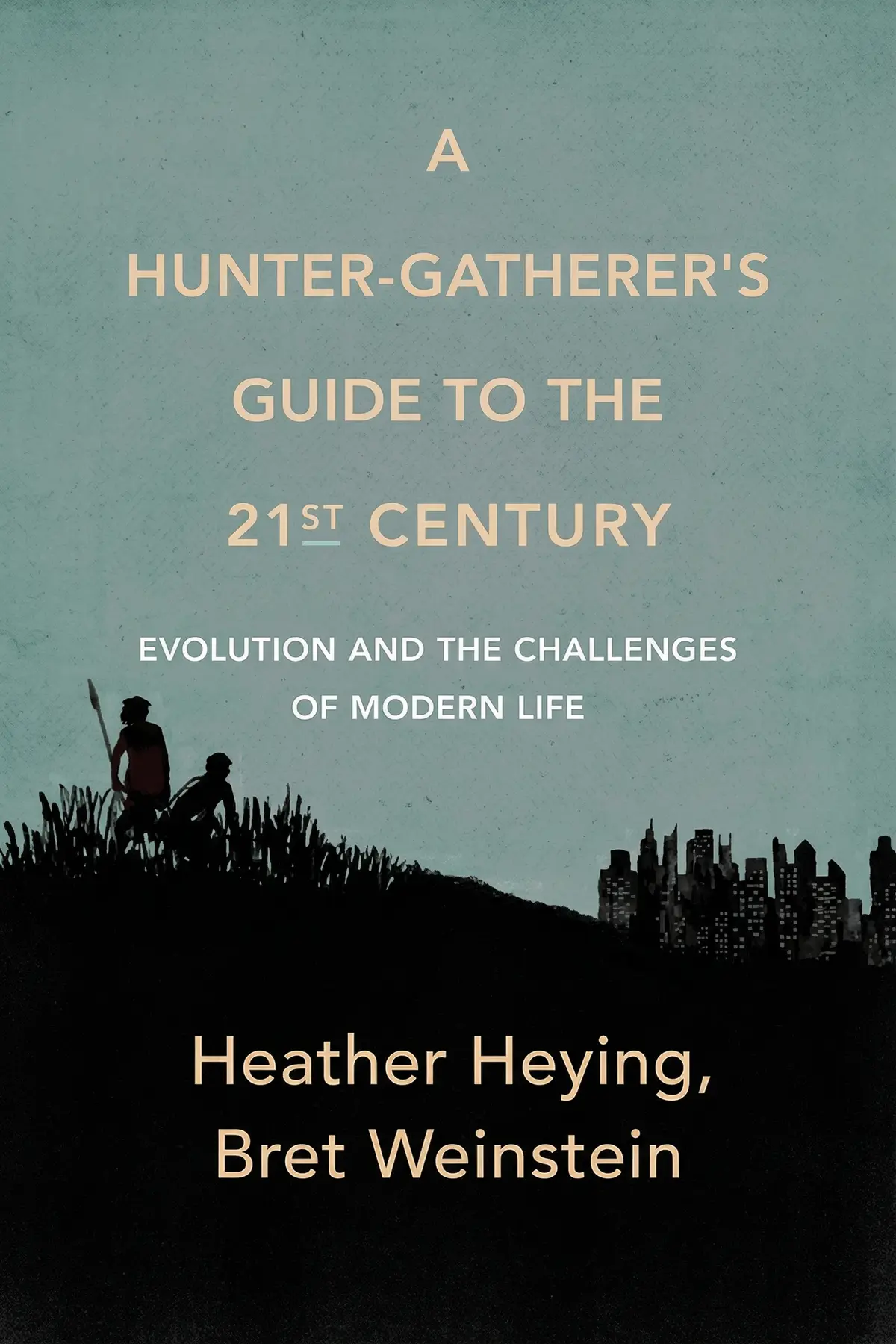
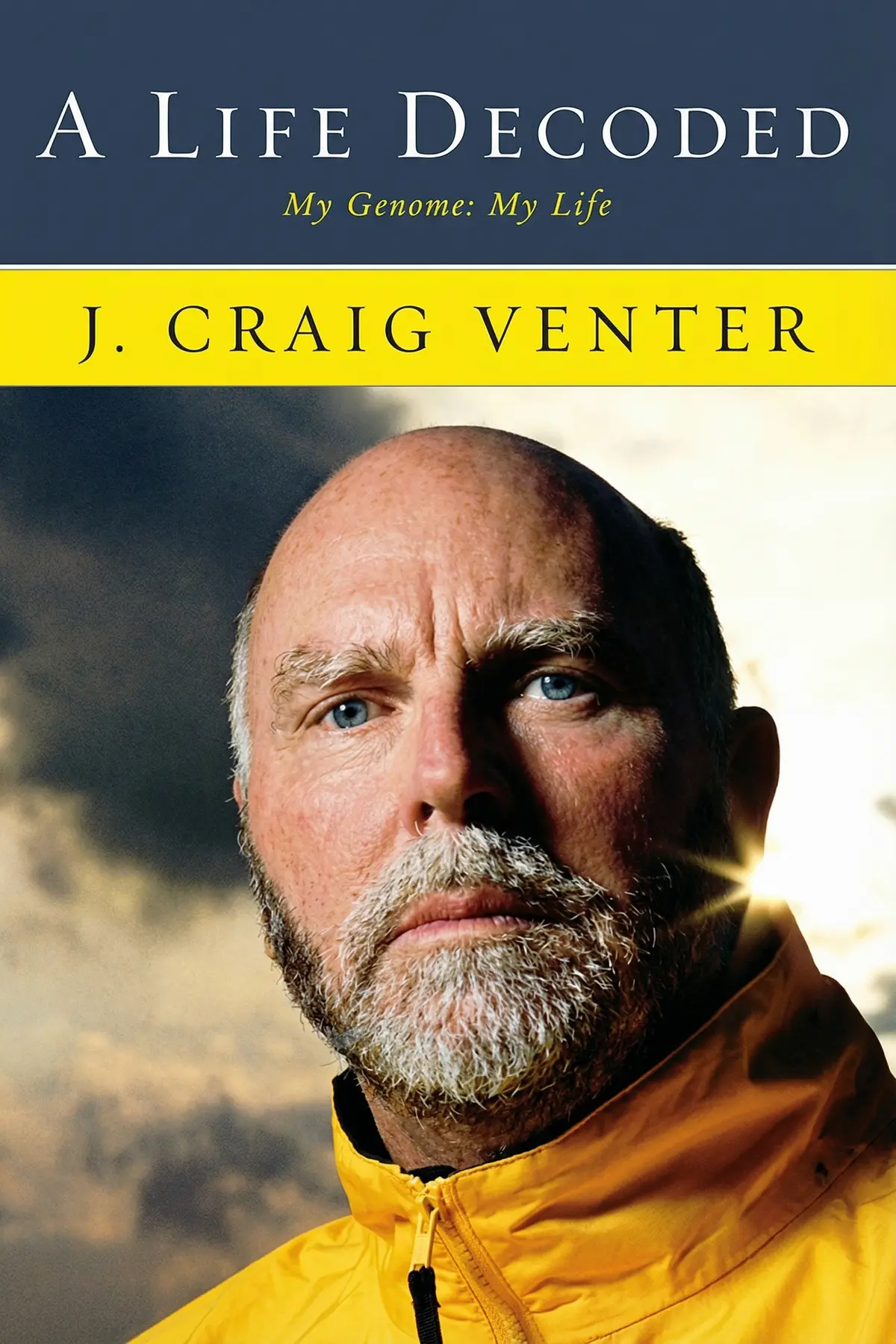
A Life Decoded: My Genome: My Life
J. Craig Venter
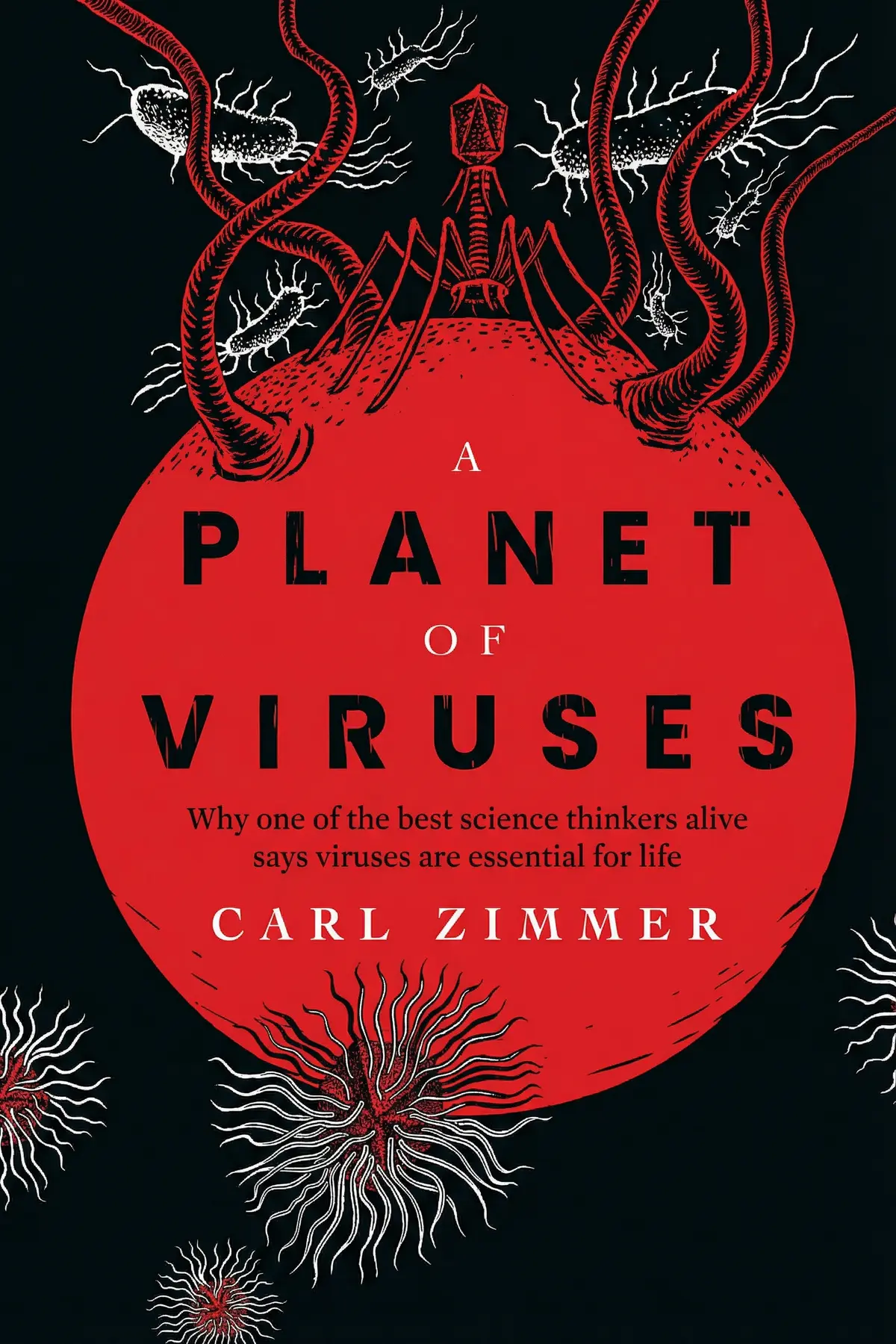
A Planet of Viruses
Carl Zimmer
A Short History of Nearly Everything
Bill Bryson
AUDIO SUMMARY AVAILABLE
Listen to On Being in 15 minutes
Get the key ideas from On Being by Peter Atkins, plus 5,000+ more titles in English and Thai.
- 5,000+ titles
- Listen as much as you want
- 7-day free trial
- Cancel anytime







