
An Ordinary Man: The Surprising Life and Historic Presidency of Gerald R. Ford
Richard Norton Smith
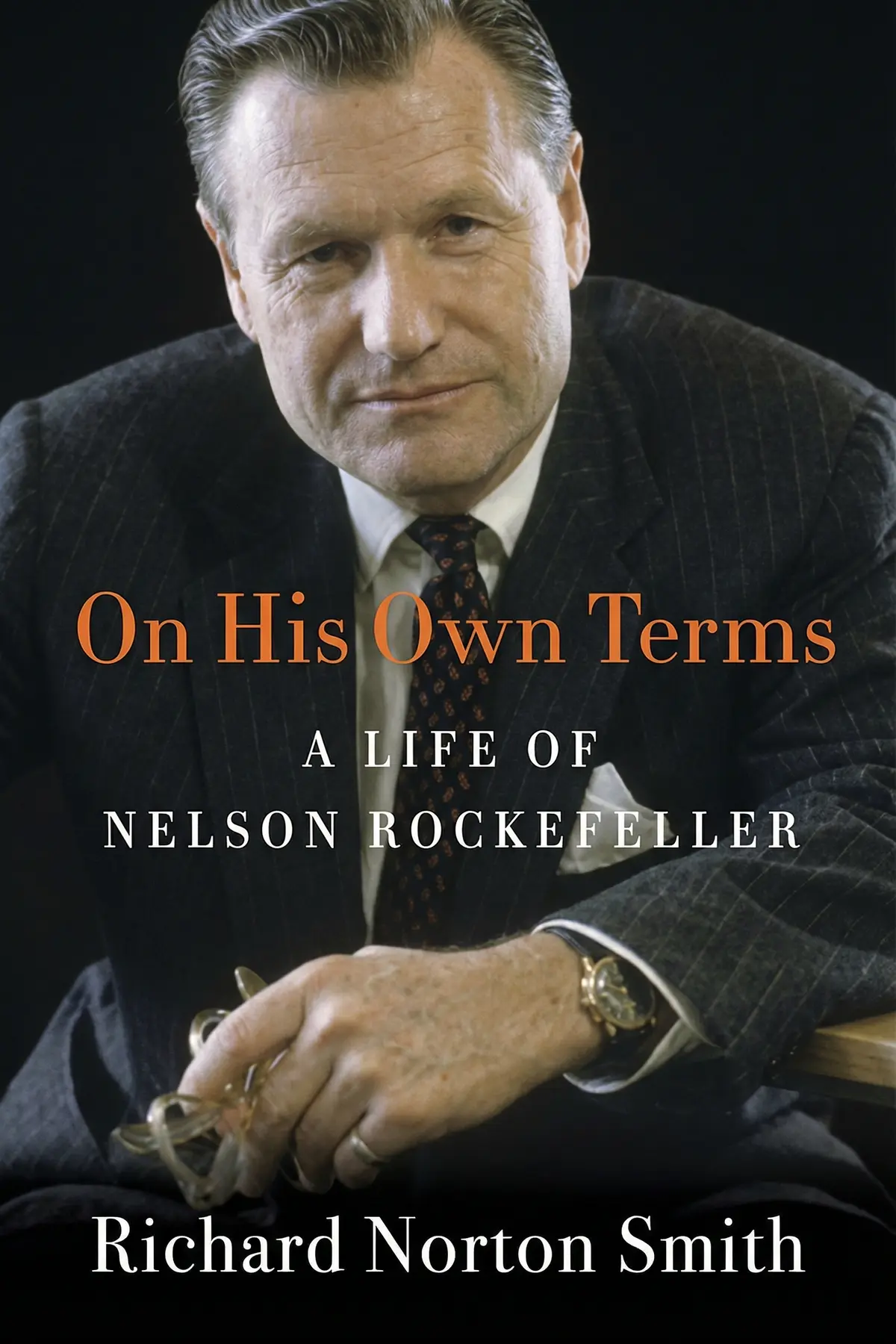
Explore the sweeping life of Nelson Rockefeller, a man whose immense wealth was matched only by his restless political ambition and his indelible impact on modern American governance and culture.
2 min 00 sec
In the landscape of American history, few names carry as much weight—or as much baggage—as Rockefeller. For over a century, the name has served as a shorthand for staggering wealth, industrial dominance, and eventually, a specific kind of high-minded philanthropy. But while we often think of the Rockefellers as a monolithic dynasty, the individuals within that family had to navigate the immense shadow of their own last name. Among them, none lived quite as vibrantly, as controversially, or as restlessly as Nelson Rockefeller.
To understand Nelson is to understand the twentieth-century American dream and the peculiar pressures of extreme privilege. He was a man born with every advantage, yet he spent his entire life working as if he had everything to prove. He was a Republican who often felt more at home with Democratic ideals, a businessman who believed capitalism must have a heart, and a politician who saw every problem as a puzzle waiting for a bold, expensive solution.
In this exploration of Richard Norton Smith’s biography, we are going to look beyond the family crest. We will follow Nelson from his childhood struggles with a learning disability through his meteoric rise in New York politics and his eventual frustration at the highest levels of national government. We’ll see how his passion for art helped build the Museum of Modern Art, how his diplomatic skill brought the United Nations to Manhattan, and how his pragmatic—and sometimes polarizing—approach to governance reshaped the very infrastructure of the state he led.
This isn’t just a story about a rich man in a suit. It’s a story about a man who tried to bend history to his will, often succeeding, sometimes failing spectacularly, but always doing so on his own terms. Let’s dive into the life of a figure who defined an era of American liberalism and left a physical and political mark on the world that remains visible to this day.
2 min 35 sec
Born into unimaginable fortune, Nelson Rockefeller’s childhood was defined by a mix of family philanthropy and a private battle with a learning disability that shaped his character.
2 min 31 sec
Nelson merged his passion for art with his family’s architectural ambitions, playing a central role in the creation of MOMA and the iconic Rockefeller Center.
2 min 18 sec
A business trip to South America transformed Nelson into a social reformer, leading to a pivotal role in US foreign policy during the Roosevelt administration.
2 min 10 sec
During World War II, Nelson’s office became a crucial front in the ideological battle against fascism in the Western Hemisphere.
2 min 42 sec
After the Roosevelt years, Nelson turned his attention to blending profit with social good, while playing a decisive role in bringing the United Nations to New York.
2 min 26 sec
Nelson’s tenure in the Eisenhower administration highlighted his struggle to reconcile his progressive ideals with a Republican Party that was moving toward the right.
2 min 21 sec
Nelson’s 1958 run for Governor of New York showcased his populist appeal and set the stage for his emergence as a major national political figure.
2 min 32 sec
The early 1960s brought a series of devastating personal losses for Nelson, including a scandalous divorce and the mysterious disappearance of his son.
2 min 10 sec
Nelson became a vocal opponent of the rising tide of political extremism within the Republican Party, leading to a legendary confrontation at the 1964 convention.
2 min 25 sec
As Governor, Nelson enacted a series of ambitious reforms that modernized New York’s infrastructure, education, and environmental protections.
2 min 17 sec
Nelson’s tenure was marked by a fierce rivalry with NYC Mayor John Lindsay and a complex, shifting relationship with Richard Nixon.
2 min 20 sec
In his final term as governor, Nelson’s reputation was tarnished by his response to the Attica prison riot and the passage of draconian drug laws.
2 min 27 sec
Nelson’s final years in public service were marked by a stifling vice presidency under Gerald Ford and a controversial, mysterious death.
1 min 59 sec
The life of Nelson Rockefeller is a study in the complexity of power and the limits of even the most determined will. He was a man who inhabited multiple worlds simultaneously: the rarified air of extreme wealth, the gritty reality of New York politics, and the strategic halls of international diplomacy. Through it all, he remained a figure of immense energy and vision, driven by a belief that problems were meant to be solved and that progress was always possible if one had the resources and the resolve.
His legacy is a complicated one. He is remembered for the soaring campuses of the State University of New York and the iconic skyline of Rockefeller Center, but also for the tragedy of Attica and the legacy of the Rockefeller drug laws. He was a man who could be incredibly charming and populist, yet sometimes imperial and out of touch. He was a Republican who fought for civil rights and environmental protection, yet he was ultimately rejected by a party that chose a different path toward conservatism.
Ultimately, Nelson Rockefeller’s story reminds us that history is not just made by impersonal forces, but by individuals with all their passions, flaws, and contradictions. He used his name and his fortune not just to maintain his status, but to actively shape the world around him. Whether you see him as a visionary leader or a polarizing figure of privilege, there is no denying that he lived life at full throttle. He left behind a physical and political landscape that is still being navigated today, a testament to a man who insisted on making his mark on his own terms. His life serves as a bridge between the industrial age of his grandfather and the modern world we live in now, a vivid reminder of a time when the bold application of power and resources could aim to transform an entire society.
This detailed biography delves into the multifaceted life of Nelson Rockefeller, tracing his journey from the heights of inherited fortune to the complexities of public service. As a scion of one of the world’s most powerful families, Nelson was never content to simply manage his inheritance. Instead, he sought to redefine the role of a modern statesman, serving as the four-term Governor of New York and eventually the Vice President of the United States. The narrative explores the internal and external conflicts that defined his career, from his struggle with dyslexia to his contentious relationship with the shifting ideologies of the Republican Party. It uncovers his pivotal roles in shaping American foreign policy in Latin America, establishing the United Nations in New York City, and revolutionizing the state's education and infrastructure. Readers will gain insight into the man behind the public persona—his passions for art, his personal scandals, and his unwavering belief in the power of pragmatic leadership to solve the world’s most pressing problems.
Richard Norton Smith is a critically acclaimed biographer and a familiar voice to audiences of PBS and ABC News, where he frequently provides historical perspective on current events. His expertise in American political history is extensive, having served as the director for several prestigious presidential libraries, including those dedicated to the legacies of Abraham Lincoln and Dwight Eisenhower.
Richard Norton Smith
Listeners find this biography to be the definitive account of Nelson Rockefeller, highlighting its meticulous reporting and elegant research. Furthermore, the narrative is compelling and expertly crafted, with listeners describing it as a captivating exploration of a singular individual. They also value the thorough treatment of Rockefeller's time in politics, and one listener points out how the work brings country's political history into focus.
Richard Norton Smith has crafted what is clearly the definitive account of Nelson Rockefeller’s life. I was blown away by the sheer depth of research, especially concerning his early years and his surprising struggles with dyslexia. It’s a massive book, but Smith’s writing style makes the 800-plus pages fly by with grace. You see the contradictions of the man: the "Republican head and Democratic heart" that defined an era of politics we just don't see anymore. From his influence in Latin America during the FDR years to his complicated time as Gerald Ford's VP, every facet of his public and private life is laid bare. The inclusion of his messy divorce and the scandal surrounding his death adds a humanizing, if sometimes uncomfortable, layer to the narrative. Truly an authoritative piece of scholarship that reads like a novel.
Show moreThe chapter on Rockefeller’s role as FDR’s man in Latin America was worth the price of the book alone. Most people only remember him as the Governor or the "almost" President, but Smith highlights his genuine passion for hemispheric diplomacy and art. It’s a beautifully researched work that manages to bring a long-gone era of bipartisan governance into sharp focus. Rockefeller was a force of nature, and Smith captures that "can-do" spirit perfectly, even when describing his spectacular failures. I loved the footnotes; they are packed with little anecdotes that really flesh out his relationships with giants like Nixon and Kissinger. If you want to understand how wealth and power intersect in American life, you won't find a better roadmap than this biography. Highly recommended for history buffs.
Show moreWow. Just wow. Richard Norton Smith has written a masterpiece that feels more like a grand American epic than a simple biography. I was struck by how Rockefeller’s wealth acted as both a shield and a cage throughout his life. The way he used his money to overcome his reading difficulties and fund his own political commissions is just staggering. Smith’s writing is elegant and authoritative, making even the complex world of bond proposals and infrastructure projects seem vital and interesting. You really feel for the man during the search for his son Michael in New Guinea; it’s one of the few times his money couldn't solve a problem. This is a brilliant, multifaceted look at a man who shaped New York and the nation in ways we still feel today.
Show moreEver wonder what happened to the "Rockefeller Republican"? This biography provides a masterclass in how one man’s ambition and wealth shaped American politics for decades, even if the presidency ultimately eluded him. Smith doesn't shy away from the darker moments, like the tragedy at Attica or the ruthless political maneuvering in Albany. I found the sections on the building of Rockefeller Center and his obsession with modern art particularly fascinating, as they reveal a side of him beyond just the ballot box. My only real gripe is that it occasionally bogs down in the minutiae of New York state budget fights. However, for anyone wanting to understand the mid-century GOP, this is essential reading. It captures a remarkable man who was always in the wrong pew of his party.
Show morePicked this up because I’ve always been curious about the Rockefeller dynasty, and this didn’t disappoint. The book is incredibly detailed—maybe a bit too detailed at times—but the insights into Nelson's personal life are worth the effort. It’s frankly wild to read about his philandering and how his second marriage to Happy Murphy basically torpedoed his national political chances in '64. Smith handles the sensitive stuff with a balanced hand, never coming across as salacious but also not making excuses for him. I also had no idea about his lifelong battle with dyslexia, which makes his academic and political achievements even more impressive. It’s a long journey through 20th-century history, but seeing how he navigated four terms as Governor of New York while juggling a massive art collection was eye-opening.
Show moreNot what I expected from a standard political biography! I thought this would be a dry recitation of dates and policy papers, but it’s actually a very engaging character study of a man who refused to be pigeonholed. Smith does a great job explaining why Rockefeller was so successful in New York but couldn't bridge the gap with the growing conservative wing of the national party. The "Rockefeller Republican" brand was built on high taxes and massive infrastructure projects, which sounds like an alien concept today. I appreciated the honest look at the Attica riots, which remains a massive stain on his legacy. The author doesn't let him off the hook for his decisions there. It’s a dense read, but the prose is lively enough to keep you turning the pages.
Show moreFinally got around to finishing this beast, and I’m glad I did. Nelson Rockefeller was truly the "champ who never made it," and Smith illustrates the tragedy of his political career with great insight. He was a man out of time, caught between his liberal instincts and the shifting sands of the 1960s GOP. The book highlights how his personal life—specifically the scandal of his divorce and remarriage—became a weapon used against him by the Goldwater wing. I found the sections on his philanthropy and his role in founding MoMA to be a nice break from the political infighting. It’s a complete portrait of a complex individual who was as much a builder of institutions as he was a seeker of power. Definitely the most comprehensive bio of "Rocky" available.
Show moreAs someone who follows political history closely, I found this to be a fascinating exploration of a pivotal figure. Smith expertly tracks Rockefeller’s evolution from a New Deal-adjacent liberal to a more hawkish conservative in his later years. It’s a great way to see how the country’s political landscape shifted under his feet. The book doesn't just focus on the "big" moments like the vice presidency; it spends significant time on his genuine interest in public health and the arts. His life was a whirlwind of activity, and the author does a commendable job of keeping all the plates spinning. While the length is daunting, the reward is a deep understanding of a man who lived life entirely on his own terms. A very impressive achievement in biography.
Show moreTo be fair, this is a massive undertaking that requires a serious time commitment from the reader. While I appreciate Smith's meticulous reporting and the way he contextualizes the "Eastern Establishment" GOP, the pacing felt uneven to me. Some chapters, particularly those covering the early diplomatic missions to South America, felt like they could have been trimmed significantly without losing the essence of the story. Nelson himself is a polarizing figure; he's generous yet vindictive, visionary yet out of touch. I found myself admiring his drive but frequently frustrated by his arrogance. It’s certainly an authoritative biography, but unless you’re a hardcore political junkie, the level of detail regarding state legislative battles might be overkill. A solid resource, just a bit of a slog in the middle sections.
Show moreLook, the research is undeniable, but the sheer volume of information here can be overwhelming. Smith is clearly a master of his craft, but I personally found the 100 pages of notes and the endless policy discussions to be a bit much for a casual reader. I wanted more focus on the human element and less on the arcane budget fights in Albany. That said, the sections dealing with his rivalry with Richard Nixon were absolute gold. The tension between those two men practically jumps off the page. It’s an important book for historians, for sure. However, if you're looking for a quick overview of Nelson Rockefeller’s life, you might want to look elsewhere. This is for the completists only.
Show more

Ben Macintyre

Miles Taylor

Jacinda Ardern
Ron Chernow
James Comey
AUDIO SUMMARY AVAILABLE
Get the key ideas from On His Own Terms by Richard Norton Smith, plus 5,000+ more titles in English and Thai.







