
20 min 20 sec
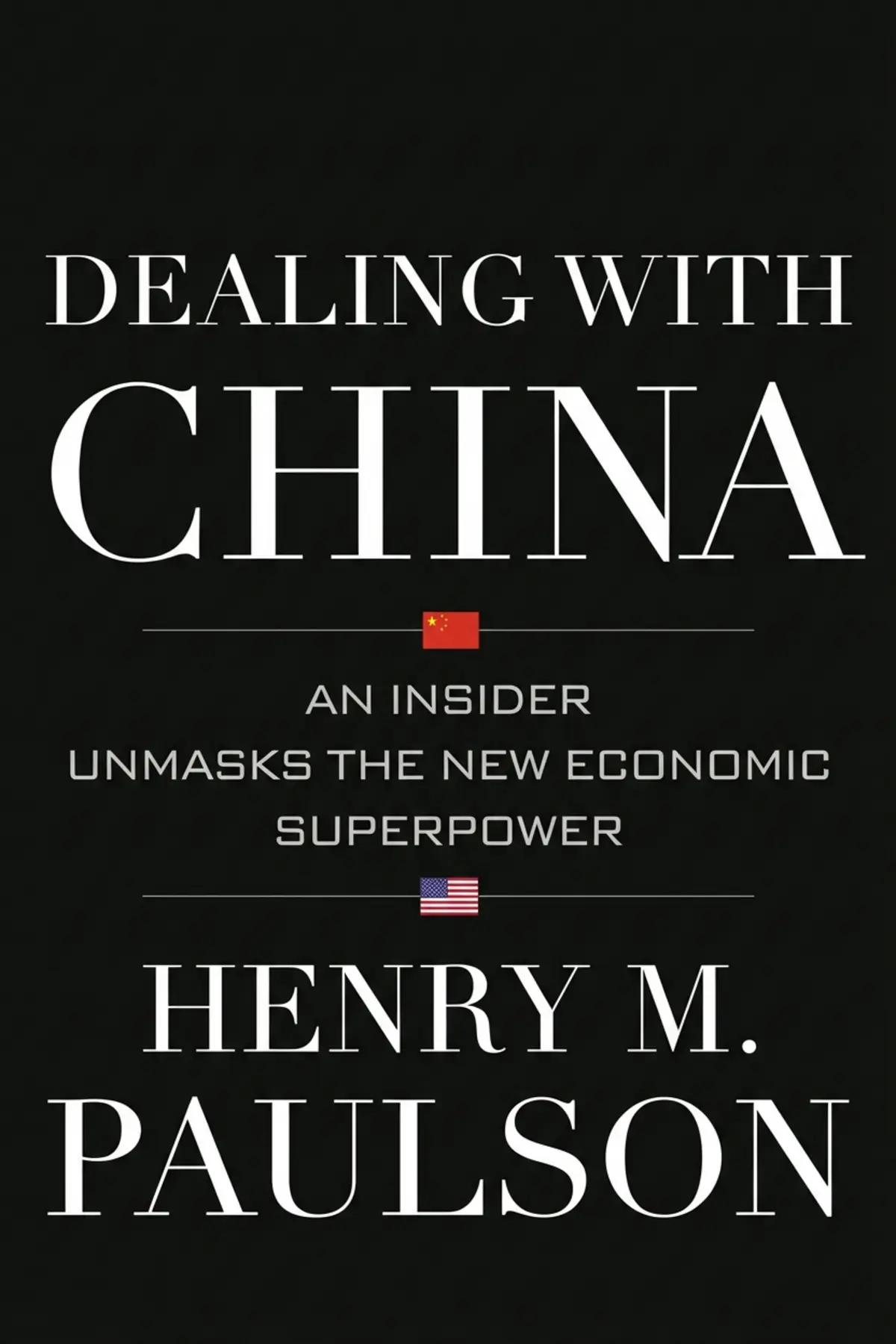
On the Brink: Inside the Race to Stop the Collapse of the Global Financial System
An intense, firsthand account of the 2008 financial crisis from the U.S. Treasury Secretary, exploring the high-stakes decisions and massive interventions required to prevent a total global economic collapse.
Table of Content
1. Introduction
1 min 54 sec
Imagine for a moment that the entire foundation of the world economy is beginning to crack. It is not just a single bank or a specific sector of the market, but the very infrastructure that allows people to buy homes, businesses to pay their employees, and nations to trade with one another. This was the terrifying reality that greeted the leaders of the U.S. Treasury in 2008. What followed was a period of high-stakes gambling, sleepless nights, and the invention of a new financial rulebook on the fly. It was a race against time where the cost of failure was nothing less than a global depression.
At the center of this storm was Henry Paulson, a man who had moved from the peak of Wall Street to the highest levels of government. His account of these events provides a rare window into the decision-making processes that occur when there is no precedent to follow. We often look back at history as a series of inevitable events, but when you are in the middle of a crisis, every choice feels like a fork in the road where both paths lead toward potential disaster. The story of this period is not just about numbers or balance sheets; it is about the fragility of trust and the immense burden of leadership under pressure.
In the following sections, we will walk through the pivotal moments that defined this era. We will explore why some institutions were saved while others were allowed to fall, and how political ideologies had to be set aside to prevent a systemic meltdown. This journey is about more than just a historical economic event; it is a lesson in how complex systems behave when they are pushed to their breaking point. Through this throughline of crisis management and systemic stabilization, we can better understand the forces that continue to shape our financial world today. Let’s look closer at how the race to stop a collapse actually unfolded.
2. The Strategic Takeover of Mortgage Giants
2 min 31 sec
When the backbone of the American housing market began to crumble, the government had to orchestrate a silent but massive intervention to prevent a global chain reaction.
3. The Agonizing Reality of the Lehman Brothers Collapse
2 min 45 sec
Discover the legal and financial constraints that led to the fall of a Wall Street icon and the immediate chaos that followed.
4. The AIG Rescue and the Threat of Interconnectedness
2 min 52 sec
Learn how the near-death experience of a global insurance giant forced the government to cross a line it never intended to bridge.
5. The Political War Over the Troubled Asset Relief Program
2 min 45 sec
Witness the dramatic collision of economic necessity and political reality as leaders fought to pass a plan the public detested.
6. Restoring the Core Through Direct Capital Injections
2 min 49 sec
In a bold shift of strategy, the Treasury decided to become a part-owner of the nation’s biggest banks to force the system back to life.
7. Navigating the Transition and the Industrial Crisis
2 min 39 sec
As the administration prepared to leave office, a new threat emerged in the auto industry, testing the limits of the rescue funds once more.
8. Conclusion
2 min 05 sec
The story of the 2008 financial crisis, as told from the inner sanctum of the U.S. Treasury, is a profound reminder of the precariousness of our modern world. At its heart, the crisis was an event of psychological collapse—a moment when the collective trust that powers our global markets simply vanished. The journey from the takeover of Fannie Mae and Freddie Mac to the direct injection of capital into the nation’s banks shows a leadership team forced to abandon their most cherished ideologies in favor of cold, hard pragmatism. Henry Paulson’s account reveals that when the entire system is at risk, there are no perfect choices, only varying degrees of difficult ones.
What can we take away from this high-stakes period? First, that in a globalized economy, everything is connected. A bad mortgage in a small town can eventually threaten the stability of a sovereign nation halfway across the globe. Second, that leadership in a crisis requires the courage to be unpopular. The decisions made during 2008 were loathed by the public and criticized by politicians, yet they were the very actions that prevented a total economic shutdown. Finally, it teaches us that resilience is not a given; it must be actively maintained through oversight, coordination, and a willingness to act decisively before a crack becomes a chasm.
As we close this exploration, consider the importance of trust in your own life and business. The 2008 crisis shows us how quickly that trust can disappear and how incredibly difficult it is to rebuild. By understanding the race to stop the collapse, we are better prepared to recognize the warning signs of systemic risk and the value of clear-eyed, courageous action in the face of uncertainty. The world remained on the brink for a long time, but because of the frantic efforts of a few in the halls of power, it did not fall over the edge.
About this book
What is this book about?
On the Brink provides a gripping, behind-the-scenes look at the most volatile period in modern economic history. Narrated from the perspective of Henry M. Paulson, who served as the U.S. Secretary of the Treasury during the peak of the 2008 turmoil, it chronicles the frantic race to stabilize a crumbling financial system. The narrative moves from the halls of the White House to the boardrooms of Wall Street, detailing the decisions that led to the government takeover of mortgage giants, the controversial collapse of Lehman Brothers, and the unprecedented rescue of AIG. This summary goes beyond the headlines to explain the complex logic and immense pressures facing leadership during a systemic crisis. It promises an understanding of the delicate balance between free-market principles and necessary government intervention. Listeners will gain insight into the mechanics of global finance, the challenges of political gridlock, and the sheer magnitude of the efforts required to restore trust when the world’s markets were on the verge of total paralysis.
Book Information
About the Author
Henry M. Paulson
Henry M. Paulson Jr. is a former U.S. Treasury Secretary and Harvard MBA who spearheaded the nation’s financial response during the 2008 economic crisis. Prior to his government service, he spent decades in the private sector, most notably as the Chairman and CEO of Goldman Sachs. His deep expertise in global finance and high-level leadership informed his work at the Treasury and his later literary contributions, including the best-selling book Dealing with China, which examines the complexities of the relationship between the United States and China.
Ratings & Reviews
Ratings at a glance
What people think
Listeners view this book as an exceptionally accessible chronicle of the financial crisis, with one listener identifying it as required reading for business students. The prose is expertly constructed; one listener remarks that it is written with the urgency of each moment. Additionally, the work captures an intriguing period in history, with one review highlighting its detailed chronology of the financial collapse. Although reactions to the narrative style are mixed, many listeners are gripped by the storytelling, and the book sustains a quick pace throughout.
Top reviews
Saengdao
Finally got around to this after finishing Geithner’s Stress Test, and it holds up remarkably well. Paulson gives a unique viewpoint on the 2008 meltdown that somehow makes a Treasury Secretary feel like a relatable human being. I was surprised by the personal details, like his need for eight hours of sleep or his family’s liberal leanings. The narrative wastes no time on fluff and dives straight into the action with the seizure of Fannie and Freddie. It’s written with such urgency that I found myself mesmerized by the storytelling despite knowing how it all ends. Truly, it’s a tour de force that puts the entire Bush administration in a brand new light for me.
Show moreTod
Wow, I didn't expect a former Treasury Secretary to be this relatable and straightforward in his writing. The very first sentence—a direct question from President Bush—sets a tone that is conversational rather than cerebral. I loved the admissions of personal stress and the focus on the human element of these massive institutions. Paulson’s description of the weekend negotiations feels authentic, capturing the exhaustion of men trying to stop a global hemorrhage. It’s a fascinating moment in history told by the man at the center of the storm. Even if you disagree with the bailouts, you have to admire the transparency regarding his thought process. This is required reading for anyone interested in how power actually functions during a catastrophe.
Show moreOtt
Picked this up during a deep dive into the 2008 crash. The book offers a fascinating, step-by-step chronology that makes the financial collapse feel like it’s happening in real-time. I appreciated how Paulson managed to break down complex maneuvers involving Fannie Mae and Freddie Mac without drowning me in jargon. Frankly, the writing captures the urgency of those weekend meetings where the global economy was hanging by a thread. However, it’s a bit jarring that there are no 'bad guys' in this version of events. Every banker seems like a selfless hero trying to save the world rather than a participant in the mess. Still, for anyone wanting to see the internal logic of the Bush administration, it’s essential reading.
Show morePannipa
The chapter on the Bear Stearns crisis is a masterclass in high-stakes negotiation and political maneuvering. Truth is, I had no idea how close we actually were to an absolute economic abyss until reading this. Paulson presents himself as a pragmatic statesman, and while he’s perhaps too generous to his banking colleagues, the tension is palpable. The book maintains a fast pace throughout, structured almost day-by-day, which helps the reader track the cascading failures. It’s a highly readable account that avoids the worst of Wall Street’s 'alphabet soup' jargon. My only real gripe is the lack of documentation to back up some of the more specific conversations. It’s a great piece of history, even if it’s viewed through a very specific lens.
Show moreUbolrat
Ever wonder what was actually being said in the Oval Office when the world was melting down in 2008? This book provides that fly-on-the-wall perspective with a surprising amount of directness and candor. Paulson manages to show the intense pressure the Treasury was under to act against their own Republican ideologies. In my experience, most political memoirs are sanitized, but this feels like a genuine attempt to explain a desperate situation. The writing is well-crafted, maintaining a sense of momentum even during the more technical chapters on block grants. While it’s clear Paulson views his peers as 'statesman material,' the insight into George W. Bush’s decision-making is worth the price of admission alone.
Show moreZoey
Not gonna lie, this was assigned for my MBA, but it turned out to be a fast-paced thriller in its own right. The book wastes no time with long introductions, jumping straight into the panic of the Fannie and Freddie seizure. It’s a highly readable account that I think even non-business students would find engaging because of the narrative quality. Paulson does a great job of explaining why the government felt forced to intervene, even when it went against their instincts. I did find the 'full cast of characters' a bit difficult to manage at times, requiring a few Google searches. Overall, it’s a mesmerizing look at a moment when the world was on the brink of collapse.
Show moreLillian
After hearing so much about the 2008 bailout, reading the insider's account felt necessary, even if Paulson is an unreliable narrator. The book provides a fascinating, detailed chronology of the financial collapse from a perspective we rarely get to see. I was particularly gripped by the sections on the Lehman Brothers failure and how it differed from Bear Stearns. Personally, I found the book to be written with an incredible sense of urgency that kept me turning pages late into the night. It’s not perfect—there’s definitely some self-justification going on regarding his past at Goldman—but the historical value is immense. It’s a complex story told in a very accessible way for the average reader.
Show moreAir
As someone who works in finance, the granular detail was appreciated, yet the narrative frequently felt like reading the minutes of a meeting. Paulson is clearly a brilliant guy, but his voice is sometimes a bit monotone on the page. I kept waiting for more drama or a collaboration with someone like Michael Lewis to spice up the prose. The material is undeniably interesting, especially the behind-closed-doors look at the Lehman Brothers failure, but the pacing is quite uneven. One moment you're in a high-stakes negotiation, and the next you're slogged down in repetitive technical explanations. It's a decent accounting of the facts, but it lacks the narrative punch found in other crisis memoirs.
Show moreParichat
To be fair, Paulson is no Michael Lewis when it comes to punchy prose, but this is a solid primary source. The book is structured as a detailed chronology, which is helpful for keeping track of the dizzying number of characters involved. However, the lack of a bibliography is a major issue for a book that claims to be a definitive history. It relies so heavily on Paulson’s own memory that you can’t help but wonder what was left on the cutting room floor. It’s a bit of a strange document—part memoir, part apology for the banking sector. I found the sections on the Lehman collapse interesting, yet the book failed to explain why some firms were saved while others weren't.
Show moreKofi
Look, I wanted to love this, but it’s essentially an unbelievable feat of memory without a single bibliography or source listed. For a 500-page non-fiction work covering a massive paper trail, relying solely on 'memory' feels like revisionist history at its peak. He conveniently omits his 2007 attempts to partner with money managers to buy up subprime loans, which makes the whole narrative feel like a self-fulfilling prophecy. The prose is dry, and at times, it reads more like a tedious itinerary or a set of meeting minutes than a cohesive story. While it’s interesting to see the perspective of an insider, you have to read it knowing he’s a highly unreliable narrator. I’d recommend Roger Lowenstein if you want a more objective take.
Show moreReaders also enjoyed
A Splendid Exchange: How Trade Shaped the World
William J. Bernstein
A Theory of Justice
John Rawls
A Warning
Miles Taylor

Adults in The Room: My Battle With Europe’s Deep Establishment
Yanis Varoufakis
AUDIO SUMMARY AVAILABLE
Listen to On the Brink in 15 minutes
Get the key ideas from On the Brink by Henry M. Paulson, plus 5,000+ more titles in English and Thai.
- 5,000+ titles
- Listen as much as you want
- 7-day free trial
- Cancel anytime







