
Bloodlands: Europe Between Hitler and Stalin
Timothy Snyder
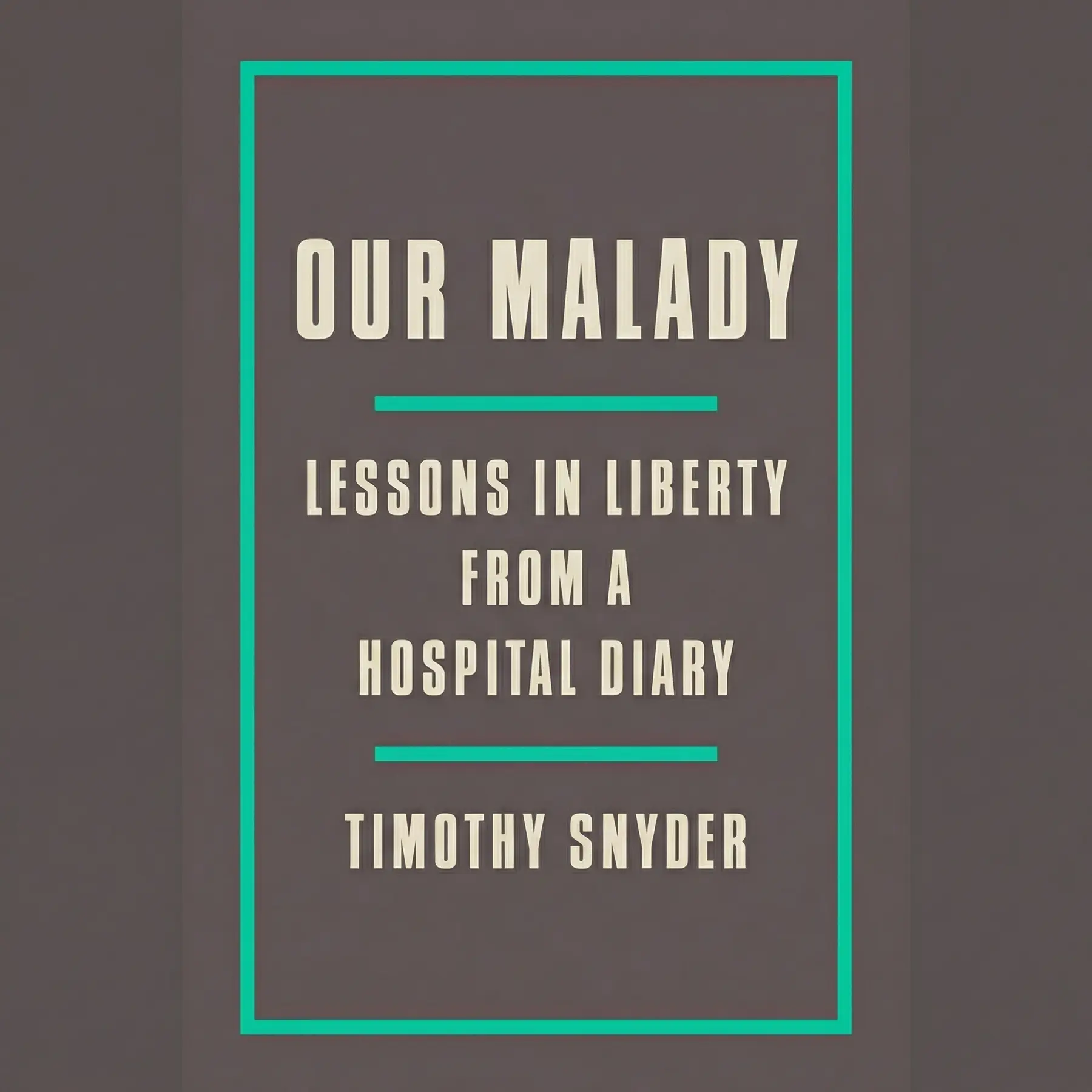
A profound look at the American healthcare crisis through the lens of political freedom. Timothy Snyder argues that without the right to health, true liberty remains out of reach.
1 min 55 sec
Imagine for a moment the classic American image of liberty. We think of the open road, the right to speak our minds, and the ability to chart our own destinies. We often define freedom by what the government cannot do to us. But there is a quieter, more fundamental prerequisite for freedom that we frequently overlook: the state of our physical well-being. As Timothy Snyder argues, a person who is incapacitated by illness, or terrified by the looming shadow of medical bankruptcy, is not truly free. You cannot exercise your rights if you are struggling to breathe or if you are trapped in a hospital bed due to preventable negligence.
Our journey through these ideas begins with a harrowing personal story. In late 2019, Snyder, a prominent historian, found himself on the brink of death within the very system he sought to analyze. His experience serves as a microcosm for a much larger national crisis. We like to believe that America is a beacon of progress and democracy, yet when we look at the hard data of public health, a different story emerges. It is a story of declining life expectancy, the prioritization of profit over patients, and a fundamental misunderstanding of what it means to be a free citizen.
In the following sections, we will explore why the American medical landscape looks so different from its international peers. We will look at the psychological foundations of liberty, starting from the way we treat our youngest citizens. We will examine how truth—the bedrock of any democracy—is often the first casualty when a healthcare system is managed by political or commercial interests rather than medical expertise. This isn’t just a critique of hospitals and insurance companies; it is a call to rethink the throughline of our national identity. If we want to be the land of the free, we must first become a land where health is recognized as a basic human right. Let’s dive into how the current system is failing us and what a healthier, more liberated future might actually look like.
2 min 26 sec
A personal medical crisis reveals the deep-seated flaws in a healthcare system that prioritizes administrative convenience over the lives of its patients.
2 min 28 sec
Explore the dangerous historical precedents of withholding healthcare and how the absence of universal care in America undermines basic human rights.
2 min 26 sec
Investing in the health and emotional development of children is not just a moral choice, but a strategic necessity for a functional democracy.
2 min 24 sec
Discover the dangerous link between political misinformation and public health, and why a healthy democracy requires honest leadership.
2 min 11 sec
When medical expertise is sidelined by corporate interests, both doctors and patients suffer. Explore the consequences of treating healthcare as a battlefield.
2 min 19 sec
The transformation of medical records into billing tools is a symptom of a larger malady: the commercialization of our most basic human needs.
1 min 39 sec
As we reach the end of this exploration into the intersection of health and liberty, the central message of Timothy Snyder’s work becomes clear: the ‘malady’ we are suffering from is as much political as it is physical. For too long, we have accepted a system that treats health as a luxury or a reward for economic success, rather than the very foundation of a free society. We have seen how a profit-driven medical model leads to declining life spans, the silencing of medical experts, and the erosion of the truth during times of national crisis.
But the throughline here is one of hope and potential. If we recognize that our rights are meaningless without the physical health to enjoy them, we can begin to demand a different kind of system. We can look to the models provided by our international peers—not to copy them exactly, but to understand the principles of universal care, early childhood support, and the restoration of medical authority. A nation that invests in the health of its citizens is a nation that is truly investing in its freedom.
The actionable takeaway from these reflections is a shift in perspective. We must stop viewing healthcare as a partisan debate about insurance companies and start seeing it as a fundamental requirement for democracy. When you think about the future of the country, consider the link between a child’s emotional regulation, a doctor’s freedom to speak the truth, and a citizen’s ability to live without the fear of medical ruin. These are the building blocks of a truly liberated society. The path forward requires the courage to face the truth of our current failings and the vision to build a system where the survival and well-being of every individual is the highest priority. Only then can we truly call ourselves a land of the free.
Our Malady is a poignant reflection on the state of healthcare in the United States, written from the perspective of a historian who nearly lost his life to a series of systemic medical failures. Timothy Snyder connects his personal brush with death to the broader political and social ailments currently plaguing the nation. He argues that the American concept of freedom is hollow if the population is too sick, too stressed, or too burdened by medical debt to exercise their rights. The book promises a deep dive into how commercial interests have replaced care, how misinformation during a global pandemic eroded democratic norms, and why the United States lags behind other developed nations in basic metrics like life expectancy. By examining the history of healthcare as a human right and the psychological importance of early childhood support, Snyder offers a roadmap for a more liberated society. This summary explores the vital link between a healthy body and a healthy democracy, illustrating why healthcare reform is not just a policy issue, but a prerequisite for liberty.
Timothy Snyder is an award-winning author and academic who focuses on the history of Central and Eastern Europe. His work has been translated into over 40 languages and has even inspired an opera, a rap song, and art.
Timothy Snyder
Timothy Snyder
Timothy Snyder
Timothy Snyder
Listeners find this work to be a fantastic, swift read offering extensive perspectives on healthcare, while one review points out the author’s skillful integration of academic study and individual narrative. The text is lauded for its profundity, as one listener calls it an exceptional book written from a private vantage point. Listeners hold differing opinions on the correctness of the information, and the tempo of the writing draws varied responses. Listeners value the work's importance, with one remarking that it feels especially pertinent in the post-election period.
Ever wonder how a historian views the tubes and wires of an ICU? Snyder’s 'Our Malady' is a harrowing bridge between personal catastrophe and national failure, written while he was still recovering from a near-fatal misdiagnosis. He uses his brush with death—a terrifying case of sepsis that went undetected across multiple hospitals—to dissect the systemic rot in American healthcare. It’s a short, punchy volume that feels like a necessary companion to 'On Tyranny.' He masterfully argues that without health, we cannot truly be free citizens because we are too weak to exercise our rights. The way he connects the opioid crisis to political desperation and the rise of populism is particularly brilliant. It’s an urgent, emotional, and deeply scholarly plea for a system that values human life over quarterly profits. I found the pacing perfect for such a heavy subject; it’s a quick read but the ideas stick with you for weeks.
Show moreWow. This book is a punch to the gut that manages to be both a scholarly critique and a desperate plea for humanity. Snyder's account of his brush with death is nothing short of terrifying, especially considering it happened just as the world was shutting down in 2020. He describes being treated like a 'number' behind a hospital curtain, a cog in a profit-driven machine that almost let him die of sepsis. His definition of freedom—not just as the absence of government but as the presence of health and security—is a paradigm shift. The way he links the lack of local news to the spread of medical misinformation is a detail I hadn't considered before. It is a very comprehensive look at how we’ve lost our way. Personally, I think every politician should be required to read the chapter on how inequality in healthcare directly leads to the erosion of democracy. It’s a profound, albeit short, masterpiece.
Show moreAfter hearing Snyder speak about his experiences in Europe compared to the US, I had to read the full account. This book is a brilliant exploration of how our physical bodies are connected to the body politic. Snyder argues that we cannot be free if we are constantly in pain or terrified of medical bankruptcy. His story about the hospital roommate with COVID-like symptoms being ignored is a haunting reminder of the early days of 2020. The prose is eloquent and urgent, moving quickly from personal anecdote to historical warning. He reminds us that tyrants thrive on a sick and divided population. I particularly liked the section on empathy and how our lives are like 'rafts' tied together; when one person sinks, we all feel the waves. It’s a beautiful, tragic, and ultimately hopeful call for a more empathetic society. Truly an outstanding book that provides a fresh perspective on what it means to be a free individual.
Show moreSnyder's 'Our Malady' is an essential read for anyone concerned about the future of American democracy. He deftly combines scholarly research with personal experiences to show how our failing healthcare system makes us vulnerable to authoritarianism. The book is incredibly timely, reflecting on the failures of the COVID-19 response and the broader 'malady' of a society that treats health as a luxury. I loved the distinction he makes between 'individualism' and actual freedom. He points out that we are currently trapped in a system that forces us to spend our lives worrying about survival rather than thriving. The writing is sharp, and the emotional stakes are high. It’s a quick read, but it provides a very comprehensive look at the structural changes needed to save our country. This is Snyder at his most passionate and most personal. I’ve already recommended it to several friends who are frustrated with the state of the world.
Show morePicked this up after seeing Snyder’s name, and while it isn't his typical historical tome, it’s just as vital. The book is part hospital diary, part political treatise, detailing his agonizing journey through the US medical system during the dawn of the pandemic. He makes a compelling case that 'malady' isn't just a physical disease but a social one. Look, the American system is focused on profit, which Snyder contrasts sharply with his experiences in European hospitals where doctors actually have time to talk to patients. Some might find the focus on the Trump administration’s handling of COVID-19 a bit dated, but the underlying philosophy about health as a human right is timeless. My only minor gripe is that he occasionally gets a few technical details wrong—like the regulation of medical implants—but the emotional core of the book is undeniable. It’s a sobering look at how close we are to the edge.
Show moreFinally got around to reading this short but heavy-hitting essay on why America's medical system is so broken. Snyder’s personal ordeal with appendicitis and subsequent sepsis serves as a terrifying case study of how a wealthy person with every advantage can still nearly die due to systemic inefficiency. The writing style is vintage Snyder: succinct, sharp, and laden with historical parallels that make your skin crawl. He argues that healthcare is the prerequisite for liberty, a concept that many in the US seem to have inverted. In my experience, his comparison of maternity care in the US versus Austria was particularly eye-opening and frankly embarrassing for our country. The book is a bit of a 'pamphlet' in terms of length, but the depth of insight is remarkable. It’s a great quick read for anyone who thinks the current system is sustainable. Definitely a timely piece that stays relevant even after the 2020 election cycle.
Show moreAs someone who works in the medical field, Snyder’s description of 'malady' as both a bodily ailment and a social sickness resonates deeply. He captures the exhaustion of the American doctor and the transactional nature of our current system perfectly. His diary entries from the hospital are raw and vulnerable, showing a side of the historian we rarely see. Not gonna lie, some of his critiques of hospital management are hard to read because they are so accurate. He correctly identifies that when doctors are forced to prioritize 'efficiency' and billing codes over patient interaction, everyone loses. The pacing is a bit frantic, mirroring his own delirium and recovery, which adds to the authenticity of the narrative. While he might lean a bit heavily into the comparison with European socialized medicine, his observations about the dehumanizing nature of the US system are spot on. It’s a necessary, albeit uncomfortable, mirror for our society.
Show moreThe chapter on the intersection of pain and politics changed how I think about the opioid crisis. Snyder isn't just complaining about a bad hospital experience; he's diagnosing a national illness where wealth is prioritized over wellness. He writes with the clarity of someone who has stared death in the face and come back with a message. The book is short enough to read in one sitting, but the implications are massive. He talks about how the 'freedom' to be sick is no freedom at all. Gotta say, his insights into how the Nazi regime used health as a tool of exclusion were chilling and gave much-needed context to his modern critiques. Some parts feel a bit like a collection of thoughts rather than a unified theory, but the brilliance of his mind shines through every page. It’s a vital contribution to the conversation about what we owe one another as citizens.
Show moreNot what I expected from a historian of Snyder's caliber, though the core message remains vital and worth discussing. The book feels a bit rushed, likely because it was written in the heat of a personal health crisis and the start of a global pandemic. While his story of being ignored by doctors while his body was shutting down is genuinely moving, the transition into political theory feels a bit disjointed at times. To be fair, he makes some excellent points about how physical pain can be exploited by authoritarian leaders to create divisions in society. However, I found some of his generalizations about the medical profession to be a bit broad and occasionally unfair to the overworked staff he describes. It’s an interesting hybrid of memoir and manifesto, but it lacks the rigorous structure of his previous works. It’s worth a read for the perspective, but don't expect a deep dive into policy specifics.
Show moreTimothy Snyder presents a deeply flawed premise that true freedom can only be achieved through government-mandated health care, which essentially feels like a call for total bureaucratic control. Truth is, if medicine is a right, then the medical professionals themselves are being treated as property of the state to fulfill your demands. This book argues that for-profit medicine is a sinister force, yet it ignores the fundamental loss of liberty when the government micromanages every aspect of a person's physical well-being. It feels more like a hive-mind manifesto than a serious historical analysis. While his personal story of surviving sepsis is harrowing, the leap he makes to suggest that only a socialized, European-style system can save our humanity is a stretch. He paints the American public as cattle incapable of running their own lives. Frankly, the tone is condescending and the logic is circular, prioritizing a twisted version of security over actual individual choice.
Show more
Barack Obama
Masaji Ishikawa
John Rawls
Miles Taylor
Tracy Rosenthal
AUDIO SUMMARY AVAILABLE
Get the key ideas from Our Malady by Timothy Snyder, plus 5,000+ more titles in English and Thai.







