
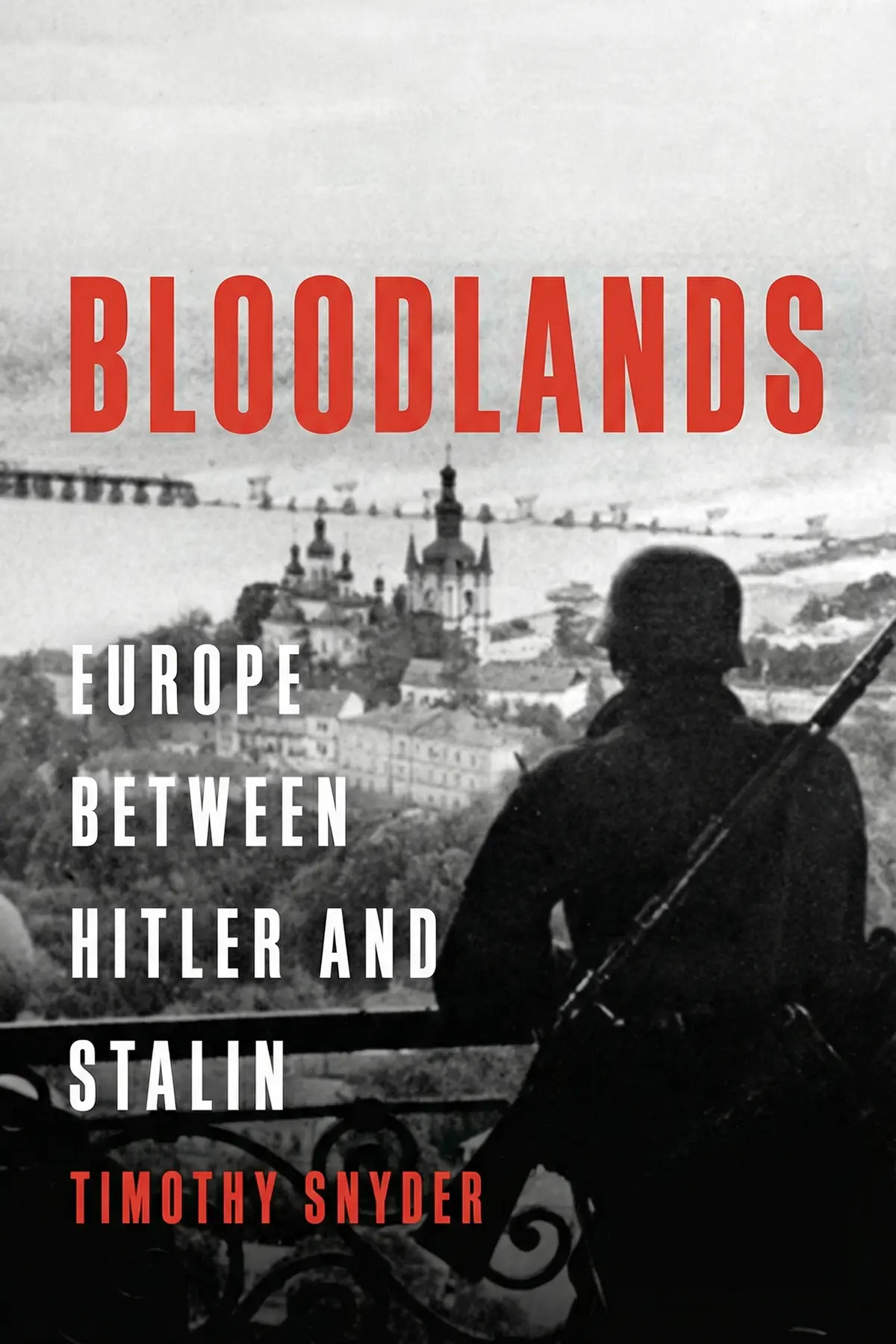
Bloodlands: Europe Between Hitler and Stalin
Timothy Snyder
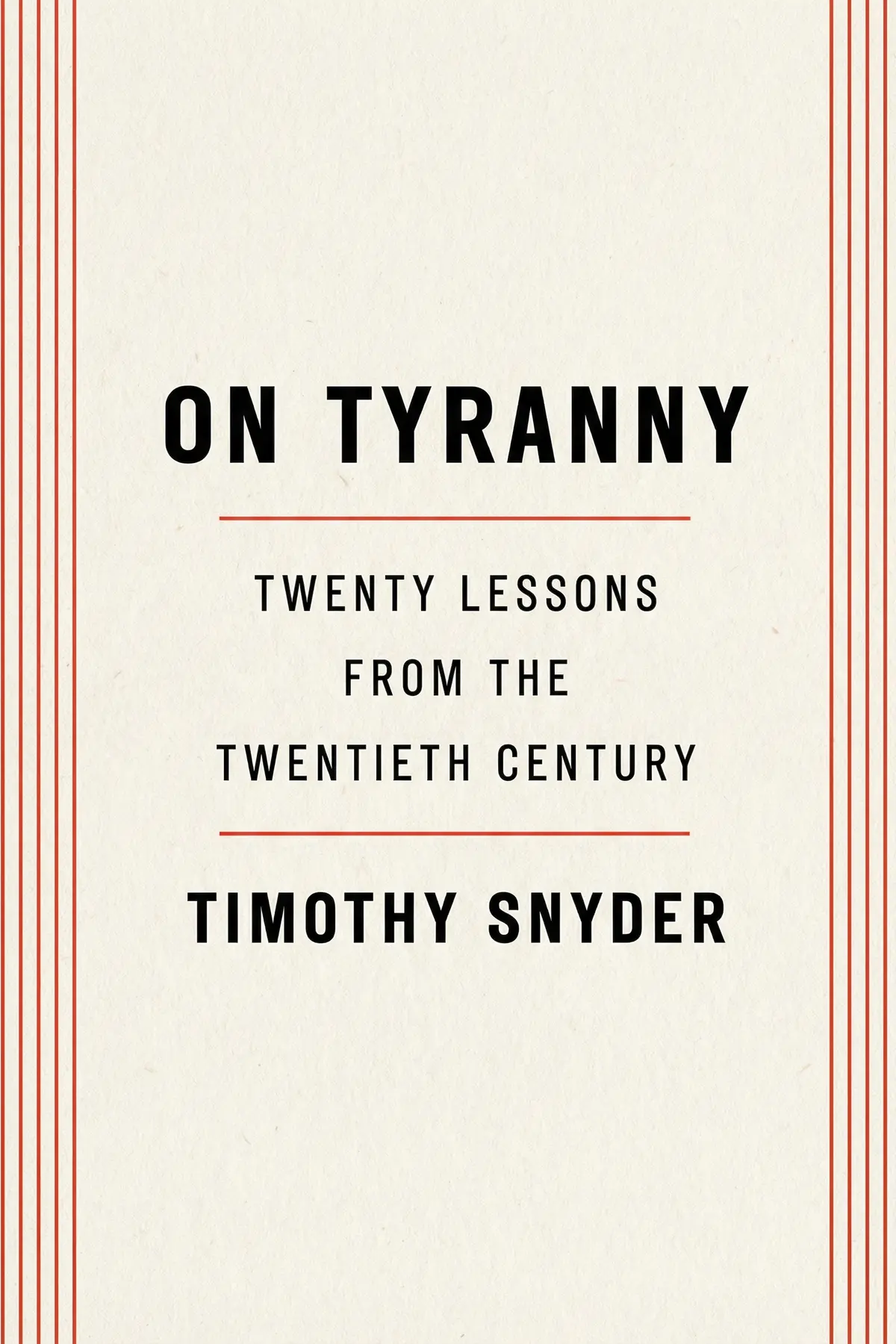
On Tyranny provides twenty critical lessons from twentieth-century history to help modern citizens recognize the early signs of authoritarianism and take active steps to defend democratic institutions and personal freedoms.
2 min 05 sec
For much of the late twentieth century, there was a comforting sense of inevitability in the air. Many people living in established democracies felt as though the hard work of history was largely finished. The prevailing narrative suggested that we were moving toward a world of increasing globalization, shared prosperity, and rational governance. In this view, the horrors of the past—the rise of Fascism, the brutality of Nazism, and the suffocating control of Communism—were viewed as historical aberrations. They were grim relics of a distant era, lessons learned and filed away, surely never to be repeated in a modern, enlightened society.
But history is not a one-way street toward progress. As we look at the shifting political landscapes of the present, that sense of security is beginning to feel like complacency. The structures we rely on to protect our rights and freedoms are more vulnerable than we might like to admit. What if the twentieth century wasn’t a closed book, but a warning? What if the same patterns that led to the collapse of democracies eighty or ninety years ago are beginning to emerge once again?
This is the core concern of Timothy Snyder’s work. He argues that if we want to protect our future, we must become students of the past. Tyranny rarely arrives overnight with a sudden, dramatic coup. Instead, it often grows gradually, feeding on the indifference and the small concessions of the population. By looking at how previous generations failed to stop the rise of autocracy—and how some brave individuals managed to resist—we can find the tools we need to identify the threats in our own time.
In the following sections, we will explore a series of vital lessons for the modern citizen. We’ll look at why internal threats are often more dangerous than foreign ones, how the language we use can either nourish or starve a tyrannical regime, and why the simple act of reading a book can be a revolutionary deed. The throughline here is clear: democracy is not a spectator sport. It requires active participation, a commitment to truth, and an understanding that the choices we make today will determine whether we remain free tomorrow.
2 min 31 sec
Democracies often crumble not from foreign invasion, but from a gradual seizure of power by internal factions that use fear and intimidation to bypass the law.
2 min 11 sec
Small acts of obedience, like displaying a party symbol, can unintentionally validate a regime and lead to the exclusion and persecution of fellow citizens.
2 min 21 sec
Authoritarianism thrives on slogans and simplified language, making the habit of reading books a vital tool for maintaining the ability to think critically.
2 min 05 sec
Isolation is a primary tool of repression, but when people from different walks of life build connections, they create a foundation for powerful resistance.
2 min 09 sec
The loss of control over our private information makes us vulnerable to manipulation and blackmail, tools that are central to the rise of totalitarianism.
2 min 29 sec
Tyranny begins with the death of truth, proceeding through stages of lies and contradictions designed to make citizens give up on reality altogether.
1 min 59 sec
The history of the twentieth century is a catalog of both great tragedy and remarkable courage. The primary lesson we must take away is that democracy is not a self-sustaining machine. It is a living, breathing system that requires the constant care and attention of its citizens. The signs of tyranny—the erosion of truth, the rise of paramilitary attitudes, the loss of privacy, and the use of ‘salami tactics’ to dismantle the law—are not relics of the past. They are recurring patterns that we must learn to recognize in the present.
Protecting your country means more than just occasionally showing up at the ballot box. it means being a person who values facts over slogans, who builds bridges across social divides, and who refuses to give up their private life to the state. It means understanding that your individual choices matter. Every time you refuse to repeat a political cliché, every time you read a challenging book, and every time you make eye contact with a neighbor from a different background, you are performing an act of resistance.
It is also vital to reject defeatist thinking. It is easy to feel small and powerless in the face of massive political shifts, but that is exactly how a tyrant wants you to feel. Change happens through the accumulation of small acts. As an actionable step, seek out the works of those who have seen the face of tyranny before, such as Hannah Arendt’s ‘The Origins of Totalitarianism.’ By understanding how racism and ideology have been used in the past to justify the removal of rights, you will be better equipped to defend human dignity today.
Ultimately, the throughline of this journey is responsibility. We cannot wait for a hero to save our institutions; we are the ones responsible for them. By staying informed, staying connected, and staying committed to the truth, we can ensure that the dark history of the last century remains a lesson rather than a blueprint for our future. Vigilance is the price of liberty, and it is a price we must be willing to pay every single day.
For many decades, it was easy to believe that democracy was a permanent fixture of the modern world, an inevitable destination for all nations. However, history tells a different story—one where freedom is fragile and easily dismantled from within. On Tyranny serves as a warning and a guidebook, drawing on the darkest chapters of the 1900s to illustrate how quickly societies can slide into autocracy when citizens are not vigilant. This summary breaks down the tactics used by repressive regimes, from the manipulation of language and the erosion of truth to the use of paramilitary forces and the exploitation of private information. By examining the rise of Fascism, Nazism, and Communism, it offers a roadmap for resistance. The promise of these lessons is not just to provide historical context, but to empower individuals to act before it is too late, emphasizing that the survival of democracy depends on the small, daily choices of every citizen.
Timothy Snyder is an esteemed Professor of History at Yale University. He is widely recognized as one of the leading experts on the history of Central and Eastern Europe and the Holocaust. His academic work is complemented by his best-selling books, which include Bloodlands: Europe Between Hitler and Stalin and Black Earth: The Holocaust as History and Warning. Through his writing, Snyder bridges the gap between deep historical research and contemporary political analysis.
Timothy Snyder
Timothy Snyder
Timothy Snyder
Timothy Snyder
Listeners describe this work as a fast and simple listen featuring clearly stated historical insights, considering it essential reading for all Americans. Its brief prose ensures it remains approachable, and listeners value the superb historical background and thoroughly researched material.
Timothy Snyder has crafted a chillingly essential roadmap for anyone concerned about the fragility of modern democracy. Every page of this slender volume resonates with the weight of 20th-century tragedies, yet it never feels like a dry academic lecture. By distilling complex historical shifts into twenty actionable lessons, Snyder makes the terrifying patterns of the past feel immediate and preventable. I found the chapter on "not obeying in advance" particularly striking because it challenges our innate tendency to conform to shifting norms. While it takes less than an hour to read, the implications of his warnings will stay with you for years. This is not just a book for historians or political junkies; it is a vital manual for every citizen who values their liberty. The prose is lean and muscular, cutting through the noise of contemporary media to provide a clear-eyed perspective on how autocracies take root. Frankly, it should be required reading in every high school across the country to ensure we don't repeat the mistakes of our ancestors.
Show moreFinally sat down with this today and I am absolutely floored by how much power Snyder packed into such a small space. The twenty lessons are arranged with surgical precision to show how easily a society can slip into the shadows of tyranny. He isn't just theorizing; he’s providing a tactical manual for maintaining an independent mind in an era of intense social pressure. I was especially moved by the advice to "make eye contact and small talk," a simple human act that prevents dehumanization. Look, the world feels increasingly polarized, but these historical parallels offer a grounded way to understand the chaos without falling into despair. The sentence structures are varied and rhythmic, making the heavy themes surprisingly easy to absorb in one sitting. It acts as both a mirror and a shield, reflecting our current reality while offering ways to protect our democratic values. If you care about the future of this country, stop what you are doing and read this immediately.
Show moreWow, this is exactly the kind of clear-eyed analysis we need during these confusing and often frightening times. Snyder takes the most horrific moments of the 20th century and translates them into a series of punchy, memorable instructions for the modern citizen. The book’s small size is its greatest strength, allowing it to function as a handbook you can carry with you and reference whenever you feel overwhelmed by the news cycle. His writing style is direct and accessible, stripped of unnecessary flourish but still capable of delivering a profound emotional impact. Not gonna lie, I teared up a bit reading the closing lines about how young people must be the ones to make history. It reminds us that democracy is not a static state of being, but a constant, active process that requires our bodies and our voices. Every American should have a copy of this on their nightstand to remind them that the price of liberty is eternal vigilance.
Show moreAfter hearing so many people quote Snyder’s "Twenty Lessons," I finally decided to see if the content lived up to the social media buzz. It does. The book is an urgent, well-articulated defense of the institutions that make a free society possible. Snyder’s prose is incredibly accessible, making the dark lessons of the Holocaust and the Soviet era feel relevant to a wide audience. I was particularly struck by the warning about paramilitaries and the erosion of the line between official police and private security forces. The way he structures each chapter—starting with a historical anecdote and ending with a modern takeaway—is both logical and deeply engaging. This isn't just about one political figure; it’s about the recurring patterns of human behavior that lead to the loss of freedom. It’s a sobering read, but it’s also empowering because it reminds us that our individual choices actually matter in the grand scheme of history.
Show moreThe chapter on "corporeal politics" completely changed the way I think about my involvement in the local community. Snyder argues that power wants us to stay in our chairs, staring at screens, while real resistance happens when we put our bodies in unfamiliar places. This book is a masterclass in concise, effective communication, stripping away the fat to deliver a lean set of instructions for survival. I loved how he referenced famous authors and philosophers to provide a deeper layer of meaning to each of his twenty lessons. It creates a sense of continuity, showing that we are part of a long tradition of people who have fought for their right to self-governance. While some might find the tone a bit dark, I found it strangely comforting to know that we have seen these patterns before and that there are proven ways to fight back. This is an essential guide for anyone who wants to be more than just a bystander as history unfolds around them.
Show moreCan a book that fits in your back pocket actually save a republic from crumbling into authoritarianism? Snyder certainly tries to prove it can by bridging the gap between historical scholarship and modern activism. His focus on how institutions don't protect themselves but require active defense is a necessary wake-up call for those who take freedom for granted. I appreciated the specific examples from Nazi Germany and the Soviet bloc, which provide a much-needed reality check on our current political climate. To be fair, some sections feel a bit repetitive if you are already well-versed in the works of Hannah Arendt or George Orwell. However, the brevity of the chapters makes the heavy subject matter digestible for the average reader who might be intimidated by a denser tome. The writing is sharp and urgent, though I wish there were more footnotes for some of the broader historical claims. It is a solid, practical guide that serves as a constant reminder to keep our eyes open and our language precise.
Show moreAs someone who has spent years studying the rise of fascism, I found Snyder’s distillation of the "standard" historical warnings to be incredibly effective. He manages to avoid the dense jargon of academia while still providing enough context to make his points feel authoritative and well-documented. The emphasis on "professional ethics" and the role of lawyers and doctors in preventing total control was a perspective I hadn't considered deeply before. My only real gripe is that the book is so short that it occasionally brushes past the complexities of the current digital landscape. While he mentions the dangers of the internet, a more modern analysis of social media’s specific role in radicalization would have been a great addition. Regardless, the core message remains powerful: we must be patriots, not nationalists, to survive the coming storms. It’s a beautifully written call to action that balances historical dread with a faint, necessary glimmer of hope.
Show morePicked this up because of the massive hype surrounding it and I have somewhat mixed feelings about the final product. On one hand, the historical context regarding the "shamanistic incantations" of past dictators is genuinely fascinating and provides a unique lens for viewing modern political rhetoric. On the other hand, the book is so incredibly brief that it feels more like an extended blog post than a fully realized non-fiction book. Many of the 20 lessons are common sense, such as "be kind to our language" and "contribute to good causes," which didn't feel particularly revelatory to me. Truth is, I was hoping for more deep-dive analysis into the specific mechanisms of how modern bureaucracies fail under pressure. It functions well as a primer for those who aren't familiar with 20th-century history, but seasoned readers might find it a bit simplistic. It’s worth a read for the core message, but don't expect it to provide all the answers to our current systemic problems.
Show moreNot what I expected from a history book, but perhaps exactly what we need in an era of ten-second soundbites and constant digital distraction. Snyder chooses to focus on the individual’s role in resisting tyranny, which feels much more practical than a typical top-down historical analysis. His chapter on "believing in truth" should be required reading for anyone who spends time on the internet today. Gotta say, the book's brevity means that some of the more nuanced historical arguments are sacrificed for the sake of being "punchy." I also noticed a few places where the analogies to the current administration felt a bit heavy-handed, even if I generally agreed with the underlying sentiment. Still, the core advice about establishing a private life and being wary of "dangerous words" like "terrorism" and "emergency" is incredibly sound. It is a quick read that packs a significant intellectual punch, encouraging readers to step away from their screens and engage with the real world.
Show moreThe premise of using history to warn against current trends is noble, but this felt more like a partisan pamphlet than a serious work of historical scholarship. Snyder seems to have written this in a rush to capitalize on the 2016 election cycle, and the resulting "lessons" often feel like a stretch. While he draws parallels to the Nazi regime, the comparisons sometimes feel forced and ignore the vast differences in our current legal and institutional frameworks. Personally, I found the tone to be unnecessarily alarmist, bordering on a type of hysteria that doesn't actually help foster productive political discourse. He speaks about the importance of truth, yet his own biases are so transparent that it’s hard to take the analysis as an objective warning. The writing is fine for what it is, but I expected much more depth from a Yale professor known for a masterpiece like Bloodlands. If you’re looking for a balanced view, this isn’t it; it’s a book written for a very specific echo chamber.
Show more
Masaji Ishikawa
William J. Bernstein
John Rawls
Ben Macintyre

James Shapiro
Miles Taylor
Ben Macintyre
AUDIO SUMMARY AVAILABLE
Get the key ideas from On Tyranny by Timothy Snyder, plus 5,000+ more titles in English and Thai.







