

21 min 13 sec
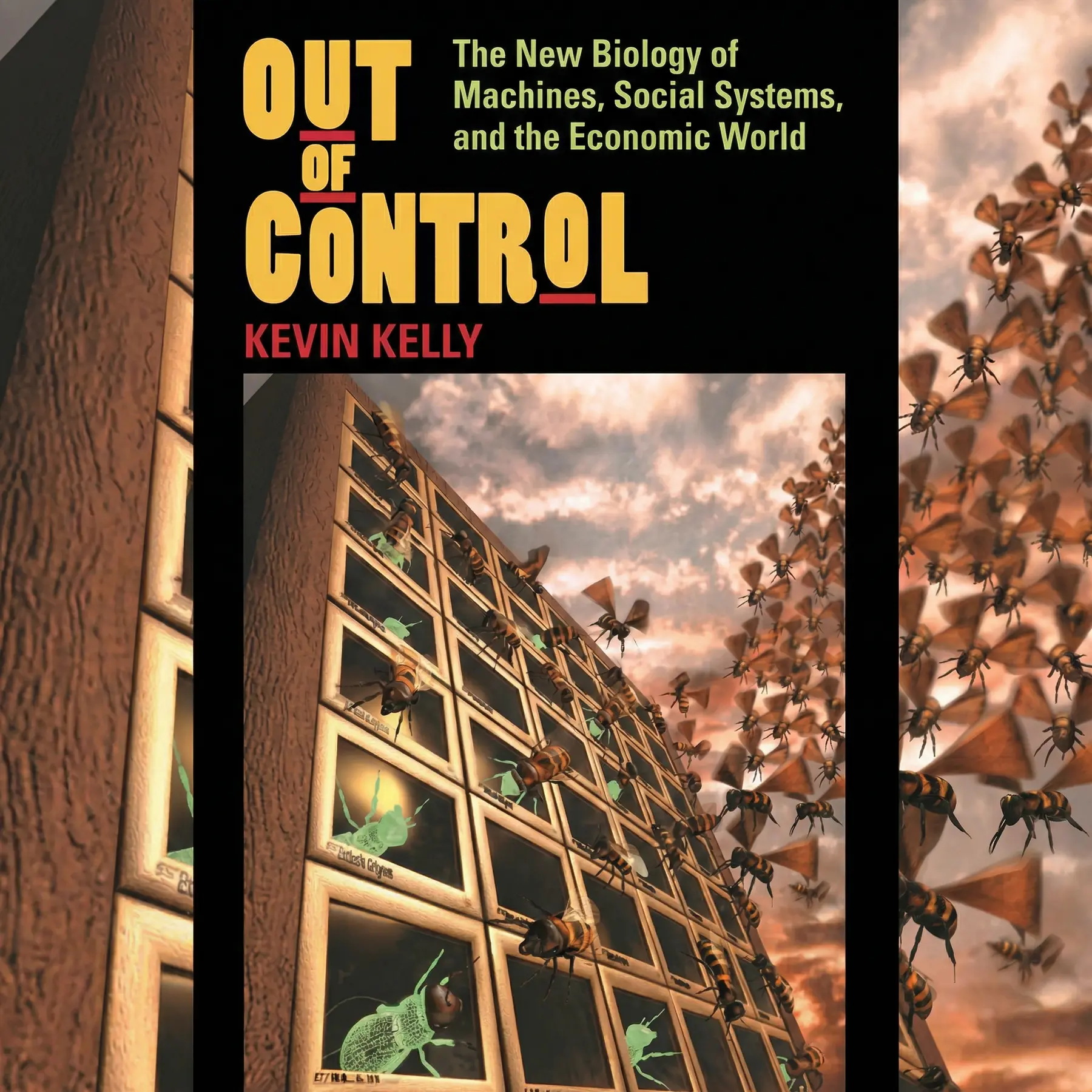
Out of Control: The New Biology of Machines, Social Systems and the Economic World
By Kevin Kelly
Explore the convergence of biology and technology. This summary examines how decentralized networks, swarm intelligence, and self-evolving systems are reshaping our economy, our machines, and our understanding of life itself.
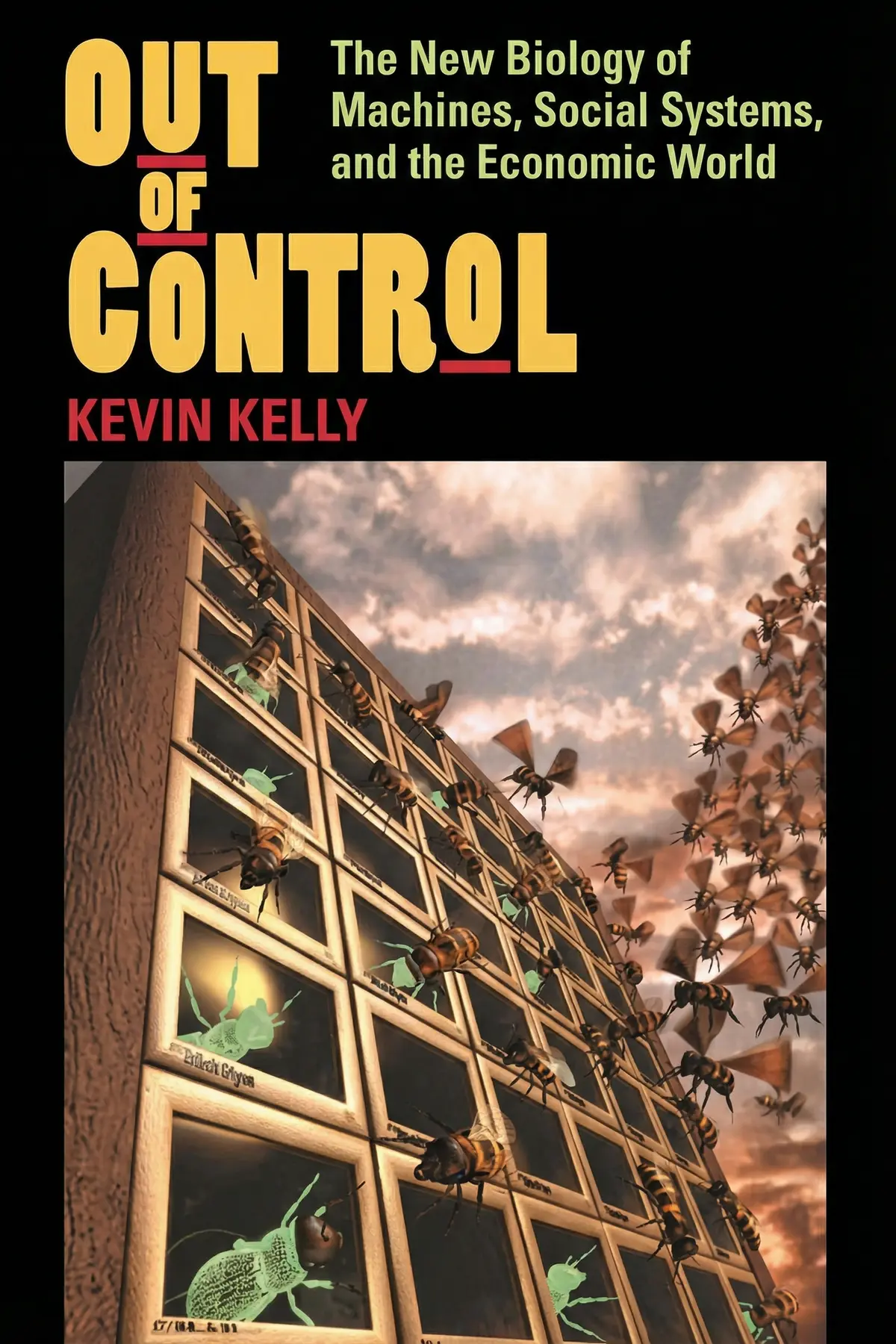
Table of Content
1. Introduction
1 min 49 sec
Step back for a moment and consider the landscape of the mid-1990s. At that time, the world was just beginning to wake up to a strange new phenomenon known as the World Wide Web. Most people viewed computers as glorified calculators—machines that followed strict, linear instructions to perform specific tasks. But even then, some thinkers were looking far beyond the horizon, seeing a future where technology would shed its mechanical skin and take on the characteristics of living organisms.
This is the world of biological machines and social systems that function like ecosystems. It is a world where the rigid boundaries between the born and the manufactured begin to dissolve. To understand where we are going, we have to look at how nature solves problems. Nature doesn’t use blueprints; it uses processes. It doesn’t rely on a single central commander; it relies on the collective wisdom of the crowd.
As we journey through these ideas, we will explore why the concept of control is becoming an outdated relic of the industrial age. We will see how decentralization is the key to building systems that don’t just survive but actually thrive in the face of chaos. Whether we are talking about the way the internet handles data, how a swarm of bees finds a new home, or how the economy of the future will operate, the throughline is clear: to build something truly great, we have to let it go. We have to be willing to inhabit a world that is, in a very real sense, out of our control. By the end of this exploration, you’ll see why these concepts were so influential that they became required study for those imagining the digital simulations of science fiction, and how they continue to define the technological reality we live in today.
2. Merging the Natural and the Artificial
2 min 29 sec
Traditional machines are limited by rigid programming, but the future belongs to systems that think and grow. Can we teach technology to behave like a living brain?
3. The Necessity of Relinquishing Control
2 min 15 sec
To harness the power of lifelike systems, humans must stop being micro-managers. What happens when we trade total command for organic guidance?
4. Lessons from the Beehive and the Power of Swarms
1 min 50 sec
Individual bees aren’t very smart, but the swarm is a genius. How can decentralized networks transform the way we build and protect our digital world?
5. The Evolution of a Networked Economy
2 min 05 sec
The traditional corporate ladder is being replaced by a web of connections. How does a decentralized market empower consumers and protect the environment?
6. Privacy and the Invisible Shield of Encryption
1 min 48 sec
As our lives move onto the network, how do we keep our secrets? The answer isn’t in laws or erasers, but in the power of mathematics.
7. Why Stability Emerges from Chaos
2 min 01 sec
You can’t build a perfect ecosystem from a blueprint. Discover why true stability requires a healthy dose of randomness and even destruction.
8. The Evolution of Synthetic Minds
1 min 45 sec
Artificial intelligence isn’t a program we write; it’s a mind we grow. What happens when our creations start to evolve on their own?
9. Postdarwinism and the Lessons of Simulation
1 min 49 sec
By simulating life on a screen, we are uncovering secrets about our own origins. Is natural selection the only way for life to thrive?
10. The Limits of Foresight in a Chaotic World
1 min 53 sec
We can see the immediate future, but the distant horizon is a blur. Why is ‘positive myopia’ the best tool we have for navigating the unknown?
11. Conclusion
1 min 29 sec
As we have seen, the path of human progress is leading us away from the mechanical and toward the biological. We are building a world that is no longer composed of separate, inert objects, but of interconnected, living networks. From the way our computers think to the way our economies breathe, the principles of nature—decentralization, emergence, and evolution—are becoming our most important tools.
But these tools come with a price. To truly harness the power of these systems, we have to let go of our obsession with total control. We have to accept that the most resilient and creative systems are those that are allowed to grow, fail, and evolve on their own. We are moving from a world of ‘making’ to a world of ‘growing.’
The takeaway for our daily lives is to embrace this complexity rather than fear it. Whether you are leading a team, managing a project, or simply trying to understand the news, remember the lesson of the beehive: the most powerful solutions often come from the bottom up. Seek out networks, value adaptability over rigid planning, and trust in the wisdom of the crowd. We may not be able to predict exactly where this journey will take us, but by understanding the biological rules of the game, we can ensure that we are ready for whatever the future brings. The world may be out of control, but that is exactly why it is so full of possibility.
About this book
What is this book about?
What if the machines of the future looked less like cold, rigid boxes and more like living, breathing organisms? This exploration delves into the fascinating intersection where technology and biology meet. It argues that the most sophisticated systems of the twenty-first century—from the global economy to artificial intelligence—will not be designed from the top down by engineers, but will instead emerge from the bottom up, much like a beehive or a tropical rainforest. Readers will discover the shift from mechanical control to biological shepherding. The promise of this perspective is a more resilient, adaptable, and sustainable world. By studying the way honeybees collaborate, how ecosystems recover from disaster, and how evolution refines genetic code, we can build digital networks and social structures that are capable of learning and growing on their own. This summary provides a roadmap for navigating a world that is becoming increasingly complex, autonomous, and, ultimately, out of our direct control.
Book Information
About the Author
Kevin Kelly
Kevin Kelly stands as a central figure in technological thought, having served as the founding executive editor of Wired magazine. Through his work, he has established himself as a premier analyst of how emerging technical breakthroughs ripple through our social fabric and redefine the human experience.
Ratings & Reviews
Ratings at a glance
What people think
Listeners find the work full of stimulating concepts, with one listener explaining how it reshaped their perspective on the ecology of everything. Furthermore, they characterize the text as a deeply engaging and comprehensive experience, with one reviewer drawing attention to the author’s focus on the collective behavior of dynamical systems. The title also earns praise for its treatment of evolution, as one listener points to its examination of co-evolution and spontaneous emerging symbiosis.
Top reviews
Suthida
Few books manage to fundamentally rewire your brain, but Kelly’s exploration of the "ecology of everything" did exactly that for me. He crafts a compelling narrative about how technological systems mimic natural growth, making the world’s chaos feel less like a threat and more like a biological necessity. Truth be told, his take on the collective behavior of dynamical systems is what stuck with me long after I closed the cover. While some of the hardware references are definitely products of the early nineties, the underlying philosophy regarding spontaneous emerging symbiosis remains incredibly relevant. You start seeing these patterns everywhere, from social media algorithms to the way your own garden grows. It’s a dense read that demands your full attention, yet the payoff is a completely refreshed perspective on what progress actually means in a connected world.
Show moreRatchada
The way this explores the collective behavior of dynamical systems is nothing short of masterful and should be required reading for anyone in the tech space. Kevin Kelly manages to extrapolate developments that were deemed fringe science back in the 90s and turns them into a coherent vision of our future. I was particularly fascinated by the sections on co-evolution and how disparate parts of a system begin to work together in a spontaneous emerging symbiosis. It’s a mind-expanding exploration that forces you to reconsider the boundary between living organisms and human-made machines. Even though some chapters stand a bit isolated, the overall impact is a profound understanding of how complexity arises from simple rules. It’s the best of an important genre, and I find myself returning to its concepts whenever I feel overwhelmed by the pace of change.
Show moreNoo
What if the distinction between the born and the manufactured is actually a lie? This is the central question Kelly tackles, and his overview of evolutionary biology is comprehensive enough to make you a believer. I love how he focuses on the "means" of development, showing that the most successful systems are those that embrace an organic style of growth rather than rigid top-down control. It’s a disturbing and reassuring perspective at the same time because it suggests we aren't in charge, but the system knows what it’s doing. The book is a massive mixture of technology, philosophy, and social sciences that offers enough inspiration to last for several academic careers. It’s truly a foundational work on interdisciplinarity and cooperation that feels more important now than it did twenty years ago.
Show moreJom
Ever wonder how a hive of bees and a network of computers are essentially doing the same thing? Kelly dives deep into this connection, offering a quirky kind of philosophical outlook that helps make sense of world chaos. He highlights the importance of spontaneous emerging symbiosis, proving that our greatest inventions often mirror the complex patterns we see in nature. I found the book to be packed with thought-provoking ideas about how we can build better systems by mimicking biological evolution. It has fundamentally changed the way I see the world, which is about the best recommendation I can give any piece of writing. Even with its age, the core message about the power of decentralized networks is more relevant than ever in our hyper-connected age.
Show moreCharlotte
Is it dated? Absolutely. Some of the tech Kelly describes feels like a relic from a museum, but the way he bridges the gap between evolutionary biology and the realm of the made is still inspirational. I found his quirky philosophical outlook on the "hive-mind" to be particularly refreshing even if his predictions didn't all hit the mark. Frankly, he offers a method to dissect trends that most modern writers completely overlook because they’re too focused on the next quarterly earnings report. My only real gripe is that he glosses over the fallout of these systems, ignoring the risks of power dynamics in favor of pure techno-optimism. Despite that oversight, the core idea—that science is displaying an organic style of development—is a neat way to analyze the messy state of modernism.
Show moreWanida
Picked this up on a recommendation after hearing it was a major influence on the actors in The Matrix, and I can totally see why. Kelly presents this idea that we’re moving toward a world that is "out of control" in a good way, where systems manage themselves through decentralized logic. In my experience, the chapters on how we can learn from models that have functioned for eons are much more valuable than the specific tech forecasts. There’s a certain beauty in his description of the hive-mind as a metaphor for the new economy, even if it feels a bit idealistic at times. Some parts are definitely worth skipping if you aren't interested in outdated anecdotes about 90s software. Still, for a beginner looking to understand the intersection of biology and technology, this remains a very thorough and interesting read.
Show moreKamol
Look, some of the specific predictions about 90s tech are almost laughable now, but you’re missing the point if you stop there. The real meat of the book is Kelly's analysis of how science is displaying an organic style of development that we can't fully control. I particularly enjoyed the parts where he discusses the "ecology of everything" and how human-made systems are becoming increasingly indistinguishable from natural ones. Not gonna lie, it’s a bit of a dense slog at points, and Kelly definitely allocates no effort to the notion of upholding existing quality-of-life. However, the intellectual payoff from understanding his "nine laws of God" for complex systems is well worth the struggle. It’s an essential text for anyone trying to wrap their head around the logic of the modern world.
Show moreNarumon
As someone who spends a lot of time thinking about decentralized systems, Kelly’s work feels like a foundational text that was decades ahead of its time. His discussion of the hive-mind as a metaphor for the new economy predicted so much of what we see in modern internet culture and collaborative research. While critics argue he leaves us without a critical approach to social power, his focus on the collective behavior of dynamical systems provides a unique lens for analysis. The writing style is engaging, though he does have a tendency to get wrapped up in his own positivist viewpoint. It’s a thorough read that rewards those who can look past the outdated references to find the timeless principles of complexity. I’d suggest pairing it with more recent books on social media's effects to balance out the techno-optimism.
Show moreElias
To be fair, Kelly’s relentless techno-optimism feels like a time capsule from a more innocent era before we realized how damaging social media could be. He suggests we just click our heels and trust in the whirlwind of progress, but I think he’s far too comfortably wrapped in a positivist viewpoint that ignores actual human fallout. While the analogies between science and nature are cleverly drawn, they don't quite account for the ways computers are now running the world in ways that aren't "natural" at all. The book is packed with thought-provoking ideas, yet the lack of a critical approach to politics and social power leaves a bit of a sour taste. It’s a good starting point for understanding complexity, but you definitely need to pair it with more recent works to get the full picture.
Show moreTalia
Not what I expected given the hype, mostly because the chapters feel isolated without enough metacontext to bridge the gap between them. Kelly is clearly a brilliant thinker, but his "get with the program" attitude towards technological change ignores the importance of preserving existing traditions and customs. To be honest, seeing him compare science to nature so concretely feels like a reach when you consider the actual environmental impact of the electronics boom. His examples just don't go far enough in addressing the byproduct of our rapid progress or the risks involved in letting machines run the world. It’s a very interesting read for the historical context, but the optimism feels misplaced in today's landscape of digital surveillance. I'd recommend it for the biology sections, but take the techno-prophecy with a massive grain of salt.
Show moreReaders also enjoyed

AUDIO SUMMARY AVAILABLE
Listen to Out of Control in 15 minutes
Get the key ideas from Out of Control by Kevin Kelly, plus 5,000+ more titles in English and Thai.
- 5,000+ titles
- Listen as much as you want
- 7-day free trial
- Cancel anytime







