The Law of Success
Napoleon Hill
Explore the hidden obstacles to personal freedom and learn how to overcome the internal and external forces of negativity that prevent us from achieving our highest potential and lasting success.
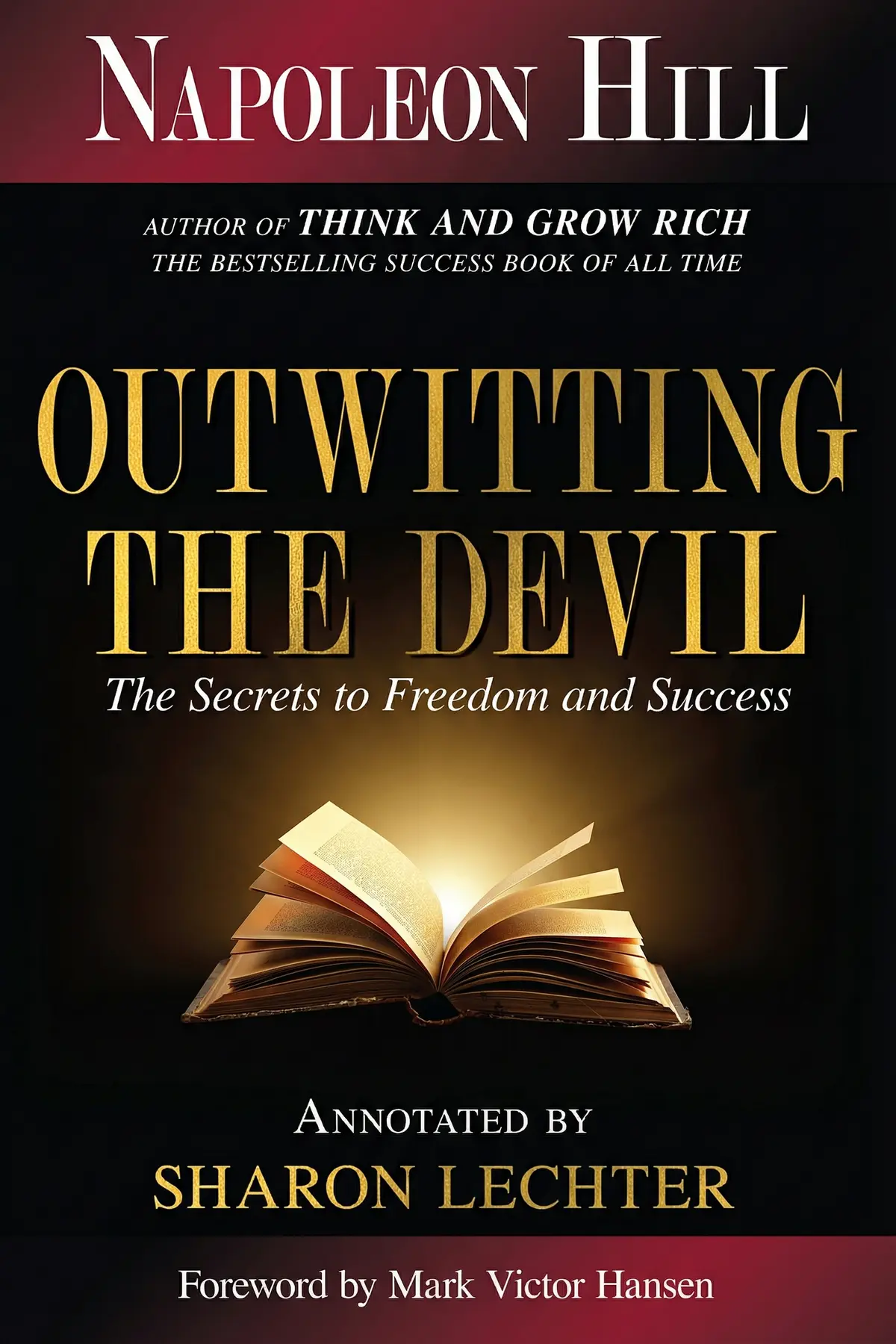
1 min 22 sec
Imagine a message so provocative that it was hidden from the public for over seventy years. This is the story of a manuscript written during a time of global economic turmoil, when people were searching for hope amidst the Great Depression. The author, a man who had already become a household name for his theories on success, felt he had uncovered a deeper, more controversial truth about why so many people fail to reach their goals. However, his insights into how religious and educational institutions might inadvertently stifle individual growth were considered too scandalous for the era. Because of this, the work remained in a drawer, silent and unpublished, until long after the author had passed away.
Now that this wisdom is finally accessible, it offers a fascinating look at the internal struggle we all face. It suggests that our greatest enemy is not an external force, but rather a mental state of negativity and fear that keeps us from taking control of our lives. By framing this struggle as a battle against a symbolic adversary, the author provides a vivid metaphor for the psychological traps that lead to stagnation. The central theme is the importance of perseverance, the power of a positive mental attitude, and the necessity of independent thinking. As we explore these concepts, we will see how relevant these decades-old lessons remain in our modern world, providing a timeless blueprint for anyone seeking to break free from the invisible chains of doubt and aimlessness.
1 min 42 sec
Discover how the subtle influence of fear and social conditioning can lead to a life of aimlessness, turning many individuals into what the author calls drifters.
1 min 40 sec
Learn about the transformative moment when the author discovered a source of inner strength that can overcome any obstacle or moment of despair.
1 min 49 sec
Explore why having a clear, unwavering goal is the most effective antidote to failure and the primary characteristic of those who succeed.
1 min 42 sec
Investigate the natural law that solidifies our habits, for better or worse, and how to harness it for personal growth.
1 min 48 sec
Discover why the people you spend time with and the atmosphere you inhabit are critical factors in your journey toward success.
1 min 46 sec
Learn how to reframe setbacks as necessary lessons and discover the resilience needed to keep going when others give up.
1 min 33 sec
As we look back at the insights shared by Napoleon Hill, a clear throughline emerges: the ultimate battle for success is fought within the confines of the human mind. We have seen how the insidious nature of drifting can rob us of our individuality and how the institutional weight of fear can keep us from ever attempting to reach our dreams. Yet, we have also discovered the tools for liberation. By identifying a definite purpose, we provide our lives with the structure and direction needed to resist negative influences. By understanding the law of hypnotic rhythm, we recognize that our daily habits are the bricks that build our future, and we take responsibility for ensuring those habits are positive.
What this really means for you is that you have the power to be the master of your own destiny. Whether it is through the influence of the people you choose to associate with or the way you choose to reframe your failures, the choice is always yours. Hill’s work reminds us that faith is not just a religious concept, but a psychological necessity—a state of mind that allows us to tap into an intelligence far greater than our own doubts. As you move forward, remember the lessons of persistence from figures like Thomas Edison and Julie Krone. When life presents you with a challenge, don’t see it as a wall, but as a stepping stone. Reclaim your mind from the grip of fear, reject the tendency to drift, and start walking toward your definite goal with absolute confidence. The secret to outwitting the obstacles in your path is to realize that they only have the power you give them. Choose to give power to your dreams instead.
This summary explores a long-suppressed dialogue regarding the psychological and spiritual barriers that keep individuals from reaching their full potential. It identifies fear, social conditioning, and aimlessness as the primary tools used to keep people in a state of 'drifting'—a condition where one lacks clear goals and becomes susceptible to negative influences. The narrative provides a roadmap for reclaiming control over the mind by shifting from doubt to faith and from confusion to clarity. Through the lens of early twentieth-century wisdom, the summary promises to reveal how self-determination, the development of positive habits, and the careful selection of one's environment can break the cycle of failure. It offers a unique perspective on resilience, suggesting that every setback contains the seeds of future triumph. Ultimately, it serves as a guide for anyone looking to liberate their thoughts from societal pressures and internal anxieties to forge a path of purposeful achievement.
Napoleon Hill was a pioneering American entrepreneur and author who spent decades researching the secrets of success. He is best known for his landmark work, Think and Grow Rich, which remains one of the most influential self-help books ever written. Sharon Lechter is a prominent American businesswoman and advocate for financial education. She has served as a leader for the National CPA Financial Literacy Commission and founded Pay Your Family First. Her work includes the creation of Thrive Time for Teens, a specialized educational game designed to teach financial responsibility to young people.
Napoleon Hill
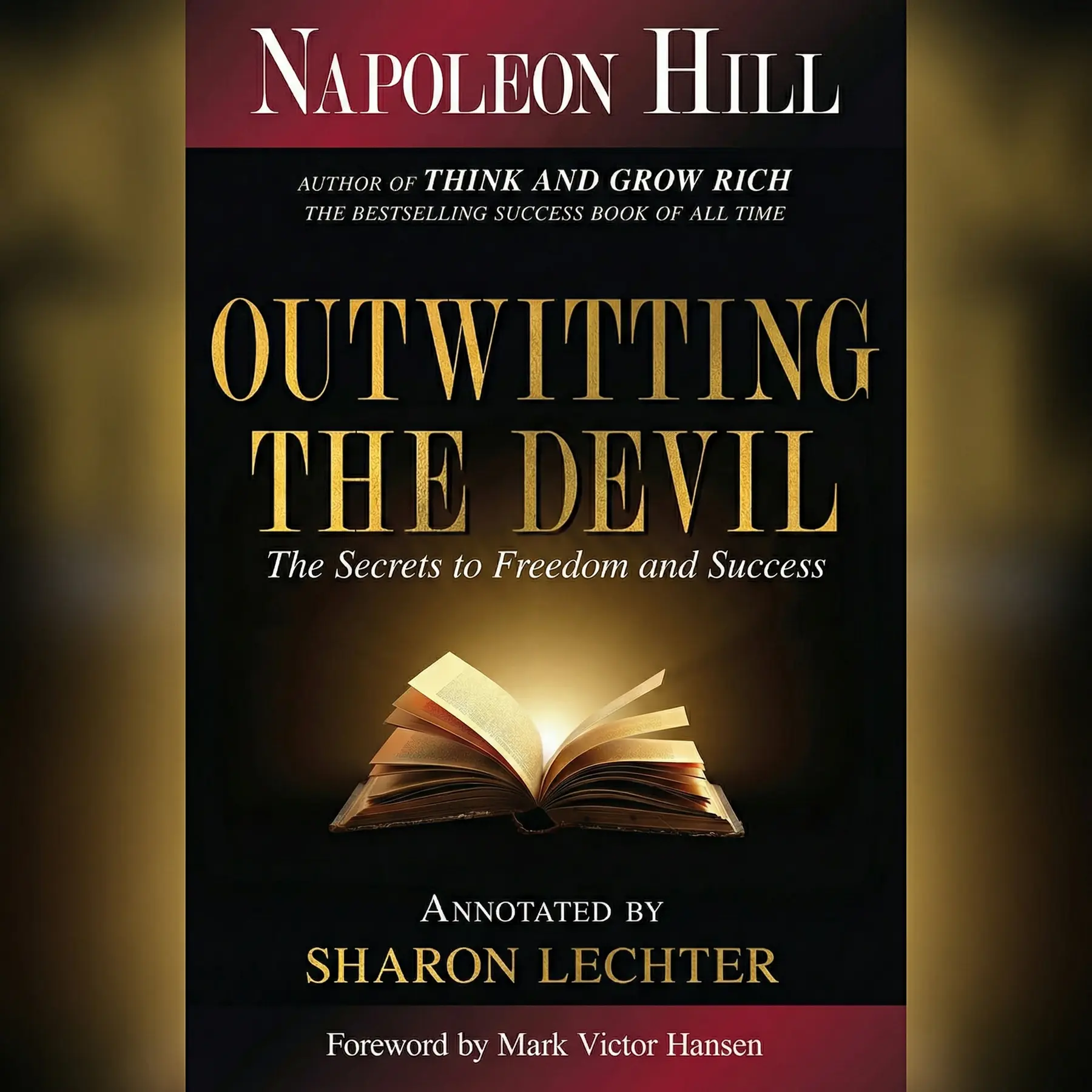
Listeners find this work to be an essential and accessible read, featuring stimulating material that explores the depths of thoughts and actions. They value the original 1938 writing style and view it as modernly relevant, with one listener noting how it changed their perspective on fear. The storytelling is highly regarded, with one review describing it as a psychological thriller about the hearts of mankind. Opinions on the annotations are split; some find the information good while others find them unhelpful.
Finally got around to reading this classic and it’s genuinely eerie how relevant it remains today. Hill’s 'interview' with the Devil dives deep into the psychology of fear and why so many of us feel stuck in a rut. I loved the distinction between 'drifters' and 'non-drifters,' as it forced me to confront my own lack of definiteness. The writing style reflects that 1938 era, but the advice on overcoming mental roadblocks is timeless. Some parts are a bit repetitive, yet the overall message about self-mastery is incredibly empowering. It’s more of a psychological thriller for your soul than a standard self-help guide.
Show moreWow, this was a wild ride from start to finish. I wasn't expecting a self-help book to read like a high-stakes interrogation, but Hill pulls it off perfectly. The way he breaks down the six major fears—especially the fear of criticism and poverty—really helped me identify why I’ve been holding myself back lately. It’s a dense read that requires you to slow down and reflect on your own choices. If you’re going through a period of adversity, this book offers a unique perspective on how to turn failure into a seed of success. Truly a must-read for anyone serious about personal growth.
Show moreAs someone who has struggled with procrastination, Hill's concept of 'drifting' hit home in a way I didn't expect. This book isn't just about making money; it's about the fundamental battle for control over your own thoughts and actions. The Devil explains how he uses simple things like bad habits and negative associations to keep people in a state of 'hypnotic rhythm' where they never reach their potential. It’s a chilling reminder of how easy it is to sleepwalk through life. I finished this feeling more alert and determined to take charge of my daily routine. A definite game-changer for my mindset.
Show moreThis book feels like a secret manual for life that was buried for decades for a reason. Hill is much more aggressive here than in Think and Grow Rich, and I think that’s why I liked it more. He doesn't sugarcoat the fact that most people are failing because they lack the courage to think independently. The section on how adversity contains the 'seed of an equivalent advantage' is something I will keep returning to. It changes the way you look at failure entirely. It's a bold, uncompromising work that challenges you to be part of the 2% who actually lead.
Show moreDon't let the title scare you off or make you think this is some weird religious text. It's essentially a masterclass in psychology and habit formation disguised as a dramatic dialogue. The Devil's 'confessions' about how he traps people through their own lack of caution and self-control are eye-opening. Personally, I found the advice on parenting and teaching kids to make firm decisions to be some of the most interesting parts. It's a quick read but one that sticks with you long after you close the cover. If you want to stop being a victim of circumstance, pick this up.
Show moreIt is absolutely mind-blowing how a manuscript from 1938 can feel more relevant to the 21st century than most modern self-help. Hill discusses how the world is designed to make us lose our individuality, and his solution is a ruthless dedication to self-discipline and faith. The 'hypnotic rhythm' concept is a brilliant metaphor for the momentum of our choices. While the tone is definitely egotistical at times, the wisdom is undeniable. This is the kind of book you read once, then immediately want to read again to catch all the nuances you missed the first time.
Show moreThe interview format is a genius way to explore the subconscious mind and the various ways we sabotage our own success. Napoleon Hill frames the Devil not as a red-horned beast, but as the negative force living within our own doubts and hesitations. I found the concept of 'hypnotic rhythm' to be a fascinating explanation for how habits become ingrained in our lives. My only real gripe is the heavy-handed annotations from Sharon Lechter; they often broke the immersion and felt unnecessary. Truth be told, the original text is strong enough to stand on its own without someone explaining it every few pages.
Show moreWhether you believe the Devil actually spoke to Hill or it’s just a clever literary device, the message holds up remarkably well in the modern era. The book identifies how societal structures, from schools to religions, often inadvertently teach people to stop thinking for themselves. Frankly, it’s a bit scary how accurate his descriptions of 'drifters' are when you look at social media today. I found the advice on definiteness of purpose and mastery over self to be very practical, though the middle sections drag a bit. It’s a deep dive into the human heart that requires an open mind to appreciate.
Show moreThe core content is quite provocative, but Sharon Lechter’s constant interjections really ruined the narrative flow for me. Every time I got sucked into Hill's dialogue with the 'Devil,' an annotation would pop up and state the obvious or repeat what I just read. Look, the 1938 manuscript is fascinating on its own; it doesn't need to be modernized to be understood. I found the 'laws of nature' and the discussion on public education to be very insightful, even if a bit cynical. It’s worth a read for Hill’s original thoughts, but be prepared for a choppy experience if you get the annotated version.
Show moreI'm probably in the minority here, but I couldn't stand this book's pseudo-scientific ramblings and egotistical tone. Hill claims to be revealing the secrets of the universe through a conversation with a literal or metaphorical devil, but it feels like he's just venting his personal biases. The 'hypnotic rhythm' stuff sounds like nonsense meant to sound profound without offering any scientific backing. To be fair, I know Hill has a huge following, but his claims about being a 'non-drifter' while the other 98% of the world are 'drifters' felt incredibly condescending. It's too dramatic and cheesy for my taste, and I think there are better ways to learn about discipline than this.
Show more
Richard Wiseman
William B. Irvine
Andrew D. Thompson

Deepak Chopra
AUDIO SUMMARY AVAILABLE
Get the key ideas from Outwitting the Devil by Napoleon Hill, plus 5,000+ more titles in English and Thai.