
18 min 52 sec
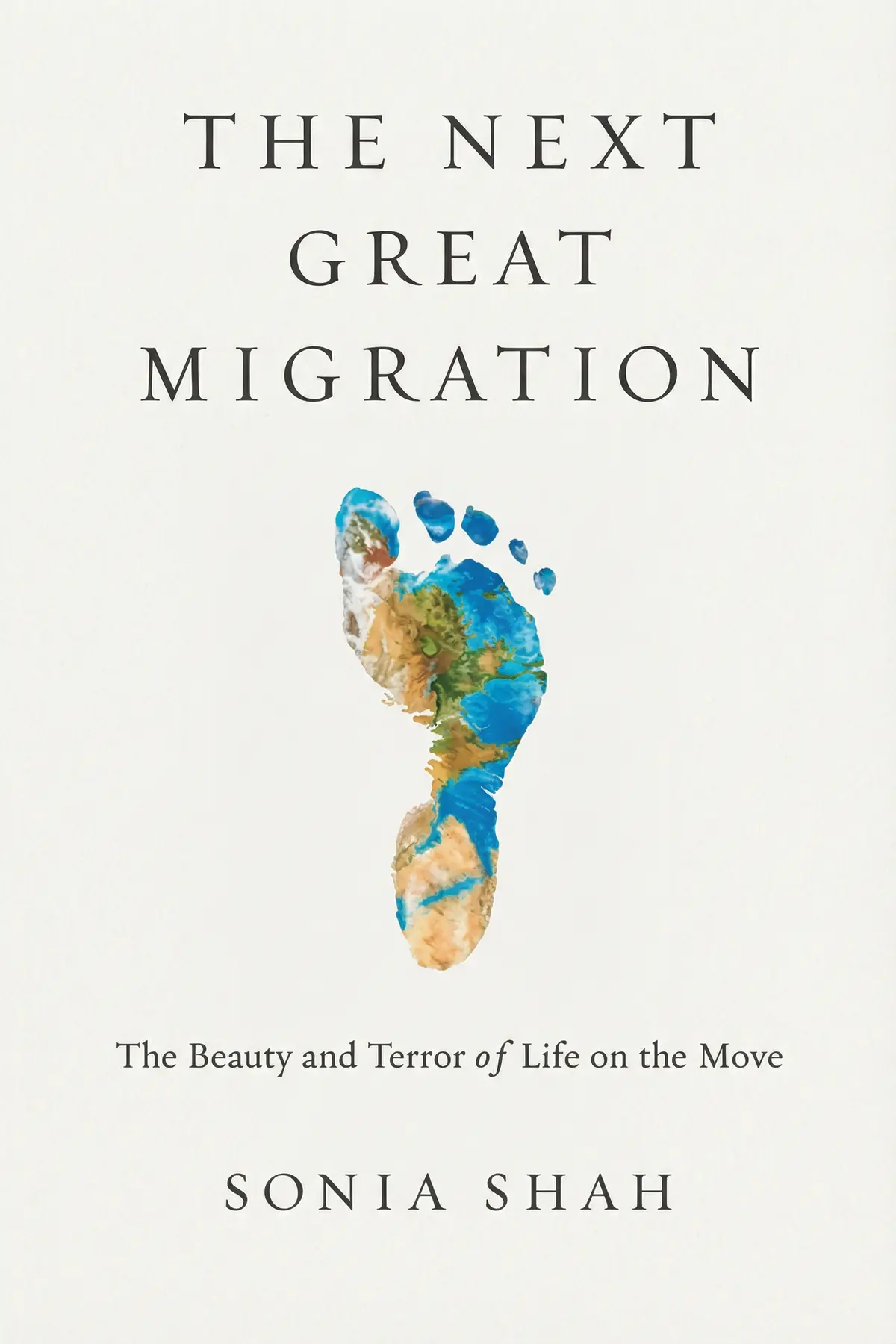
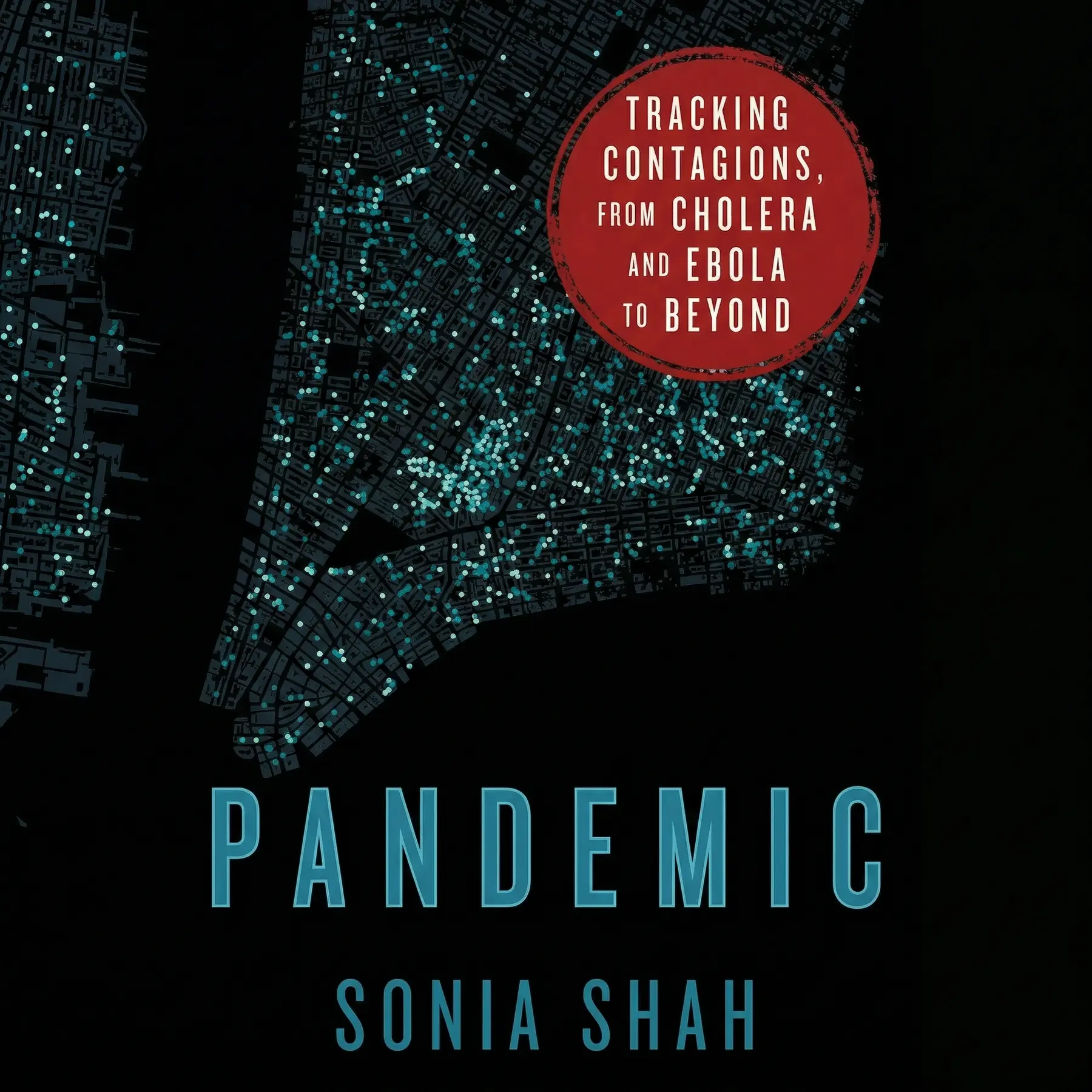
Pandemic: Tracking Contagions, from Cholera to Ebola and Beyond
By Sonia Shah
Explore the hidden mechanics behind global health crises. This investigation reveals how human expansion, political choices, and modern infrastructure create the perfect environment for pathogens to leap from animals to humans.
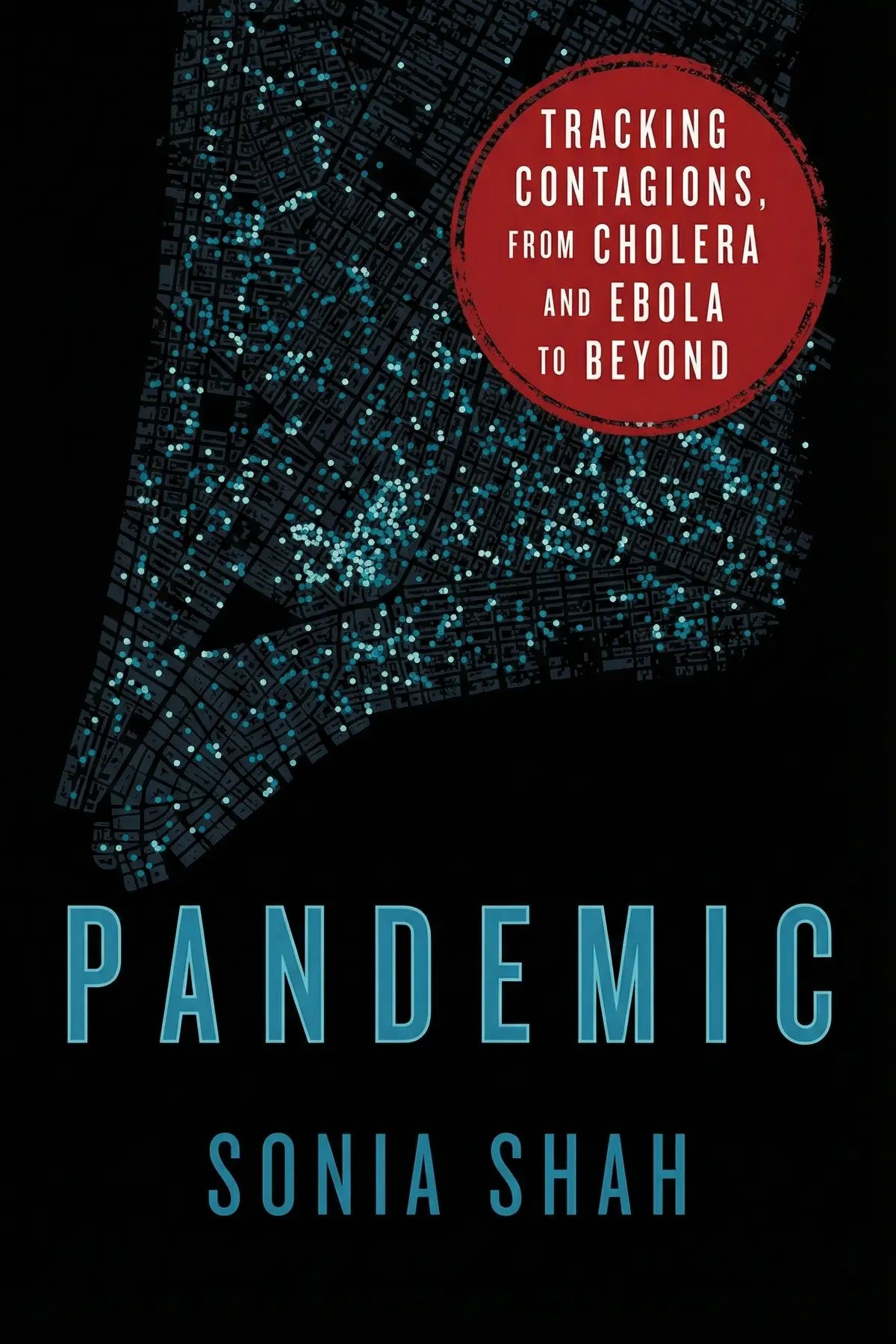
Table of Content
1. Introduction
1 min 45 sec
Most of us look back at the history of human civilization through the lens of our great triumphs—our architectural wonders, our technological leaps, and our mastery over the natural world. But there is a parallel history that often goes overlooked: the history of the microbes that have followed us every step of the way. We might think of devastating events like the Black Death as relics of a distant, less hygienic past. We often tell ourselves that with the advent of antibiotics, vaccines, and advanced sanitation, the era of the global plague is behind us.
However, if you look closer at the patterns of the last few centuries, a different story emerges. Experts in the field of epidemiology warn that we are not living in a post-pandemic world, but rather in an era where the frequency of these events is actually increasing. To understand why, we have to look at the intersection of biology, history, and human behavior. We need to see how our choices—where we live, how we travel, and even how we play politics—actually provide an open invitation for pathogens to enter our lives.
In this exploration, we will trace the evolution of several major health crises. We will see how a simple bacterium from a remote swamp managed to conquer the world’s greatest cities, and how modern air travel can turn a single infection into a global emergency in less than twenty-four hours. This isn’t just a look at the past; it’s a guide to the vulnerabilities that still exist in our modern systems today. By understanding the surprising circumstances that allow an outbreak to grow into a catastrophe, we can begin to see what is required to protect our future.
2. Human Expansion and Pathogen Adaptation
2 min 26 sec
Discover how our relentless push into the world’s most remote habitats forces harmless animal microbes to adapt and find a new home within our bodies.
3. The Role of Transportation in Disease Transmission
2 min 23 sec
Learn how the evolution of travel, from nineteenth-century canals to modern jet engines, provides a high-speed highway for infectious germs.
4. The Hidden Dangers in Waste Management
2 min 10 sec
Trace the unsettling history of sanitation and find out why modern industrial farming might be recreating the filth-ridden conditions of the past.
5. Urban Crowding as a Pathogen Multiplier
2 min 07 sec
Explore why the sheer density of modern cities makes them the ultimate breeding ground for increasingly aggressive and persistent diseases.
6. How Political Deceit Fuels Outbreaks
2 min 13 sec
Uncover the shocking connection between political power plays and public health failures, from nineteenth-century banks to modern government secrets.
7. Medical Dogma and the Reductionist Trap
2 min 05 sec
Examine why even the most advanced medical minds can sometimes be blinded by tradition and narrow focus, allowing preventable deaths to mount.
8. The Disconnect Between Fear and Reality
2 min 02 sec
Analyze the psychological paradox that makes us panic over exotic, distant threats while ignoring the dangerous diseases already in our own backyards.
9. Conclusion
1 min 41 sec
As we have seen, the rise of a pandemic is rarely the result of a single, unlucky event. Instead, it is the culmination of a complex web of human activities and systemic failures. Our push into the wild habitats of the world, our reliance on high-speed global travel, and our management of waste all create an environment where microbes can thrive and evolve. When these biological factors are combined with political secrecy, medical narrow-mindedness, and a skewed perception of risk, the stage is set for a global crisis.
The history of cholera and SARS shows us that we are not helpless, but we are vulnerable. The infrastructure we build and the way we organize our society can either act as a barrier to disease or as a catalyst for it. The primary lesson is that we cannot treat public health as an isolated concern. It is intimately connected to how we treat the environment, how we manage our food systems, and how transparent our governments are with their citizens.
Moving forward, the key to survival lies in better communication and a more holistic approach to health. We need to bridge the gaps between veterinarians, doctors, and environmental scientists to spot emerging threats before they cross into the human population. We must demand that our leaders prioritize public safety over political expediency. Most importantly, we must remain vigilant. A pandemic is not a ghost from the past; it is a recurring feature of our interconnected world. By learning the lessons of history, we can build a more resilient future and ensure that when the next microbe makes its move, we are ready to respond.
About this book
What is this book about?
This summary dives deep into the history and science of infectious diseases, tracing their journey from remote wildernesses to the heart of global metropolises. It examines how specific human behaviors—from the way we manage waste and handle food to our rapid international travel networks—act as catalysts for the spread of illness. By looking at historical examples like the cholera outbreaks of the nineteenth century alongside modern threats like SARS and Ebola, the text highlights the patterns that precede a pandemic. Listeners will gain a clearer understanding of why specific regions become hotspots for new viruses and how our modern lifestyle unintentionally supports microbial evolution. The narrative also explores the intersection of politics and public health, showing how institutional secrecy and outdated medical dogmas can hinder our response to emerging threats. Ultimately, it provides a sobering look at our vulnerability while offering a roadmap for better preparedness through improved communication and a more holistic view of global health.
Book Information
About the Author
Sonia Shah
Sonia Shah is a distinguished author and investigative journalist. Her reporting has been featured in prominent publications such as The New York Times, The Wall Street Journal, and Scientific American. She is well-known for her insightful TED Talk regarding the persistence of malaria, which has reached a global audience of over a million viewers. Her other acclaimed works include Crude: The Story of Oil and The Body Hunters.
Ratings & Reviews
Ratings at a glance
What people think
Listeners find this work as absorbing as a mystery novel, rich with intriguing scientific facts and historical context. They admire the high quality of the writing and the book's historical accuracy, with one listener contributing an in-depth analysis of cholera outbreaks. The educational value is highly regarded; one review praises the clear explanation of water-borne disease epidemiology, and another highlights the connection made between sociology and epidemiology. Listeners also appreciate the political insights, particularly one mention of how it examines the global economy and cholera.
Top reviews
Por
Shah writes with the pacing of a seasoned thriller novelist, making a history of microbes feel like a high-stakes detective story. Instead of dry data, we get a narrative that links 19th-century New York filth to modern-day wet markets in China. Her investigation into the 'locomotion' of pathogens is particularly gripping, showing how our globalized world is essentially a giant petri dish. The way she connects the dots between political corruption and public health failures feels incredibly relevant today. I loved the blend of investigative journalism and hard science, though some sections on evolutionary psychology felt a bit speculative. Still, for anyone interested in why the world keeps getting hit with new viruses, this is an essential primer. It’s both a haunting history and a necessary warning for the future.
Show morePetch
Picked this up during the height of the recent pandemic and found it incredibly prescient. Shah manages to turn the grim reality of zoonotic spillover into something that reads like a mystery novel. The details about bats being 'hollow tubed disease incubators' because of their immune systems were fascinating and gross in equal measure. She doesn't pull any punches when describing the wet markets in Guangzhou or the crowded tenements of the past. Sentence by sentence, the book builds a convincing argument that we are our own worst enemies when it comes to disease prevention. Some of the talk about 'sexy sons' and David Buss style psych was a bit of a detour, but it didn't ruin the experience. It’s a sobering look at how vulnerable we really are. If you enjoy history mixed with hard-hitting journalism, this is it.
Show moreKung
Wow. This was a masterclass in narrative non-fiction. Shah takes the complex world of epidemiology and makes it feel deeply personal and urgent. The way she describes 'locomotion'—the physical movement of people and goods—as a primary engine for pandemics is brilliant. We often think of diseases as things that just 'happen,' but she proves they are the result of specific human choices and environmental shifts. The sections on the 19th-century cholera outbreaks were so vivid I could almost smell the stagnant water. It’s a heavy read, but the prose is so fluid that it never feels like a chore. I appreciated the 'One Health' perspective, emphasizing that we can't be healthy if our ecosystems are failing. This should be required reading for anyone in public policy. A truly stellar piece of reporting.
Show moreSurasit
As someone who usually finds science books dry, I was pleasantly surprised by how much this felt like a thriller. Shah tracks the 'biography' of cholera with such intensity that you start to view the bacterium as a living, breathing antagonist. The book is incredibly accurate in its historical details, particularly regarding the early industrial revolution and its impact on public health. I was struck by the discussion on how 'superbugs' are cultivated through antibiotic misuse and medical tourism. It’s a political book as much as a scientific one, exposing the cracks in our global response systems. Some of the evolutionary psychology bits felt a little like 'just-so' stories, which slowed the momentum slightly. Regardless, the overall message is powerful and timely. It’s a thoughtful exploration of how our past failures are paving the road for future outbreaks.
Show moreAndrei
The deep dive into cholera was eye-opening, especially the way Shah tracks its seven major pandemics across centuries. Truth is, I never realized how much of our modern infrastructure was shaped by a fear of 'miasmas' and contaminated water. The section on the Manhattan Company’s role in poisoning New York City was a standout for me, blending corporate greed with epidemiological disaster. While the book leans heavily on cholera—sometimes to the exclusion of airborne threats like the Spanish Flu—it serves as a fantastic case study. The writing is punchy and accessible, perfect for non-scientists. I did find the personal stories about her son’s MRSA infection a little distracting from the broader global scope, but they did ground the science in a visceral way. It’s a solid 4-star read for history buffs.
Show moreThawee
Ever wonder why fungal infections aren't a bigger threat yet? Shah explores this with terrifying clarity, linking our warming planet to the potential for new, heat-resistant pathogens to breach our natural defenses. It’s a chilling thought. The book excels when it moves beyond the lab and into the streets, examining how our modern lifestyle—from monoculture farming to international 'medical tourism'—invites disaster. I found the chapter on 'corruption' particularly biting, especially regarding how private donors influence global health policy. Her prose is sharp, making even the most complex epidemiological concepts easy to grasp for a layman. It’s not just a book about germs; it’s a book about how we live now. Highly recommended for those who want to understand the 'One Health' movement.
Show moreDylan
After hearing so much about it, I finally delved into this study of human contagion. The connection Shah draws between the Bantu expansion and malaria resistance was a highlight for me. It’s rare to find a book that treats immunology as a legitimate driver of human history and culture. She avoids the 'alarmist' trap while still conveying the urgency of our current situation. I particularly liked the analysis of how our sense of 'disgust' is a biological tool that we’ve often ignored in the name of progress. The book is well-researched, though I agree with other reviewers that it could use more focus on respiratory viruses. Still, the insights into how the WHO operates are worth the price of admission alone. It’s an intelligent, if slightly lopsided, look at the pathogens that shape our world.
Show moreChanon
Finally got around to this, and it’s a fascinating, if somewhat lopsided, history. In my experience, Shah’s focus on cholera provides a brilliant framework for understanding how pathogens exploit human infrastructure. However, I was hoping for more on the Spanish Flu or modern respiratory threats. The strength of the book lies in its sociological insights. She explains how our cultural behaviors are often just 'immune behaviors' in disguise. It’s a compelling way to view the world. The writing is top-notch—sharp, clear, and occasionally poetic. I did find her dismissal of certain scientific paradigms a bit rushed, and the personal family story didn't quite land for me. Despite those minor gripes, it’s a very informative read. It definitely makes you want to wash your hands every five minutes. A solid addition to any science lover's shelf.
Show moreLaddawan
While the historical context is robust, I found the scientific explanations a bit lacking compared to David Quammen’s work. Shah is clearly a talented journalist, but she sometimes accepts psychological or evolutionary studies without much skepticism. Her focus on the 'sexy sons' hypothesis felt out of place in a book about global contagion. To be fair, the historical chapters on John Snow and the London sewer systems are masterfully written. She does a great job illustrating how 'crowds' and 'filth' act as accelerators for disease. If you want a deep dive into the biology of viruses, look elsewhere. But if you want to understand the sociology and politics behind why pandemics happen, this is quite good. It’s just not as 'scientifically literate' as I had hoped.
Show morePla
Not what I expected, and frankly, I was disappointed by the lack of balance in the diseases covered. It felt like the book should have been titled 'A History of Cholera' rather than 'Pandemic.' Shah spends so much time on one specific bacterium that other major threats feel like footnotes. Look, the writing is decent, but I struggled with her reliance on older scientific paradigms that have since been challenged. The personal anecdotes about her family's struggle with MRSA felt like filler and didn't really mesh with the investigative tone of the rest of the chapters. I appreciate the effort to highlight the WHO's funding issues, but the overall execution was too disjointed for my taste. It was an okay read, but far from the definitive guide I was looking for.
Show moreReaders also enjoyed
A Life Decoded: My Genome: My Life
J. Craig Venter
1929: Inside the Greatest Crash in Wall Street History--and How It
Andrew Ross Sorkin

Agent Sonya: The Spy Next Door
Ben Macintyre
A Planet of Viruses
Carl Zimmer

A Biography of Loneliness: The History of an Emotion
Fay Bound Alberti

Alexander Hamilton
Ron Chernow
A Short History of Nearly Everything
Bill Bryson
Alexander the Great
Philip Freeman

A Thousand Brains: A New Theory of Intelligence
Jeff Hawkins
AUDIO SUMMARY AVAILABLE
Listen to Pandemic in 15 minutes
Get the key ideas from Pandemic by Sonia Shah, plus 5,000+ more titles in English and Thai.
- 5,000+ titles
- Listen as much as you want
- 7-day free trial
- Cancel anytime







