
20 min 26 sec
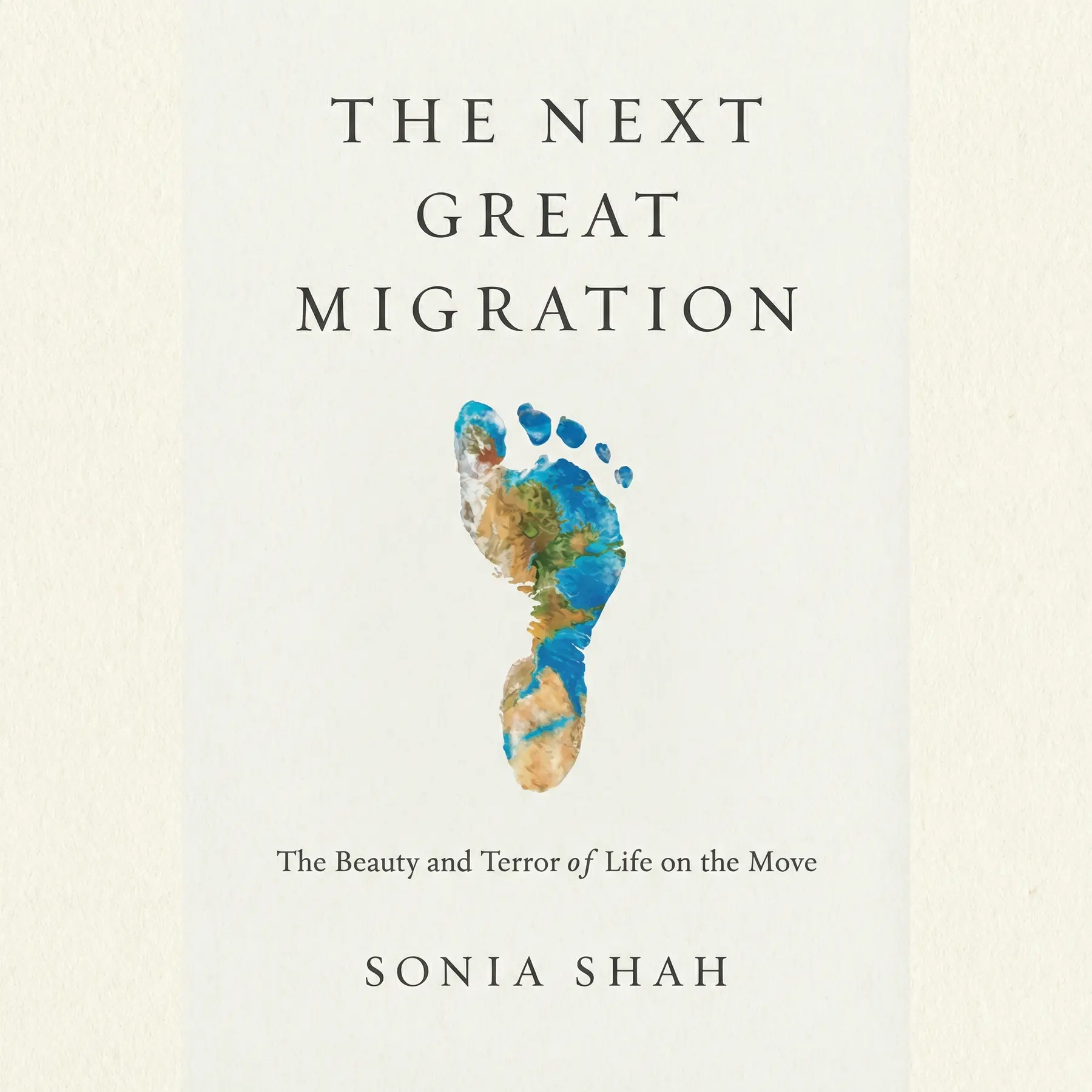
The Next Great Migration: The Beauty and Terror of Life on the Move
By Sonia Shah
A deep dive into how migration is a biological necessity, challenging historical prejudices and scientific myths to argue for a world that embraces movement as a fundamental driver of life.
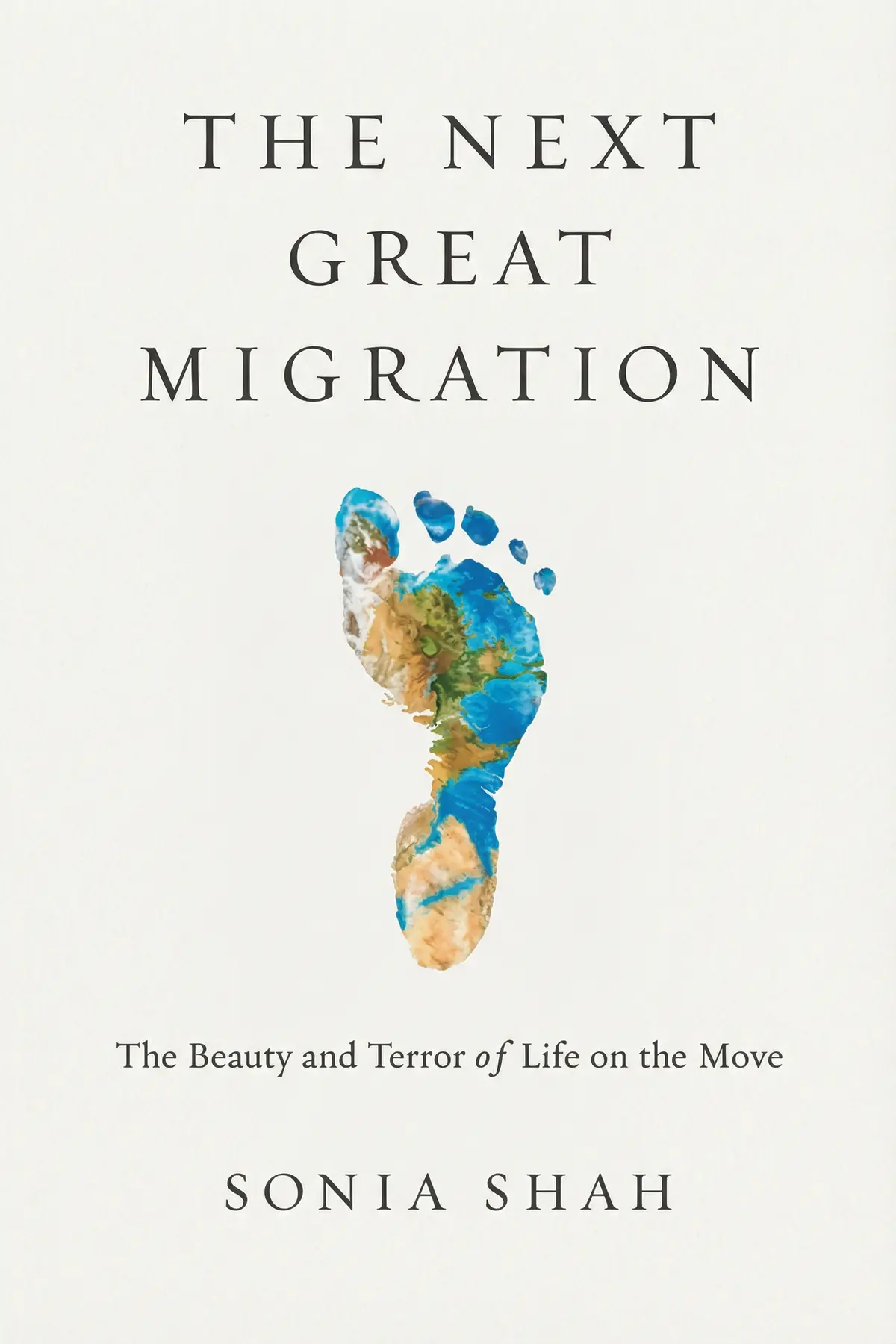
Table of Content
1. Introduction
1 min 52 sec
Every single day, across the vast stretches of our planet, life is in a state of constant motion. We see it in the monarch butterflies that travel thousands of miles and in the silent, underwater journeys of eels. Yet, when we look at our own species, we often treat this very same behavior as a crisis. We build walls, we patrol borders, and we use language that suggests people who move are somehow breaking the natural order of things. We’ve been taught to see the world as a collection of fixed places where everything and everyone has a ‘rightful’ spot, and any departure from that spot is viewed with suspicion or fear.
But what if that entire perspective is fundamentally wrong? What if the tragedy isn’t the migration itself, but our desperate and often violent attempts to stop it? In the pages ahead, we are going to explore a different story of life on Earth—one where migration isn’t the exception, but the rule. We will look at how our misunderstanding of nature was shaped by eighteenth-century thinkers who had never seen a radar screen and how those mistakes eventually blossomed into the dangerous ideologies of the twentieth century.
This isn’t just a book about the politics of borders; it is an investigation into our biological identity. We will uncover how the ‘Father of Taxonomy’ accidentally planted the seeds of modern racism and how a small island of reindeer became a terrifying, though misinterpreted, omen for the human race. Ultimately, this journey through history and science leads us to a startling conclusion: we are not a sedentary species that occasionally wanders. We are a migratory species to our very core. By understanding the beauty and the necessity of life on the move, we can begin to imagine a world that doesn’t just tolerate migration, but facilitates it as the life-saving mechanism it has always been.
2. The Long Denial of Nature’s Constant Motion
2 min 26 sec
For centuries, the world’s leading scientists believed plants and animals stayed exactly where they were discovered, viewing any evidence of movement as a dangerous or impossible anomaly.
3. How Taxonomy Created the Architecture of Racism
2 min 07 sec
The classification systems used to organize the natural world were eventually turned toward humanity, creating artificial divisions that justified centuries of colonial expansion and systemic inequality.
4. The Toxic Influence of Eugenics on Immigration Policy
2 min 10 sec
In the early 20th century, a small group of influential thinkers used pseudoscientific theories to convince governments that migrants were a biological threat to the health of the nation.
5. The Myth of the Invasive Species
2 min 03 sec
Modern ecology often treats non-native plants and animals as invaders, but history shows that ecosystems are constantly evolving through the arrival of new arrivals.
6. Malthusian Fears and the Ghost of St. Matthew Island
1 min 59 sec
A tragic experiment with reindeer on a remote island fueled a global panic about overpopulation, leading to decades of human rights abuses in the name of ‘stability.’
7. DNA and the Truth of Our Wandering Ancestry
2 min 08 sec
Breakthroughs in genetic mapping have finally proven that there are no biological races, only a single, interconnected human family that has never stopped moving.
8. The Weaponization of Misinformation in the Refugee Crisis
1 min 53 sec
The backlash against modern migration is often fueled by sensationalized stories and outright lies that paint desperate people as a threat to social order.
9. Building a Future for a Planet on the Move
1 min 56 sec
By creating safe pathways for both wildlife and humans, we can move away from a culture of borders and toward a more resilient, interconnected world.
10. Conclusion
1 min 52 sec
As we wrap up our look at the history and science of migration, it’s clear that we are standing at a crossroads. For too long, we have allowed ourselves to be governed by a ‘sedentary bias’—the false belief that the natural state of things is to be still. We’ve seen how this bias was woven into our biology by Linnaeus, how it was weaponized by eugenicists to create racial hierarchies, and how it continues to fuel the xenophobia of our modern political landscape. But we have also seen the evidence that contradicts this old way of thinking. Our DNA tells a story of constant mixing and wandering. The ‘radar angels’ in our skies and the hybrid forests of Hawaii show us that nature is at its best when it is moving and adapting.
The throughline of our journey is simple: migration is not a problem to be solved; it is a solution that life has been using for millions of years. It is how species survive climate change, how they find new resources, and how they maintain genetic health. When we try to stop migration, we are essentially trying to stop the pulse of the planet.
So, what does this mean for us today? It means we need to stop seeing the migrant at the border as an ‘alien’ or a threat. Whether it’s a butterfly or a human being, the act of moving is a brave and vital response to a changing world. We can choose to build a future that respects this biological imperative. By creating wildlife corridors and reforming our immigration systems to be safe and humane, we can stop fighting against nature and start working with it. The world has never been a collection of static, isolated boxes. It is a vast, interconnected web of journeys. Embracing that reality is the only way we can move forward together, with dignity and resilience, on a planet that never stops turning.
About this book
What is this book about?
The Next Great Migration offers a profound reassessment of what it means for living things to move across the planet. For centuries, our legal systems, scientific frameworks, and political borders have been built on the assumption that nature is static and that migration is a disruptive anomaly. Sonia Shah dismantles these misconceptions by weaving together the history of taxonomy, the dark influence of eugenics, and modern breakthroughs in genomic science. The book reveals that the urge to move is not a sign of desperation or a threat to stability, but rather a vital pulse that keeps ecosystems healthy and human populations resilient. From the mysterious flights of birds once mistaken for supernatural beings to the ancient DNA found in skeletal remains, the evidence is clear: we are a wandering species on a wandering planet. By the end, the narrative provides a hopeful roadmap for a future where both wildlife and humans can traverse borders safely, acknowledging that movement is the very thing that allows life to survive an ever-changing world.
Book Information
About the Author
Sonia Shah
Sonia Shah is a renowned science journalist and the recipient of multiple awards for her investigative writing. She has authored several acclaimed books, including Pandemic and The Fever, which explored the historical and social impacts of malaria. Born in 1969 in New York City to Indian immigrant parents, Shah’s work often focuses on the intersection of science, politics, and human rights.
Ratings & Reviews
Ratings at a glance
What people think
Listeners find the writing to be skillful and the research thorough, noting how effectively the text establishes a basis for comprehending migration. It is considered a stimulating read, with one listener highlighting the remarkable depth it brings to such a multifaceted issue. Conversely, the political perspective yields conflicting opinions among listeners.
Top reviews
Jai
Finally, a book that challenges the 'invasive species' narrative with actual data and historical context. I was stunned to learn about the history of purple loosestrife and how much of our 'conservation' logic is actually rooted in old-school xenophobia. Shah’s deep dive into Carl Linnaeus and the early days of taxonomy was brilliant. She shows how these 18th-century ideas about 'fixed' locations for species still poison our thinking today. The book is dense, but the prose is so fluid that it never feels like a chore. The truth is, we live on a planet in constant motion. This book isn't just about people crossing borders; it’s about the fundamental way life survives through movement. It’s easily one of the most important nonfiction books I've read this year.
Show moreFatou
As someone who has always felt a bit of 'nativist' anxiety about changing neighborhoods, this book really shifted my worldview. It forced me to look at the long arc of history. We’ve been moving since the beginning of time! Shah’s prose is evocative and her arguments are backed by a surprising amount of historical detail that I had never encountered. The stories of refugees moving alongside migrating forests really highlight the scale of the transition we are entering. Not gonna lie, some of the facts about the US intelligence tests for immigrants were hard to stomach, but they were necessary to read. This book doesn't just provide information; it provides a much-needed dose of empathy. I’ll be thinking about this one for a long time.
Show moreDuangjai
Wow, I didn't expect to learn so much about the history of eugenics in a book about migration. The way Shah tracks the line from Linnaeus’s taxonomy to the horrors of the 20th century is masterful. She argues that our fear of the 'migrant' is a cultivated bias, not a natural instinct, and she uses both history and biology to prove it. The stories of individual species, from the humble coconut to the majestic wolf, serve as beautiful anchors for her larger points. In my experience, most books on this topic are either too dry or too emotional, but Shah strikes a perfect balance. It’s an urgent, necessary read for the era of climate change. We need to stop building walls and start understanding the flow of life. Truly a brilliant piece of work.
Show moreLook
Sonia Shah brings a remarkably fresh perspective to a topic that usually feels exhausted by the 24-hour news cycle. Instead of viewing migration as a modern crisis or a geopolitical failure, she frames it as a biological imperative, something as natural as breathing. The way she links the movement of humans to the migration of butterflies and plants is truly eye-opening. Personally, I found the section on how we’ve historically categorized 'native' versus 'invasive' species to be the most compelling part of the book. It really makes you question why we view change with such inherent suspicion. The writing is accessible, though the middle chapters drag a bit when the focus shifts heavily toward legislative history. Still, it's a thought-provoking read for anyone trying to understand the larger patterns of life on our changing planet.
Show moreAnchalee
The chapter on the Isla Royale wolves was absolutely fascinating and served as a perfect metaphor for the entire book. Seeing how the introduction of a single lone wolf saved an entire population from the defects of inbreeding was a powerful argument for the necessity of genetic flow. Shah argues convincingly that migration isn't the problem—it’s the solution to a changing environment. While I found the climate change predictions a bit repetitive toward the end, the historical sections on eugenics and intelligence testing at Ellis Island were incredibly well-researched. It’s a sobering look at how 'science' has been weaponized to keep people in their place. This is a must-read for anyone interested in ecology or social justice. It successfully bridges the gap between the two.
Show moreSau
Listening to the audiobook version was a great experience because the author’s narration is clear and engaging. She manages to take complex topics like genetic differentiation and make them sound like a narrative thriller. I especially appreciated the section on how 'invasive' species often provide ecological services we don't recognize because we are so focused on maintaining a static version of nature. My only real gripe is that the book feels a bit one-sided; it dismisses the legitimate anxieties of local populations as mere xenophobia without much dialogue. However, as a work of investigative journalism, it succeeds in making you rethink everything you thought you knew about borders. It’t a very timely piece of work.
Show moreClara
Pick this up if you're interested in how we categorize the world. Shah does a fantastic job of deconstructing the 'native' myth. She explains how our obsession with keeping things 'as they were' is actually a relatively new and scientifically flawed concept. The writing is sharp and the pacing is generally good, though it starts off a little sleepy in the first two chapters. Once she gets into the GPS tracking of animals and the modern movement of species, it really picks up. It’s a very challenging book in the best way possible. It asks us to accept a world that is fluid rather than fixed. Even if you don't agree with every political conclusion she draws, the ecological data is hard to ignore.
Show moreWatcharaporn
Wait, is this a science book or a political manifesto? I picked this up because the title promised a look at how plants and animals are shifting due to climate change, but the focus is overwhelmingly on human immigration policy. To be fair, Shah makes some interesting points about the 'migrant formula,' but I felt she often conflated animal instincts with complex human social structures. Comparing a bird's seasonal flight to a refugee's flight from war feels like a reach that ignores the role of human agency and territorial affinity. The book is well-written, but the 'pop science' feel was a bit much for me. I would have preferred more citations from peer-reviewed journals rather than news articles and op-eds. It’s an okay overview, but it lacks the scientific rigor I was expecting.
Show morePawinee
To be fair, Shah is a gifted writer, but the research felt a bit thin in places compared to other books on this topic. I was really looking forward to a deep dive into the biology of migration, but the book spends more time on the history of eugenics and the prejudices of early naturalists. Those parts are important, don't get me wrong, but they felt like they belonged in a different book. The 'Next' part of the title is also a bit misleading. There isn't as much foresight into the future of migration as I had hoped for. It’s more of a history of why we hate migrants than a projection of what’s to come. It's a solid 3-star read: good, but not quite what the cover promised.
Show moreSupachai
Look, I wanted to love this because the premise of biology meeting sociology is fascinating, but it quickly devolved into a political screed against recent administration policies. Rather than focusing on the science of movement, the author spends a significant portion of the book rehashing talking points about modern immigration laws that I’ve heard a thousand times before. It felt less like an objective investigation and more like a partisan lecture. Frankly, it didn't change my mind on anything because it lacked the nuance required for such a polarized topic. If you're looking for a deep dive into the 'next' migration, you won't find much new here besides the usual rhetoric. It was a major disappointment considering the potential of the subject matter.
Show moreReaders also enjoyed
Alien Earths: The New Science of Planet Hunting in the Cosmos
Lisa Kaltenegger

Afropean: Notes From Black Europe
Johny Pitts


All About Love: New Visions
bell hooks
AUDIO SUMMARY AVAILABLE
Listen to The Next Great Migration in 15 minutes
Get the key ideas from The Next Great Migration by Sonia Shah, plus 5,000+ more titles in English and Thai.
- 5,000+ titles
- Listen as much as you want
- 7-day free trial
- Cancel anytime







