
27 min 42 sec
Permission to Feel: Unlocking the Power of Emotions to Help Our Kids, Ourselves, and Our Society Thrive
Marc Brackett explores the critical necessity of emotional intelligence. Through the RULER framework, he demonstrates how identifying, understanding, and managing our feelings can lead to healthier lives, stronger relationships, and more productive societies.
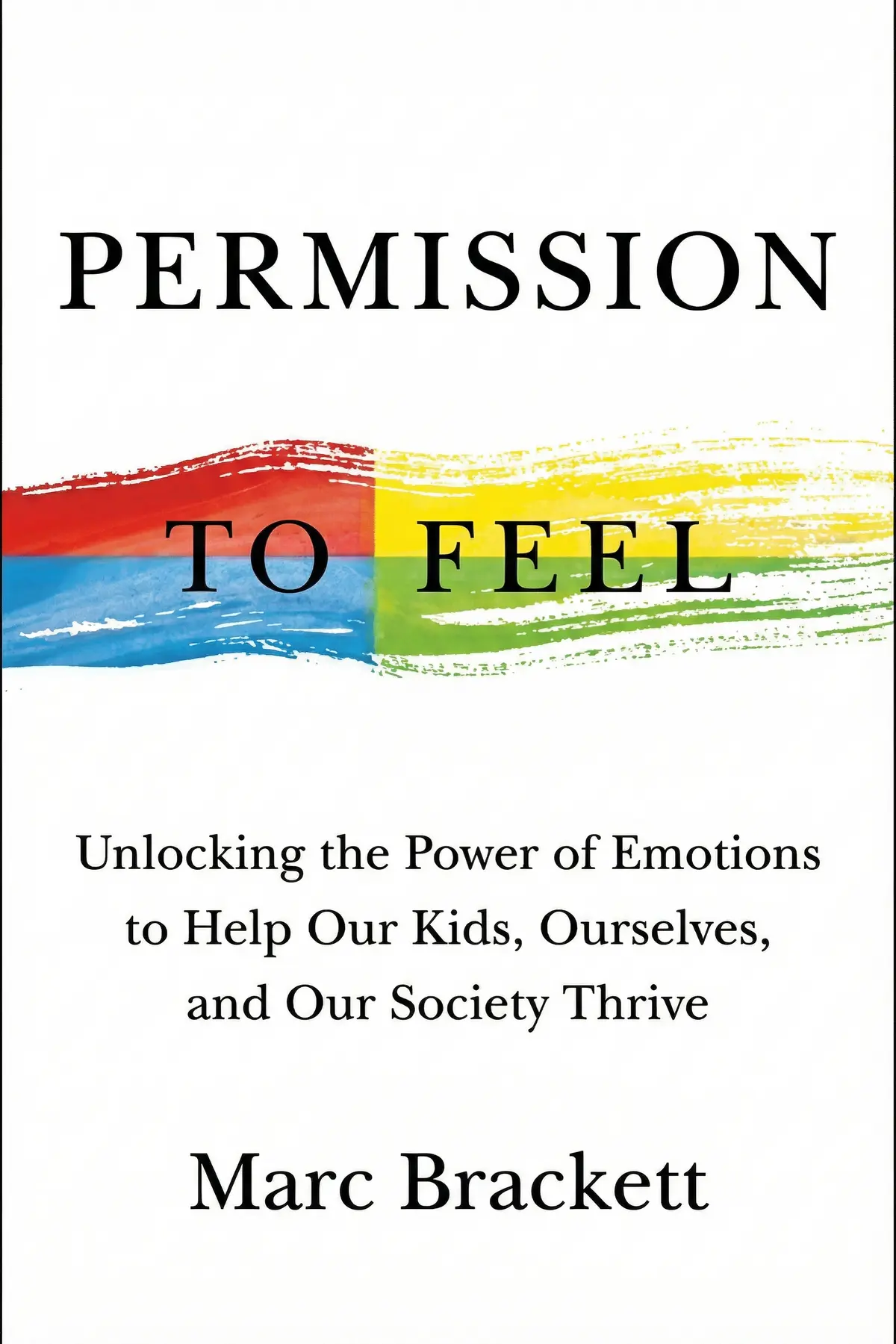
Table of Content
1. Introduction
2 min 12 sec
Consider for a moment the last time someone asked you how you were doing. If you’re like most people, you probably gave a standard, almost robotic response: “I’m fine,” or “Doing well, thanks.” But were you actually fine? Or were you perhaps carrying a heavy weight of anxiety about a deadline, a nagging sense of loneliness, or a flicker of excitement about a new project that you didn’t feel comfortable sharing?
For far too long, our culture has treated emotions as something to be managed at best and ignored at worst. We’ve been conditioned to believe that being professional means being stoic, and being strong means being silent. We’ve built a society where we are often strangers to our own internal landscapes. But as Marc Brackett reveals, this emotional avoidance comes at a staggering cost. When we suppress what we feel, those emotions don’t just vanish. They ferment. They manifest as chronic stress, physical ailments, fractured relationships, and a general sense of burnout that permeates our schools and offices.
The throughline of this exploration is simple yet radical: we must give ourselves and others the permission to feel. Emotions are not obstacles to a productive life; they are the very fuel that drives it. They provide us with essential data about our environment and ourselves. By becoming what Brackett calls “emotion scientists,” we can learn to decode these signals.
In the pages ahead, we will explore the RULER framework—a set of five specific skills designed to help us navigate the complex world of human feeling. We’ll look at why the old divide between the “rational head” and the “emotional heart” is a biological myth. We will see how even the most difficult feelings, like anger or fear, can be transformed into allies if we know how to listen to them. This isn’t just about individual well-being; it’s about a systemic shift. It’s about creating an emotion revolution that allows our kids, ourselves, and our communities to finally move from merely surviving to truly thriving. Let’s begin by looking at how a single act of emotional validation can change the entire trajectory of a life.
2. The Transformation of Personal Pain
2 min 34 sec
Discover how a young boy’s struggle with bullying and silence was transformed by one relative who finally cared enough to ask a single, life-altering question about his feelings.
3. The Myth of the Rational Mind
2 min 37 sec
Explore why the ancient idea that logic and emotion are enemies is factually wrong, and see how our feelings actually serve as the primary directors of our thoughts.
4. The Purpose of Unpleasant Feelings
2 min 41 sec
Learn why suppressing negative emotions is a recipe for physical illness and how feelings like anger and fear can actually be used as productive tools for success.
5. Adopting the Mindset of an Emotion Scientist
2 min 38 sec
Moving from judging our feelings to investigating them is the first step toward true intelligence. Discover the difference between a curious scientist and a harsh judge.
6. Recognition and the Power of the Mood Meter
2 min 39 sec
Learn the first two steps of the RULER framework: how to use our senses to detect emotions and the crucial importance of asking ‘Why’ to find their root cause.
7. The Precision of Emotional Vocabulary
2 min 40 sec
Discover why being ‘sad’ is different from being ‘despondent’ and how using the right words can actually calm your brain’s fear centers and foster connection.
8. Mastering Expression and Regulation
2 min 36 sec
Hiding your feelings isn’t strength—it’s a health risk. Learn how to authentically express yourself and discover the secret of the ‘Meta-Moment’ for staying in control.
9. Emotional Intelligence as a Parenting Foundation
2 min 25 sec
Discover why you can’t expect your child to stay calm if you haven’t mastered your own triggers, and learn the life-changing power of ‘co-regulation.’
10. The Emotion Revolution in Schools and Work
2 min 49 sec
What happens when we stop treating feelings as ‘unprofessional’? See how integrating emotional intelligence can slash burnout and unlock human potential in any organization.
11. Conclusion
1 min 51 sec
As we reach the end of this journey through Marc Brackett’s RULER framework, it’s worth reflecting on the central promise of this work: that emotions are not a weakness to be managed, but a source of profound strength to be harnessed. We’ve seen how the simple shift from being an “emotion judge” to an “emotion scientist” can transform our health, our relationships, and our impact on the world. We’ve learned that every feeling, no matter how difficult, carries a message that can help us navigate the complexities of being human.
The work of emotional intelligence is never truly finished. It is a lifelong practice of curiosity and courage. It starts with the tiny, daily decisions to be honest about our internal state and to be present for the internal states of others. It requires us to slow down, to breathe, and to remember our “best selves” even when we are most provoked.
If you take only one thing away from this exploration, let it be an actionable commitment to your own well-being. The next time you feel a wave of intense emotion—whether it’s the heat of anger or the heavy fog of sadness—don’t try to push it away. Instead, practice the “Meta-Moment.” Take sixty seconds to just breathe. Close your eyes and focus on the sensation of the air entering and leaving your body. In that space, recognize the feeling, give it a precise name, and ask yourself why it’s there.
By taking that small pause, you are reclaiming your power. You are honoring your biological reality while asserting your conscious choice. You are participating in the emotion revolution. When we give ourselves the permission to feel, we don’t just become more intelligent; we become more human. And in a world that often feels increasingly disconnected, that may be the most important skill of all.
About this book
What is this book about?
Many of us are taught to suppress our feelings, viewing them as distractions from logic or signs of weakness. Permission to Feel challenges this perspective, arguing that our emotions are actually a sophisticated source of information. When we learn to harness them, we unlock a superpower that improves our physical health, our decision-making, and our overall well-being. The book introduces the RULER framework—Recognizing, Understanding, Labeling, Expressing, and Regulating—as a toolkit for personal and professional growth. Marc Brackett blends personal narrative with psychological research to show how an 'emotion revolution' can transform our homes, schools, and workplaces. By the end, readers will understand how to move from being 'emotion judges' to 'emotion scientists,' creating a world where every individual has the space and tools to thrive emotionally.
Book Information
About the Author
Marc Brackett
Marc Brackett, PhD, is a research psychologist and the founding director of the Yale Center for Emotional Intelligence. He also serves as a professor in the Child Study Center at Yale University. Brackett is the primary architect of RULER, an emotional intelligence curriculum that has reached more than one million students worldwide, spanning all age groups and diverse educational settings.
Ratings & Reviews
Ratings at a glance
What people think
Listeners find the book offers significant perspective on emotional intelligence, featuring detailed descriptions and content backed by research. Furthermore, the prose is accessible and simple to follow, and listeners deem it an essential resource for educators. The book also provides hands-on advice through links for implementing the RULER tool, and listeners value its applicability, with one listener highlighting its broad use across different types of relationships. Listeners prize its impact on well-being, with one listener reporting a better quality of life at home and school.
Top reviews
Violet
As an educator, I find Dr. Brackett's RULER framework to be an absolute game-changer for the modern classroom. We spend so much time focusing on grades, but we rarely give students the actual vocabulary to express their internal struggles. Frankly, the research-backed approach here makes it feel less like "fluff" and more like a necessary life skill. While some might find the personal anecdotes a bit long, I think they illustrate his points beautifully. It’s about more than just "feeling"; it’s about regulating those feelings to be more productive and compassionate. My students are already benefiting from the Mood Meter concept. Highly recommend this for any teacher or administrator looking to change their school culture.
Show moreWatchara
After hearing Marc on Brene Brown's podcast, I knew I had to dive deeper into his work. This book provides such a necessary bridge between hard science and the messy reality of human emotions. I love how he breaks down the "Labeling" phase; using words like 'ennui' or 'discontent' instead of just 'sad' makes a world of difference. To be fair, I already considered myself pretty high in EQ, but this gave me a structured way to teach these concepts to my kids. The writing is approachable and doesn't get bogged down in academic jargon. It’s a must-read for anyone trying to navigate the complexities of modern relationships.
Show moreIsabella
Wow, I didn't realize how much I was "managing" my emotions by just stuffing them down until I read this. The distinction between suppressing a feeling and actually regulating it is a nuanced one that Brackett explains perfectly. In my experience, most people think emotional intelligence is just a "soft skill," but this book proves it's a vital health metric. The research-based content is presented in a way that’s easy to digest, which I really appreciated. It feels like a roadmap for a better quality of life. Whether you're a parent or a CEO, there is something in here that will make you rethink your daily interactions.
Show morePing
Personally, I think the book's greatest strength is how it takes Yale-level research and makes it feel approachable for the average person. While the science is definitely there, the writing style felt a little redundant at times. It’s like the author assumes the reader has never had a single self-aware thought in their life. While I appreciate the RULER system, the advice on how to handle difficult coworkers felt a bit impractical for a real-world office environment. Honestly, I think the author’s TED talk covers most of what you need to know. However, for a deep dive into how EQ impacts physical health, it's a very valuable resource.
Show moreTong
The chapter on labeling emotions completely shifted my perspective on how I process stress. It’s amazing how simply finding the right word can take the power away from a negative feeling. I’ve started using the RULER tools at home, and the atmosphere has improved significantly. Truth is, we all have "permission to feel," but many of us don't know what to do once we actually start. Dr. Brackett gives you the tools to handle that "what's next" part. It’s an essential read for anyone who wants to be a more "emotionally literate" human being. Five stars for the practical application and the heart behind the research.
Show moreSomrutai
Finally got around to reading this after seeing the Mood Meter app mentioned everywhere. I’m a sucker for a good self-help book, but this one feels more grounded in actual science than most of the stuff on the shelf. The RULER acronym—Recognize, Understand, Label, Express, Regulate—is simple enough to remember when you’re actually in the heat of a moment. Truth is, I struggled a bit with the pacing, as it gets quite repetitive in the middle sections. However, the insight into how our emotional health impacts our physical well-being was eye-opening. It's a solid 4-star read that offers practical tools for anyone looking to understand their own brain better.
Show moreSeksan
Ever wonder why we feel the way we do but can't quite put a finger on the name for it? Dr. Brackett’s exploration of "labeling" was the highlight of this book for me. He introduces cultural terms like 'hygge' and 'litost' that really expand how you view your own internal landscape. Personally, I think the section on emotional intelligence in the workplace is worth the price of admission alone. It’s not just about being "nice"; it's about being effective and avoiding burnout. The tone is mostly encouraging, though it occasionally feels like he’s trying to sell his program a bit too hard. Definitely a solid addition to any professional’s library.
Show moreWatcharee
Picked this up because my child’s school is starting to implement SEL programs, and I wanted to be on the same page. I’m so glad I did. It’s heartbreaking to realize how much we’ve ignored the emotional lives of children in the pursuit of test scores. The author’s vulnerability about his own childhood trauma adds a layer of authenticity that many self-help books lack. I will say, the book is a bit repetitive, and I found myself skimming some of the later chapters. But the fundamental idea that we need "permission" to even acknowledge our feelings is powerful. It's already helped me change the way I talk to my son after a bad day.
Show moreNattapong
To be fair, the core message of this book is fantastic, even if the execution is a little clunky. Dr. Brackett is clearly passionate about his Yale research, but the book oscillates between being a memoir and a textbook. I found the RULER method helpful, but some of the regulation tips—like "take a walk"—felt a little too basic for a book of this length. I think this works best for someone who is just starting their journey into emotional awareness. If you’ve read Goleman or other EQ staples, much of this will feel like a retread. Still, the Mood Meter is a great visual tool that I've started using daily.
Show moreSamuel
This title is a bit much, isn't it? I felt like I had to hide the cover while reading it on my commute because it sounds so incredibly soft. Not gonna lie, I was expecting a technical manual on emotional intelligence, but it felt more like the author's personal therapy journal. He spends a lot of time talking about being "triggered" by things that most adults just need to develop a thicker skin for. The RULER system is okay, but it really could have been a PDF or a short blog post instead of a full-length book. If you're looking for something with more "grit" and less "hand-holding," you might want to look elsewhere. It just wasn't for me.
Show more

Readers also enjoyed
Age of Propaganda: The Everyday Use and Abuse of Persuasion
Anthony Pratkanis
59 Seconds: Change Your Life in Under a Minute
Richard Wiseman
AUDIO SUMMARY AVAILABLE
Listen to Permission to Feel in 15 minutes
Get the key ideas from Permission to Feel by Marc Brackett, plus 5,000+ more titles in English and Thai.
- 5,000+ titles
- Listen as much as you want
- 7-day free trial
- Cancel anytime







