

14 min 31 sec
Platonic: How the Science of Attachment Can Help You Make - and Keep - Friends
Discover the science-backed secrets to building deep, lasting friendships. This guide explores how attachment theory and intentional connection can transform your social life and improve your overall well-being and health.
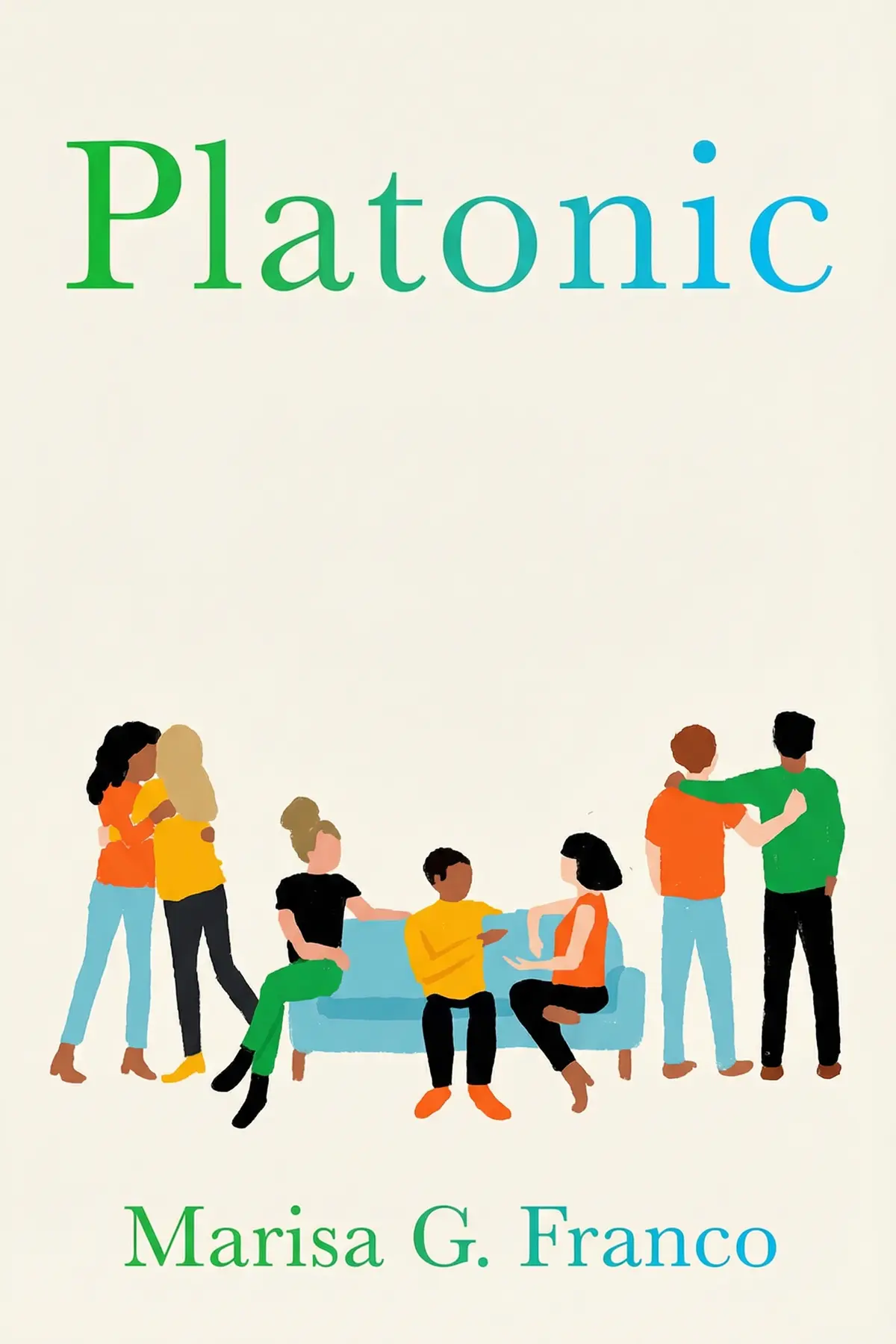
Table of Content
1. Introduction
1 min 34 sec
Have you ever wondered why, in a world that is more connected than ever before, so many of us feel increasingly isolated? We have thousands of digital followers and professional contacts, yet many people struggle to name a single person they could call in a crisis. We often put all our emotional eggs in one basket—the basket of romantic partnership—while leaving our platonic lives to chance. But what if our friendships were actually the secret key to our health, our happiness, and even our sense of self?
In this summary of Platonic, we are going to explore the transformative work of Dr. Marisa G. Franco. She argues that we need to stop treating friendship as a secondary concern and start seeing it as a vital necessity for human survival. This isn’t just about being more social; it’s about understanding the psychological mechanics of how we relate to one another.
We will walk through the science of attachment and see how it applies to our friends. You will discover why making friends as an adult feels so much harder than it did on the playground, and more importantly, how you can fix that. We’ll dive into the concept of the ‘liking gap,’ the power of being the one who reaches out first, and the surprising way that conflict can actually make a bond stronger.
By the end of this journey, you’ll have a new set of tools to help you navigate your social world with more confidence and authenticity. Whether you’re looking to find a new group of peers or deepen the bonds you already have, the throughline here is clear: friendship is an intentional practice, and with the right mindset, anyone can become a master of connection. Let’s get started.
2. The Vital Role of Friendship
1 min 49 sec
Explore why your platonic connections might be more important for your health than your workout routine and how they define your character.
3. The Myth of Spontaneous Connection
1 min 46 sec
Discover why waiting for friends to find you is a losing strategy and how the ‘liking gap’ might be holding you back from new bonds.
4. The Strength in Vulnerability
1 min 37 sec
Learn why showing your fragile side is actually a magnet for others and why selective sharing is the key to deep intimacy.
5. Living Authentically
1 min 31 sec
Understand the difference between being ‘raw’ and being ‘authentic,’ and how dropping your guard can cure social anxiety.
6. The Necessity of Healthy Conflict
1 min 43 sec
Why avoiding arguments might be killing your friendships and the seven steps you can take to resolve tension with grace.
7. Generosity and the Art of Asking
1 min 44 sec
See how small acts of kindness act as a magnet for new friends and why asking for help is actually a gift to the other person.
8. The Power of Affirmation and Affection
1 min 35 sec
Break the barrier of ‘being weird’ and learn how verbalizing your appreciation can solidify a friendship for a lifetime.
9. Conclusion
1 min 12 sec
As we wrap up our look at the science of connection through Platonic, the main takeaway is that our social health is a choice. We are not destined to be lonely, nor are we limited by our past experiences or our personality types. The quality of our friendships is a direct reflection of the intentionality we bring to them. We’ve seen that it takes initiative to break the cycle of passivity, vulnerability to bridge the gap between strangers and confidants, and authenticity to build bonds that last.
We’ve also learned that conflict isn’t the end of a friendship, but often the beginning of a deeper one, provided we handle it with empathy and grace. And we’ve seen how generosity and affection create the safety and warmth that all humans need to thrive. Friendship is more than just a social hobby; it is a vital pillar of a long, healthy, and meaningful life.
The next step is yours. Think about one person in your life you’d like to be closer to, or one group you’ve been hesitant to join. Use the tools we’ve discussed—assume they like you, be the first to reach out, and don’t be afraid to show a little more of your true self. The journey toward a more connected life starts with a single, intentional act. Go out and build the community you deserve.
About this book
What is this book about?
Platonic explores the often-overlooked world of non-romantic relationships, arguing that our friendships are just as vital to our survival and happiness as our family or romantic partners. Using the lens of attachment theory, the book provides a roadmap for navigating the complexities of modern social life. It moves beyond simple networking tips to delve into the psychological foundations of connection, explaining why we often hold ourselves back from making the first move and how our internal narratives dictate our social success. The promise of the book is a complete shift in how you view your social world. You will learn how to overcome the fear of rejection, how to navigate the inevitable conflicts that arise in close bonds, and how to cultivate a personality that naturally attracts and sustains high-quality connections. By applying research-based strategies such as vulnerability, intentionality, and generosity, you can build a support system that fosters personal growth and emotional resilience. Ultimately, it is an invitation to take friendship seriously as a pillar of a flourishing life.
Book Information
About the Author
Marisa G. Franco
Dr. Marisa G. Franco is a professor at the University of Maryland, where she also earned her PhD in Counseling Psychology. She has done extensive research on friendship, which she presents to various organizations across the United States.
Ratings & Reviews
Ratings at a glance
What people think
Listeners find this work to be a vital resource that blends thorough scientific study with actionable tips for developing significant connections. The prose is carefully developed, and one listener characterizes it as a masterclass in turning complex psychological research into captivating language. Listeners value the way the title encourages personal evolution and consider it a valuable purchase, with one highlighting its specific relevance to their own generation.
Top reviews
Bo
Ever wonder why it's so hard to make friends as an adult? Dr. Franco takes a deep dive into why we struggle, using attachment theory as a roadmap. I found the chapter on generosity particularly moving; it really challenged the 'me-first' boundaries that are so trendy on social media right now. The writing is accessible but feels grounded in actual psychological science rather than just empty platitudes. While some of the anecdotes felt a bit staged, the core message about prioritizing platonic bonds over romantic ones is life-changing. It’s a masterclass in translating complex science into prose that stirs the soul. Truly an essential read for anyone feeling isolated.
Show moreLily
The chapter on initiative alone is worth the price of admission. Dr. Franco dispels the myth that friendships should be effortless and instead provides a masterclass on how to build connection through vulnerability. I love how she translates complex psychological research into prose that feels like a conversation with a very smart friend. It’s refreshing to see someone tackle the loneliness epidemic without just telling everyone to 'get off their phones.' My only minor gripe is that some of the personal stories felt a bit 'Oprah-esque' and saccharine. Regardless, the spiritual resonance of this book is undeniable. It’s a necessary tool for building a more connected life.
Show moreBun
Finally got around to reading this and I’m honestly blown away by how much it shifted my perspective. The writing style is beautiful and the storytelling is top-notch. It’s not just a 'how-to' guide; it’s a deep reflection on what it means to belong. The chapter on generosity nearly moved me to tears with its insight into communal vs. individualistic boundaries. In a world that feels increasingly isolated, this book offers a path back to each other. It’s particularly important for my generation, where we’ve traded real intimacy for digital likes. This is a masterclass in human connection that I will be returning to for years to come.
Show moreRuangrat
Picked this up during a lonely stretch and it was exactly the gut check I needed. Most books focus on finding 'The One,' but Franco argues that our platonic relationships deserve just as much intentionality and effort. Her breakdown of secure, anxious, and avoidant attachment styles in a non-romantic context was a total lightbulb moment for me. I started using her advice on 'assuming people like you' and it has genuinely lowered my social anxiety in new groups. It’s a practical, heartwarming guide that moves beyond the typical fluff you find in the self-help section. I just wish there was more advice on how to end toxic friendships.
Show moreThitiwan
After hearing so much about this book on social media, I finally gave it a go. Dr. Franco’s focus on 'amatonormativity'—the societal obsession with romantic love—is a vital critique that I haven't seen explored this clearly before. The book provides a healthy balance of academic theory and personal storytelling, making it an engaging read for anyone in their 20s or 30s. I particularly liked the section on initiative; it’s a kick in the butt to stop waiting for things to happen 'organically.' The truth is, friendship takes work. While some chapters felt repetitive, the overall message is worth the investment of your time.
Show morePloy
As someone who struggles with social anxiety, I appreciated the practical scripts provided throughout the chapters. Franco doesn’t just tell you to 'be yourself,' she explains how to navigate conflict and express affection without it feeling forced or awkward. The research on how loneliness impacts physical health—comparing it to smoking a pack of cigarettes—was particularly startling. It motivated me to reach out to old contacts I’d let slip away. To be frank, the tone can be a bit 'woke' at times, which might pull some readers out of the flow. However, the core strategies for maintaining adult friendships are some of the best I've encountered.
Show moreSienna
Look, the way we view friendship in the West is fundamentally broken, and this book is a great first step toward fixing it. I loved the historical context Franco provides, especially regarding how male friendships used to be much more affectionate before the sexualization of everything. The book is incredibly thoughtful and the advice on navigating friendships across lines of privilege felt nuanced. It’s a wholesome guide that I’ll be recommending to my entire friend group. Some of the research felt a bit dated or narrow in scope, but the practical applications are solid. It really makes you think about the kind of friend you are being to others.
Show morePim
In my experience, self-help books are usually hit or miss, but this one lands firmly in the 'hit' category. The author is clearly knowledgeable about attachment theory, and applying those concepts to platonic bonds is brilliant. I wasn't entirely convinced by her 'authenticity' argument, which seemed to suggest everyone is deep-down a loving person, but I appreciate the optimism. The scripts for raising grievances were particularly helpful for me since I tend to avoid conflict at all costs. It’s a well-crafted book that bridges the gap between academic research and everyday life. Highly recommended for anyone looking to deepen their social circle in a meaningful way.
Show moreJong
This book felt like a missed opportunity. While the premise is noble, the execution is sometimes bogged down by examples that feel culturally specific or odd, like the references to settlers to illustrate social bonds. I found it difficult to fully engage with the advice when the 'science' cited felt a bit flimsy compared to the heavy reliance on personal anecdotes. It often reads like a collection of trendy buzzwords used in ways that felt more performative than practical. If you're looking for deep intellectual rigor regarding social dynamics, you might find this a bit lacking. That said, the emphasis on being the one to reach out first is a lesson everyone needs.
Show moreMint
Not what I expected from a book that claims to be 'data-driven.' While I agree that friendship is undervalued, I couldn't get past the heavy-handed ideological slant that colored almost every chapter. The author frequently relies on small-sample studies of white college students while ignoring broader economic factors like class or wage stagnation. It felt more like a collection of liberal Twitter zingers and 'therapy speak' than a rigorous exploration of social connection. Frankly, some of the scripts for conflict resolution were okay, but the author holds deep-seated biases that make the advice feel exclusionary. To be fair, the writing is polished, but the substance didn't live up to the hype for me.
Show moreReaders also enjoyed
AUDIO SUMMARY AVAILABLE
Listen to Platonic in 15 minutes
Get the key ideas from Platonic by Marisa G. Franco, plus 5,000+ more titles in English and Thai.
- 5,000+ titles
- Listen as much as you want
- 7-day free trial
- Cancel anytime







