
11 min 57 sec
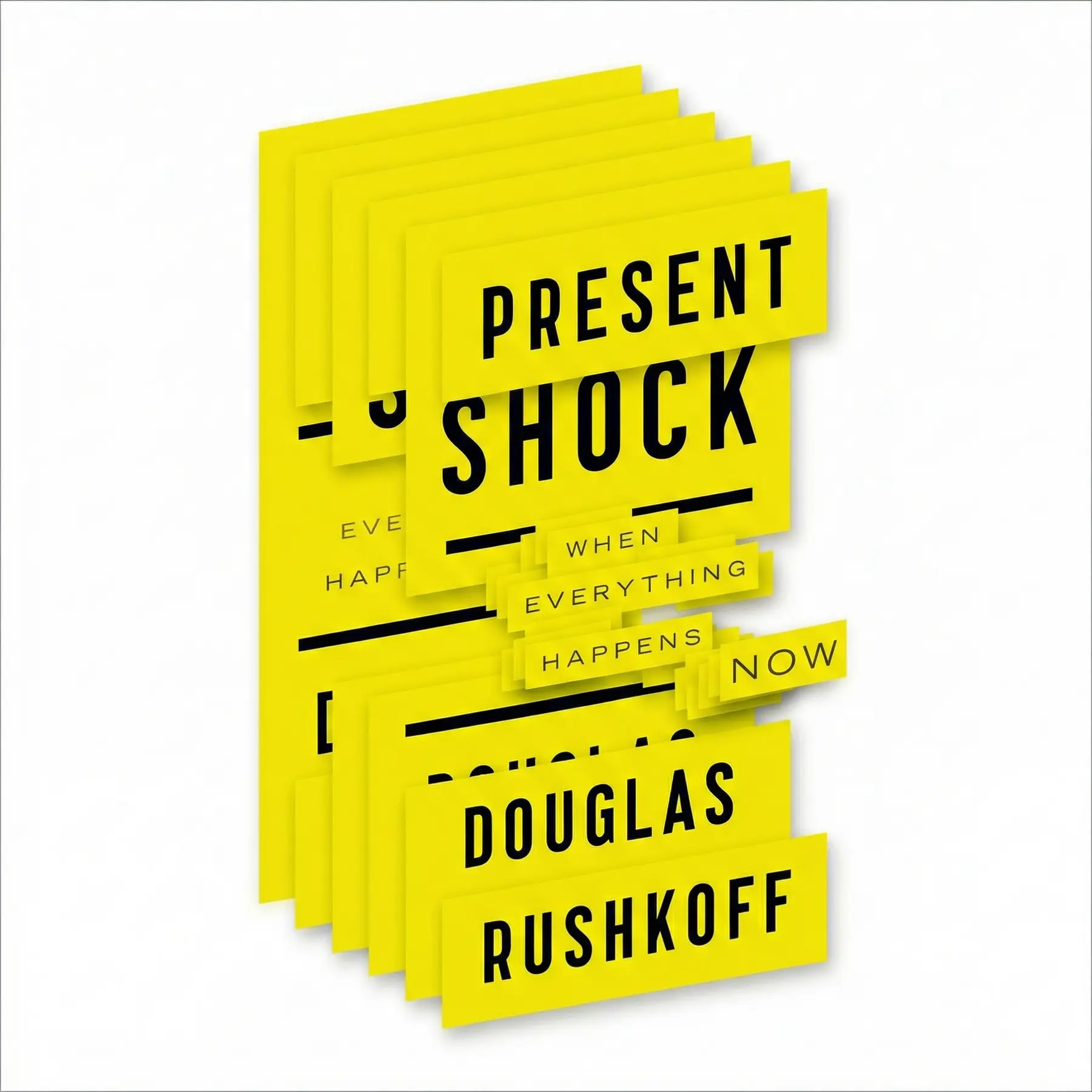
Present Shock: When Everything Happens Now
Explore how the digital age has collapsed our sense of time, creating a state of perpetual distraction. This guide explains why we feel overwhelmed by the present and how to regain focus.
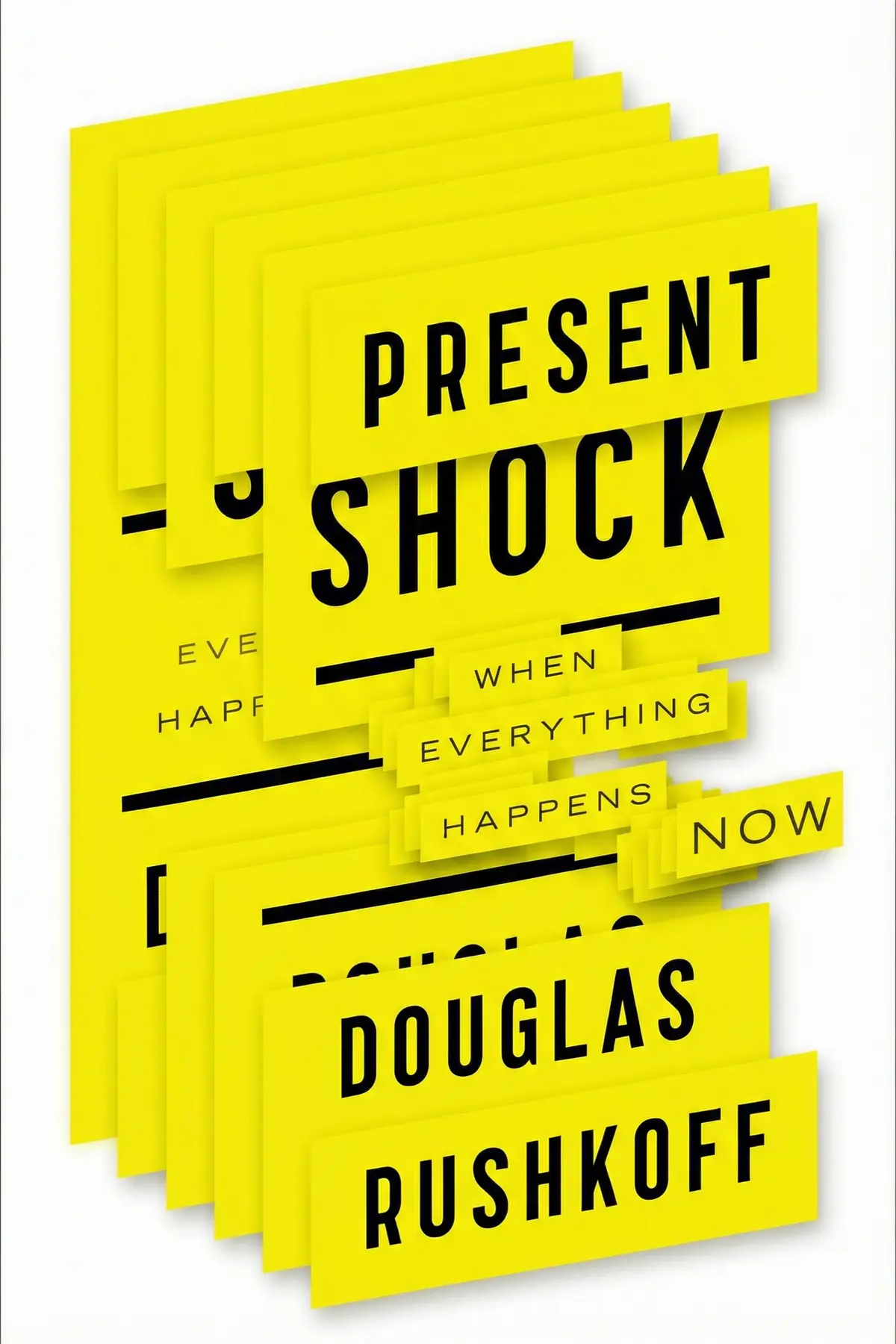
Table of Content
1. Introduction
1 min 34 sec
Have you ever felt like you are constantly running just to stay in the same place? It is a familiar sensation in the modern age—the nagging feeling that despite being more connected than ever, we are somehow falling behind. We check our phones the moment we wake up, scroll through endless feeds during lunch, and fall asleep to the blue light of a screen, all in an attempt to keep up with a world that never stops moving. This constant state of alertness has a name: Present Shock.
In this exploration of Douglas Rushkoff’s work, we are going to look at the profound shift in how we experience time. For most of the twentieth century, humanity was obsessed with the future. We looked at the horizon with a mix of wonder and anxiety, wondering what the next big invention would be. But today, that horizon has seemingly vanished. The future has arrived, and it has brought with it a relentless demand for our immediate attention.
We find ourselves in a culture that prioritizes the ‘now’ above all else. This isn’t just about being busy; it’s about a fundamental change in the way we process information, tell stories, and even understand our own identities. Over the next few minutes, we will unpack how digital media has dismantled our traditional sense of narrative and why we feel so disoriented in a world of instant updates. By the end, you’ll see the ‘always-on’ world through a different lens and understand how to navigate the complexities of this eternal present without losing your sense of self.
2. The Shift from Future Shock to Present Shock
1 min 56 sec
Discover why we have traded long-term dreams for instant gratification and how the rapid pace of change has left us stuck in a frantic present.
3. The Dissolution of the Linear Story
2 min 10 sec
Explore how the classic beginning-middle-end structure has been replaced by fragmented, non-linear experiences that change how we see the world.
4. Digiphrenia and the Fragmented Self
2 min 13 sec
Learn about the psychological strain of managing multiple digital identities and being in several places at once through our devices.
5. The Conflict Between Digital Speed and Natural Rhythms
2 min 28 sec
Understand why our modern obsession with the ‘now’ is clashing with the slow-moving systems of nature and government.
6. Conclusion
1 min 36 sec
As we have seen, the condition of present shock is more than just a feeling of being busy; it is a fundamental restructuring of how we perceive our world and ourselves. We have moved from a society that looked ahead to one that is trapped in a frantic, eternal ‘now.’ This shift has fragmented our stories, divided our identities through digiphrenia, and caused a dangerous misalignment between the speed of our technology and the slower, more natural rhythms of our culture and our planet.
The throughline of our digital age is one of constant interruption. We have built tools that were meant to give us more time, but instead, they have taken our attention and scattered it across a thousand different directions. We no longer wait for the future; we react to the present. But there is a way to push back. By recognizing the different scales of time—understanding that while a tweet happens in a second, a career or a community takes decades to build—we can start to prioritize what truly matters.
The goal isn’t to abandon technology or hide from the modern world. Instead, it’s about regaining our temporal agency. We need to learn to step out of the ‘always-on’ stream and reconnect with the slower processes that give life its meaning. By being more intentional about how we use our digital selves and by respecting the long-term narratives of our lives, we can move from a state of shock to a state of presence. The present should be a place where we actually live, not just a moment we are trying to survive.
About this book
What is this book about?
Present Shock investigates the psychological and social consequences of living in a world where everything happens in real time. We have transitioned from a society that looked forward to the future with optimism to one that is perpetually stuck in a frantic, eternal present. This shift has fundamentally altered our politics, our commerce, and our personal well-being. The book promises to illuminate the hidden pressures of our always-on digital culture. By identifying the specific ways technology distorts our perception of narrative and identity, it offers a path toward reclaiming our attention. You will learn to distinguish between the fast-moving distractions of the digital world and the deeper, more meaningful rhythms of human life.
Book Information
About the Author
Douglas Rushkoff
Douglas Rushkoff is a highly regarded media theorist and author known for his insightful critiques of digital culture. His notable works include Life Inc and Program or Be Programmed. Beyond his books, he is a regular contributor to major outlets like the Guardian and CNN, and he has shared his expertise through writing and hosting documentaries such as The Persuaders and Digital Nations.
Ratings & Reviews
Ratings at a glance
What people think
Listeners find the book highly engaging and value its deep theoretical look at our current era. The research is also top-tier, leading one listener to label it a "grand vortex of information and technology." The commentary receives positive remarks for providing an objective cultural analysis, with listeners noting the abundance of intriguing concepts throughout. On the other hand, the writing style itself gets varied feedback, with some appreciating it and others considering it less effective.
Top reviews
Methinee
Picked this up because the premise of 'narrative collapse' felt so relevant to our current TikTok-brained culture. Rushkoff creates this incredible, grand vortex of information that perfectly captures why we all feel so overwhelmed and out of sync with our own lives. While some sections lean a bit heavily into speculative territory, the overall analysis of how we've traded meaning for immediacy is hauntingly accurate. I loved the way he dissected the collapse of the traditional story arc in favor of the 'now.' It’s a dense read, definitely not something you can just breeze through in a single afternoon, but the insights are lasting. If you've ever felt like you're drowning in notifications while life passes you by, this provides the vocabulary you need to understand that sensation.
Show moreOm
As someone who struggles to balance a digital identity with actual presence, I found Rushkoff’s concept of 'digiphrenia' incredibly validating. He captures that weird sensation of being 'here but never here' that defines so much of our social media interaction today. The book is a grand vortex of technology and culture, and while it's a bit rambling, I found the wandering style led to several genuine eureka moments. I especially loved the idea of 'Team Human' and the call to sustain the playability of the moment rather than just competing for dominance. It’s not a perfect book, and some of the examples are starting to feel a little dated, but the core message remains vital. It’s a must-read for anyone feeling overwhelmed by the digital 'now.'
Show moreJames
Finally got around to finishing this, and while it's a 'grand vortex' of tech-culture analysis, it definitely requires some patience. Rushkoff is an on-the-edge thinker who provides a really unbiased analysis of how our natural rhythms are being disrupted by real-time technology. I found his take on 'narrative collapse' particularly interesting, especially the idea that we’ve lost the ability to see things in a linear continuum. However, the writing quality is a bit hit-or-miss, with some chapters feeling much more polished and insightful than others. The section on 'fractalnoia' felt a bit like he was chasing his own tail, but the overall contemplation of the present is still very strong. It’s a thought-provoking piece that stays with you long after you close the cover.
Show moreCharles
Ever wonder why you feel constantly behind despite being perpetually connected? Rushkoff explains this through 'digiphrenia,' the mental strain of trying to exist in multiple digital spaces while our physical bodies remain stuck in one place. It’s a brilliant concept that gave me several 'eureka' moments, especially regarding how we treat time as just another commodity to be processed. To be fair, the book is a bit of a mess structurally; arguments don’t always build on each other in a linear way, which is ironic for a book lamenting the end of narrative. Still, the cultural commentary is unbiased and sharp, offering a much-needed update to Toffler's older theories. I’d recommend it for the ideas alone, even if the writing is occasionally frustrating.
Show moreAiden
After hearing so much about Future Shock, I found this to be a much-needed update for the digital era. The way Rushkoff distinguishes between 'chronos' and 'kairos' in the 'Overwinding' chapter was particularly eye-opening for me. We are living in a world where the ping of a notification carries more weight than the actual event it’s notifying us about. Personally, I found the research to be excellent, creating a grand vortex of information that forces you to rethink your relationship with your smartphone. Some of his points about the 'mythic present' are a bit vague, but the emotional core of the book—our loss of context—is undeniable. It’s an ambitious work that manages to capture the low-level unease of the 21st century.
Show moreCooper
The chapter on 'Overwinding' alone is worth the price of admission, even if some of the later sections get a bit bogged down in corporate-villainy tropes. Rushkoff’s description of the 'BlackBerry prayer' and the creeping start times of Black Friday shopping are perfect examples of our obsession with the immediate. I really appreciate how he doesn't just blame the tools but looks at the underlying shifts in how we perceive the passing of time. It's an incredibly fun read if you enjoy high-level media theory, though it does get a bit 'preachy' toward the end. Not every point lands, but the ones that do are incredibly sharp. It’s definitely made me more conscious of how I ‘spend’ my attention during the day.
Show moreJib
Truth is, I wanted to love this, yet the lack of a central thesis made the reading experience feel like wading through a stream of consciousness. There are some truly fascinating gems hidden in here, like the concept of 'Apocalypto' and our weird obsession with imminent doom. But the execution is just so disjointed that I finished the book without a clear takeaway or a sense of where we should go next. It’s more of a polemic than a study, and while the sentences sound persuasive, the logic often fails to stack up. If you're a good skimmer, you'll find plenty to like, but don't expect a rigorous or evidence-based scientific analysis. It’s more of a vibes-based critique of modern life.
Show morePim
Look, Rushkoff is clearly brilliant, but his ability to structure a coherent argument is severely lacking here. The book feels more like a collection of interesting provocations than a fully realized thesis on our contemporary condition. I found the sections on 'fractalnoia' and conspiracy theories particularly weak, as they seemed to rely on a false premise that everything is connected to everything else. However, his analysis of how corporations fail to communicate with real people on social media was spot on and very satisfying. It's a mixed bag of a book that requires a lot of skimming to find the truly insightful nuggets. If you’re looking for a prescriptive guide to digital wellness, you’re better off looking elsewhere, but for theoretical contemplation, it’s decent.
Show moreTitiluck
Why does every media theorist eventually resort to pseudoscientific blather to make a point? I started this with high hopes, but by the second chapter, the author completely lost my trust by citing a chiropractor's 'biochemical research' without a shred of irony. When you look into these sources, the air of respectability evaporates instantly, leaving you with a disjointed grabbag of speculative theories. It’s a shame because the core idea of 'present shock' is genuinely fascinating and worth exploring. Unfortunately, the execution is so lacking in rigor that it becomes impossible to take his broader arguments seriously. I eventually had to return this to the library unfinished because I couldn't stomach the rambling, incoherent structure anymore.
Show moreChanon
Not what I expected from such a well-regarded author, and frankly, I gave up midway through. The first hundred pages were okay, but it quickly devolved into a rambling, speculative mess that felt more like a series of disjointed blog posts than a book. I almost never quit books, yet the lack of precision and the constant 'moralizing' about how we use technology became too annoying to ignore. He spends so much time vilifying corporate narratives that he forgets to actually define what the 'present' is in any meaningful way. It felt like the author was just throwing neologisms at the wall to see what would stick. It’s a letdown because the 'Future Shock' comparison promised so much more than what was delivered here.
Show moreReaders also enjoyed

AUDIO SUMMARY AVAILABLE
Listen to Present Shock in 15 minutes
Get the key ideas from Present Shock by Douglas Rushkoff, plus 5,000+ more titles in English and Thai.
- 5,000+ titles
- Listen as much as you want
- 7-day free trial
- Cancel anytime







