
17 min 09 sec
Primal Intelligence: You Are Smarter Than You Know
Discover how the ancient, narrative-driven powers of the human brain—intuition, imagination, emotion, and commonsense—provide a unique cognitive edge that far surpasses the rigid logic of artificial intelligence and data-driven systems.
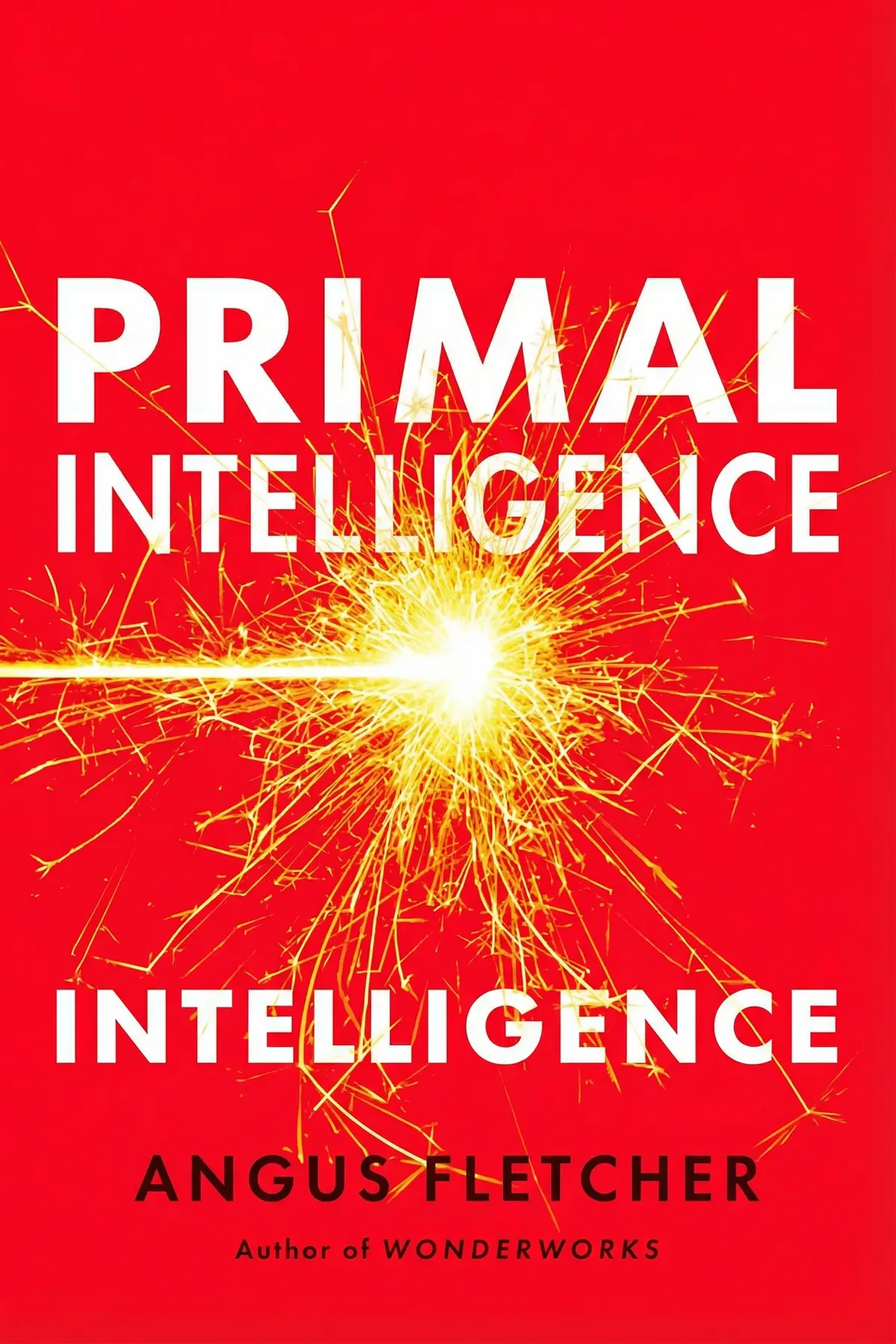
Table of Content
1. Introduction
2 min 19 sec
About two decades ago, an elite branch of the United States military encountered a problem that didn’t make sense on paper. Their newest recruits were statistically the most intelligent in history, boasting record-breaking scores on standardized IQ tests and demonstrating a mastery of complex, abstract logic. Yet, when these same individuals were deployed into the unpredictable chaos of real-world operations, something went wrong. Their decision-making faltered. Under the weight of uncertainty, their sophisticated logical frameworks didn’t just bend—they snapped. They became paralyzed by anxiety or stuck in repetitive, unproductive habits. This military paradox was a microcosm of a broader societal shift: as we’ve become more reliant on data and cold logic, our ability to handle the messy, narrative reality of life has seemed to diminish.
The search for a solution led researchers away from the latest technology and back toward our ancient origins. What they discovered is a form of intelligence that predates computers, spreadsheets, and even formal logic. This is what we call Primal Intelligence. It is the suite of evolutionary tools that allowed our ancestors to survive in a world where there were no clear rules and no data sets to consult. While modern society often treats our instincts, emotions, and creative hunches as secondary to “rational” thought, the truth is that these primal powers are actually the engines of our most effective behaviors.
In this exploration, we are going to look at the four specific pillars of this ancient wisdom: intuition, imagination, emotion, and commonsense. We will see how they function not as mystical feelings, but as sophisticated biological systems designed to help us navigate the unknown. We’ll discover why human beings can still do things that the most powerful artificial intelligence cannot, and how we can reawaken these dormant strengths to become better leaders, more resilient thinkers, and more creative problem-solvers. The throughline of this journey is simple but profound: you are already smarter than you think, because your brain was built for the story of life, not just the equations of logic.
2. The Power of Intuition in Spotting Exceptions
2 min 09 sec
Uncover why your brain’s ability to notice the ‘weird’ is actually a highly evolved survival mechanism that outperforms even the most advanced data algorithms.
3. Imagination as a Branching Engine for Action
2 min 17 sec
Explore the biological roots of creativity and learn why thinking in ‘what-ifs’ is essential for planning and surviving in a shifting environment.
4. Emotions as an Internal Diagnostic Dashboard
2 min 14 sec
Discover why ‘negative’ emotions like fear and anger are actually vital data points that tell you exactly what is wrong with your current plan.
5. Commonsense and the Art of the Doubt Switch
2 min 00 sec
Learn how the human ability to ‘know that we don’t know’ acts as a vital safeguard against the overconfidence that plagues modern logic.
6. Leadership Through Vision and Nonconformity
2 min 11 sec
Transition from being a manager to a true leader by embracing the ‘primal’ approach of coaching, trust, and the courage to stand alone.
7. The Shakespearean Method of Storythinking
2 min 08 sec
Discover why the world’s greatest playwright was actually one of history’s most effective strategic planners and how his ‘moto’ can help you today.
8. Conclusion
1 min 51 sec
In concluding our journey through the landscape of Primal Intelligence, we return to the central realization that our most basic human instincts are not obstacles to overcome, but are in fact our greatest cognitive assets. We have seen how intuition serves as our radar for the unexpected, and how imagination acts as the branching tree of our future possibilities. We’ve redefined emotions as a sophisticated diagnostic system that keeps our narratives on track, and recognized commonsense as the vital ‘doubt switch’ that protects us from the blind spots of pure logic.
These four pillars, supported by the ‘moto’ of our action-oriented brains, create a form of intelligence that is uniquely equipped for the volatility of the twenty-first century. While artificial intelligence can process data at speeds we could never match, it lacks the ability to understand cause, effect, and meaning through the lens of a story. It cannot pivot with the same fluid creativity that a human being can when the old rules no longer apply.
Your challenge moving forward is to trust these ancient powers. The next time you feel a flash of intuition that something is ‘off,’ don’t dismiss it. When you feel the weight of fear or the heat of anger, don’t just suppress them; ask what they are telling you about your current plan. Allow yourself the space to branch out your imagination, thinking not just twenty steps ahead, but focusing on that vital ‘Now + 1.’ By integrating these primal strengths into your daily life and leadership, you move beyond the limitations of spreadsheets and algorithms. You reclaim the brilliance that allowed our ancestors to thrive against all odds, ensuring that you are ready not just for the world as it is, but for the world as it could be. You are smarter than you know, provided you have the courage to listen to the story your brain was born to tell.
About this book
What is this book about?
Primal Intelligence challenges the modern obsession with logic and big data, arguing that these tools often fail us in times of high-stakes uncertainty. By examining the success of elite military units and creative icons, the book reveals that true human brilliance is rooted in our evolutionary past. It identifies four essential pillars of our primal mind: intuition, which spots anomalies; imagination, which creates future paths; emotion, which fuels resilience; and commonsense, which signals when to pivot. This book promises to help you reclaim these dormant cognitive abilities to navigate a chaotic world. It moves beyond standard self-help by grounding its insights in the science of how our brains are physically wired for action and storytelling. By the end, you will understand how to leverage your innate story-thinking to spark innovation, lead with vision, and remain adaptable when traditional strategies crumble.
Book Information
About the Author
Angus Fletcher
Angus Fletcher serves as a professor of story science at Ohio State University’s Project Narrative. His work uniquely bridges the gap between neuroscience, literary analysis, and creativity research. Fletcher’s expertise has made him a sought-after advisor for diverse organizations, including Pixar and the US Army, where he demonstrates the power of story-thinking in building resilience and driving innovation.
Ratings & Reviews
Ratings at a glance
What people think
Listeners find the material convincing because of its practical usage, with one listener mentioning the integration of brain science and tactical Army experiences. Furthermore, the text is praised for its storytelling methods, inventiveness, and capacity to promote mental toughness. Listeners also value the depth of the investigation, as one listener points out how firmly it is grounded in published science.
Top reviews
Yaowaluk
Ever wonder why humans can still outperform the most advanced algorithms in a chaotic crisis? Fletcher answers this by breaking down what he calls the four pillars: intuition, imagination, emotion, and commonsense. It’s a brilliant defense of the human spirit in an age obsessed with AI and cold analytics. I loved the concept of the 'doubt switch'—the idea that our ability to admit we don't know something is actually a superpower. The book is exceptionally well-written and flows with the energy of a master storyteller. It makes a compelling case that we are far smarter than we give ourselves credit for. If you’re feeling overwhelmed by the digital world, this is the reality check you need. It’s easily one of the most provocative things I’ve read this year.
Show moreSureerat
After hearing Fletcher talk about the 'Now + 1' strategy used by Special Ops, I started applying it to my own project management, and the results have been incredible. This book isn't just theory; it’s a practical manual for building resilience in a world that feels increasingly volatile. Fletcher’s writing is accessible yet deeply rooted in his background in both science and literature. He makes a strong case that our strength lies in our ability to adapt and anticipate, rather than just crunching numbers. The way he describes commonsense as a mechanism for sensing volatility really changed how I view my own decision-making process. For leaders and creatives, this is essential reading. It’s a rare book that manages to be both intellectually stimulating and immediately useful on a personal level.
Show moreLena
This book is a masterclass in reclaiming what it means to be a uniquely gifted species. Fletcher takes us on a journey through history, from the canvases of Van Gogh to the laboratories of Marie Curie, to show how intuition and imagination drive every great leap forward. The idea that we are 'smarter than we know' isn't just a feel-good slogan here; it’s a well-argued hypothesis based on how our brains actually evolved. I was particularly struck by the discussion on coaching and how true leadership involves letting others 'run to the edge of collapse' to trigger growth. It’s a brave, brilliant book that isn't afraid to challenge the status quo of the tech-obsessed 21st century. I've already recommended it to three people this week.
Show moreMason
As an educator who is constantly told to follow data-driven metrics, Fletcher’s argument for 'storythinking' felt like a breath of fresh air. He successfully reframes our most ancient mental tools—imagination and intuition—not as primitive distractions, but as the very foundations of human ingenuity. I found the sections on how school systems inadvertently break a child’s natural curiosity to be particularly stinging and accurate. While the frequent pivots back to Shakespeare felt a bit repetitive for a non-literary reader, the broader point remains solid. We are more than just biological calculators. The truth is, logic can only get you so far when you’re facing a situation that has no precedent. This book provides a much-needed template for navigating that uncertainty without losing your mind.
Show moreClara
Fletcher manages to bridge the gap between hard neuroscience and the messy reality of human emotion with surprising grace. Most psychology books treat our 'gut feelings' as errors to be corrected, but this work argues they are actually sophisticated pattern-recognition systems. I found the chapter on imagination particularly helpful, especially the concept of 'Now + 1' thinking to avoid paralysis. The prose is punchy and direct, avoiding the dry jargon that usually bogs down academic writing. My only minor gripe is that he completely ignores indigenous storytelling traditions, which seems like a huge oversight for a book about primal narrative intelligence. Despite that, the historical vignettes about Einstein and Curie were genuinely illuminating. It’s a solid 4-star read for anyone interested in the mechanics of creativity.
Show moreSun
Look, the way we define 'intelligence' has been broken for decades, and this book finally provides a tangible framework for fixing it. Fletcher’s exploration of the four pillars—especially the role of fear and grief as navigation tools—is profoundly moving and insightful. He argues that we should stop trying to act like machines and start leaning into the narrative-driven brains we actually have. The chapters move at a brisk pace, and I appreciated the self-deprecating humor the author sprinkled throughout the more academic sections. I did find the Shakespeare obsession a bit much after a while, but his analysis of how 'storythinking' drives innovation is hard to argue with. It’s a refreshing take that challenges the Dunning-Kruger-heavy narrative of modern psych.
Show moreCameron
Finally got around to finishing this, and while the middle sections get a bit bogged down in military anecdotes, the 'Primal Quick Guide' at the end is pure gold. Fletcher’s central claim that human cognition is about story shaping rather than data processing is a timely reminder of our inherent value. I loved the Gretzky metaphor about skating to where the puck will be. It’s an engaging read that restores a lot of confidence in our oldest mental tools. The writing is sharp, though I wish there were a few more scientific citations to balance out the rhetorical flourishes. Still, it’s a very persuasive piece of work for anyone navigating an unpredictable career path.
Show morePim
Picked this up for a professional development book club, and I’m feeling pretty torn about the final product. On one hand, the four-part framework of Primal Intelligence—especially the focus on how emotion sustains our plans—is very applicable to leadership and coaching. On the other hand, the heavy reliance on US Special Ops stories felt disconnected from my daily reality as a middle manager. Fletcher writes with immense conviction and clearly knows his Shakespeare, but he sometimes stays at such a high level that the practical application gets lost in the rhetoric. It’s a thought-provoking read, certainly, but I walked away feeling like I had learned more about Fletcher’s own impressive resume than about how to actually train my brain. If you're looking for a quick fix, just flip to the Quick Guide at the end.
Show morePannipa
The premise of Primal Intelligence sounded fascinating, but the execution felt like academic snake oil. I was hoping for a grounded study on neuroscience, yet what I got was a series of grandiose claims about Shakespeare being the solution to every modern problem. It’s hard to take the 'science' seriously when Steve Jobs and Van Gogh are treated as these lone, mystical geniuses who succeeded simply because they tapped into some ancient narrative engine. To be fair, the writing is fast-paced, but it lacks the experimental evidence I expected from a book shelved under cognitive psychology. It felt more like a $40 pitch for a specific worldview than a rigorous investigation. By the time he started using military anecdotes to explain creativity, I had completely checked out.
Show moreMoon
Not what I expected, and frankly, quite a bit of it felt like an expensive exercise in name-dropping and entitlement. The author seems convinced that reading Shakespeare is the primary catalyst for every major scientific breakthrough in history, which is a massive stretch, to say the least. While I agree that modern education focuses too much on memorization, the alternative presented here feels like a collection of 'what ifs' and military metaphors rather than actual psychology. The book is beautifully produced, but the content is remarkably light on data and heavy on personal opinion. I struggled to finish it because the tone felt increasingly condescending toward anyone who values logic or traditional research. It's essentially a self-help book dressed up in a PhD's gown.
Show moreReaders also enjoyed
A Liberated Mind: How to Pivot Toward What Matters
Steven C. Hayes
Acting with Power: Why We Are More Powerful Than We Believe
Deborah Gruenfeld
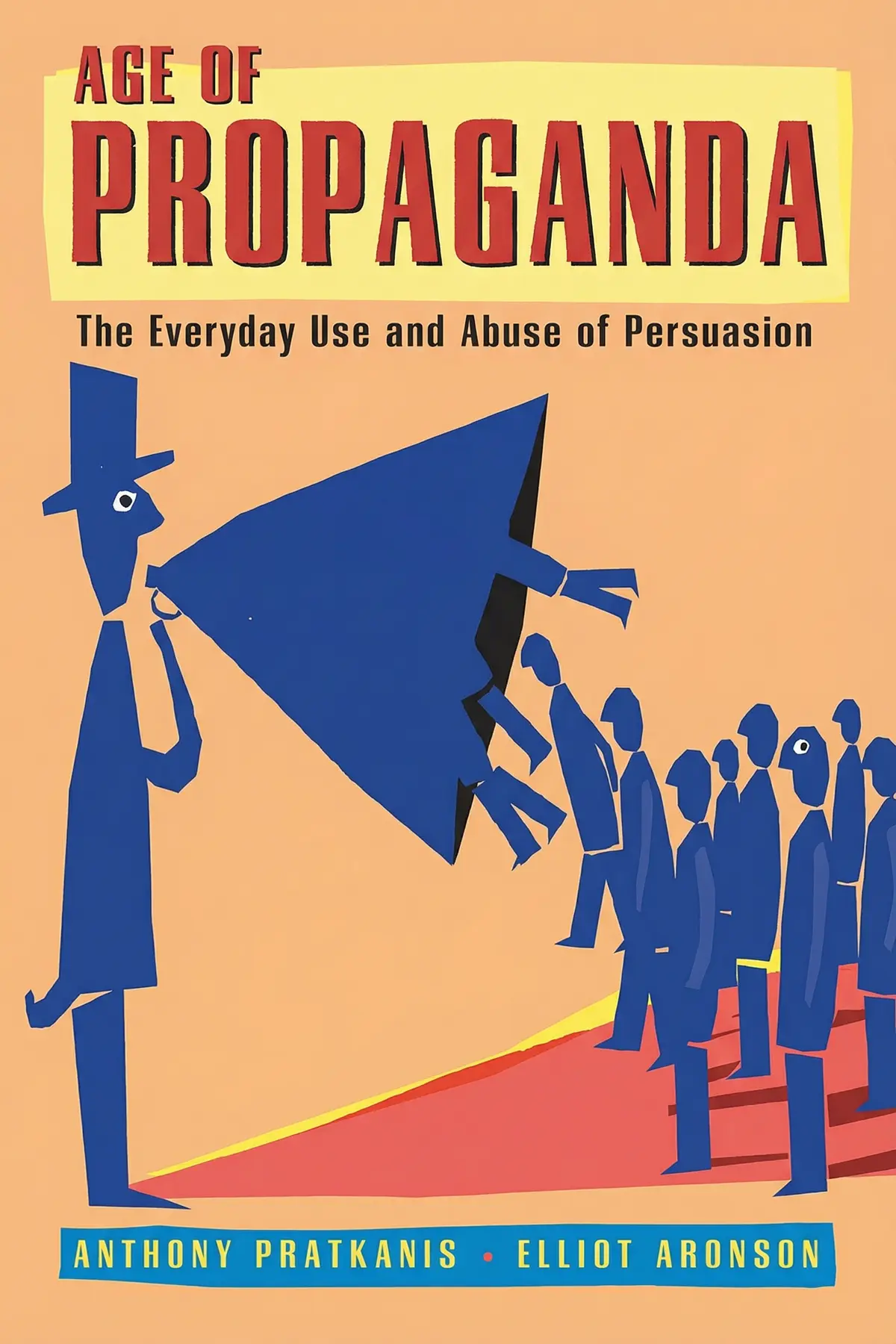
Age of Propaganda: The Everyday Use and Abuse of Persuasion
Anthony Pratkanis
AUDIO SUMMARY AVAILABLE
Listen to Primal Intelligence in 15 minutes
Get the key ideas from Primal Intelligence by Angus Fletcher, plus 5,000+ more titles in English and Thai.
- 5,000+ titles
- Listen as much as you want
- 7-day free trial
- Cancel anytime







