
14 min 27 sec
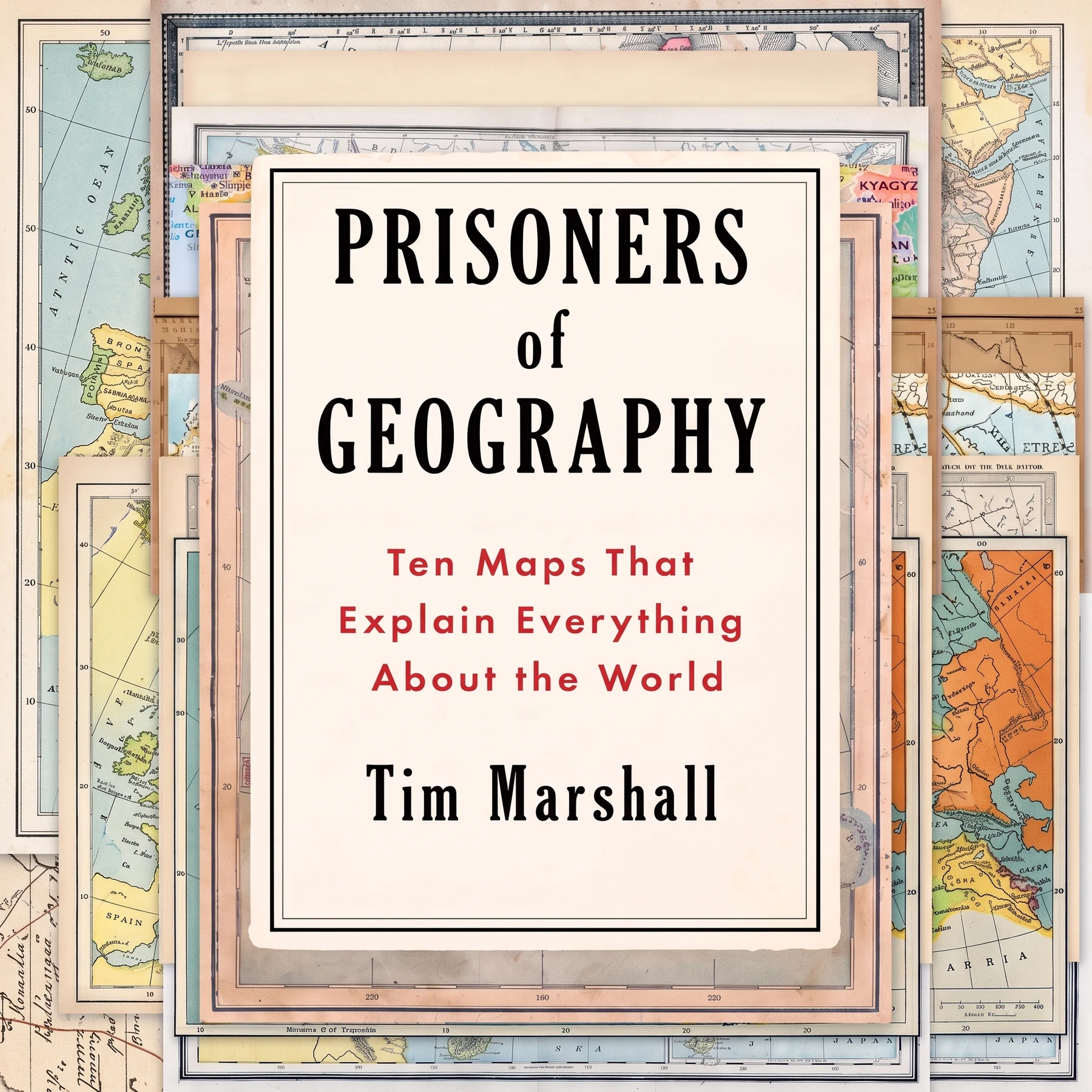
Prisoners of Geography: Ten Maps That Explain Everything About the World
By Tim Marshall
A deep dive into how physical landscapes—mountains, rivers, and plains—dictate the political and economic destinies of nations, revealing the hidden geographical forces that shape our global power structures and conflicts.
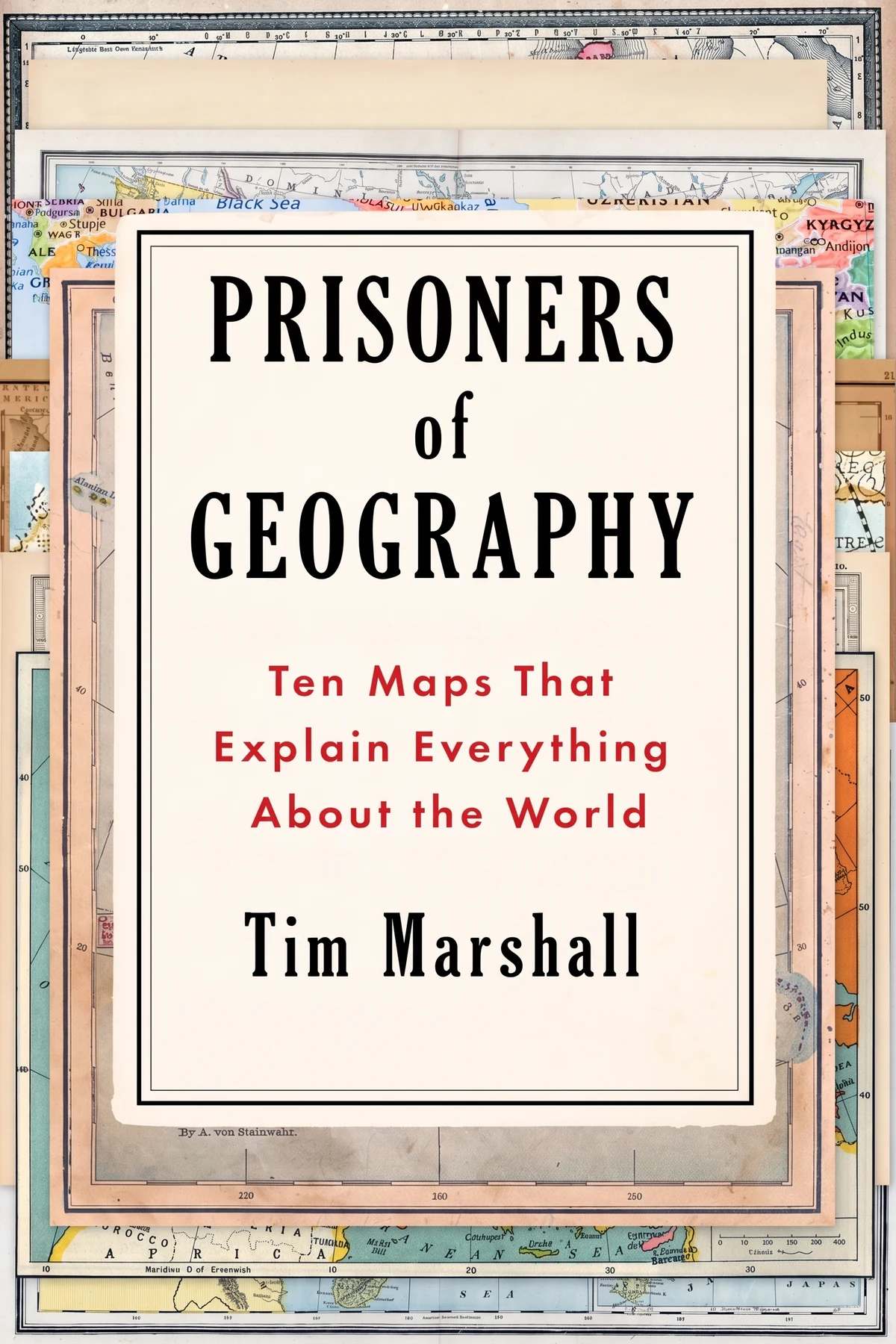
Table of Content
1. Introduction
1 min 35 sec
When we think about world history, we often focus on the big personalities—the kings, presidents, and generals who made the decisions that changed the world. We look at ideologies, economic systems, and technological breakthroughs. But there is a silent, unchanging player in every historical drama that often goes unnoticed: the land itself. The geography of our planet—the towering mountain ranges, the deep-water ports, the vast plains, and the winding rivers—sets the stage upon which all of human history is performed. It provides the resources that build empires and the barriers that stop them in their tracks.
In this summary, we are going to explore the concept of being “Prisoners of Geography.” It is the idea that no matter how much technology we develop or how many treaties we sign, we are still fundamentally limited by the physical features of our environment. A nation without a warm-water port will always struggle to project naval power. A country situated on a flat, open plain will always fear invasion more than one tucked behind a massive mountain range. We’ll see how these geographical realities have dictated the strategies of world powers for centuries and how they continue to influence the headlines we see today.
From the frozen borders of Russia to the high plateaus of Tibet, and from the blessed shores of North America to the complex waterways of Africa, we will look at how the physical world defines the political one. By the end of this journey, you’ll see that the world map isn’t just a collection of lines drawn by humans; it’s a map of the possibilities and limitations imposed on us by nature itself. Let’s dive into how geography determines the balance of power on our planet.
2. Russia’s Strategic Vulnerability
1 min 55 sec
Why does the world’s largest country feel so insecure? Explore how a specific stretch of flat land has invited invasion for centuries and why Moscow looks to the Baltics for safety.
3. The Himalayan Shield and Tibet
1 min 54 sec
Tibet is more than a spiritual center; it is a strategic “water tower” and a vital mountain shield. Learn why China considers this plateau essential for its survival against India.
4. The American Fortress
1 min 49 sec
Imagine a country with two massive moats and friendly neighbors. Discover how geography granted the United States a level of security that most nations can only dream of.
5. The Divide of the European Plains
1 min 55 sec
Why are some European nations economic powerhouses while others struggle? The answer isn’t just policy—it’s written in the soil and the shape of the northern plains.
6. The Barrier of Africa's Waterways
1 min 59 sec
Africa possesses some of the world’s longest rivers and most beautiful coasts, yet geography makes trade incredibly difficult. See how terrain hinders commerce and how nations are fighting back.
7. The Imbalance of the Korean Peninsula
1 min 47 sec
In the Korean Peninsula, a few miles of terrain and a handful of hills create a terrifying military balance. Understand why geography keeps this decades-long conflict frozen in place.
8. Conclusion
1 min 33 sec
As we have seen, the world is not just a collection of political ideas or historical accidents. It is a physical place where the terrain exerts a constant, heavy influence on the choices leaders make and the lives citizens lead. Whether it is the open plains of Russia creating a perpetual sense of insecurity, the high plateaus of Tibet acting as a vital shield for China, or the oceanic moats protecting the United States, geography is the silent architect of our global order.
We often like to believe that modern technology has made geography irrelevant. We have airplanes that fly over mountains, internet cables that run under oceans, and missiles that can strike from thousands of miles away. But as this exploration shows, the basic needs of a nation—security, water, and trade—are still fundamentally tied to the land. We can build man-made ports and tunnel through mountains, but we cannot change where the mountains are or where the rivers flow. We remain, in many ways, prisoners of geography.
The lesson here is one of perspective. When we look at global conflicts or economic disparities, we should stop only looking at the leaders and their speeches. Instead, we should look at the map. Understanding the physical constraints of a nation allows us to see the world with more clarity and less judgment. It helps us realize that many of the actions taken by countries are not necessarily driven by malice or greed, but by a desperate need to navigate the geographical hand they were dealt. By respecting the power of the land, we gain a much deeper understanding of the past and a better sense of where the future is headed.
About this book
What is this book about?
This summary explores the profound influence of physical geography on international relations and national strategy. It examines why certain nations, such as the United States, enjoy a state of natural security, while others, like Russia, are perpetually haunted by the vulnerability of their open borders. Through a global lens, it reveals the strategic importance of Tibet to China’s security, the economic impact of Europe’s diverse terrain, and the logistical challenges posed by Africa’s unique coastlines and rivers. By looking at the world through the eyes of its leaders, the summary explains how the "lay of the land" acts as both a protective shield and a restrictive prison. Listeners will discover the geographical reasons behind the tension on the Korean Peninsula and the historical factors that drive territorial expansion. Ultimately, this content promises to show how mountains, rivers, and plains are the invisible hand behind the evening news, shaping the history we’ve lived and the future we are building.
Book Information
About the Author
Tim Marshall
Tim Marshall is a highly experienced British journalist who has spent a significant portion of his career reporting on the complexities of global events. He is perhaps best known for his influential role as the former foreign affairs editor for Sky News, where he provided deep analysis of international politics and conflict.
Ratings & Reviews
Ratings at a glance
What people think
Listeners find this work both captivating and accessible, noting its well-crafted writing which effectively links geographic factors with historical developments. Its educational merit is highly valued, especially for students or those curious about geopolitics, serving as an ideal starting point for the subject. Throughout the text, intriguing details are shared that provide a fresh perspective on world history. Opinions on the map quality are divided, as some find them helpful while others consider them subpar.
Top reviews
Lek
Finally got around to reading this, and it’s a total game-changer for how I view the nightly news. Tim Marshall has this incredible knack for taking dense, intimidating geopolitical concepts and breaking them down into prose that actually flows. I never realized how much a country's coastline—or lack thereof—dictates its entire destiny on the world stage. The sections on Russia’s need for warm-water ports and the navigable rivers in the US really made the "why" of history click for me. While some might find it a bit introductory, it’s the perfect starting point for anyone who wants to understand why global conflicts keep repeating. It’s accessible, informative, and frankly, pretty hard to put down once you get into the rhythm of it.
Show moreCaleb
Ever wonder why certain regions seem stuck in a cycle of poverty while others thrive with almost no effort? This book dives deep into the "fucked-up-ness" of our physical world, showing how waterfalls in Africa or mountains in Tibet shape entire civilizations. I found the section on the Middle East particularly enlightening, even if it was a bit depressing to realize how much geography fuels their rivalries. Marshall’s writing is punchy and direct, making complex international relations feel like a conversation at a bar with a very smart friend. It isn’t an exhaustive academic tome, but it doesn't try to be; it's a brilliant introduction to the forces of nature. Every student of history should have a copy of this on their shelf.
Show moreKofi
Wow, what an eye-opening journey through the various "prisons" that define our modern global borders and historical conflicts. I was particularly struck by the chapter on Latin America and how the rugged terrain of the Andes has historically isolated its nations. Marshall has a way of making you feel like you’re zooming out from a satellite view to see the big picture of human movement. It’s educational without being boring, and the chapters are short enough to keep the momentum going throughout the entire book. Personally, I think this should be required reading for anyone entering a career in international relations or political science. It’s a rare book that makes you rethink things you thought you already understood about the world.
Show moreRome
Picked this up on a whim and ended up finishing it in two sittings because the information was so compelling. The way Marshall links the "North European Plain" to centuries of warfare really helped me connect the dots between Napoleon, Hitler, and modern Russia. It’s a novel way to look at historical events that usually get blamed entirely on ideology or personality quirks of leaders. I loved learning about the "strait of Nicaragua" and China’s potential involvement in building a competitor to the Panama Canal. The writing is incredibly clear, making it a perfect gift for that person in your life who is obsessed with the news. It’s a fascinating, high-level summary that manages to be both informative and deeply entertaining.
Show morePrapaiwan
If you've ever felt overwhelmed by the complexity of the Middle East or the tension in the South China Sea, read this. Marshall strips away the confusing political rhetoric and shows you the mountains and waters that are actually driving these massive decisions. He explains how geography acts as a barrier or a bridge, defining who can trade and who must fight for survival. While it’s true that some of the maps could be more detailed, the actual content is top-notch and very easy to digest. It’s one of those rare books that makes you feel significantly smarter by the time you reach the final page. I’ll definitely be picking up his follow-up book, "The Power of Geography," to see what else I’ve missed.
Show morePakpoom
The chapter on Russia alone makes this book worth the price of admission, especially given everything happening in Ukraine today. Marshall explains the North European Plain in a way that makes Russian paranoia feel almost logical, even if you don't agree with their actions. My only real gripe is that the physical maps in my edition were a bit underwhelming and hard to read in grayscale. You’d think a book titled "Ten Maps" would have higher-quality visuals to accompany such sharp analysis. Still, the way he links the Himalayan mountains to the eternal standoff between India and Pakistan is masterful. It’s a great primer for people who want a broad overview of why the world looks the way it does.
Show moreKan
As someone who usually finds history books a bit dry, I was pleasantly surprised by how much this one reads like a narrative. Marshall manages to avoid the "textbook" trap by focusing on the physical realities that human leaders simply cannot change. He argues that we are all, to some extent, prisoners of the terrain we inhabit, which is a fascinating lens. However, I did feel like the "America is awesome" tone was laid on a bit thick in the US chapter. The author sometimes ignores the political and social nuances in favor of pure geographic determinism, which can feel a bit reductive at times. Regardless, the insights into Africa’s lack of natural harbors were eye-opening and explained a lot about its economic development.
Show moreStella
This book provides a solid, entry-level look at how the physical world dictates the movements of armies and the flow of trade. It’s fascinating to see how the "Great Wall" of the Himalayas or the vastness of the Arctic shapes the ambitions of superpowers like China. I appreciated the facts about the Mississippi basin having more navigable river miles than the rest of the world combined. Even if that specific stat is debated by some, the broader point about American prosperity being tied to its geography holds up. It’s a fast read that will definitely give you a new perspective next time you look at a world map. Just don’t expect a deep dive into the cultural or religious nuances of these regions.
Show moreThanakorn
Truth is, the premise here is better than the actual depth of the information provided by the author. It’s a decent enough introduction for a complete novice, but if you’ve followed world events for more than a year, you won't find much new. I found the chapter on Western Europe to be particularly thin, focusing mostly on Greece and the European Union rather than actual geography. The maps themselves are a huge letdown—I was expecting something unique or data-driven, but they are very basic. Marshall’s style is engaging, but he has a tendency to make sweeping generalizations that don't always hold up under scrutiny. It’s okay for a light read on a plane, but don't expect it to change your worldview fundamentally.
Show moreChamp
Look, I wanted to love this because the premise is brilliant, but the execution feels incredibly shallow and dated. Marshall leans so heavily into 19th-century geographic determinism that he almost completely ignores the impact of technology and human agency. To suggest that Africa is struggling primarily because of its rivers feels like a massive oversimplification that ignores centuries of colonial exploitation and political maneuvering. Also, the "Ten Maps" in the title is basically a marketing gimmick; they are just standard regional maps you could find on Wikipedia. It’s a smug, Eurocentric take on the world that assumes geography is the only factor that matters in the grand scheme of things. If you want real depth, you’re better off looking elsewhere for your geopolitical fix.
Show moreReaders also enjoyed

Abolish Rent: How Tenants Can End the Housing Crisis
Tracy Rosenthal
Abortion: Our Bodies, Their Lies, and the Truths We Use to
Jessica Valenti

Adults in The Room: My Battle With Europe’s Deep Establishment
Yanis Varoufakis

21 Lessons for the 21st Century
Yuval Noah Harari

A Different Kind of Power: A Memoir
Jacinda Ardern
Age of Anger: A History of the Present
Pankaj Mishra
A Higher Loyalty: Truth, Lies and Leadership
James Comey
Age of Propaganda: The Everyday Use and Abuse of Persuasion
Anthony Pratkanis
AUDIO SUMMARY AVAILABLE
Listen to Prisoners of Geography in 15 minutes
Get the key ideas from Prisoners of Geography by Tim Marshall, plus 5,000+ more titles in English and Thai.
- 5,000+ titles
- Listen as much as you want
- 7-day free trial
- Cancel anytime







