
23 min 03 sec
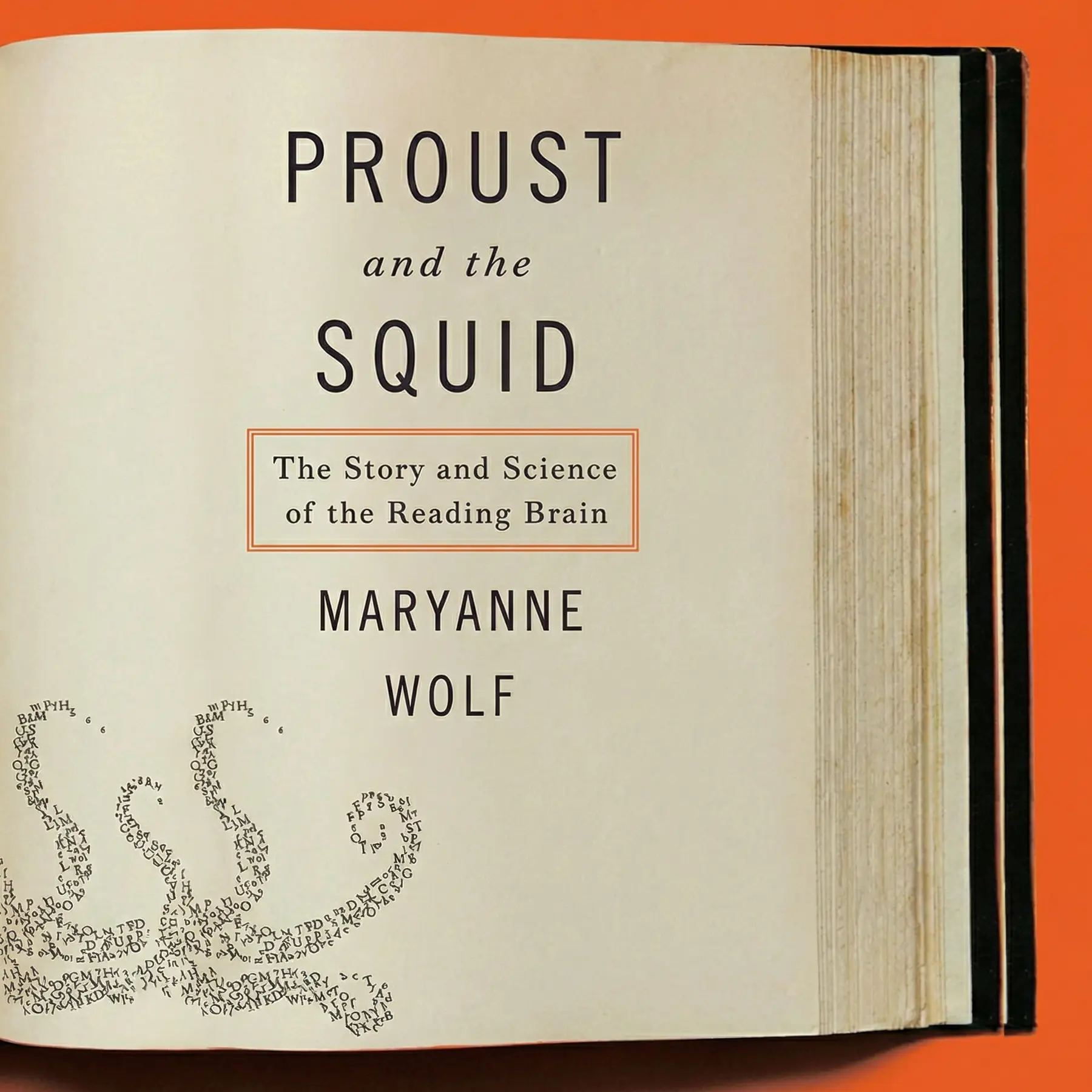
Proust and the Squid: The Story and Science of the Reading Brain
Explore the fascinating evolution and neuroscience of the human reading brain. Discover how we repurposed our biology to create literacy, why some struggle with dyslexia, and how to protect deep thought in a digital world.
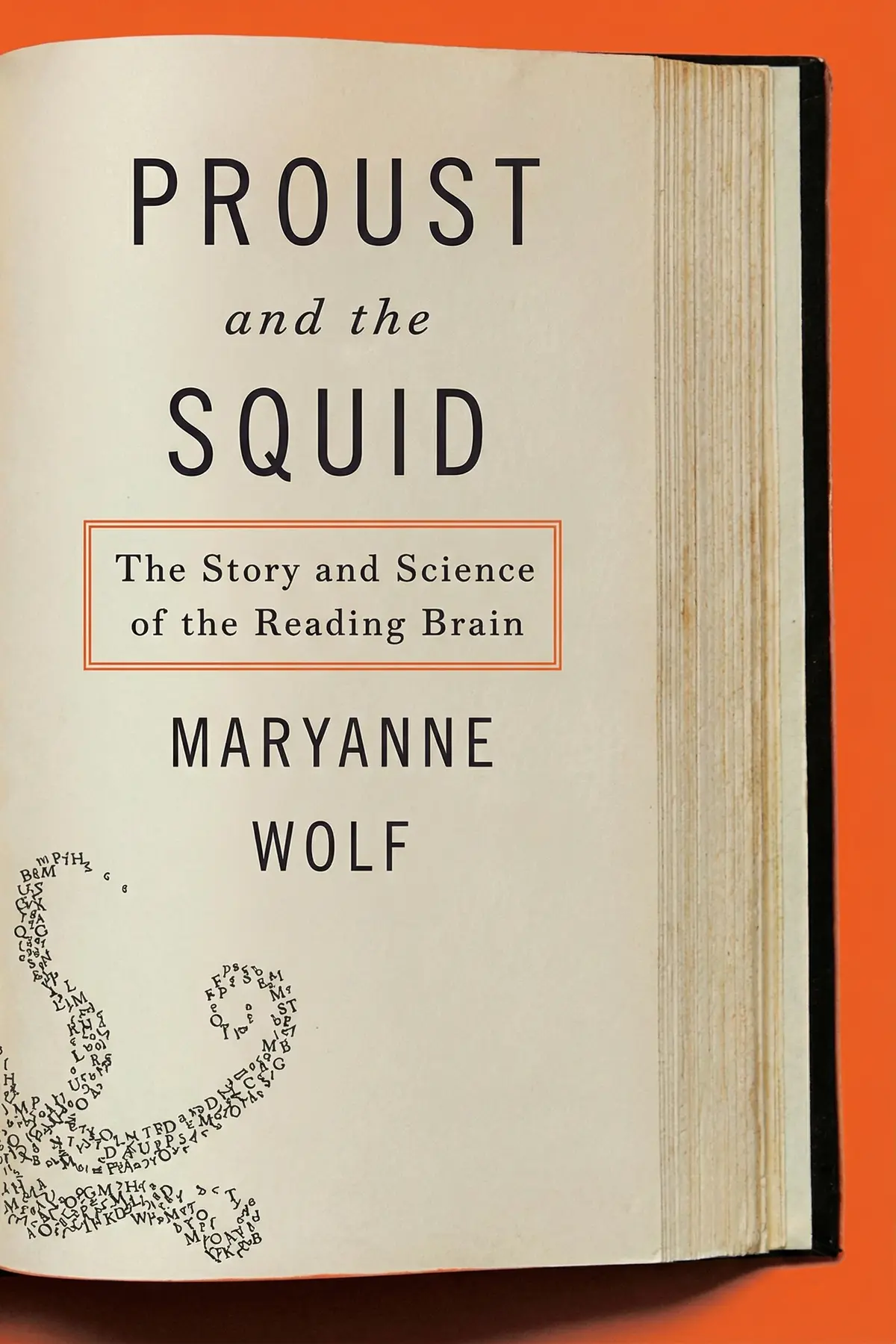
Table of Content
1. Introduction
1 min 52 sec
Every time you open a book or scroll through a digital article, you are participating in a silent miracle of biological engineering. To the casual observer, reading seems like a basic, everyday activity, but beneath the surface, your brain is performing a feat that it was never actually designed to do. Unlike walking or speaking, which are etched into our genetic code through thousands of generations of evolution, reading is a relatively new invention. It is a cognitive ‘hack’ that requires our brains to repurpose older structures originally intended for vision and language to perform a completely new task.
In this exploration of the reading mind, we will journey through the fascinating intersection of history, neuroscience, and human development. We will look back at the very first symbols carved into cave walls and trace the evolution of the alphabet, seeing how these cultural inventions literally rewired the human brain. We will also look at the individual journey of the child, who must painstakingly build this reading circuit from scratch, and examine why that process looks different for everyone. This story is not just about how we process text; it is about how the act of reading has shaped our ability to think deeply, feel empathy for others, and build a complex civilization.
By understanding the science and history behind the reading brain, we gain a new perspective on our own intellectual potential. We will see how the brain’s incredible plasticity allows it to adapt to new challenges, why some of the world’s most brilliant minds have struggled with ‘word blindness,’ and what we stand to lose in a fast-paced digital world that prioritizes speed over deep comprehension. This is the story of how a single human invention transformed us from creatures of the moment into masters of time and thought.
2. The Brain's Amazing Ability to Recalibrate
2 min 42 sec
Discover how the human brain manages to perform a task it was never biologically built for by cleverly repurposing its existing neural pathways.
3. The Evolutionary Leap of the Phonetic Alphabet
2 min 15 sec
Explore how the shift from complex picture-based writing to a simple phonetic alphabet freed up the brain to engage in higher-level critical thinking.
4. The Crucial Windows of Early Literacy
2 min 26 sec
Learn why the path to becoming a successful reader starts much earlier than you might think, long before a child ever picks up a book.
5. The Five Stages of Becoming a Reader
2 min 44 sec
Follow the developmental journey from the first ‘letter-like’ scribbles to the effortless mastery of the expert reading brain.
6. The Micro-Seconds of the Expert Mind
2 min 30 sec
Take a high-speed look at the half-second process that occurs in an expert’s brain every time they recognize a single word.
7. The Complex Science of Dyslexia
2 min 19 sec
Examine why dyslexia is more than just a reading problem, but a different neurological architecture that affects how the brain processes time and sound.
8. The Creative Gift of the Dyslexic Brain
2 min 28 sec
Reframe dyslexia not as a disorder, but as a neurological trade-off that often results in superior pattern recognition and spatial reasoning.
9. Protecting the Deep Reading Brain in a Digital Age
2 min 24 sec
Analyze the potential risks of moving from traditional print to digital screens and why we must fight to preserve the time required for deep thought.
10. Conclusion
1 min 23 sec
The story of the reading brain is a story of human ingenuity. We have taken a biological organ designed for survival in the physical world and repurposed it to navigate the world of ideas. From the first marks on cave walls to the complex digital texts of today, our ability to read has been the primary engine of our intellectual and cultural evolution. We have learned that reading is not a natural gift but a hard-won skill that requires a specific kind of neural architecture—an architecture that is both incredibly powerful and surprisingly fragile.
We must remember that every child’s journey to literacy is a monumental achievement that deserves our full support. Whether a brain follows the typical path or uses the creative ‘workarounds’ of dyslexia, the goal is the same: to unlock the door to the collective knowledge of humanity. As we look toward a future dominated by screens and rapid-fire information, we must fight to protect the ‘deep reading’ time that allows us to think, feel, and reflect. By valuing the slow, deliberate act of reading, we protect the very thing that makes us most human: our capacity for deep, independent thought and our ability to see the world through the eyes of others. Reading is the bridge that connects our past to our future, and it is a bridge we must continue to build, one page at a time.
About this book
What is this book about?
Proust and the Squid is a deep dive into the 'miracle' of the reading brain, exploring how humans performed a biological hack to develop a skill they were never meant to have. The book traces the history of literacy from ancient Sumerian symbols to the efficient Greek alphabet, showing how these cultural shifts fundamentally rewired our neural pathways. It breaks down the developmental stages of a child becoming a reader, highlighting the critical role of early language exposure and the 32-million-word gap. The narrative also provides a compassionate and scientific look at dyslexia, reframing it as a structural brain difference that often results in unique strengths like superior pattern recognition and spatial reasoning rather than a simple deficit. Finally, the book addresses the modern challenge of digital reading, warning that our fast-paced screen culture might be eroding our capacity for the 'deep reading' required for empathy and critical thinking. The promise of this summary is to help you understand the delicate machinery of your own mind and how to cultivate the focused attention necessary for true intellectual growth.
Book Information
About the Author
Maryanne Wolf
Maryanne Wolf is a renowned scholar and educator specializing in the science of reading development. She holds leadership positions as the director of the Center for Reading and Language Research at Tufts University and the Center for Dyslexia, Diverse Learners, and Social Justice at the UCLA Graduate School of Education and Information Studies. Beyond her research, she is the author of other influential works including Tales of Literacy for the 21st Century and Reader, Come Home: The Reading Brain in a Digital World, which explore the intersection of literacy and technology.
Ratings & Reviews
Ratings at a glance
What people think
Listeners find the text deeply informative concerning the science of reading and the evolution of the reading brain, with one listener mentioning that it provides 228 references for further exploration. Additionally, the book serves as a high-quality summary of language development and reading history, with one review noting its success in tying together various research fields. The author's writing style draws conflicting opinions, as some find it well-crafted while others feel differently.
Top reviews
Siriphen
Finally got around to finishing this, and I’m still reeling from the section on how our brains actually rearrange themselves to decode text. Wolf manages to weave together the biological miracle of neuroplasticity with the historical shift from oral traditions to the written word. It’s dense, yes, but the way she explains that reading is a cultural invention rather than an innate genetic trait changed how I view my own library. I loved the connection she made to Proust’s idea of the heart of communication, even if the 'squid' part felt a bit like a scientific footnote. Some sentences are a bit long and academic, but the depth of research is staggering. If you want to understand why your brain feels different when you’re deep in a novel versus skimming a screen, this is essential.
Show moreMan
Wow, what an eye-opener for anyone who considers themselves a lifelong bibliophile. I was captivated by the idea that we were never actually 'meant' to read, and that every child has to essentially hijack their brain's vision and speech centers to make it happen. Wolf’s description of the milliseconds it takes to process a single word is one of the most beautiful pieces of science writing I’ve encountered recently. She doesn't just explain the 'how' of reading, but the 'why'—how it allows us to step outside ourselves and understand the 'other.' I finished the book feeling like my own brain was a more wondrous place than I had ever imagined. Even the more technical sections on the history of the alphabet felt like uncovering a secret history of the human soul.
Show moreChloe
This book should be mandatory reading for every parent and teacher who deals with children in our increasingly digital world. Wolf’s exploration of how reading changes our lives—and how our lives change our reading—is both profound and timely. She tackles the complexity of the dyslexic brain with such empathy and scientific rigor that it’s impossible not to come away with a new perspective. The way she describes the 'milliseconds' that allow us to plan and synchronize our thoughts is pure poetry masked as neuroscience. It is a dense, intellectual journey that demands you slow down and actually read rather than just consume data. A masterful synthesis of history, biology, and literature that I will be returning to for years.
Show moreSven
The chapter on dyslexia was where this book truly came alive for me, especially knowing the author is writing from the perspective of a mother. She treats the 'reading brain' as a fascinating mosaic of different parts—vision, language, and meaning—all firing in a perfectly timed sequence that most of us take for granted. It’s eye-opening to realize that what we label as a learning disability might actually be a different, more creative way of organizing the brain's pathways. While some of the neuroanatomy descriptions felt a bit like a graduate-level textbook, the personal anecdotes kept me grounded. Truth is, I had to reread several pages just to visualize the supramarginal gyrus working its magic. It’s a dense read that rewards patience with a profound appreciation for every sentence you've ever read.
Show moreTun
As an educator, I found Wolf’s exploration of the transition from oral to written culture absolutely indispensable for my teaching practice. She draws a brilliant parallel between Socrates’ ancient fears that literacy would destroy our memory and our modern anxieties about what the internet is doing to children’s minds. It’s fascinating to learn that the brain uses 'delay neurons' to help us synchronize reality, and that reading literally builds new circuits that wouldn't exist otherwise. The book is packed with references—over 200, according to the back—which makes it a goldmine for further study. My only complaint is that the writing style is sometimes a bit too dry for a casual Sunday afternoon read. Still, the insights into how the alphabet freed our cognitive resources are worth the effort of digging through the denser chapters.
Show moreConnor
Ever wonder what happens in your head when you're making sense of a simple sentence? This book dives deep into the 'happy accident' of literacy and the way our brains have evolved—or rather, been repurposed—to handle the demands of the written word. Wolf is a master of her field, and her passion for the subject shines through, even when the prose gets bogged down in heavy scientific detail. I particularly liked the distinction she makes between the 'deep reading' of a physical book and the skimming we do online. It makes me want to put down my phone and pick up a classic novel just to preserve those precious neural pathways. It’s a challenging but rewarding look at the very foundation of modern human thought.
Show moreAiden
After hearing so much about the 'science of reading,' I was excited to jump into this, but it was a bit of a mixed bag. The first half, covering the history of writing systems from Sumerian tokens to the Greek alphabet, was genuinely fascinating and well-paced. But then the book takes a sharp turn into very dense neurobiology and personal reflections on dyslexia that felt a bit disconnected from the earlier themes. Wolf is clearly brilliant, but she hasn't quite mastered the art of making complex science feel effortless for the average reader. I appreciated the 228 references for further reading, as it shows the depth of her work. I just wish the overall narrative had a bit more of the 'squid' and a bit less of the 'textbook.'
Show moreWanphen
Frankly, the title is a bit of a bait-and-switch since there is very little about Proust or actual squids in these pages. Wolf admits this is her first attempt at writing for a general audience, and in my experience, it still feels very much like a scientific journal. The prose is often thick and difficult to 'choke down,' filled with technical jargon that makes the narrative flow feel quite sluggish. I appreciated the historical overview of how the Greek alphabet changed human cognition, but the pacing was all over the place. To be fair, her points about the dangers of the digital age are thought-provoking, though they occasionally veer into gatekeeping. It’s an informative work with a massive bibliography, but it lacks the narrative flair of someone like Mary Roach.
Show moreKai
To be fair, Wolf offers some of the most comprehensive research on reading development currently available, but it’s a slog to get through. The book is heavily footnoted and feels like it’s aimed more at speech pathologists than the general public. I did find the section on how different languages, like Chinese vs. English, require different brain structures to be quite interesting. However, the author’s persistent worrying about the digital age felt a bit like shouting at clouds without offering many specific solutions. It's a 3-star experience because while the information is valuable, the presentation is often too dry to be truly enjoyable. If you’re looking for a light beach read, keep moving, because this requires total, undivided attention.
Show moreThitiwan
Not what I expected at all, and honestly, I struggled to finish this one because the tone was just too academic. Wolf spends an exhausting amount of time on the history of cuneiform and the minute details of brain lateralization without enough connective tissue to keep a layperson interested. I felt like I was back in a boring college lecture, squinting at diagrams of the angular gyrus while the author droned on about cognitive development. There’s a lot of 'shining up' dyslexia as a secret superpower, which felt a bit saccharine and repetitive after a while. Look, the science is clearly sound, but the delivery is so dense that it becomes a chore to read. I wanted a book about the joy of reading, but I got a technical manual on neuronal transmission instead.
Show moreReaders also enjoyed
A Life Decoded: My Genome: My Life
J. Craig Venter
A Planet of Viruses
Carl Zimmer
A Short History of Nearly Everything
Bill Bryson
A Thousand Brains: A New Theory of Intelligence
Jeff Hawkins

Alien Earths: The New Science of Planet Hunting in the Cosmos
Lisa Kaltenegger
AUDIO SUMMARY AVAILABLE
Listen to Proust and the Squid in 15 minutes
Get the key ideas from Proust and the Squid by Maryanne Wolf, plus 5,000+ more titles in English and Thai.
- 5,000+ titles
- Listen as much as you want
- 7-day free trial
- Cancel anytime







