
Age of Propaganda: The Everyday Use and Abuse of Persuasion
Anthony Pratkanis
Discover the science of peak performance. This summary explores how mental preparation, rituals, and physiological hacks can help you overcome anxiety and excel during the most critical moments of your career and life.
1 min 48 sec
Consider for a moment the sheer volume of roles you are required to play on any given day. In the morning, you might be a focused professional or a decisive leader. By the evening, you transition into the role of a supportive spouse, a patient parent, or a reliable friend. Within each of these roles, there are moments where the stakes suddenly skyrocket—a difficult conversation with a partner, a presentation to a board of directors, or a competitive match on the weekend. Life, in many ways, is a continuous series of performances, and yet, most of us spend very little time thinking about how we prepare for those high-pressure windows.
We often assume that success is the result of long-term effort alone—the thousands of hours of practice or the years of education. While those are essential, they only get you to the starting line. What happens in the final sixty minutes, the final ten minutes, or even the final sixty seconds before the curtain rises is what determines if you will actually be able to access all that hard-earned skill. This is the art of getting ‘psyched up.’ It is a blend of psychology, biology, and even a bit of superstition, all aimed at one goal: ensuring that when the moment arrives, you are operating at the absolute peak of your capabilities.
In the following discussion, we are going to explore the various levers you can pull to optimize your mental state. We will look at how high-level athletes, musicians, and executives manage their nerves and sharpen their focus. We will see how rituals can anchor us, how music can literally change our physiology, and how even the presence of a rival can push us to new heights. The throughline here is simple: performance is not just something that happens to you; it is something you can actively engineer. By understanding the mechanisms of the mind and body under stress, you can move from being a victim of your nerves to being a master of your output.
2 min 40 sec
Explore why trying to calm down before a big event might be the worst advice you can follow, and learn a more effective way to use your nervous energy.
2 min 30 sec
Learn how small, repeated actions and the belief in ‘lucky’ objects can significantly boost your confidence and consistency under pressure.
2 min 18 sec
Discover the difference between your brain’s fast and slow systems and how to use ‘autopilot’ to your advantage when the pressure is on.
2 min 16 sec
Pep talks aren’t just for movies. Understand the science of how to deliver a message that actually changes behavior and boosts morale.
2 min 16 sec
Unlock the secrets of how the right tempo and rhythm can physically alter your body’s readiness for a challenge.
2 min 05 sec
Discover why having an arch-nemesis might actually be the secret to your next big breakthrough and how to use competition to fuel your drive.
2 min 03 sec
Take a look at the growing use of beta-blockers and focus-enhancing drugs in the professional world and the trade-offs they involve.
1 min 31 sec
We have explored a wide array of strategies for navigating the high-pressure moments of life, from the simple act of relabeling our nerves as excitement to the complex dynamics of rivalry and the use of chemical aids. The overarching lesson is that the minutes preceding a performance are not just a waiting period; they are a critical window where you can actively shape your destiny. Success is rarely an accident of talent alone; it is the result of a deliberate mental architecture that allows that talent to shine when it matters most.
If there is one key takeaway to implement immediately, it is to stop seeing your pre-performance anxiety as an enemy to be defeated. Instead, view it as a surge of energy that is signaling your readiness. Whether you use a specific song to sync your heart rate, a small ritual to ground your focus, or a ‘lucky’ object to boost your confidence, you are building a bridge between your preparation and your execution.
As a final piece of actionable advice, consider the power of ‘positive contagion.’ Find an object that represents success to you—perhaps something owned or used by a mentor or someone you admire in your field. Use it during your next big challenge. It may sound like a small thing, but the psychological boost of feeling connected to excellence can be the final piece of the puzzle. Performance is a skill, and like any other skill, it can be mastered with the right tools and the right mindset. Now, the next time the pressure mounts, you won’t just be ready—you’ll be psyched up.
We often focus on the years of practice required to master a skill, but we rarely discuss what happens in the final minutes before a high-stakes event. Whether it is a job interview, a championship game, or a major presentation, those closing moments of preparation can determine success or failure. This book provides a comprehensive look at the diverse strategies used by top performers to get into the right headspace. From the use of motivational music and group rituals to the physiological benefits of rivalry and the controversial use of pharmaceutical aids, the text examines how the brain and body respond to pressure. You will learn how to transform paralyzing fear into productive energy and why the objects we carry might hold more psychological power than we realize. Ultimately, it offers a toolkit for anyone looking to bridge the gap between their potential and their actual performance.
Daniel McGinn is a prominent journalist and author known for his deep dives into business and psychology. He currently serves as an editor for the Harvard Business Review. His extensive writing career includes contributions to major publications such as Newsweek, Wired, and the Boston Globe magazine, where he explores the intersection of professional performance and human behavior.
Listeners find the material deeply insightful, with one listener noting the skillful synthesis of a vast amount of knowledge. The writing is also straightforward and full of useful tips, with one listener emphasizing its collection of non-gimmicky strategies for life improvement. Additionally, listeners value the competitive edge it provides, as one mentions how it aids performance in pressure situations. They are also moved by the book's encouraging nature, with one listener pointing out that everyday people, including nonathletes, can appreciate and emulate its teachings.
Daniel McGinn has delivered a masterclass in synthesizing complex psychological research into something actually usable for the average person. Most books in this space focus purely on the elite—professional athletes or CEOs—but this feels like it's meant for the rest of us too. I was particularly fascinated by the section on the Fenway Park DJ; it’s a job I never thought about, yet the pressure is immense. The strategies are non-gimmicky and grounded in real-world application, making it easy to see how a teacher or a middle manager could benefit from a pre-performance ritual. Frankly, it’s refreshing to find a book that doesn't just yell "hustle harder" but instead gives you a toolkit for pressure situations. This is an essential read for anyone looking to stay cool when the stakes are high.
Show moreWow, I finally feel like I have a toolkit for my anxiety that doesn't feel like a series of empty clichés. This book is exceptionally well-written and synthesizes a vast amount of psychological knowledge into something digestible. I’m not an athlete, but I found myself relating to the pressure felt by the musicians and surgeons profiled in these chapters. It’s inspirational because it shows that mental preparation is a skill you can actually practice, rather than just a personality trait you're born with. The strategies are non-gimmicky, focusing on things like music and rituals that have actual measurable effects on the brain. If you’ve ever felt like you choked during a big moment, this book is going to be your new best friend.
Show moreThe chapter on pharmaceutical cognitive enhancers was the highlight of this book for me, even if it felt a bit out of place compared to the earlier chapters. McGinn takes a balanced look at beta-blockers and nootropics like modafinil, exploring how people use chemistry to handle performance anxiety. To be fair, he doesn't fully endorse them, but the "experiment" he does with a nurse was quite revealing about current societal attitudes toward edge-seeking. The rest of the book follows a more traditional path, looking at sports psychology and how we can translate those locker-room pep talks into boardroom success. It is meticulously researched and accessible, though it occasionally gets bogged down in narrative at the expense of deeper data. Overall, it’s a very solid survey of a nascent field.
Show moreAs someone who spends a lot of time giving presentations, I found the "pre-performance ritual" section incredibly relevant. McGinn has a knack for taking high-level sports psychology and making it feel approachable for the average professional. The book reads very much like a "Power of Habit" for performance, blending storytelling with actionable advice that isn't just common sense. I loved the mention of the Julliard course where they simulate worst-case scenarios to help performers recover faster during actual recitals. It makes you realize that being "psyched up" isn't just about high energy; it's about being prepared for things to go wrong. There are some minor criticisms about the depth of the research, but it’s a great introduction to the world of mental preparation.
Show moreAfter hearing about the Julliard case studies, I knew I had to give this a read to help with my own stage fright. McGinn explores how exposure to extreme events during practice can help you keep your cool when it really counts. Personally, I found the "reappraisal technique" to be the most valuable part of the whole book because it's so easy to implement. The author’s look at the "Mitch & Murray" style pep talks was also a fun trip through pop culture, though the science behind them is apparently a bit shaky. Some of the older studies mentioned, like the power stance research, are acknowledged as being potentially spurious, which I appreciated. It's an honest look at what works and what might just be a placebo.
Show moreEver wonder what goes through a surgeon’s head right before they make the first cut? This book dives deep into that high-stakes mental prep, offering seven specific strategies ranging from reappraisal techniques to the power of a good playlist. In my experience, the most interesting parts were about harnessing rivalry and even anger, though some of that felt a bit aggressive for my taste. While it’s definitely an easy read, I struggled with the section on the "psyche-up pill" and the ethics of using performance-enhancing drugs for work. It’s a practical guide for amateurs, but it doesn’t quite reach the heights of something like "The Power of Habit." Still, if you have a big presentation coming up, there are definitely a few nuggets worth highlighting.
Show morePicked this up because I’m a chronic over-thinker and I needed a way to manage my nerves before big meetings. I appreciate that the author doesn't rely on fluff; he provides a clear framework of seven strategies that anyone can try immediately. The idea of "reappraisal"—turning anxiety into excitement—is something I’ve started using with decent results. That said, I found some of the advice about bad-mouthing opponents and leaning into anger a bit off-putting and counterproductive. It feels like the book tries to bridge the gap between "win at all costs" and "be your best self," and it doesn't always succeed. It’s a good, practical book for the shelf, but maybe not the definitive guide I was hoping for.
Show moreLook, if you’re already a self-improvement junkie, this book might feel a little bit like a refresher course rather than a revelation. Most of the seven strategies, like positive affirmations and using a playlist, are things you’ve likely encountered in other "peak performance" blogs or podcasts. However, the way McGinn packages them together makes for a very easy-to-read and practical guide for the amateur. I think the chapter on rivalry was the most unique, even if the research suggests that "getting mad" isn't always the best for winning. To be fair, the book is much more of a literature review than an original scientific study, but it's a high-quality one. It’s a decent choice for a weekend read if you want to sharpen your mental game.
Show moreI really wanted to like this more, but it felt like a retread of every other performance book I've picked up this year. To be fair, McGinn writes well and the anecdotes about athletes are engaging, but the actual takeaways felt a bit thin for someone already familiar with the genre. He covers things like music playlists and pep talks, which are fine, but they aren't exactly groundbreaking "life-changing" revelations as the cover blurb might suggest. I think I was looking for deeper psychological data rather than just a collection of interesting stories. If you are new to the world of mental preparation, this might be a solid four-star read for you. However, for the veterans of self-improvement, it’s mostly stuff you’ve heard before in different words.
Show moreNot what I expected given the hype surrounding this title on social media. While the writing is fluid and the case studies are interesting, the moral compass of the advice is all over the place. One minute we're talking about positive affirmations and the next the author is discussing how to use rivalry and "getting mad" to crush an opponent. Then there’s the whole section on performance drugs, which frankly felt like it undermined the mental strategies discussed earlier in the text. I didn't feel like I gained more knowledge on how to prepare better for my specific work situations. It’s worth a skim if you can find it at the library, but I wouldn't go out of my way to own it.
Show moreAnthony Pratkanis
Richard Wiseman
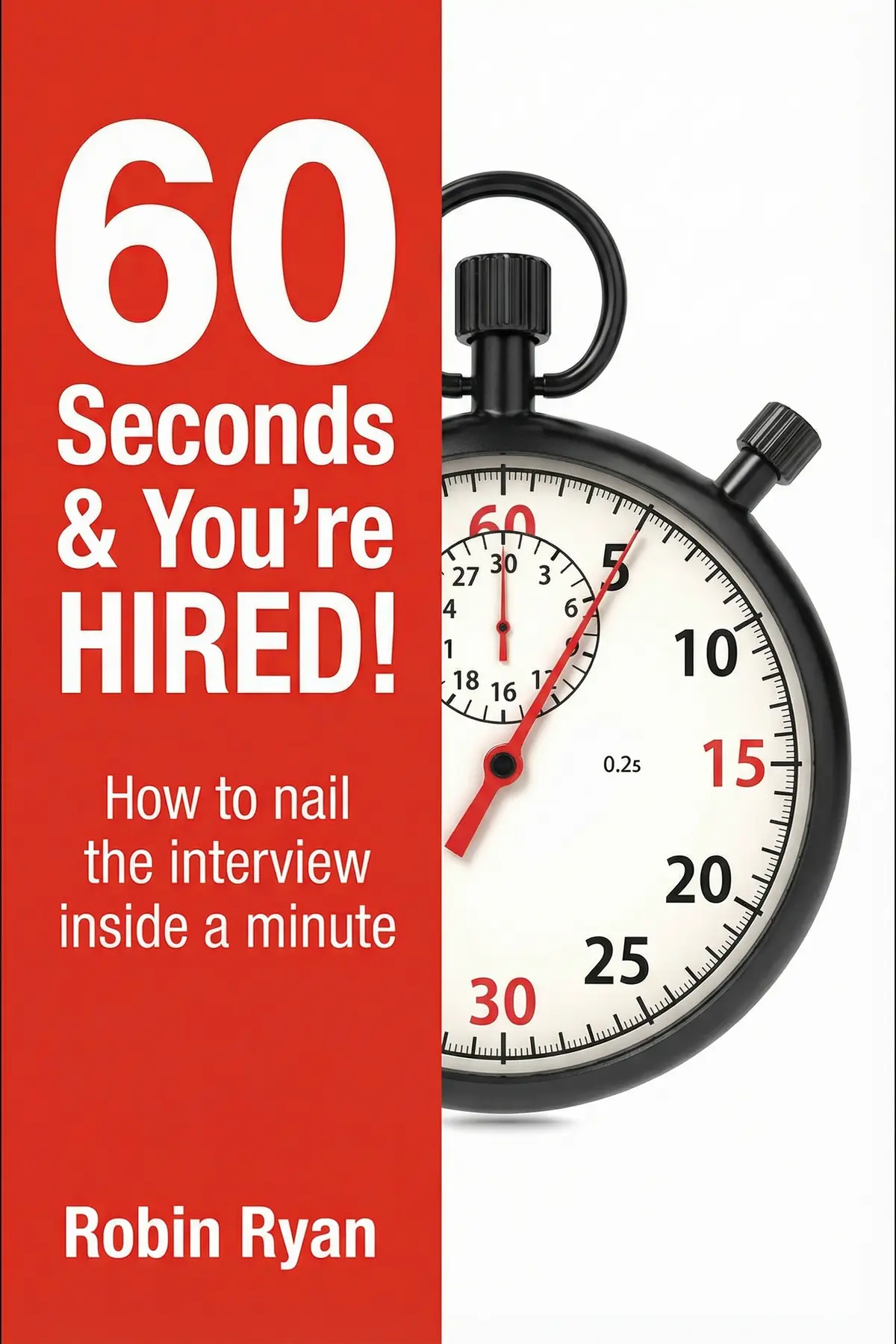
Robin Ryan
AUDIO SUMMARY AVAILABLE
Get the key ideas from Psyched Up by Daniel McGinn, plus 5,000+ more titles in English and Thai.







