
59 Seconds: Change Your Life in Under a Minute
Richard Wiseman
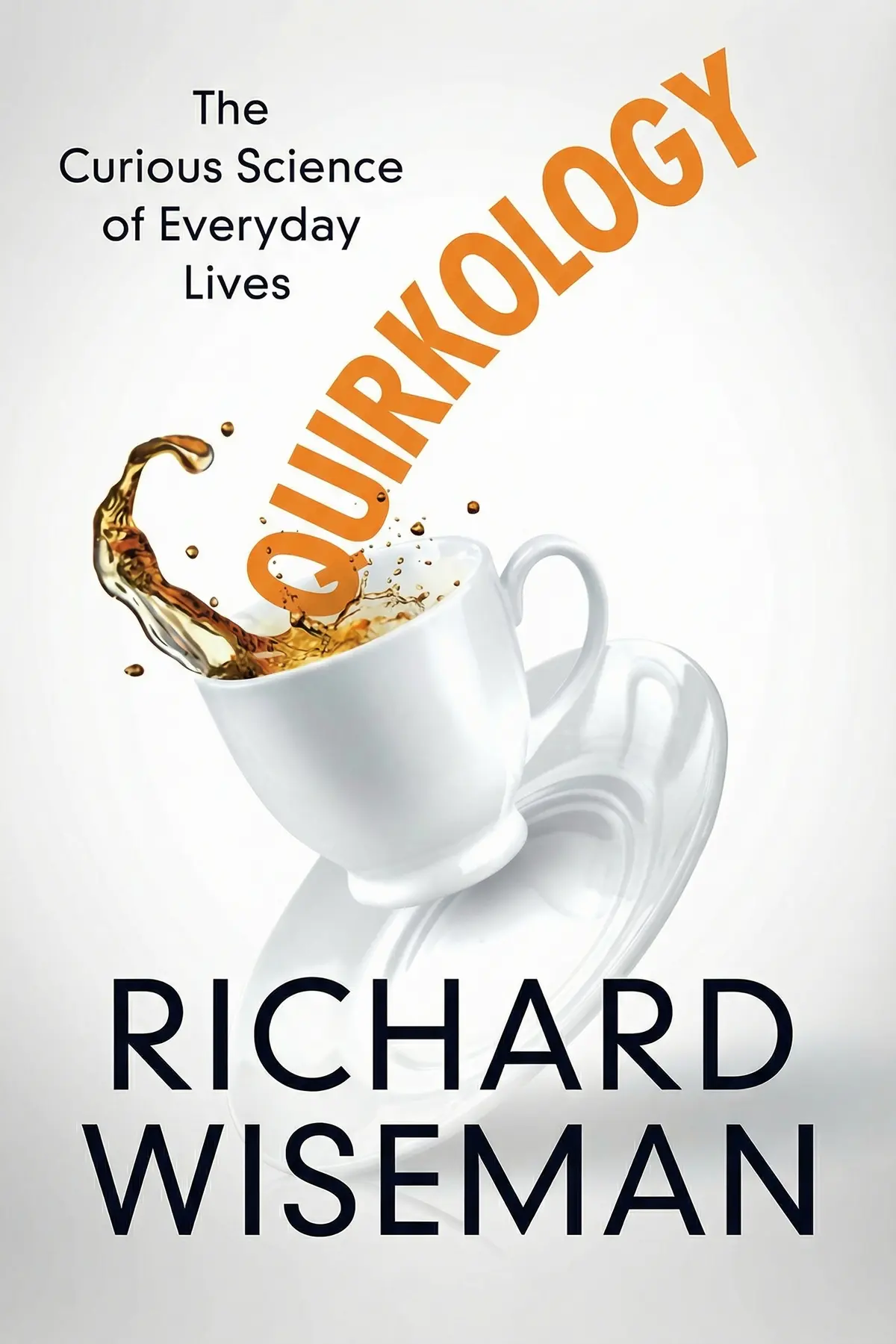
Explore the hidden side of human nature with this deep dive into Quirkology. Discover the unconventional scientific studies that reveal the surprising truths behind our superstitions, humor, and daily decisions.
1 min 33 sec
Think about the way children perceive the world. You might not expect their artistic habits to change based on the calendar, but researchers have noticed something fascinating: in the weeks leading up to the holidays, children tend to draw Santa Claus significantly larger than they do once January rolls around. This isn’t just a random fluke; it’s a tiny window into the strange ways our minds work. We are constantly influenced by hidden psychological forces that shape our perceptions, our choices, and our beliefs. This is the world of Quirkology—a field dedicated to studying the odd, the overlooked, and the downright weird aspects of human behavior.
In this summary, we are going to dive deep into the science of these quirks. We often pride ourselves on being logical, consistent creatures, but as you will soon see, that is often an illusion. We’ll explore why people still believe in the stars even when they fail to predict the future, and why a simple coin toss might be enough to debunk centuries of superstition. We will also look at the subtle art of deception and why most of us are far better at lying than we are at spotting a fake. From the way your name can dictate your social standing to the surprising reason you might feel more generous in a small neighborhood store, we are going to uncover the hidden patterns of the human experience. By the end of this journey, you’ll have a new set of tools for understanding the people around you and, perhaps more importantly, yourself. Get ready to explore the enticing and often humorous science of our everyday lives.
2 min 40 sec
Can the stars really predict your financial future or define your personality? Explore the experiments that reveal why astrology’s power lies in our minds rather than the cosmos.
2 min 47 sec
From black cats to the number thirteen, superstitions hold a tight grip on our culture. Learn how scientists have put these legendary omens to the test.
2 min 36 sec
We all lie, but some of us are much better at it than others. Discover a simple physical test to find out if you’re a natural-born deceiver.
2 min 37 sec
Why would you drive across town to save ten dollars on a small item but not a large one? Learn how context and even your name can skew your logic.
2 min 31 sec
Are humans naturally selfish or inherently kind? The answer may depend entirely on the environment and the person standing in front of us.
2 min 20 sec
What makes a joke funny? The answer might be darker than you think. Learn how ‘superiority’ humor can impact intelligence and reinforce prejudice.
1 min 30 sec
As we have seen through the lens of Quirkology, the human experience is far more complex and peculiar than it appears on the surface. We are creatures of habit and belief, often led by hidden influences that we barely recognize. We have discovered that astrology and superstitions, while deeply ingrained in our culture, fail the test of scientific scrutiny. We’ve learned that our brains struggle with basic logic when context shifts, and that our names and the jokes we tell carry weight far beyond their literal meanings. Most importantly, we have seen that our kindness and our honesty are often tied to how we perceive our connection to others.
The throughline of all these studies is a call to look more closely at the ‘why’ behind our actions. We don’t have to be at the mercy of our irrational quirks. By understanding these patterns, we can start to question our own biases and the ‘unlucky’ omens that might be holding us back.
So, here is a final thought to take with you: start challenging your own superstitions. If you have always avoided the number thirteen or felt uneasy about a certain ‘unlucky’ habit, try leaning into it instead. Much like the members of the Thirteen Club, you might find that the world doesn’t crumble when you break a minor ‘rule’ of luck. In fact, you might find a new sense of freedom. By embracing the quirky science of everyday life, you can stop worrying about the stars and start focusing on the real, fascinating power of the human mind.
Have you ever wondered why we behave in ways that seem totally illogical? Whether it is checking a horoscope, fearing a black cat, or laughing at a joke that targets a specific group, our lives are filled with peculiar habits and strange beliefs. This exploration of the field known as Quirkology takes a scientific lens to these oddities, using rigorous academic research to debunk common myths and explain the underlying psychology of our everyday actions. The book promises to pull back the curtain on the mysteries of the human mind, showing us that we are often far less rational than we believe. By looking at everything from how our names influence our success to why we are more likely to be honest in a local shop than a big-box retailer, it offers a fascinating and often funny look at what makes us tick. You will walk away with a better understanding of how your environment and your own biases shape your reality, providing you with a fresh perspective on the curious world of human behavior.
Richard Wiseman is a Professor for the Public Understanding of Psychology at the University of Hertfordshire. He has carved out a unique niche in the academic world by specializing in the psychology of magic, astrology, deception, and the paranormal. Beyond his research, he is a well-known author whose popular works include Rip It Up, The Luck Factor, and 59 Seconds.
Richard Wiseman
Richard Wiseman
Listeners find the work highly informative and thoroughly documented, with one listener emphasizing its broad analysis of psychological experiments from decades past. Furthermore, they view it as both captivating and mentally stimulating, with one individual remarking on how it challenges superstitious claims and pseudoscience. The book is also commended for its excellent writing, wit, and accessibility, while one listener points out that it is composed of brief vignettes.
Ever wonder why some people seem to breeze through life with all the luck while others struggle? This book dives deep into the weird, hidden forces that shape our daily decisions without us even noticing. I was particularly fascinated by the section on 'luck' and how it’s often more about mindset and spotting opportunities than random chance. Wiseman writes in these bite-sized vignettes that make complex psychological concepts incredibly easy to digest. Frankly, the research on how our birth months can influence our success was eye-opening, even if it feels a bit like the pseudoscience he usually tries to debunk. It is a thought-provoking read that manages to be both educational and hilariously entertaining. From the 'World's Funniest Joke' to the truth about how we perceive time, there isn't a dull page here. Highly recommended for anyone who loves trivia and human behavior.
Show moreAs someone who is naturally skeptical of pop-psychology, I was pleasantly surprised by the statistical rigor Wiseman applies to such bizarre topics. This isn't just a collection of anecdotes; it's a well-researched look at the fringes of human behavior. The way he analyzes nụ cười giả tạo (fake smiles) versus sincere ones using facial muscle changes was brilliant. I also appreciated the chapter on decision-making and how something as simple as a name or a photo on an ad can change everything. It’s extremely entertaining and moves at a fast pace. The book successfully bridges the gap between serious science and public interest. Whether he's exploring why people born in summer feel luckier or how we react to infrasound, Wiseman keeps the reader hooked. It's easily one of the most thought-provoking books I've read this year.
Show moreRichard Wiseman has a real talent for taking the 'boring' out of academia and putting the 'quirk' into science. I found the segments on how to spot a liar by listening rather than watching to be genuinely useful in real life. Most pop-psychology books just recycle the same five studies, but Quirkology feels fresh because it focuses on the offbeat stuff like the psychology of altruism and why we believe in the paranormal. The writing is snappy, though some might find the style a bit dorky at times. I did notice a few questionable conclusions where the author seems to jump to wild suppositions, but as a general exploration of human nature, it's solid. It's the kind of book you'll keep quoting to your friends for weeks. If you want to know why female van drivers are supposedly more inconsiderate, this is the book for you!
Show morePicked this up on a whim after hearing about Wiseman's weird experiments with lost wallets and fake psychics. It’s an incredibly readable collection of experiments that challenge how you think about your own brain. The section on the Mona Lisa’s smile and how our peripheral vision changes our perception of her expression was worth the entry price alone. I love how it confronts pseudoscience head-on, showing exactly how we trick ourselves into believing in things like luck or the 'Bính Ngọ' year superstitions. Some of the statistics feel a bit hand-wavy, and I spotted at least one footnote where he admits to making up a stat for effect, which is a bit annoying. Still, if you want a book that is packed with information but reads like a conversation, this is it. It’s light, funny, and definitely makes you look at the people around you a little differently.
Show moreThe section on the psychology of humor was a bit of a letdown, but the rest of the book more than made up for it. I was particularly gripped by the research on superstition and the number 13. It’s fascinating to see how something so irrational can have real-world statistical consequences on our health and behavior. Wiseman writes with a lot of energy, and his passion for 'quirkology' is infectious. Look, it’s not a textbook, so don’t expect deep theoretical frameworks. Instead, expect a fun ride through the weirdest parts of the human mind. The insights into how we perceive height and names in the dating world were especially funny and a bit depressing at the same time. It’s a great gift for anyone who likes to say 'Did you know...?' at parties. A solid 4-star read for its sheer entertainment value and the quality of the vignettes.
Show moreFinally got around to reading this classic of the genre and it definitely holds up as a fun, trivia-heavy exploration of our weirdest habits. Wiseman has a great way of debunking things like astrology by showing how 'flattering' descriptions make us believe in almost anything. The book is packed with info, yet it never feels like a chore to read because of the humor woven throughout. I particularly enjoyed the segments on the psychology of 'small world' networks and how we are all connected. Some chapters are definitely stronger than others—the stuff on female van drivers felt a bit like a reach—but the overall experience is very positive. It confronts pseudoscience in a way that is respectful but firm. If you like Malcom Gladwell but want more jokes and fewer long-winded stories, you’ll love this. It really turns a few light bulbs on for you.
Show moreWow, I never realized how much my birth month or my name could subconsciously influence my life path until I dove into these chapters. The research on 'luck' was especially helpful; it makes you realize that being lucky is actually a skill you can practice. The book is very readable and the vignettes keep things moving along nicely. I did feel that some of the conclusions were a bit hasty, and as a previous reviewer mentioned, some of the quotes or stats are a little suspect when you look closely at the footnotes. However, for a mainstream audience, it’s a goldmine of interesting facts. The altruism tests involving different decals on cars were a standout for me. It’s a very fun read that reminds us that humans are, at our core, incredibly weird creatures. Definitely worth a spot on your shelf if you're fascinated by the 'why' behind our behavior.
Show moreThis book is the definition of a mixed bag, offering some brilliant insights alongside chapters that feel like total filler. The investigations into the 'World's Funniest Joke' were entertaining, and I actually laughed at the 'brown and sticky' stick joke more than I should have. However, the section on astrology and birth dates felt a bit thin and repetitive. I also felt like the book was very Western-centric; most of the data comes from Europe or the US, so I wonder how well these 'universal' traits apply to other cultures. To be fair, it’s a quick read and the vignette format works well for picking it up and putting it down. I just wish there was a bit more depth in the analysis of the statistics. It’s fun, but it won’t exactly change your worldview or provide any life-altering truths.
Show moreWhile the experiments described are undeniably clever, there is a nagging sense that the material is a bit dated now. I’ve read a lot of similar books recently, and many of these vignettes felt like they were covering old ground. The stuff on the psychology of lying and how we help people we identify with is interesting, but not necessarily groundbreaking if you’ve followed this field for a while. Personally, I found the author’s tone a bit too self-congratulatory for my liking. He mentions his kinship with great minds a few too many times. That said, the specific details about the 'stick' joke and the altruism experiments with dropped envelopes were highlights. It's a decent 'Sách-đọc-nửa-chừng' (halfway-read) kind of book—great to dip into for ten minutes, but a bit dry if you try to power through the whole thing in one go.
Show moreTruth be told, I expected something much more professional from someone who constantly reminds the reader about his PhD. The author’s ego is front and center here, especially when he starts comparing himself to Freud or showing off photos of himself on Freud’s couch. It felt less like a science book and more like a collection of party tricks. A lot of the 'discoveries' are just common sense masquerading as groundbreaking research. For instance, did we really need a formal study to tell us that people are influenced by religious propaganda disguised as jokes? The chapter on humor was a total slog, filled with dozens of jokes that weren't even funny, only to end with a weak theory about superiority. It feels like a manic first-year psychology student wrote this while trying too hard to be 'zany.' There are some interesting nuggets, but you have to dig through a lot of fluff to find them.
Show more
Anthony Pratkanis
Richard Wiseman
Steven C. Hayes
AUDIO SUMMARY AVAILABLE
Get the key ideas from Quirkology by Richard Wiseman, plus 5,000+ more titles in English and Thai.







