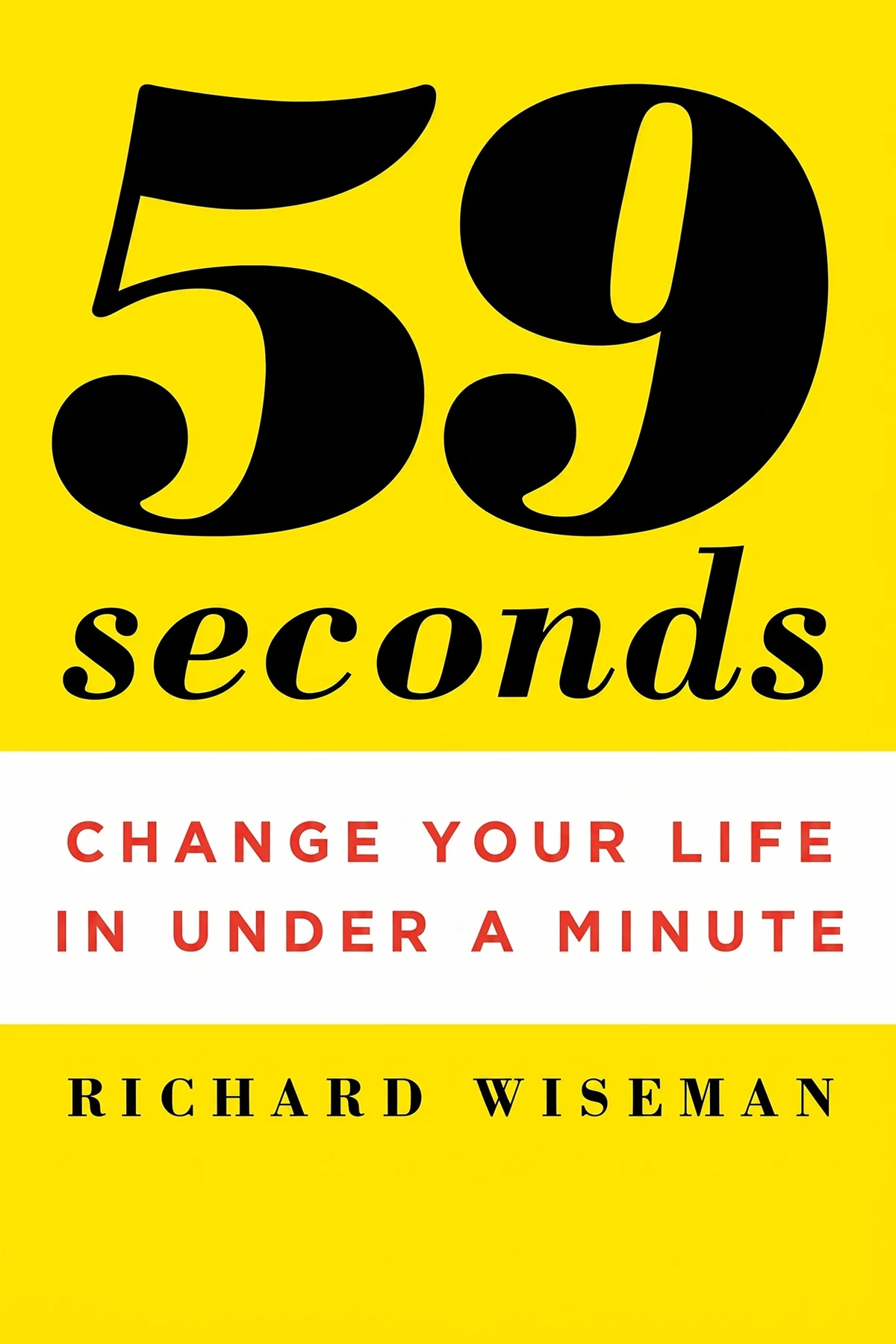
59 Seconds: Change Your Life in Under a Minute
Richard Wiseman
Night School reveals the fascinating mechanics of sleep and its impact on our health, emotions, and safety, providing a scientific roadmap to mastering your nightly rest for a better life.
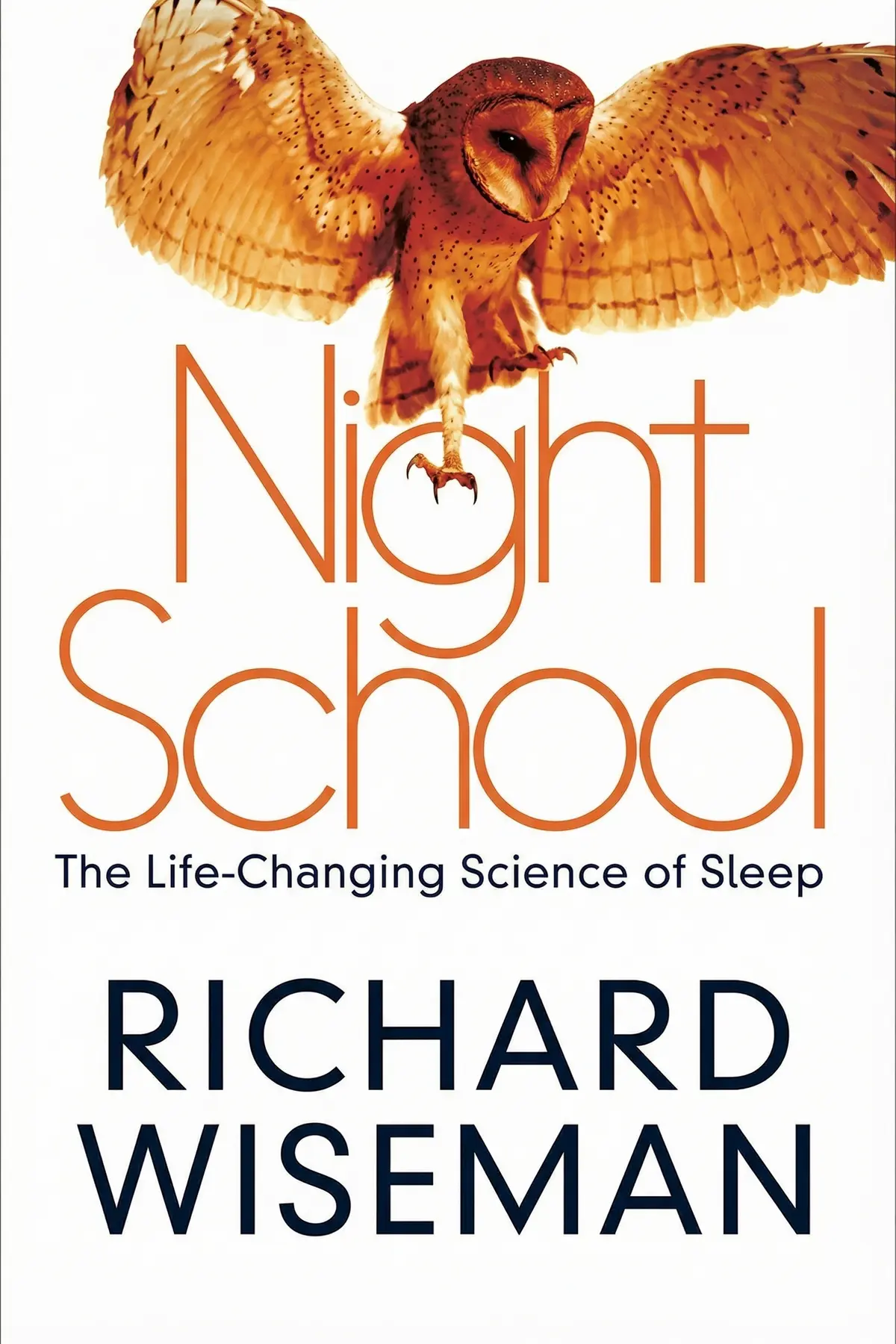
1 min 49 sec
Think about the last time you sat down to map out your goals for the year. Perhaps you promised yourself you’d finally hit the gym three times a week, or maybe you decided to cut back on sugar and embrace a more mindful way of living. These are noble pursuits, but there is one fundamental pillar of health that almost never makes the list: becoming a world-class sleeper. We often view sleep as a passive state, a mere gap between the end of one busy day and the start of the next. Some even see it as a nuisance or a sign of laziness. However, this perspective overlooks the most important discovery of modern psychological science: sleep is not a luxury, but a high-performance process that dictates our ability to achieve everything else in our lives.
In this exploration of Night School, we are going to pull back the curtain on the one-third of our lives that usually happens in the dark. We will discover that sleep is a complex, multi-layered journey that refreshes our bodies and reboots our minds. We will look at why the vast majority of us are operating in a state of perpetual sleep debt and how that debt is secretly sabotaging our health, our safety, and our happiness.
What this really means is that by learning the secrets of the night, you can actually transform your day. We will explore the surprising history of how we lost our connection to natural rest, the biological markers that distinguish deep sleep from light dreaming, and the practical, evidence-based steps you can take to reclaim your nights. From the genetic quirks of elite sleepers to the psychological power of nightmares, it’s time to enroll in a different kind of education. This is your guide to the science of the night, designed to help you unlock the full potential of your brain through the power of a perfect night’s rest.
2 min 40 sec
Sleep is far from a simple state of unconsciousness; it is an intricate five-part cycle that alternates between physical repair and cognitive exploration.
2 min 06 sec
The modern epidemic of exhaustion can be traced back to a single invention that forever altered our relationship with the natural world.
2 min 16 sec
Missing just a few hours of rest can have catastrophic consequences, impairing our reflexes as much as physical intoxication.
2 min 11 sec
While most of us need eight hours of rest, a rare group of individuals possesses a genetic key that allows them to thrive on almost nothing.
2 min 15 sec
History is littered with bizarre cures for sleeplessness, but the real solution lies in understanding our body’s natural triggers.
2 min 10 sec
Sleepwalking is a window into a strange state where the body is active while the conscious mind remains completely disconnected.
1 min 58 sec
Evidence suggests that our minds remain receptive to information even when we are deep in slumber, opening the door to subconscious learning.
2 min 03 sec
Nightmares and vivid dreams aren’t just random brain activity; they are essential tools for processing trauma and maintaining emotional balance.
1 min 45 sec
As we conclude our journey through Night School, it is clear that sleep is far more than just ‘time off.’ It is a dynamic and essential part of the human experience that touches everything from our physical health and safety to our creative potential and emotional resilience. We have seen how the five stages of sleep work in harmony to repair the body and reboot the mind, and how the invention of artificial light has pushed us into a state of chronic exhaustion that we often don’t even recognize. We’ve explored the dangerous reality of sleep deprivation and the fascinating ways our minds continue to work, learn, and process trauma while we are seemingly unconscious.
The throughline of Richard Wiseman’s work is a call to action: we must stop treating sleep as an optional luxury and start treating it as a non-negotiable foundation of our well-being. Whether it’s by controlling our light environment to boost melatonin, using white noise to mask disruptions, or simply giving ourselves the full nine hours our biology craves, the power to improve our lives is literally found in the dark.
What this really means for you is that the next time you feel overwhelmed, slow, or emotionally drained, the answer might not be a new productivity hack or a third cup of coffee. The answer might be to simply go to bed. By respecting the natural rhythms of your body and the vital work of your sleeping brain, you can wake up not just rested, but transformed. Remember, your day is only as good as the night that preceded it. It’s time to take what you’ve learned in Night School and put it into practice. Sweet dreams, and better days, are just a few cycles away.
Have you ever wondered why you feel like a different person after a bad night's rest? Night School dives deep into the science of the slumbering mind, exploring why we sleep, what happens when we don't, and how the modern world has fundamentally broken our relationship with the night. Richard Wiseman takes us through the five stages of sleep, the impact of the light bulb on our biological clocks, and the strange phenomena of sleepwalking and sleep-learning. This summary provides a comprehensive look at how to reclaim your rest. It explores the genetic mutations that allow some people to thrive on almost no sleep, the historical and often bizarre remedies for insomnia, and the vital role dreams play in processing our deepest traumas. By understanding the 'Night School' of our subconscious, you will learn how to optimize your environment and habits to unlock the full potential of your brain power and emotional well-being.
Richard Wiseman is a professor at the University of Hertfordshire and one of Britain’s most acclaimed psychologists. He is celebrated for making complex concepts accessible to the general public through his popular YouTube videos and his best-selling books, such as 59 Seconds and Quirkology.
Richard Wiseman
Richard Wiseman
Listeners consider the book to be highly readable and clear, with one individual mentioning how effectively it turns scientific research into actionable advice. They value the informative details regarding sleep science, as one listener points out how well it addresses both slumber and dreaming. Listeners also find the book’s comedic touch entertaining.
Can a book actually change how you view your pillow? Night School is an incredibly engaging deep dive into the third of our lives we usually ignore. Wiseman has this gift for taking dense, clinical studies and turning them into something you’d actually want to talk about at a dinner party. The sections on how even an hour of lost sleep can wreck your cognitive function were particularly eye-opening for me. Frankly, the writing is so fluid that I polished it off in just two sittings. While some might find the humor a bit light, I thought it kept the pace moving through the more technical bits. It’s a perfect mix of hard science and actionable advice that feels realistic for a busy person to implement.
Show moreFinally got around to reading this after it sat on my nightstand for months, and I’m kicking myself for waiting so long. Night School is easily one of the most accessible science books I’ve ever picked up. Wiseman manages to explain why we dream and how our internal clocks function without ever making the reader feel stupid. The practical tips, like using specific soundscapes or adjusting bedroom lighting, are simple yet backed by legitimate research. Not gonna lie, I was skeptical about the sections on lucid dreaming, but the way he breaks down the mechanics of the unconscious mind is actually quite grounded. If you want to understand the 'why' behind your sleep habits, this is the definitive book to buy.
Show moreWiseman has a knack for making complex psychology feel like a casual chat at the pub with a very smart friend. Night School isn't just a list of rules for sleeping; it’s an exploration of the human experience through the lens of our unconscious hours. I was fascinated by the data regarding how sleep deprivation mimics the effects of alcohol on the brain. The writing is punchy, the research is solid, and the tone is perfectly balanced between being informative and entertaining. I’ve recommended this to several friends already because it’s just so readable. Even the parts about the history of sleep labs, which could have been boring, were told with a great sense of narrative.
Show moreThis book is a fantastic bridge between academic jargon and everyday curiosity. If you are looking for a dry medical textbook, keep moving, because Wiseman leans heavily into a conversational tone that makes the history of sleep research feel alive. I particularly appreciated the focus on the psychology of dreaming, which is a topic often ignored in more 'practical' sleep guides. To be fair, a few of the anecdotes felt a little padded, and I can see why some readers might want more bulleted lists of instructions. However, the insights into how our brains process emotions during REM cycles were worth the price of admission alone. It’s a solid, well-written exploration of what happens when the lights go out.
Show moreAfter hearing Richard Wiseman on a podcast, I decided to dive into this one despite already having read 59 Seconds last year. I’ve got to say, this feels like a more focused effort, even if it covers some common-sense ground that most adults probably already know. The way he explains the 150-year evolution of sleep science is fascinating and easy to digest. Look, it’s not going to cure chronic insomnia overnight, but the tips on using white noise and environmental adjustments are grounded in real data rather than just 'wellness' trends. It’s a breezy read that manages to be educational without being condescending, which is a rare feat in the popular science genre these days.
Show moreThe chapter on the 'power of the nap' was a complete eye-opener that changed my afternoon routine entirely. Richard Wiseman has a knack for translating complex psychological phenomena into everyday language that anyone can understand. I loved the balance between the biological side of sleep and the more mysterious world of dreams. Truth is, I’ve read a lot of these types of books, and this one stands out because it doesn't take itself too seriously. The humor is subtle but effective, making the data points stick better in your memory. While a few of the suggestions felt like stuff I’d already seen on the internet, the scientific context provided here makes them much more convincing.
Show moreEver wonder what actually happens to your brain when you drift off? This book answers that question with a lot of wit and a surprising amount of heart. Wiseman covers everything from the impact of blue light to the strange history of Victorian sleep patterns. I found the actionable advice on white noise and temperature control to be particularly helpful for my own routine. The prose is snappy, and the short chapters make it a perfect book to read right before bed without getting too overwhelmed. It might not be a groundbreaking scientific paper, but as a piece of popular science, it hits all the right notes for a general audience.
Show moreWow, this was a bit of a mixed bag for me personally. On one hand, Wiseman is a charming writer who clearly knows his subject inside and out, but on the other, the book feels a bit disjointed in the middle. The descriptions of specific clinical studies tended to waffle on, detailing the lives of the researchers more than the actual results of the work. I was hoping for a more direct 'how-to' guide for better rest, but what I got was more of a historical overview with some tips sprinkled in. In my experience, the first few chapters are the strongest, while the latter half loses steam. It’s a decent enough read if you’re a complete novice, but seasoned non-fiction readers might find it a bit basic.
Show moreAs someone who struggles with chronic fatigue, I was looking for a miracle manual but found a historical overview instead. The book is definitely well-written and the author's voice is pleasant, but the content felt a bit thin in certain areas. It loses its way in the middle sections where the descriptions of clinical trials become a bit repetitive and dry. I did enjoy the parts about how sleep affects our emotional resilience, as that felt very relevant to my daily life. However, I think I had unrealistic expectations for how much 'new' information would be here. It’s a good introductory text for someone who has never read about sleep science, but it’s probably not for the 'uninitiated' experts.
Show moreNot what I expected given the rave reviews I had seen on social media. I bought this specifically to help with my sleep issues, but it felt much more like a history lesson than a practical manual. The author spends far too much time on long-winded anecdotes about researchers from decades ago instead of getting to the point. Frankly, if you’ve spent more than ten minutes googling 'how to sleep better,' you have already encountered about 70% of the advice in this book. The presentation style felt borderline-silly at times, almost like it was written for a much younger audience. It’s a readable book, sure, but it didn't offer the depth or the solutions I was looking for.
Show moreAUDIO SUMMARY AVAILABLE
Get the key ideas from Night School by Richard Wiseman, plus 5,000+ more titles in English and Thai.