
21 min 05 sec
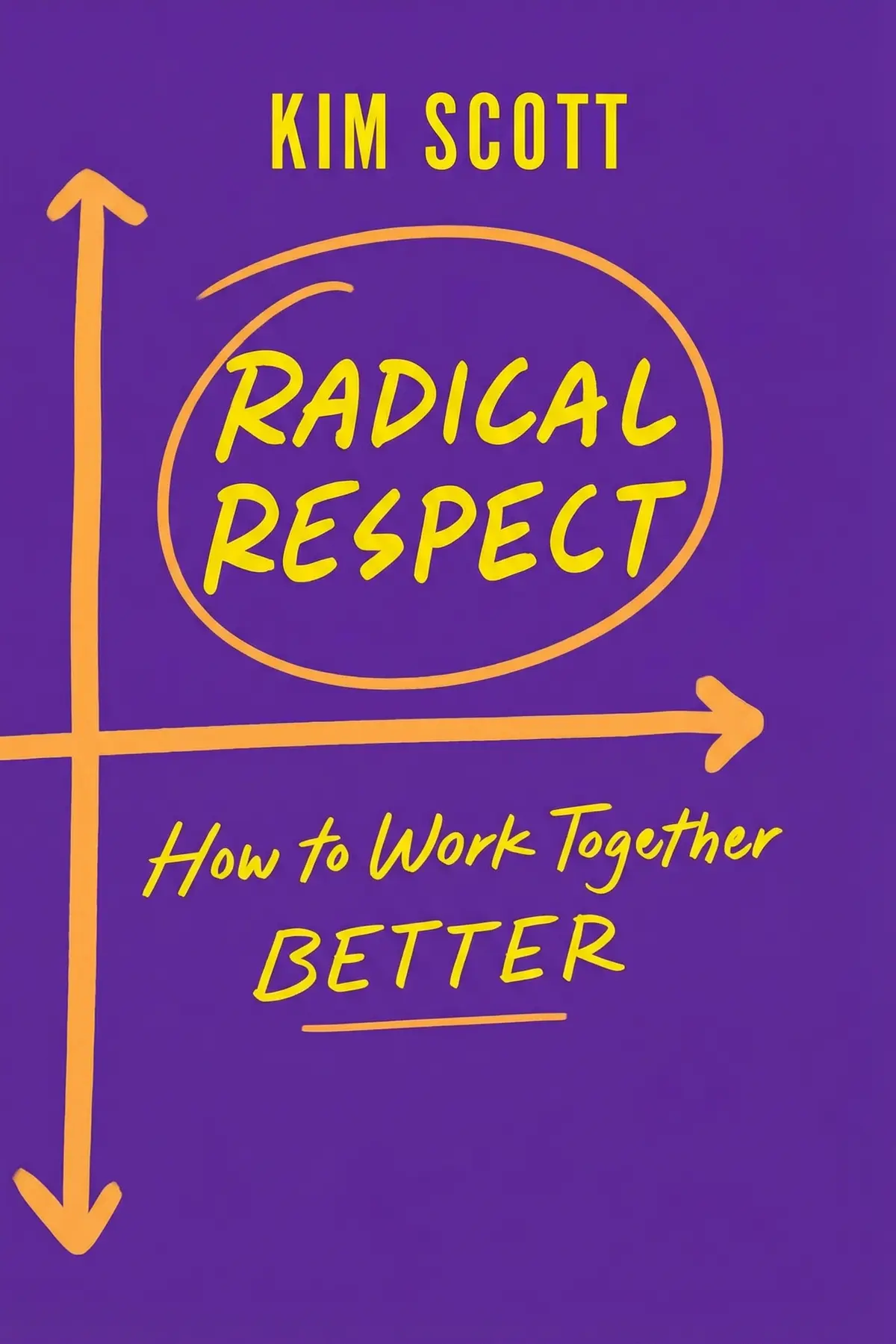
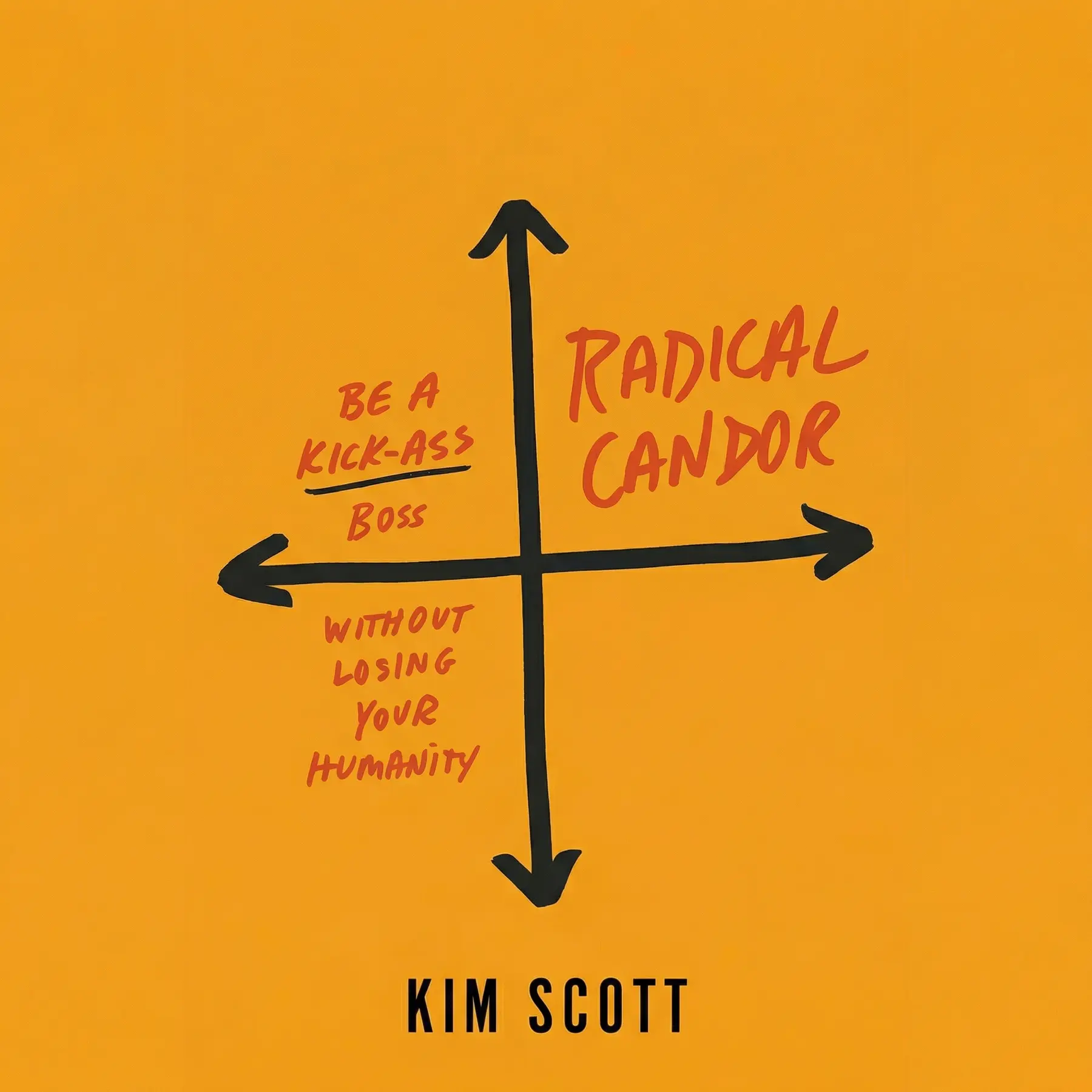
Radical Candor: Be a Kickass Boss Without Losing Your Humanity
By Kim Scott
Radical Candor explores how leaders can achieve exceptional results by building authentic relationships. It teaches managers to balance personal care with direct challenges to foster a culture of honesty and growth.
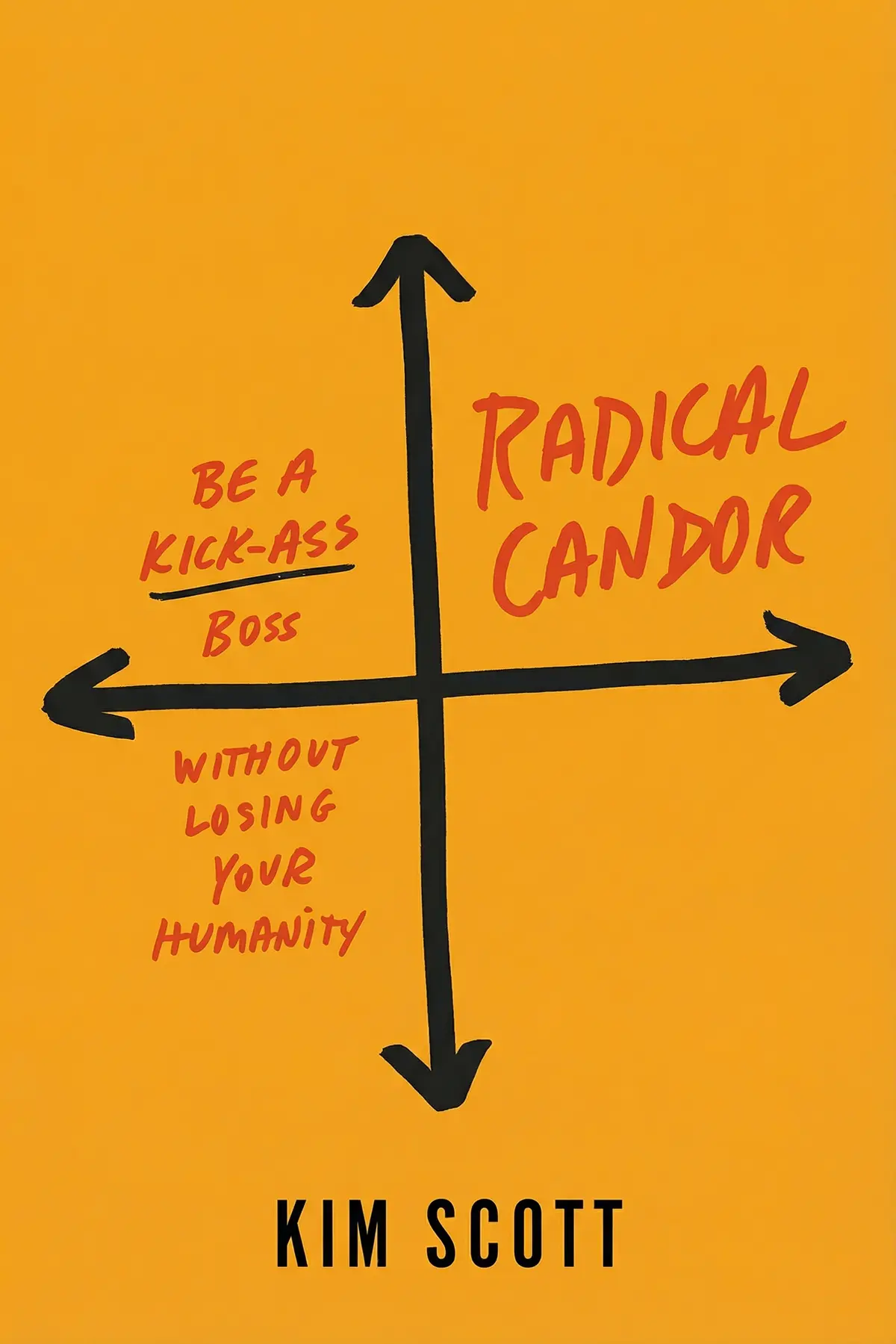
Table of Content
1. Introduction
1 min 41 sec
Picture this: you are a CEO, and your morning is already disappearing. You’ve just walked into the office, your mind racing with a critical pricing strategy that needs your immediate attention. But before you can even reach your desk, an employee stops you. He isn’t there to talk about the quarterly numbers or a technical glitch; he’s in distress over a personal health crisis. You spend an hour listening and reassuring him. Then, as soon as that conversation ends, another colleague approaches with an urgent emotional concern. By noon, you feel like you haven’t done a lick of ‘real work.’ You feel more like an emotional babysitter than a business leader.
This exact scenario happened to Kim Scott, and her reaction—initial frustration followed by a profound epiphany—forms the heartbeat of the philosophy we are exploring today. When Scott complained to her coach about these ‘distractions,’ the advice she received was sharp and transformative: this isn’t babysitting; it’s management. It is, in fact, the most important part of the job.
At its core, being a great boss isn’t about spreadsheets or top-down directives. It’s about the quality of the relationships you build. If you don’t care about the people you lead as unique individuals, you will never earn the trust required to push them toward greatness. However, caring is only half the battle. You also have to be willing to tell the hard truths. This balance—caring personally while challenging directly—is what Scott calls Radical Candor. In this summary, we will break down how to master this balance, avoid the common traps of poor management, and build a team that isn’t just productive, but truly thriving.
2. The Core Framework of Caring and Challenging
2 min 12 sec
Uncover the two vital dimensions that define a high-performing leader and why professional distance is actually a barrier to your team’s success.
3. Navigating the Hazards of Poor Communication
2 min 27 sec
Learn to identify the three common management mistakes that happen when you fail to balance empathy with honesty.
4. The Leader’s Foundation of Self-Care
1 min 46 sec
Discover why your ability to lead others is directly tied to how well you manage your own energy and presence.
5. Mastering the Art of Guidance
2 min 40 sec
Explore a practical system for giving and receiving feedback that focuses on behavior rather than personality.
6. Understanding What Truly Motivates Your Team
2 min 23 sec
Learn to distinguish between different types of high performers and how to support their unique career paths.
7. Mapping the Path to Career Dreams
2 min 02 sec
Discover a three-step conversation model designed to align your employees’ daily tasks with their long-term life aspirations.
8. The Get Stuff Done Wheel
1 min 56 sec
Explore a collaborative cycle for turning ideas into reality without relying on autocratic commands or inefficient consensus.
9. Fostering a Culture of Listening and Dissent
2 min 01 sec
Unlock the secrets to better team collaboration by mastering different listening styles and encouraging healthy disagreement.
10. Conclusion
1 min 57 sec
As we wrap up our journey through the principles of Radical Candor, let’s return to the core question: what kind of leader do you want to be? Do you want to be the ‘nice’ boss who watches their team fail because they were too afraid to speak up? Or the ‘tough’ boss who gets results but leaves a trail of burned-out, resentful employees in their wake? Radical Candor offers a third way—a way to be a ‘kickass boss’ without losing your humanity.
It all comes back to those two fundamental axes: Care Personally and Challenge Directly. If you remember nothing else, remember that your job is to build trust through authenticity and to use that trust to push your people toward their full potential. We’ve looked at how to avoid the pitfalls of aggression and insincerity, how to manage your own energy so you can show up for others, and how to create a culture where feedback is a gift rather than a threat. We’ve explored how to see your employees as whole people with dreams that extend far beyond their current job descriptions, and how to drive results through collaboration rather than coercion.
The beauty of this framework is that it doesn’t just work for CEOs in Silicon Valley; it works for anyone who has to interact with other human beings to get things done. It applies to peers, to employees managing ‘up’ to their bosses, and even to our personal lives. The next time you find yourself hesitating to say what needs to be said, ask yourself: ‘Do I care about this person? Am I being helpful?’ If the answer is yes, then speak your truth with humility. Start today by asking your team for their honest criticism of your leadership. Reward their candor, fix what’s broken, and watch as your relationships—and your results—begin to transform. Being a radically candid leader isn’t easy, and you won’t get it right every time. But the effort to care more deeply and challenge more courageously is the most rewarding work you will ever do.
About this book
What is this book about?
Many leaders believe they must choose between being a liked boss or being an effective one. Radical Candor dismantles this myth, offering a framework that integrates deep personal empathy with the courage to challenge employees directly. By operating in this 'Radical Candor' zone, managers can move past the pitfalls of aggression or passive-aggressive behavior to create a workspace built on trust and mutual respect. This guide provides a comprehensive roadmap for navigating the complexities of workplace feedback, employee motivation, and collaborative decision-making. Through practical tools like the 'Get Stuff Done' wheel and structured career conversations, it promises to help any leader—from first-time managers to seasoned CEOs—drive performance while maintaining their humanity and supporting the long-term dreams of their team members.
Book Information
About the Author
Kim Scott
Kim Scott is an experienced CEO who has held leadership roles at major Silicon Valley firms, including Twitter, Dropbox, and Google. She previously served as a faculty member at Apple University. Currently, she is the CEO of Candor, Inc., a company she cofounded to provide specialized resources and support for managers and business leaders.
Ratings & Reviews
Ratings at a glance
What people think
Listeners find this management title to be essential reading, especially for those in leadership, and appreciate the concrete advice and usable tools provided. The book allows listeners to transform their management capabilities through authentic case studies that make the principles simple to grasp. Listeners also value the focus on making professional interactions more human, and one listener mentions how the text offers a roadmap for success throughout every tier of an organization.
Top reviews
Vipawan
If I could mail this back to my younger self before I took my first management role, I would do it immediately. The quadrant system is such a helpful mental model for understanding why certain conversations go off the rails so quickly. I used to fall into the 'Ruinous Empathy' trap constantly, thinking I was being kind when I was actually doing a disservice to my team. This book gave me the permission and the tools to be direct while still maintaining a deeply human connection with my colleagues. The rebrand to 'Compassionate Candor' in the new edition really clarifies that this isn't about being a jerk. It is about being a professional who actually gives a damn about the growth and success of other people.
Show moreHom
Scott manages to make the sterile world of corporate management feel profoundly human again by focusing on authentic relationships. Most management books treat employees like cogs in a machine, but this approach centers on getting to know people as individuals. I loved the distinction between 'superstars' on a steep growth trajectory and 'rockstars' who provide the steady foundation for every successful team. Not gonna lie, the name-dropping is a bit much at times, but the core message about humanizing our daily interactions is vital. Since applying these principles, my team's communication has improved significantly, and we are catching problems before they turn into full-blown disasters. This is a must-read for anyone who wants to lead with both a heart and a backbone.
Show moreSomsak
The quadrants provided here are the most effective mental models I have encountered in over a decade of leadership experience. Truth is, most of us are terrified of conflict, and we end up hurting people more by staying silent than by being honest. Radical Candor provides a clear path out of that fear-based management style by prioritizing both honesty and human compassion. I found the section on the 'male colleague' who got caught in a firestorm over gender politics to be particularly intriguing and nuanced. The book avoids being a sequence of useless anecdotes by grounding every story in a practical tool you can use tomorrow. It has completely revolutionized the way I approach performance reviews and daily feedback sessions with my direct reports. If you want to build a high-performing culture, you need this framework in your toolkit immediately.
Show morePatchara
Stop what you’re doing and read the chapter on the 'dog’s tail' immediately if you want to understand real leadership. This book is a masterclass in how to stop avoiding the hard conversations that actually help people grow and thrive. I appreciated the honest look at gender bias and the specific challenges women face when trying to be both direct and caring. Kim Scott has learned from the best in the business, and she distills that high-level experience into something any manager can use. The idea that we should let our long-term relationships compound rather than rust is a powerful way to view team dynamics. It is rare to find a business book that is this practical while also being this focused on human dignity. Every new manager in our organization is getting a copy of this book on their first day.
Show moreCarlos
After years of struggling with how to give feedback without feeling like a bully, I finally found the framework I needed. This book totally shattered the delusion that being 'nice' means never hurting anyone's feelings or avoiding necessary, difficult criticisms. Scott’s writing style is engaging and the way she structures the 'Care Personally' and 'Challenge Directly' axes makes perfect sense. I loved the emphasis on sincere and specific praise, which is an area where I realized I was significantly lacking as a leader. Although some of the Silicon Valley stories are a bit over the top, the underlying principles are universal and highly effective. It has changed the way I show up for my team every single day, and the results have been incredible. This is easily one of the most important management books of the last decade.
Show moreTar
Finally, a business book that doesn't feel like a bloated TED talk with three hundred pages of filler text. Kim Scott provides actual, actionable guidance that you can implement in your next one-on-one meeting without feeling like a corporate robot. Look, the Silicon Valley elitism is definitely there, and you have to filter out some of the more extreme privilege to find the gold. But once you do, the framework of challenging people directly while caring about them personally is a total game-changer for team health. I particularly appreciated the specific cycle of meetings she suggests for ensuring decisions are made efficiently and transparently. It’s not a perfect manual, but it is a highly practical one for anyone trying to navigate the messy reality of management.
Show moreRatree
Skip the fluff and focus on the bold text if you are short on time, because the core concepts are absolute gold. I picked this up because our company culture was becoming increasingly passive-aggressive and we desperately needed a new way to communicate. The framework for success at all levels is clearly laid out, and the real-world examples make the complex concepts very easy to digest. Personally, I found the chapter on skip-level meetings to be a bit intense, but the underlying logic is solid and worth considering. Even though the author’s career at Google and Apple sounds like a fantasy world, her advice on feedback is grounded and useful. It is a refreshing departure from the usual esoteric management theories that never work in the real world.
Show moreNutnicha
Let’s be real: the name-dropping is exhausting, but the core message about communication is undeniable and deeply impactful for any leader. I struggled with the author's privileged perspective, yet I cannot deny that her tactical advice on giving criticism is the best I've read. The Russian dog tail analogy is something I will never forget because it perfectly illustrates the cruelty of being 'vaguely nice' during tough times. While some parts feel like a love letter to Silicon Valley, the actual tools for 2-minute guidance between meetings are incredibly useful. It is a solid resource that helps you move away from obnoxious aggression and toward a more balanced, effective style of leadership. It’s a bit of a drag in the middle, but the practical takeaways make it worth the effort.
Show moreYothaka
Is it possible to be a servant leader while constantly reminding everyone exactly how many people report to you? I struggled with the internal inconsistency of this book, as it vacillates between genuine care and a rigid, top-down hierarchy. To be fair, there are some brilliant nuggets of wisdom buried under the self-aggrandizement and the tech-bro culture worship. However, the author’s attempt to fit Steve Jobs into the Radical Candor framework felt forced and frankly a bit delusional given his reputation for aggression. I fear that bullying managers will use this 'management bible' as a shield to justify being obnoxious under the guise of directness. It is a dangerous tool in the hands of someone who lacks the self-awareness to actually care personally about their direct reports.
Show moreSupranee
This book felt like a high-speed tour through a very exclusive Silicon Valley gated community. While Kim Scott clearly knows her stuff, I found the constant name-dropping of Sheryl Sandberg and Steve Jobs to be more alienating than inspiring. It feels like the advice is tailored specifically for organizations with infinite resources and a very specific, white, privileged demographic. Frankly, the anecdotes about her team flying to her during pregnancy made me roll my eyes considering the reality for most working mothers. The way POC are used as mere props for feedback examples felt shallow and deeply out of touch with modern workplace dynamics. If you aren't part of the 'white friends club' in tech, this will likely feel like a collection of elitist stories.
Show more
Readers also enjoyed
A Year with Peter Drucker: 52 Weeks of Coaching for Leadership Effectiveness
Joseph A. Maciariello


Acting with Power: Why We Are More Powerful Than We Believe
Deborah Gruenfeld

All In: How Great Leaders Build Unstoppable Teams
Mike Michalowicz
AUDIO SUMMARY AVAILABLE
Listen to Radical Candor in 15 minutes
Get the key ideas from Radical Candor by Kim Scott, plus 5,000+ more titles in English and Thai.
- 5,000+ titles
- Listen as much as you want
- 7-day free trial
- Cancel anytime







