
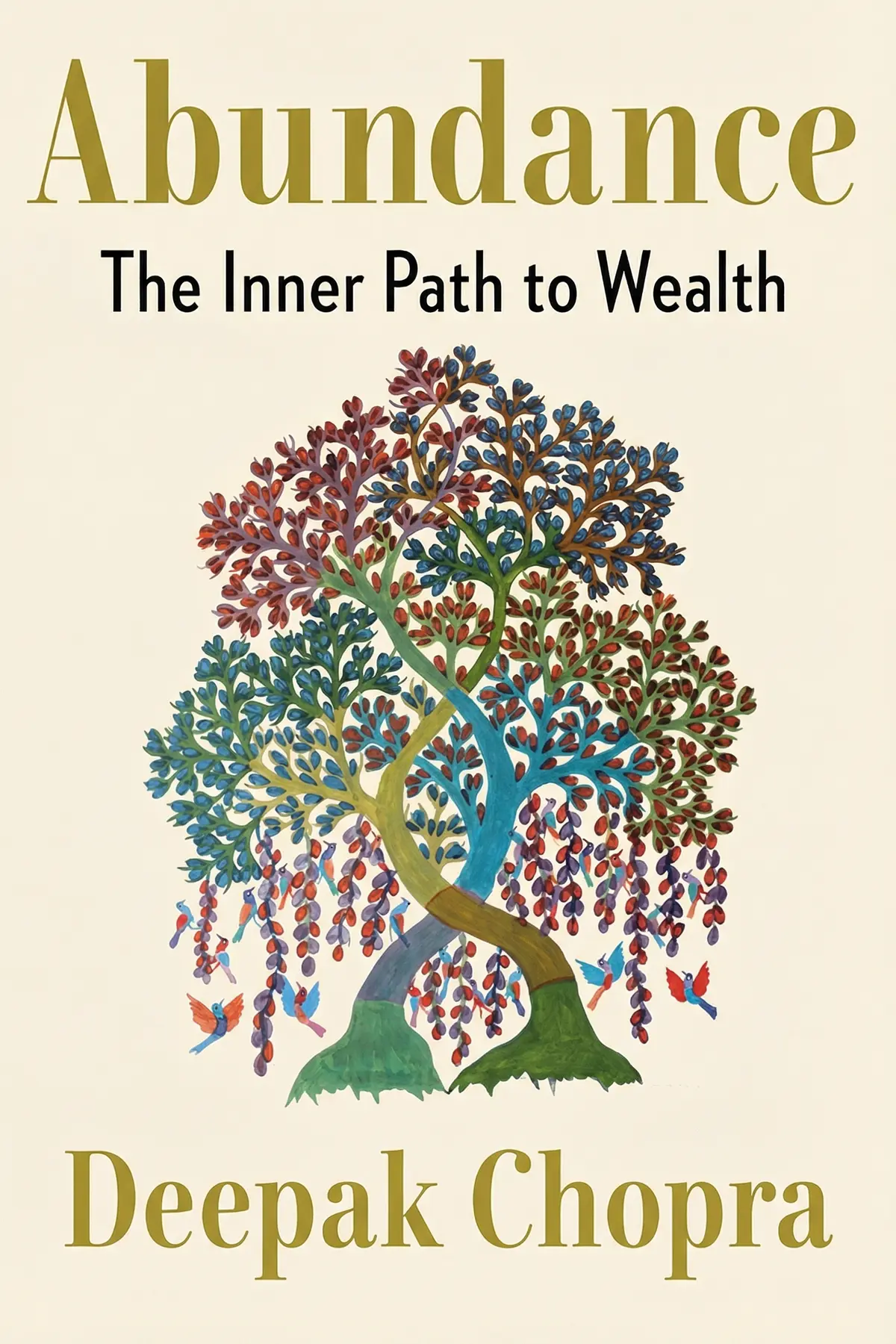
Abundance: The Inner Path to Wealth
Deepak Chopra
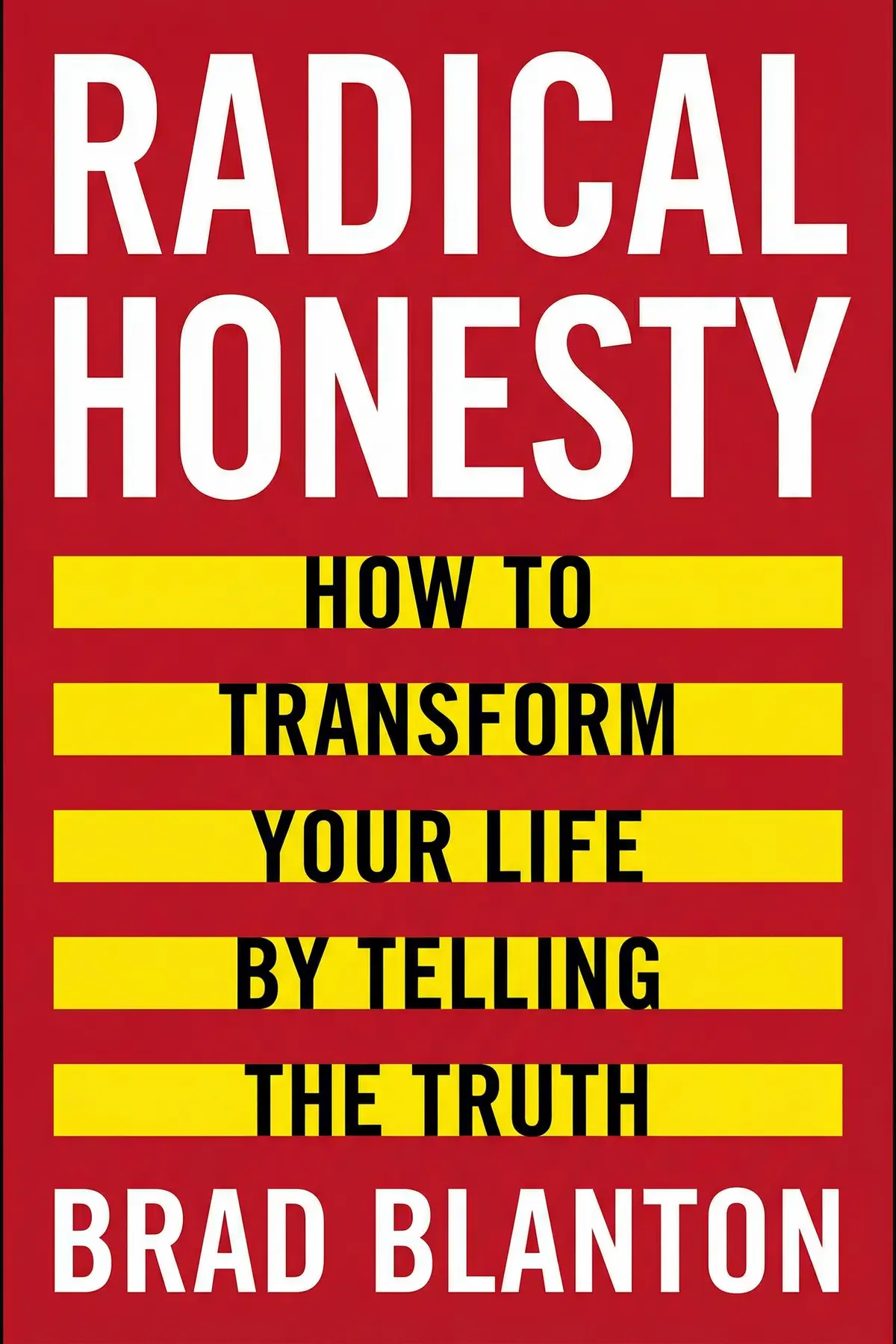
Radical Honesty explores how pervasive lying and social conditioning damage our well-being. Brad Blanton argues that total transparency about our thoughts, feelings, and past is the only path to authentic connection and personal freedom.
1 min 37 sec
Think about the last twenty-four hours of your life. How many times did you adjust the truth just a little bit to avoid a conflict, spare someone’s feelings, or make yourself look slightly better than you felt? Most of us consider ourselves honest people, but if we really look at our interactions, we see a tapestry of omissions, white lies, and curated personas. According to Brad Blanton, this isn’t just a social habit; it’s a way of living that is literally making us sick.
We are raised in a culture that rewards the ‘mask.’ We learn early on that fitting in is more important than being real. But this creates a split between our ‘being’—the core of who we are—and our ‘mind’—the collection of rules, judgments, and roles we play. This summary explores the philosophy of Radical Honesty, a movement that suggests the only way to heal our fractured lives is to stop lying entirely.
Over the course of this exploration, we will look at how our upbringing traps us in a cycle of moralism and how we can break free. We will examine why withholding anger is actually a form of violence against yourself and others. We will dive into the three distinct levels of honesty and learn why revealing your deepest, most uncomfortable secrets—including the gritty details of your private life—is the key to a successful relationship. This isn’t just about ‘not lying’; it’s about a fundamental shift in how you inhabit your own skin. It is about moving from a life of evaluation and judgment to a life of pure, unfiltered description. Let’s begin by looking at where this disconnect starts and why our own minds often act as our primary jailers.
2 min 22 sec
Explore how the purity of early consciousness is overwritten by social rules, creating a state called moralism that prioritizes external expectations over internal reality.
2 min 35 sec
Learn about the progressive stages of truth-telling, from admitting basic facts to acknowledging the false personas we use to navigate the world.
2 min 20 sec
Discover why withholding details about your private desires and history creates a barrier in relationships and how brutal honesty can foster deeper intimacy.
2 min 18 sec
Challenge the idea that suppressing anger is a noble act and learn why raw, unrefined expression is essential for preventing long-term resentment.
2 min 38 sec
Understand the philosophical difference between treating people as objects and as beings, and how specific communication exercises can bridge the gap.
2 min 35 sec
Learn why the path to honesty requires physical health and a refusal to blame the external world for your internal state of being.
1 min 47 sec
The journey through Radical Honesty is not an easy one. It requires a willingness to be seen as ‘difficult,’ ‘rude,’ or ‘weird’ by a society that values politeness over authenticity. We have seen how the mind creates a prison of moralism, how we use lies to protect a false identity, and how we poison our relationships by withholding our true feelings. We have also explored the radical alternative: a life of total transparency where we share our deepest secrets, our rawest anger, and our most private desires.
The throughline of Brad Blanton’s message is that truth is not a moral obligation; it is a physical and psychological necessity. When we lie, we divide ourselves. We create a ‘me’ that acts and a ‘me’ that hides. This division is the source of our neurosis and our stress. By choosing to be radically honest, we heal that divide. We integrate our mind back into our being. We move from a world of ‘shoulds’ to a world of ‘is.’
As you move forward, consider this actionable step: identify one significant secret you are currently keeping from someone close to you. It might be something you think is ‘for their own good’ or something you are simply ashamed of. Take a deep breath and find a time to sit that person down and tell them the truth, without justification or apology. Describe the facts, describe your feelings, and then simply be there with them in the aftermath. You will likely find that the fear of telling the truth was far more painful than the act itself. The weight that lifts from your shoulders is the feeling of your being finally coming back into the light. Truth is the only foundation upon which a real life can be built. Start building yours today.
Have you ever considered that the stress, anxiety, and general dissatisfaction you feel might stem from a single, pervasive habit? Brad Blanton suggests that most of us are suffering from a chronic disease called moralism, which is built entirely on a foundation of lying. In Radical Honesty, he explains that from childhood onward, we are taught to suppress our true selves in favor of social masks. We lie to our partners, our families, and perhaps most dangerously, to ourselves. This book promises a radical alternative: a life where nothing is hidden. Blanton guides listeners through the process of stripping away these layers of deception. By practicing total transparency—even when it is uncomfortable or socially taboo—we can break the cycle of resentment and neurosis. The promise is profound: by telling the truth about everything from our sexual histories to our hidden anger, we can reclaim the vitality and clarity we lost as we grew up. It is a challenging, sometimes jarring call to action that seeks to transform how we relate to the world and our own bodies.
Dr. Brad Blanton was trained in Gestalt Therapy and practiced psychotherapy for many years. Alongside Radical Honesty, his books include Practicing Radical Honesty, Radical Parenting, and The Truthtellers. He also conducts workshops on radical honesty in Shenandoah Valley, Virginia.
Listeners find the book intellectually stimulating, with one listener highlighting how it turns existential philosophy into actionable guidance for daily living. They also appreciate the straightforward language and practical content that provides an accessible path toward true happiness. Furthermore, the work aids in personal evolution, and one listener characterizes it as a life-changing psychotherapy guide. On the other hand, opinions on the prose are divided; while some view it as well-written, others consider the writing style crippled.
This book is a visceral punch to the gut that forces you to reckon with the elaborate lies we tell ourselves every single day. Blanton manages to translate complex existential philosophy into a guide that feels both incredibly raw and surprisingly practical for the average person. While the prose is often rough and unpolished, the underlying message about collapsing the split between our "performing self" and our "real self" is life-changing. I found his focus on the body and physical sensations over the "mind" to be a refreshing departure from typical cognitive-heavy therapy. It’s certainly a radical shift in perspective that won’t suit everyone, but for those feeling suffocated by social expectations, it offers a genuine path toward liberation. Just be prepared to confront some uncomfortable truths about how you've been relating to your loved ones.
Show moreFinally got around to finishing this, and my relationships are already shifting into a much more honest and grounded space. The distinction Blanton makes between the "mind" (which is mostly a collection of stale labels) and "being" (which is what we actually sense) is incredibly powerful. I used to spend hours ruminating on what I should say, but now I’m learning to just report what I’m actually feeling in my body. It’s a simple shift, but it has drastically reduced my daily anxiety and made my interactions feel less like a chess match. The author is definitely an eccentric character, and his anecdotes about his various marriages are a bit distracting, but the technique itself is solid. This is more of a psychotherapy guide than a standard self-help book, offering a raw way to reclaim your vitality.
Show moreTo be fair, this isn't for the faint of heart or those who prefer to keep their secrets tucked away in the dark. Radical Honesty is less of a book and more of a demolition project for your ego, aimed at tearing down the walls you’ve built to stay safe. I found the practical advice on how to deal with resentment directly to be transformative for my marriage, which had become a graveyard of unsaid things. Blanton writes with a confidence that borders on arrogance, but his results-oriented approach is a welcome change from more passive therapeutic methods. It really does feel like a manual for life transformation that prioritizes your own wellness over being "nice" to everyone else. If you are tired of the chronic emotional numbness that comes from hiding, this book provides the heavy-duty tools you need to break free.
Show moreEver wonder why you feel like you're wearing a mask all day just to get through your morning meetings? This book addresses that chronic tension by arguing that our constant self-censorship is literally making us sick and tired. Blanton uses very simple language to explain how we become "performance artists" instead of human beings, which makes the content highly accessible. In my experience, the exercises regarding expressing resentment directly were terrifying but ultimately cleared the air in a way polite conversation never could. The book does oversimplify things and ignores the nuance required for professional settings, which is a major drawback. However, if you can get past the author's brash and sometimes arrogant persona, there is some serious wisdom here. It’s a messy, loud, and provocative read that actually delivers on its promise of life transformation if you're brave enough to try it.
Show moreThe chapter on anger alone is worth the price of admission for anyone who has spent years suppressing their true feelings. Blanton argues that our "mind" is essentially a jailer, and the only way out is to start noticing what our senses are telling us right now. I’ve read a lot of Zen literature, but this is a much more aggressive and Westernized take on staying present that some will find refreshing. My only gripe is that he treats every situation as if you're in a therapy group, which just isn't how the real world works. Truth is, if I told my boss everything I fantasized about, I’d be unemployed by lunch. Still, for intimate relationships, the "taboos against excitement" section offers a really helpful framework for deepening a connection that has gone stale.
Show moreLook, the guy is clearly a narcissist with a questionable track record, but his core thesis about the "performer" vs. "real self" is actually brilliant. We spend so much energy managing impressions that we lose touch with the simple sweetness of just existing without a script. I particularly liked the sections on how we hold onto the past and refuse to update our beliefs based on current reality. It’s a very bold, brash book that doesn't care about your feelings, which is exactly why it’s so effective at breaking through the usual self-help fluff. While I don't agree with his "one size fits all" approach to sharing every sexual fantasy with your family, the underlying goal of ending self-censorship is noble. It helped me realize how much of my internal dialogue was just "should-ing" all over myself.
Show moreBlanton's writing style is, to put it mildly, a bit of a mess that fluctuates between brilliant insights and narcissistic rambling. One moment he’s offering profound existential wisdom about living in the present, and the next he’s bashing the legal profession for no apparent reason. To be fair, the sections on how we use "moralism" as a weapon against ourselves are thought-provoking and helped me identify my own self-destructive scripts. Yet, the lack of nuance is frustrating because he presents his method as a universal remedy without considering the safety or context of the reader. I found the middle chapters on telling the truth in couples to be the only truly useful part of this otherwise bloated manifesto. It feels like a very "Boomer" approach to psychology that values shock value over sustainable, healthy communication.
Show moreAs someone who has studied Nonviolent Communication (NVC), I found this approach fascinating yet deeply flawed in its execution. Blanton repeatedly bashes NVC for being too "polite," yet his own suggestions for clear communication actually mirror many of its core principles. The main difference is his insistence on the raw expression of anger, which he claims is necessary to stop it from festering into resentment. While I appreciate the attempt to integrate Eastern thought into Western life, the book's rejection of all moral absolutes feels a bit nihilistic and juvenile at times. It’s a very "loud" book that seems to enjoy being offensive for its own sake rather than for the reader's benefit. You’ll find some great "meat" in the middle chapters, but you have to chew through a lot of stale, repetitive filler to get there.
Show moreAfter hearing about this on a podcast, I was prepared for something extreme, but the reality is more of a confusing mixed bag. The author is clearly trying to start a movement—his "Futilitarian Church" stuff is particularly odd—but the basic premise that lying kills your soul is hard to argue with. I found the book to be quite repetitive, as if the author was just transcribing his own therapy sessions without much of an editorial eye. His constant insults toward "moralists" and "legalists" get old quickly and make him sound like a petulant teenager rather than a seasoned psychologist. On the plus side, the focus on physical sensations and "living from the body" is a practical way to manage stress. It’s an interesting read, but one that requires a lot of "taking what works and leaving the rest."
Show moreNot what I expected from a supposed 'self-help' classic, as it feels more like an angry rant than a cohesive philosophy. Brad Blanton seems to have a serious chip on his shoulder, especially regarding lawyers and traditional morality, which often overshadows his points. Frankly, it is hard to take relationship advice from a man who has been married five times and notably married a teenager when he was nearly forty. His "Futilitarian" religion feels like a shallow excuse to be a jerk under the guise of being authentic or "real." While the core idea that lying creates stress is undeniably true, the implementation he suggests is a one-size-fits-all disaster that would likely burn every bridge you have. I found the writing to be repetitive and the tone unnecessarily aggressive throughout the entire text.
Show moreDeepak Chopra
Richard Wiseman
AUDIO SUMMARY AVAILABLE
Get the key ideas from Radical Honesty by Brad Blanton, plus 5,000+ more titles in English and Thai.







