
14 min 10 sec
Read Write Code: A Friendly Introduction to the World of Coding
Read Write Code offers a foundational look at the building blocks of the digital age. It demystifies how software, the internet, and artificial intelligence actually function for the curious non-expert.
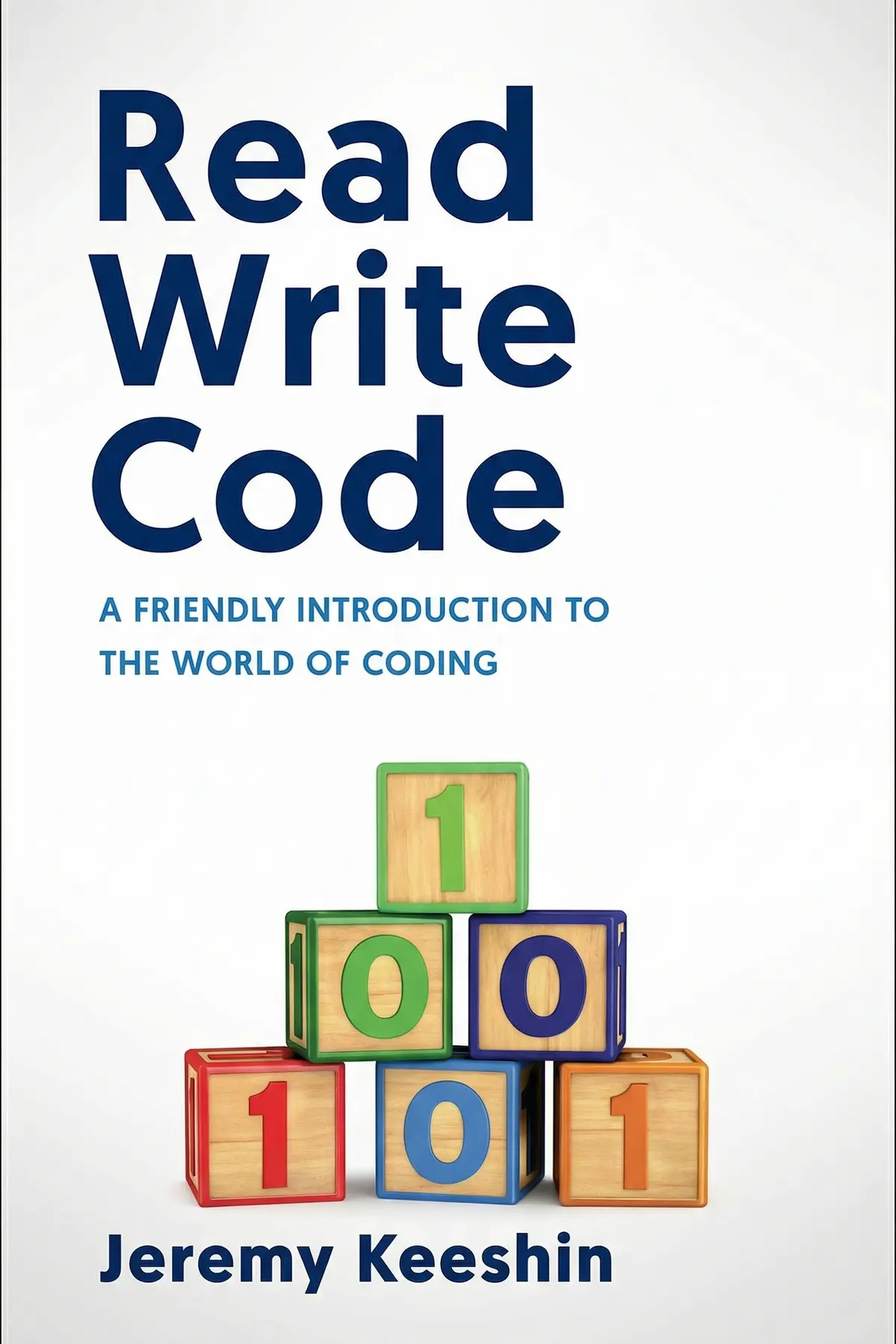
Table of Content
1. Introduction
1 min 54 sec
Think about the last twenty-four hours of your life. Every interaction you had with a screen—every text sent, every payment processed, every video streamed—was powered by an invisible layer of logic. Most of us use these tools constantly, yet for many, the inner workings of a computer remain as mysterious as a magic trick. We talk about the “cloud” as if it’s a literal vapor and treat algorithms like unpredictable digital deities. But this lack of understanding creates a gap. In a world where technology influences our jobs, our relationships, and our privacy, being tech-illiterate is no longer an option.
Read Write Code is a guide for the rest of us. It posits that understanding the basics of computer science is the new essential literacy, much like reading and writing became necessary skills during the industrial age. Coding isn’t just a niche skill for engineers in Silicon Valley; it is the language of the modern world. When you understand how code works, you start to see the world differently. You stop seeing a website as a static image and start seeing it as a dynamic set of instructions. You stop seeing an app’s behavior as random and start recognizing the logic behind its choices.
In this summary, we are going to explore the core pillars of this digital world. We’ll start by breaking down the very basics of what code is and how computers actually think. Then, we will look at the architecture of programming and the clever shortcuts called algorithms that make modern software possible. We’ll dive into the physical reality of the internet and the cloud to understand where our data actually goes. Finally, we’ll look toward the future, examining the reality of artificial intelligence and how it compares to the human mind. By the time we’re done, the digital world won’t feel like magic anymore—it will feel like a tool that you are finally ready to understand.
2. The Foundations of Digital Logic
2 min 34 sec
Discover how the complex apps we use every day are built upon simple, meticulous instructions and the humble binary code of ones and zeros.
3. The Mechanics of Programming and Algorithms
2 min 47 sec
Explore the bridge between human thought and machine action, and see how algorithms provide the shortcuts to solve complex problems.
4. The Reality of the Web and the Cloud
2 min 39 sec
Demystify the invisible networks that connect our devices and discover why the ‘cloud’ is more physical than you might think.
5. Demystifying Artificial Intelligence
2 min 45 sec
Uncover how machines actually ‘think’ through probability and data, and what this means for the future of human work.
6. Conclusion
1 min 31 sec
The journey from understanding a single bit of data to grasping the complexities of artificial intelligence is a journey toward empowerment. As we’ve seen in this summary of Read Write Code, technology isn’t an impenetrable wall of jargon; it’s a logical system built by humans to solve human problems. Whether it’s the meticulous instructions of a simple program, the global infrastructure of the web, or the pattern-recognition of machine learning, these concepts are the tools we use to build the future.
Digital literacy is about more than just knowing how to use an app; it’s about understanding why that app works and what it’s doing with your information. When you move from being a passive user to an informed observer, you gain a sense of agency. You can ask better questions, make more informed decisions about your privacy, and perhaps even begin to create digital solutions of your own.
As you move forward, keep that curiosity alive. The next time you encounter a new technology or a strange software glitch, don’t just write it off as magic or a mystery. Think about the instructions, the data, and the logic underneath. The digital world is yours to read and yours to write. By mastering these fundamentals, you’ve taken the first step toward being a fluent citizen of the twenty-first century. Thank you for listening to this BookBits summary. If you found this helpful, please leave us a review and stay curious.
About this book
What is this book about?
Have you ever felt like a passenger in a high-tech world you don't truly understand? Read Write Code is designed to change that by pulling back the curtain on the technology that powers our daily lives. This summary explores the fundamental concepts of computer science, from the binary code that dictates how hardware operates to the complex algorithms that decide what you see on your social media feed. Rather than focusing on memorizing syntax, the book promises to provide a conceptual framework for digital literacy. You will learn how programming languages serve as translators between human logic and machine action, how the internet actually moves data across the globe, and what is really happening when a machine “learns.” By the end of this guide, you will have the vocabulary and the conceptual grounding to move from being a mere consumer of technology to an informed participant in the modern digital landscape.
Book Information
About the Author
Jeremy Keeshin
Jeremy Keeshin is a prominent figure in computer science education. As the co-founder and CEO of CodeHS, he has dedicated his career to making programming instruction more accessible to students and teachers in schools everywhere. Keeshin’s background includes teaching computer science at Stanford University, where he developed a passion for breaking down complex technical topics into meaningful and engaging lessons for beginners.
Ratings & Reviews
Ratings at a glance
What people think
Listeners find the work highly effective for explaining programming and computer science topics in a straightforward, understandable manner. They like the informal narrative style and view it as a solid pick for any reader, while one listener mentions its particular value for students and teachers just beginning. They appreciate how it makes technology feel less daunting, and one review calls out the interactive coding exercises.
Top reviews
Harper
This book is the missing link for anyone who feels like technology is a black box. Keeshin doesn't just teach you how to type lines of Python; he teaches you how to think like a developer. I loved the analogy of the 'literal-minded assistant'—it perfectly captures why my programs used to crash constantly! The writing style is conversational and never condescending, making topics like binary and logic gates feel like common sense rather than rocket science. My only minor gripe is that I wish it dove deeper into specific languages toward the end, but as a primer, it’s unbeatable for gaining digital fluency.
Show moreTanawan
Picked this up on a whim and couldn't put it down. It’s rare to find a book that explains 1s and 0s without making your eyes glaze over. Keeshin makes the binary foundation of our devices feel tangible and interesting. I especially appreciated the transition from raw logic to actual applications like social media and search engines. The interactive feel of the examples kept me engaged throughout. If you've ever felt like the digital world was passing you by, read this. It’s empowering to finally understand the infrastructure behind the apps I use every single day. Truly an essential literacy tool.
Show moreChan
As someone who has always been curious about AI but terrified of the math, I found this book to be a total lifesaver. Keeshin explains machine learning as probability rather than magic, which was a huge 'aha' moment for me. The discussion on Moravec’s paradox—why robots struggle with 'easy' human tasks—was fascinating and grounded the whole AI hype in reality. The book is friendly, smart, and incredibly timely. It doesn't just tell you that coding matters; it shows you why digital literacy is the new standard for participating in society. A breath of fresh air for the tech-curious.
Show moreSau
Wow. This is the first tech book I’ve read that didn't feel like a dry textbook. Keeshin’s tone is like a friend explaining things over coffee. I’ve been trying to learn JavaScript on my own, but I lacked the 'big picture' context that this book provides. Understanding how databases work and how they feed into user experiences has made my own coding practice much more meaningful. It’s more than just a book about syntax; it’s about the philosophy of the digital age. It’s an essential read for anyone wanting to be a builder of the future, not just a consumer.
Show morePensuda
Finally, a book that treats coding like a basic literacy instead of an elite secret! Jeremy Keeshin does a brilliant job of showing that you don't need to be a math genius to understand how the internet functions. The way he discusses the future of work and the rise of automation is balanced—not alarmist, but realistic. This book empowered me to stop being a passive user of my devices and start thinking like a builder. Whether you’re a student, a teacher, or just a curious human, you need this. It makes the intimidating world of computer science feel completely approachable.
Show moreLaor
Ever wonder why a 'bug' is even called a bug? Jeremy Keeshin’s approach to demystifying the digital world is exactly what we need in an era where AI is everywhere. I’m a high school teacher, and I’ve already started using his explanations of IP addresses and domain names in my classroom. The way he breaks down complex systems into manageable chunks is masterful. However, to be fair, some of the sections on the 'cloud' felt a little too brief for my liking. Still, it’s a fantastic starting point for students or professionals who are intimidated by the word 'coding'.
Show moreThawee
The chapter on algorithms is worth the price of the book alone. Most people think algorithms are just scary math, but Keeshin shows they’re just logical steps, like a recipe. I loved the focus on pseudocode and problem decomposition. It helped me realize that I’m already using these skills in my daily life without knowing it! Truth is, the book can get a bit repetitive when talking about the importance of 'clarity' in code. We get it, machines are very literal! But that’s a small nitpick for such a solid, accessible resource for beginners looking to understand the modern world.
Show moreSofia
After hearing so much about the 'cloud,' it was nice to finally have someone explain that it’s just a bunch of physical servers in a giant building somewhere. Keeshin has a knack for stripping away the buzzwords and getting to the core of how data moves across the internet. The section on HTML and CSS was a great touch, as it gives you an immediate look at how the web is structured. I do wish there were more diagrams to illustrate the network paths, but the prose is clear enough to follow. It's a great bridge for non-techies to cross over into understanding.
Show moreTim
Not what I expected in terms of depth, but still quite useful for the right audience. Look, if you already have a computer science degree or work in IT, you’re going to find this way too basic. It’s definitely written for the absolute layperson. I found the sections on loops and conditional statements to be very clear, but I was hoping for more hands-on project ideas. It’s more of a 'theory of how things work' book rather than a practical 'learn to code in 30 days' manual. Good for my parents or a young student, maybe not for a power user.
Show moreKomsan
Frankly, I have mixed feelings about the pacing. On one hand, the explanation of how bits and bytes create images and music is the best I've ever read. It's clear and vivid. On the other hand, the section on memorizing password rules vs. passwords felt a bit dated and out of place compared to the more forward-thinking chapters on AI and AGI. I also found the middle chapters on programming languages a bit repetitive. It’s a decent primer for a total novice, but it might leave you wanting more if you have any existing tech background. Good, but not perfect.
Show moreReaders also enjoyed
AUDIO SUMMARY AVAILABLE
Listen to Read Write Code in 15 minutes
Get the key ideas from Read Write Code by Jeremy Keeshin, plus 5,000+ more titles in English and Thai.
- 5,000+ titles
- Listen as much as you want
- 7-day free trial
- Cancel anytime







