
14 min 17 sec
Read Write Own: Building the Next Era of the Internet
By Chris Dixon
Explore the evolution of the internet from centralized corporate control to a decentralized future. This summary reveals how blockchain technology enables digital ownership, empowering users to reclaim their data and financial value.
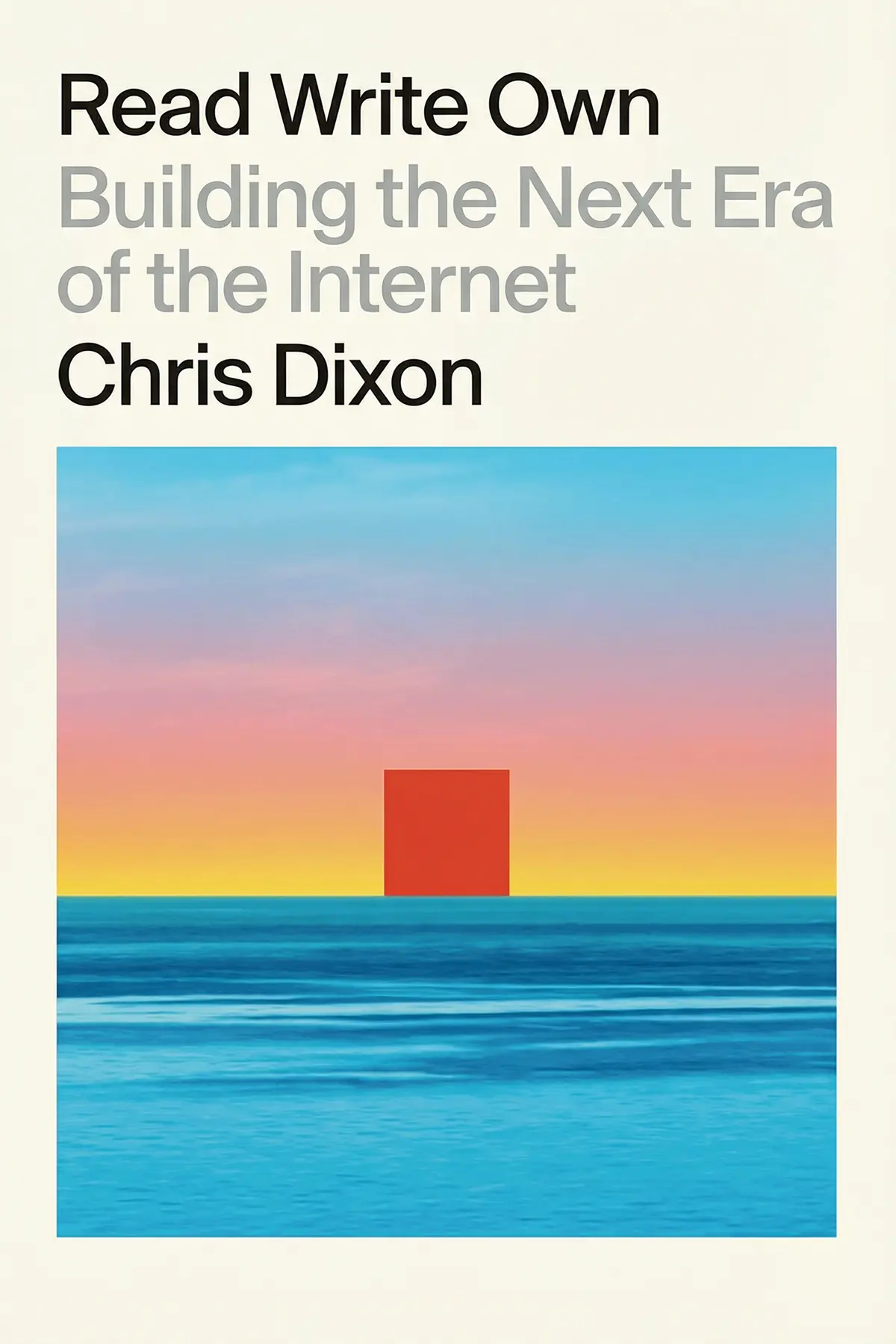
Table of Content
1. Introduction
1 min 47 sec
Think back to the earliest days of the internet. It was a time of pure potential, often described as a digital frontier where the rules were still being written. In 1989, when Tim Berners-Lee first proposed the World Wide Web, his goal wasn’t to create a few global monopolies. He envisioned a decentralized network—a place where information could flow freely across borders and where anyone, regardless of their status or location, could collaborate and share. This early web was a haven for entrepreneurs, hobbyists, and dreamers who believed in a digital society that was both free and empowering.
However, if you look at the internet today, that original vision feels like a distant memory. Instead of a decentralized utopia, we live in an era of massive surveillance and corporate gatekeepers. A few tech giants now hold the keys to our digital lives, deciding what information we see, which ideas can be shared, and how much of our personal data is sold to the highest bidder. The promise of the web was decentralization, but the reality we received was a system built on extraction and nonstop advertising.
But what if we could hit the reset button? What if the next phase of the internet allowed us to reclaim the autonomy we lost? In the following sections, we will explore the transformative potential of blockchain technology. We’re moving past the surface-level hype and the volatile price swings of cryptocurrencies to look at something much more profound: the birth of a new digital architecture. This architecture doesn’t just let us read or write content; it allows us to own it. By the end of this journey, you’ll understand how a shared, decentralized virtual computer can shift power away from corporate boardrooms and back into the hands of individual users.
2. The Three Eras of the Internet
2 min 18 sec
Discover how the web evolved from a simple information library into a corporate-dominated social hub, and why we are now entering a third, revolutionary phase.
3. The Trap of Attract and Extract
2 min 20 sec
Learn why the most successful tech platforms eventually turn against their own users and creators to maximize their bottom line.
4. Blockchain as a Global Virtual Computer
1 min 51 sec
Explore the technical breakthrough that allows thousands of separate computers to act as one single, untrustworthy-proof record of truth.
5. The Power of Tokens and Digital Assets
2 min 18 sec
Uncover how fungible and non-fungible tokens serve as the basic building blocks for a new, user-centered digital economy.
6. Challenging the Corporate Middleman
2 min 17 sec
See how decentralized networks are using the ‘Amazon strategy’ to undercut Big Tech’s profits and return value to creators.
7. Conclusion
1 min 26 sec
The trajectory of the internet has brought us from a wide-open field of possibility to a series of tightly controlled corporate silos. While the “read-write” era gave us the power to create, it did so by tricking us into a lopsided deal where we traded our data and our autonomy for convenience. We have reached the limits of this centralized model, where the desire of platforms to extract profit has begun to stifle the very innovation and creativity that made the web great in the first place.
Blockchain technology represents more than just a new way to handle money; it is a new way to structure human cooperation and digital ownership. By moving to a “read-write-own” model, we can finally build a web where the value stays with the people who create it. We can have social networks that we govern together, marketplaces that don’t charge us predatory fees, and digital assets that we truly own, just like we own physical objects in the real world.
The transition won’t happen overnight, but the foundation is already being laid. The shift toward decentralization is not just a technical change; it’s a social and economic one. It invites us to stop being passive consumers within someone else’s empire and to start being active owners of our digital future. As we move forward, the question isn’t just about what we will read or write next, but about what we will finally own.
About this book
What is this book about?
The digital landscape is at a crossroads. For years, the internet has been dominated by a handful of massive corporations that control our data, our social interactions, and the economic value we create. Read Write Own provides a roadmap for a different kind of digital world—one built on the foundation of blockchain technology. It explains how we are moving away from the era of centralized platforms toward a decentralized future characterized by true ownership. By examining the history of the web, the book illustrates how early democratic ideals were overshadowed by the corporate "attract and extract" model. It then introduces the blockchain not as a speculative tool, but as a shared virtual computer that allows for the creation of tokens and digital assets. This shift enables a "read-write-own" era where users, rather than billionaire middlemen, reap the rewards of their online contributions. The promise here is a more equitable and innovative internet where the power is returned to the individuals and communities who actually build it.
Book Information
About the Author
Chris Dixon
Chris Dixon is a general partner at the prominent venture capital firm Andreessen Horowitz and a pioneering investor in major tech companies like Coinbase, Oculus, Stripe, and Pinterest. He leads a16z crypto, a division dedicated to web3 technologies that has expanded from $300 million to over $7 billion under his leadership. With an MA in philosophy from Columbia and an MBA from Harvard, Dixon combines deep intellectual inquiry with practical investment expertise.
Ratings & Reviews
Ratings at a glance
What people think
Listeners find this book educational and accessible, offering valuable frameworks for thinking. They value the straightforward prose, and one listener highlights that it is free from technical jargon. The narrative speed is persuasive, while one listener characterizes it as the premier account of the internet's development.
Top reviews
Yongyut
Dixon’s work is a refreshing departure from the usual tech hype, focusing on structural incentives rather than just price action. The book provides a masterclass in how network design dictates the destiny of digital platforms. Using the 'city versus theme park' analogy, the author explains why corporate networks like Facebook feel so restrictive compared to open protocols. I appreciated the absence of heavy jargon, making the complex transition from the 'Read' and 'Write' eras into the 'Own' era feel entirely logical. It is easily the best history of the internet I have read in years. While some might find his optimism about NFTs a bit much, his arguments for blockchain as a coordination tool are genuinely convincing. This is a must-read for anyone who wants to understand the next decade of technology through a clear and analytical lens.
Show moreMind
Wow, this was a surprisingly digestible look at how we got here and where we might be heading next. I’ve always been confused by the 'Web3' terminology, but Dixon breaks it down into simple eras that anyone can understand. The 'Read-Write-Own' framework is a brilliant way to categorize the internet’s history. I loved the focus on how blockchains are actually about community ownership and enshrining commitments in code rather than relying on fickle corporate CEOs. The pacing is fantastic, moving quickly from historical context to future speculation without getting bogged down in math or code. Even if you don’t own a single coin, the mental models regarding network effects are worth the price of admission. It’s an empowering read that makes you want to build something better. Finally, a tech book that prioritizes clarity over buzzwords!
Show moreViroj
As a developer who lived through the early 2000s web, I found the history of protocols versus corporate networks deeply resonant. Dixon nails the description of how the open web was slowly swallowed by 'gatekeeper' platforms that now extract usurious rents from every creator. The book is incredibly informative, stripping away the hype to show the underlying architecture of what a decentralized future could actually look like. I particularly enjoyed the discussion on how smart contracts can enforce rules programmatically, preventing the 'Zuckersaurus rex' problem of changing terms whenever it suits the board. It’s a visionary text that manages to be both optimistic and grounded in the history of technology. If you want to know why people are still excited about this space despite the headlines, this is the book to read. It’s a game-changer for digital strategy.
Show moreSiriphen
Frankly, this book is far better than the average blockchain propaganda found on Twitter or tech blogs. Chris Dixon is a brilliant tech writer who understands that the future of the internet is where we actually live our lives now. He makes a powerful case for why we should want to own our digital identities and assets rather than just renting them from billionaires. The way he traces the 'Read' era of protocols like email through to the 'Own' era of blockchain is masterful. It’s simple enough for a teenager to grasp but deep enough to make a seasoned technologist rethink their assumptions. I loved the optimism and the focus on egalitarian, permissionless systems. This book sits proudly on my shelf next to 'The Cold Start Problem' as a definitive text on how networks actually work. Absolutely essential reading!
Show moreNikolai
Picked this up on a whim after hearing a podcast interview, and it totally changed my perspective on Web3. The book is an absolute gem that grabs you from the first page by explaining why our current internet feels so stagnant. It’s not just about 'monkey pics' or crypto trading; it’s about the underlying architecture of the world we inhabit online. Dixon’s writing is exceptionally clear, and I loved how he avoided the usual technobabble that makes these topics so inaccessible. The historical context provided for the 'Read' and 'Write' eras makes the transition to the 'Own' era feel inevitable rather than just a fad. My only minor gripe is that he’s very bullish and doesn't spend much time on the environmental or regulatory hurdles. Regardless, it is an inspiring and highly informative look at a more equitable future. Highly recommended for everyone!
Show moreConnor
Ever wonder why the modern internet feels like a series of walled gardens where we are the product rather than the participants? This book tackles that question head-on by tracing the evolution of the web from its open beginnings to the centralized monopolies of today. Dixon’s writing is surprisingly clear, providing useful mental models for understanding how blockchain could potentially restore power to creators. I found the sections on protocol-based decentralization particularly illuminating, as they move past the 'crypto-bro' stereotypes into real-world utility. To be fair, the book is a bit repetitive toward the middle, and the author definitely glosses over some of the existing failures of DAOs. However, the overarching vision of a more equitable digital landscape is hard to ignore. It is a very informative guide for the tech-curious, even if you remain a skeptic of the current market.
Show morePhimwan
Finally got around to reading this, and the 'Read, Write, Own' framework finally clicked for me after months of confusion. The truth is, I expected a dense technical manual but got a surprisingly readable history of digital networks. Dixon explains the 'Read-Write' era beautifully, showing how we traded our digital sovereignty for the convenience of centralized platforms like Instagram and Twitter. His argument for blockchain isn’t just about money; it’s about rebuilding the internet as a public square again. I did think the book was a little too light on the potential downsides, such as the massive transaction fees that plague some decentralized systems. Still, the logic behind moving from corporate-controlled 'theme parks' to community-owned 'cities' is incredibly compelling. It’s a levelheaded take on a very controversial subject that deserves a fair hearing.
Show moreOmar
The 'city versus theme park' analogy is the single best mental model I’ve encountered for understanding digital ownership. Dixon explains that while theme parks (corporate apps) are controlled and safe, cities (blockchains) allow for organic growth and true property rights. Look, the book isn't perfect; it can be quite repetitive, and it definitely feels like it was written to convince the skeptics rather than challenge the enthusiasts. But the clarity of his writing style is undeniable. He manages to explain how decentralized networks can be self-sustaining without needing the venture capital model to survive forever. It’s a convincing argument for why we need to move away from our current reliance on a few tech giants. Even the most cynical reader will walk away with a better grasp of the potential for digital sovereignty. It’s a solid 4-star read.
Show moreKrisada
Not what I expected from a venture capitalist, honestly. While the intro on network effects is promising and shows some real intellectual depth, the book quickly devolves into a collection of discredited ideas. It’s a bit of a parody at this point to hear someone talking about DAOs as the future of governance when most have been disaster zones. The author criticizes corporate platforms for extracting value but doesn't mention how much his own firm has profited from those very systems. It feels like a long, polished blog post rather than a cohesive book with new insights. Most of the 'novel' ideas here were already stale by 2022. There are much better, more objective articles on the A16Z blog if you want this perspective for free. This is just mediocre blockchain propaganda for the glassy-eyed believers.
Show moreJai
This book feels like a desperate attempt to legitimize ideas that have already failed in the real world. It is clearly written by a blockchain worshipper who refuses to acknowledge any of the technology's fundamental flaws or its history of deception. Calling this an 'authentic' look at the web is a joke; it’s basically a high-budget brochure for a16z’s portfolio companies. The author talks about NFTs as if they are a revolutionary form of art appreciation while ignoring the 1:1 connection issues between on-chain and off-chain assets. He even suggests that laypeople should just 'read the code' to ensure transparency, which is a ridiculous expectation for 99% of the population. This isn't insightful technology writing; it’s pure wishful thinking that ignores every known fact about how these systems actually function in practice. Avoid this travesty if you value your time.
Show moreReaders also enjoyed
AUDIO SUMMARY AVAILABLE
Listen to Read Write Own in 15 minutes
Get the key ideas from Read Write Own by Chris Dixon, plus 5,000+ more titles in English and Thai.
- 5,000+ titles
- Listen as much as you want
- 7-day free trial
- Cancel anytime







