

16 min 17 sec
Relativity: The Special and the General Theory
A comprehensive exploration of Albert Einstein’s revolutionary work, detailing how special and general relativity transformed our understanding of time, space, and the gravitational architecture of the entire universe.
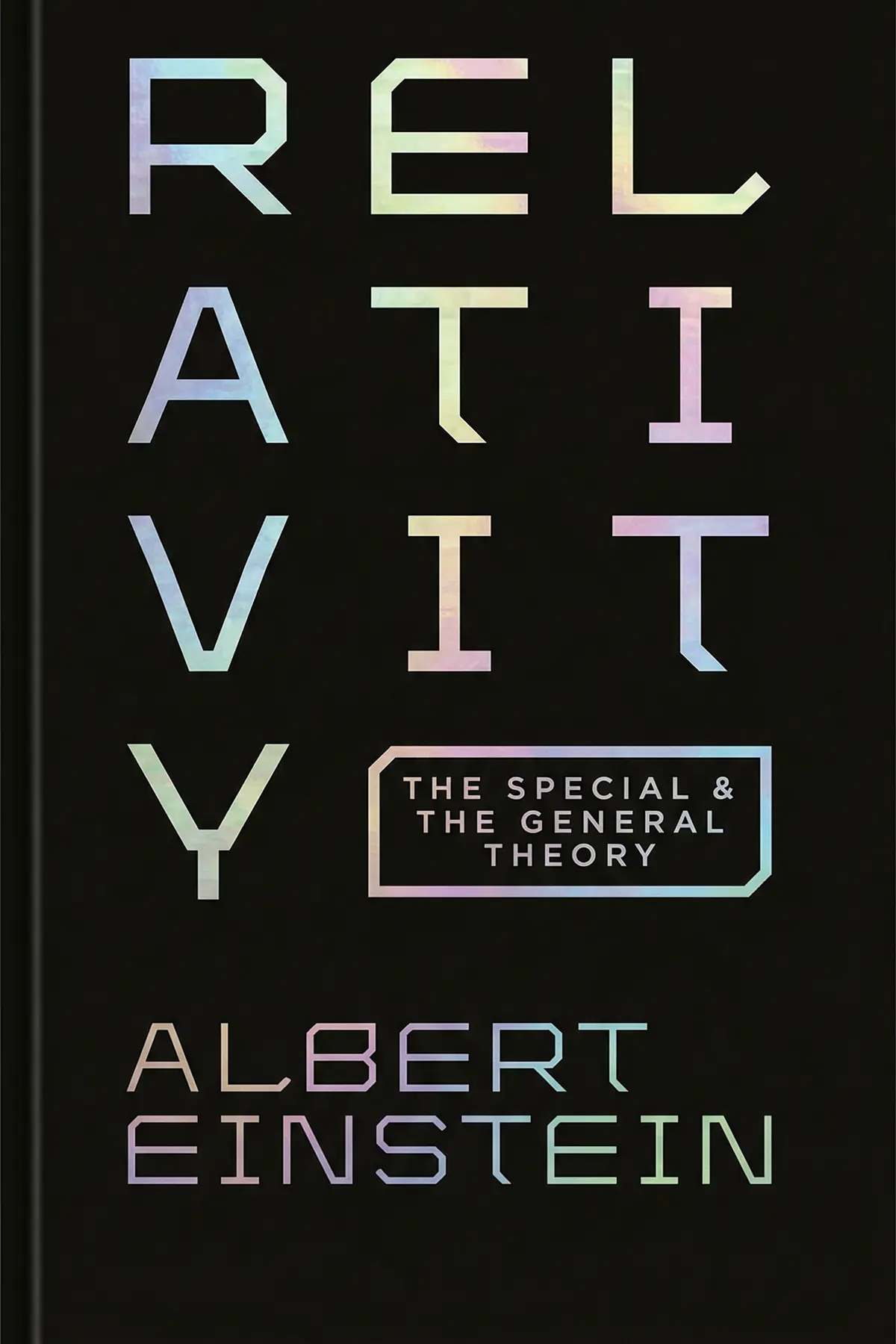
Table of Content
1. Introduction
1 min 51 sec
Have you ever paused during a clear night to look up at the stars and wondered exactly how it all hangs together? For the vast majority of human history, we viewed the universe as a fixed stage—a solid, unchanging background where time ticked away like a universal clock, the same for everyone, everywhere. We thought space was a void and gravity was just a mysterious tugging force. But in the early twentieth century, a single individual’s insights shattered those ancient assumptions. Albert Einstein didn’t just add a new chapter to the book of science; he rewrote the entire narrative of physical reality.
In this exploration of Einstein’s work on relativity, we are going to dive into the deep end of how the universe actually functions. We are moving away from the ‘common sense’ world of heavy objects falling and clocks ticking in unison, and into a reality where time can slow down, space can shrink, and the very fabric of existence can be bent and warped by the stars themselves. This isn’t just about difficult math or abstract equations; it’s about a fundamental shift in perspective.
By the time we finish, you’ll understand how light sets the ultimate speed limit, why gravity and acceleration are two sides of the same coin, and how the shape of the entire cosmos is determined by the matter it contains. We are going to look at the universe not as a collection of separate parts, but as a single, woven tapestry of spacetime. Einstein’s genius was his ability to see the simple, elegant truths hidden behind complex mysteries, and today, we’re going to unlock those truths together. Let’s begin this journey into the heart of the cosmos.
2. The Absolute Nature of Light
2 min 32 sec
Discover why the speed of light is the universe’s ultimate constant and how this one fact upends our traditional understanding of motion.
3. The Fluidity of Time and Space
2 min 42 sec
Explore the strange world of time dilation and length contraction, where moving fast actually changes the way you experience the passing of seconds.
4. Redefining Gravity Through Motion
2 min 35 sec
Learn how a simple thought experiment in an elevator led Einstein to realize that gravity isn’t a force, but a consequence of acceleration.
5. The Geometry of a Warped Universe
2 min 33 sec
See how non-Euclidean geometry and the movement of the planet Mercury provided the ultimate proof for Einstein’s curved reality.
6. The Architecture and Fate of the Cosmos
2 min 31 sec
Delve into Einstein’s vision of a finite yet boundless universe and how the density of matter determines our cosmic destiny.
7. Conclusion
1 min 33 sec
As we conclude our journey through Einstein’s universe, it is worth reflecting on just how much our perspective has shifted. We began with the simple mystery of light speed and ended with the grand architecture of a finite but boundless cosmos. Through the lens of relativity, we have seen that time is not a steady pulse, but a flexible rhythm that changes with our movement. We have learned that gravity is not a ghostly pull, but the very shape of the ground we walk on and the space we travel through.
Einstein’s work teaches us that reality is far more complex than our senses suggest. What feels solid and absolute—like the length of a second or the straightness of a line—is actually part of a fluid dance between matter and energy. But more than just providing scientific answers, relativity offers a lesson in intellectual courage. It shows us that by questioning the most ‘obvious’ truths, we can uncover the hidden mechanics of the stars.
The next time you look up at the night sky, don’t just see points of light in a void. See the curves and dips in the fabric of spacetime. Imagine the slow tick of time near a massive star and the contraction of space at high speeds. Einstein’s gift to us was a universe that is logical, connected, and endlessly fascinating. The mysteries of the cosmos are no longer out of reach; they are written in the very geometry of the world around us, waiting for us to continue exploring.
About this book
What is this book about?
Albert Einstein’s work on relativity fundamentally altered the trajectory of modern science by replacing the Newtonian concept of a static, absolute universe with a dynamic, interconnected framework of spacetime. This summary breaks down the two pillars of his work: the Special Theory and the General Theory. Through the Special Theory, we explore the surprising constancy of light speed and the mind-bending reality of time dilation, where time itself can stretch or contract based on motion. Transitioning into the General Theory, the summary explains Einstein’s groundbreaking realization that gravity is not a mysterious force pulling objects together, but a result of the physical curvature of the universe’s fabric. Using intuitive metaphors like accelerating elevators and curved flight paths, this summary promises to make some of the most complex ideas in physics accessible and engaging. You will learn how the presence of matter dictates the shape of the cosmos and why our very perception of reality is tied to our perspective within the stars.
Book Information
About the Author
Albert Einstein
Albert Einstein (1879–1955) was a legendary physicist who transformed our scientific worldview. He won the 1921 Nobel Prize in Physics and became a global icon for his work on relativity. Beyond his scientific achievements, he was a dedicated supporter of education, global peace, and civil rights.
Ratings & Reviews
Ratings at a glance
What people think
Listeners find the book educational and value the non-technical method used to explain relativity. Additionally, the writing is simple to follow, with one listener highlighting its clarity. However, the philosophical side of the work draws mixed reactions from listeners.
Top reviews
Lillian
Ever wonder how the smartest man in history explains his own ideas? This book is a remarkably clear window into a mind that reshaped our entire understanding of reality. Einstein avoids burying the reader in impenetrable math, opting instead for thought experiments involving trains and lightning bolts. Truth be told, seeing how he builds upon the foundations laid by Newton and Galileo is fascinating. It’s not just a physics lesson; it’s a masterclass in logical progression. I found the section on the curvature of space-time particularly striking, even if visualizing four dimensions remains a bit of a headache. For anyone who thinks they can't understand physics, this is the place to start.
Show moreOoi
This book is surprisingly accessible for something written by a physicist of such stature. Einstein writes with a humility that makes the complex shift from absolute to relative time feel almost intuitive. Looking at the concept of 'simultaneity' through his eyes changed how I perceive my own watch. The way he describes the four-dimensional 'world' of Minkowski is brilliant, even if my brain struggles to map it out. Personally, I appreciated that he wrote this specifically for the layperson. It isn't exactly a beach read, but it’s far more digestible than any modern textbook I’ve encountered. Truly a foundational piece of literature for the modern age.
Show moreThanit
Picked this up because I wanted to go straight to the source rather than reading a second-hand interpretation. It’s amazing how well Einstein communicates his revolutionary ideas without the need for fancy diagrams or jargon. The discussion on the deflection of light by gravitational fields was particularly gripping. It makes you realize just how much our modern technology, like GPS, relies on these very principles. I gotta say, the writing style is surprisingly humble for a man who changed the world. If you can get past the initial shock of the concepts, the internal logic is flawless. It’s a slim volume, but it packs more intellectual weight than books triple its size.
Show morePrae
The chapter on the structure of space really blew my mind. Einstein manages to explain the transition from Euclid's geometry to a non-Euclidean universe in a way that feels revolutionary even a century later. I loved the appendices that detailed the experimental confirmations, like the displacement of spectral lines. It’s one thing to have a theory, but seeing the evidence laid out makes it real. In my experience, most people are intimidated by the name Einstein, but his writing here is inviting. He treats the reader as an equal, walking them through the steps of his discovery. It’s an essential addition to any science lover’s collection.
Show moreAom
Wow, reading Einstein’s own words is like watching a master craftsman explain his tools. There’s a certain rhythm to his logic that you just don't get in popular science books written by others. The way he navigates the Maxwell-Lorentz theory to arrive at Special Relativity is just beautiful. No point of view is preferred, and time itself becomes a flexible thing—it's mind-bending stuff. The book is surprisingly thin, yet it manages to cover the entire scope of his two major theories. I found the section on the Redshift particularly interesting. It’s a profound reminder that our perception of the world is only one of many possible truths.
Show moreSamuel
Finally got around to reading this classic, and I must say the clarity of the prose is its greatest strength. Einstein manages to strip away the intimidating layers of the Special and General theories to reveal their core logic. I was particularly impressed by how he gives credit to his predecessors, like Lorentz and Minkowski, showing that science is a collaborative evolution. The appendices are actually quite helpful if you want a peek at the math, but the main text stands on its own. It’s a bit dry in spots, especially when he dives into the philosophical implications of space, yet the importance of the work is undeniable. A must-read for any curious soul.
Show moreKanokwan
Frankly, I expected a dense textbook, but what I found was a guided tour through the cosmos. Einstein’s intention to reach the broader public is evident on every page. He uses simple, everyday examples to illustrate why two observers might not agree on the time. The transition from Special Relativity to the General Theory is handled with such grace that you almost don't realize how much your worldview is shifting. My only minor gripe is that some of the philosophical conclusions felt a little detached from the physical evidence. Still, the historical significance and the sheer elegance of the logic earn this a solid recommendation for anyone's library.
Show moreMason
Looking back at high school physics, I wish we had started with this text instead of the dry chapters on pulleys and levers. Einstein makes the universe feel alive and dynamic. He doesn't just throw laws at you; he explains the 'why' behind the curvature of space-time. The mention of the perihelion of Mercury as experimental proof was a great touch in the appendix. Truth is, the book demands focus, but the payoff is a profound sense of awe. Some parts about the cosmic ether felt like a relic of the time, but they help show the progression of thought. It’s a lean, mean, scientific machine of a book.
Show moreSamroeng
To be fair, while the science is groundbreaking, the philosophical tangents felt a bit dated and abstract for my taste. Einstein is a genius, no doubt, but the 'simplified' equations still require a decent grasp of algebra to truly appreciate. I struggled with the later chapters regarding the structure of space as a whole. It’s easier to understand the concepts than it is to actually visualize the four-dimensional continuum he describes. The book is definitely informative and avoids most technical jargon, but it’s still a heavy lift for a casual reader. I’m glad I read it for the historical context, but I probably won’t be revisiting it anytime soon.
Show moreMalee
Not what I expected; the 'simplified' examples still felt like they required a PhD to fully grasp. I know this is meant for the general reader, but I found myself lost by the time we reached the Lorentz transformations. Perhaps my math skills are just too rusty, but the logic didn't feel as 'straightforward' as others have claimed. The philosophical musings at the end were particularly confusing and seemed to raise more questions than they answered. I respect the man’s brilliance, but as a teaching tool for the average person, this fell short for me. It’s historically important, sure, but it wasn't the easy read I was promised.
Show moreReaders also enjoyed
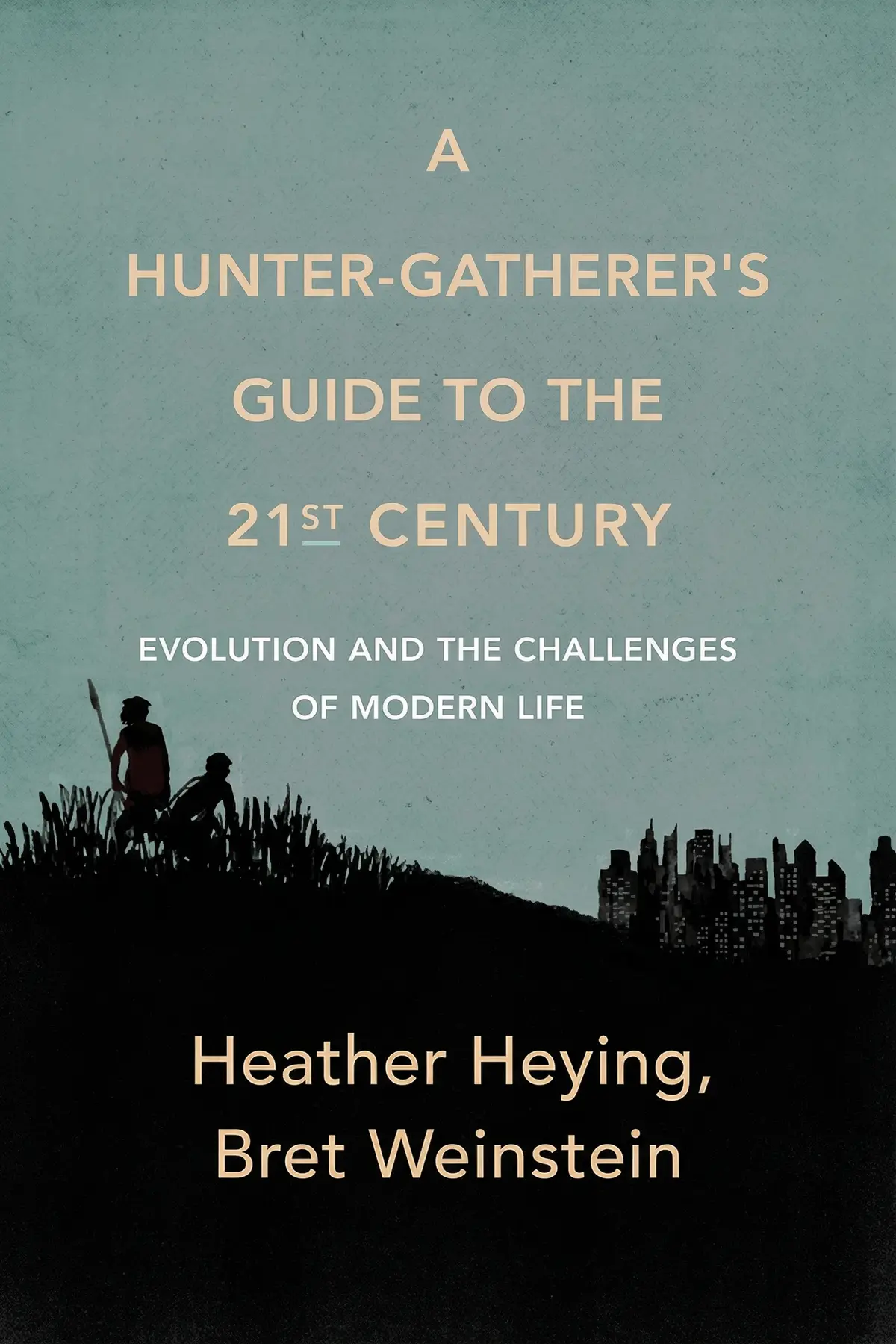

A Life Decoded: My Genome: My Life
J. Craig Venter

A Planet of Viruses
Carl Zimmer
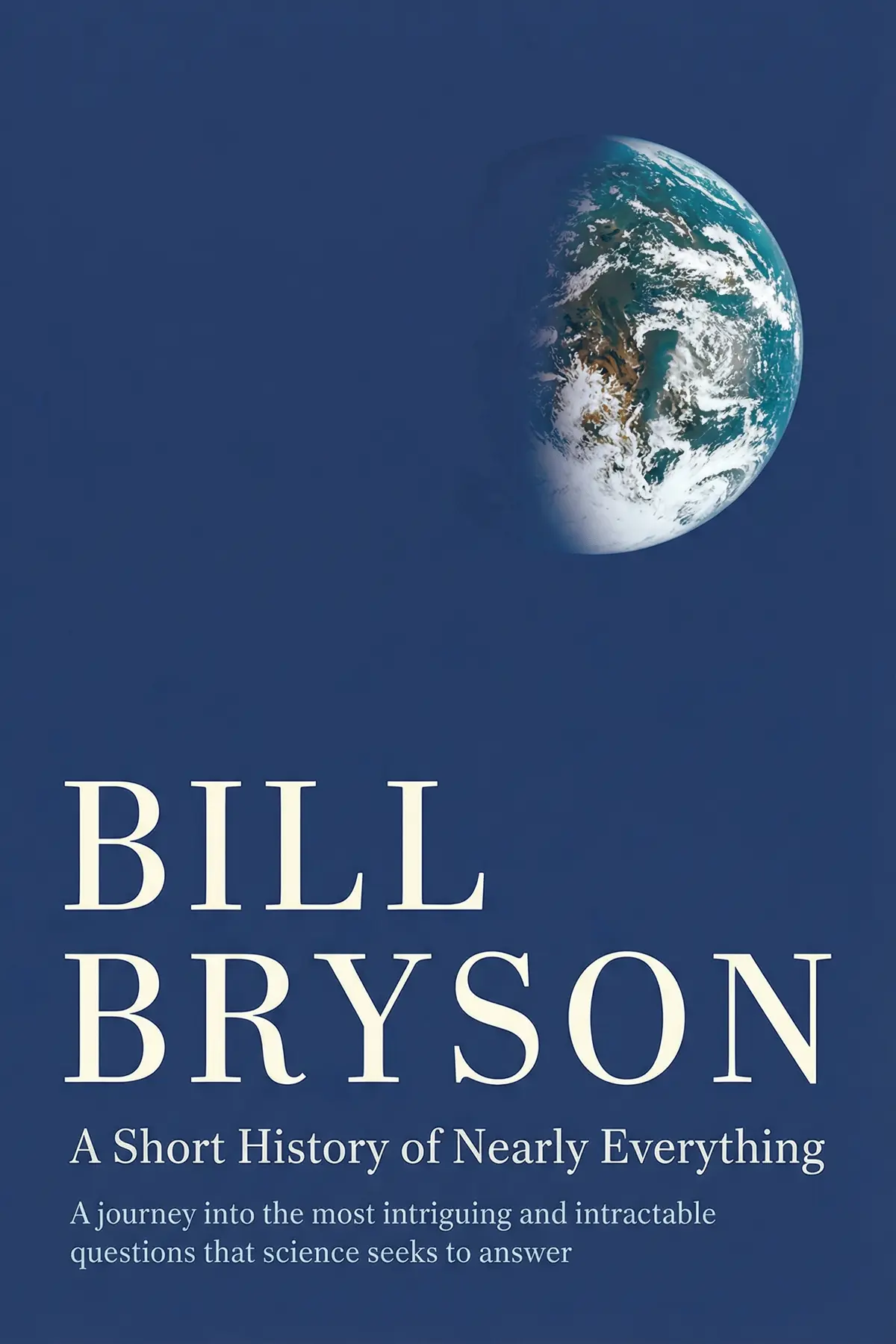
A Short History of Nearly Everything
Bill Bryson
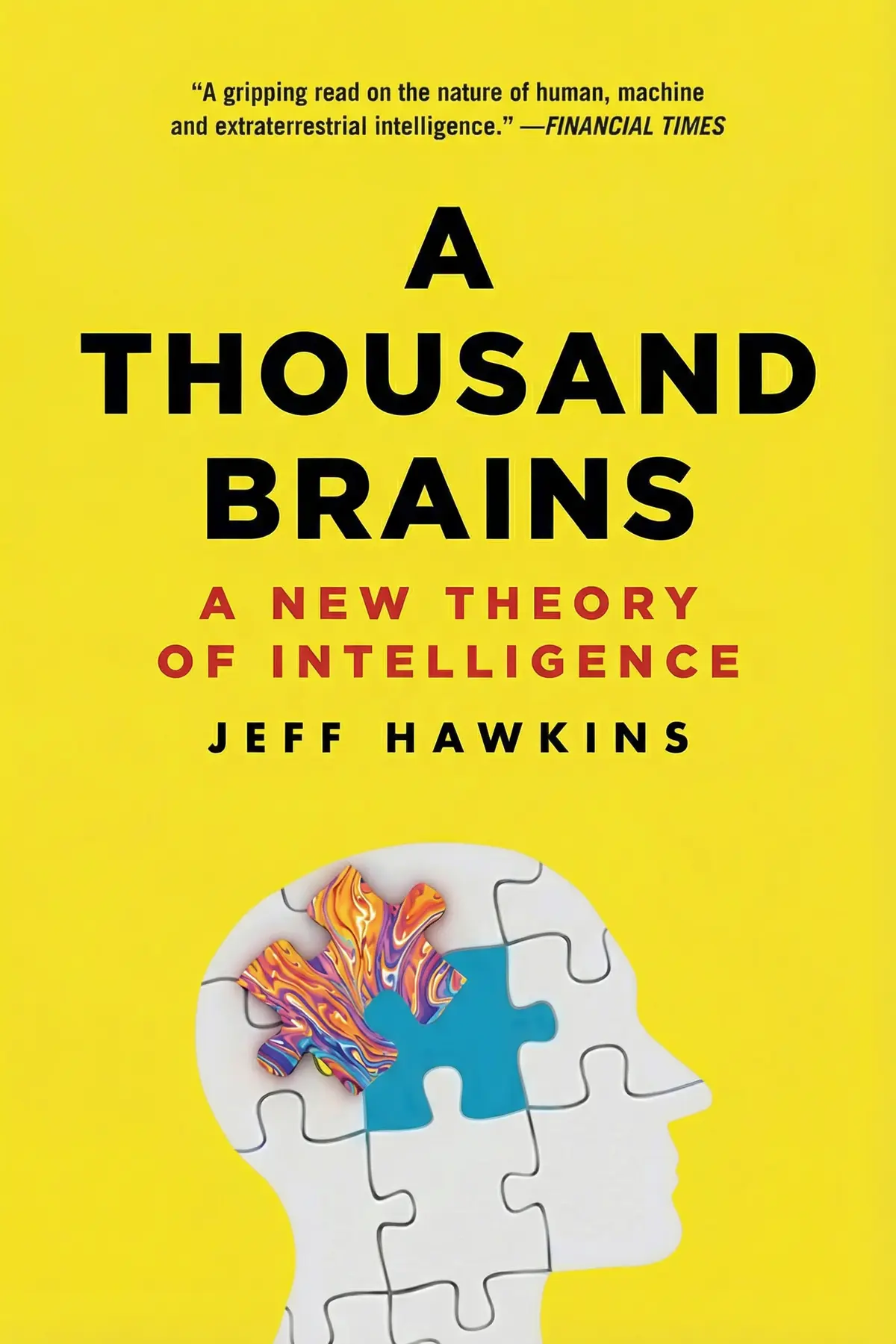
A Thousand Brains: A New Theory of Intelligence
Jeff Hawkins
AUDIO SUMMARY AVAILABLE
Listen to Relativity in 15 minutes
Get the key ideas from Relativity by Albert Einstein, plus 5,000+ more titles in English and Thai.
- 5,000+ titles
- Listen as much as you want
- 7-day free trial
- Cancel anytime







