

15 min 27 sec
Rethinking Positive Thinking: Inside the New Science of Motivation
Explore why positive thinking often fails and learn the WOOP method—a scientifically proven strategy that combines your biggest dreams with a realistic plan to overcome life's obstacles.
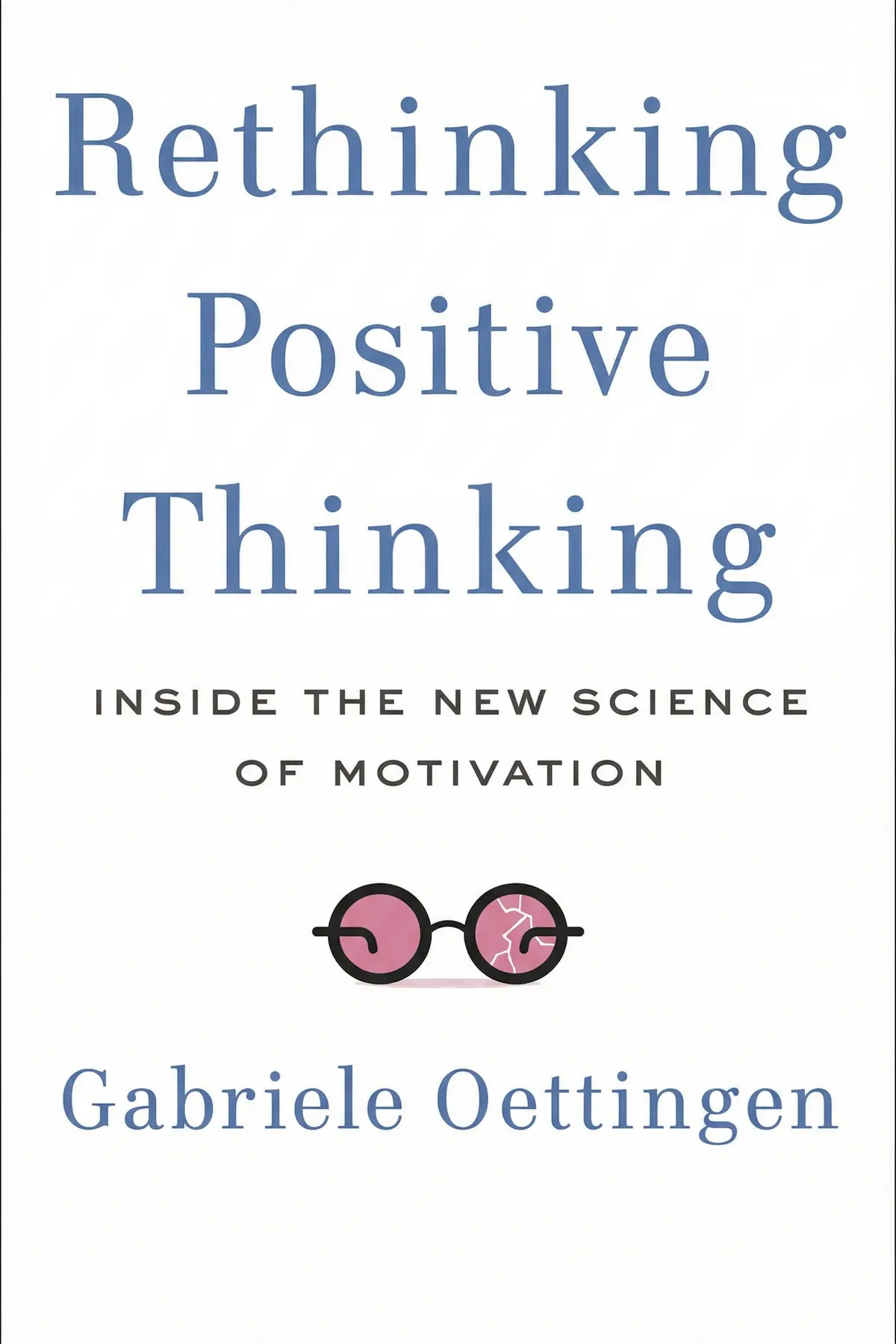
Table of Content
1. Introduction
1 min 34 sec
In our modern world, we are constantly told that the secret to success is simply a matter of mindset. We are encouraged to visualize our dreams, create elaborate vision boards, and repeat positive affirmations until our desires manifest into reality. This message of unbridled optimism is everywhere—from self-help bestsellers to corporate seminars. But what if this advice is actually steering us toward failure? What if the very act of dreaming about a better future is the thing that prevents us from ever reaching it?
This is the provocative question at the heart of Rethinking Positive Thinking. Based on more than twenty years of rigorous psychological research, this exploration challenges the conventional wisdom of the self-improvement industry. It reveals that while positive thinking feels good in the moment, it can be a deceptive trap that saps our energy and tricks our brains into thinking the hard work is already done.
However, this is not a call to become a pessimist. Instead, it is an invitation to adopt a more sophisticated and effective way of thinking. You will be introduced to a concept known as mental contrasting—a strategy that doesn’t ask you to give up your dreams, but rather to ground them in the reality of your current situation. By the end of this journey, you will understand the WOOP method, a practical four-step process designed to help you navigate obstacles and turn your most meaningful wishes into tangible results. Whether your goals involve health, career, or personal growth, the path forward starts by looking at the future and the present simultaneously.
2. The Hidden Downside of Dreaming
2 min 35 sec
Could your most inspiring daydreams actually be your biggest obstacles? Discover why your brain might be tricking you into feeling a false sense of accomplishment.
3. The Economic Fallout of Over-Optimism
2 min 22 sec
What happens when an entire society prioritizes feeling good over seeing things as they really are? Explore the surprising link between positive language and economic decline.
4. Distinguishing Between Two Kinds of Optimism
2 min 30 sec
Not all positive thoughts are created equal. Learn the crucial difference between a grounded expectation and a seductive fantasy.
5. Harnessing the Power of Mental Contrasting
2 min 21 sec
Ready to stop dreaming and start doing? Learn the simple mental shift that turns a vague wish into a strategic plan.
6. Closing the Gap with the WOOP Method
2 min 41 sec
Execution is where most dreams go to die. Discover the four-step framework that automates your success and bypasses the need for willpower.
7. Conclusion
1 min 24 sec
The central lesson of Rethinking Positive Thinking is that dreaming of a better future is only the first step—and if it’s the only step you take, it may actually be a step backward. Gabriele Oettingen’s decades of research show us that while we all love the feeling of a positive fantasy, we must be careful not to let that feeling replace the actual work of achievement. Success is not found by ignoring the difficulties of life, but by confronting them head-on with a strategic mind.
By moving away from pure, ungrounded optimism and toward the practice of mental contrasting, we gain a clearer view of both our potential and our pitfalls. The WOOP framework—Wish, Outcome, Obstacle, Plan—offers a bridge between where we are and where we want to be. It encourages us to be bold in our desires but realistic about the internal barriers that might hold us back.
As you move forward, remember that identifying an obstacle isn’t a sign of negativity; it’s the highest form of preparedness. By anticipating the ‘Ifs’ of your journey and pre-deciding your ‘Thens,’ you remove the burden of willpower and replace it with the power of automation. Start applying WOOP to your daily life, and you may find that the reality you create is even better than the fantasies you used to have. Real progress isn’t about ignoring the clouds; it’s about building the ladder to climb through them.
About this book
What is this book about?
Rethinking Positive Thinking explores the surprising psychological reality that dreaming about success can actually prevent us from achieving it. While we are often told that visualization is the key to reaching our goals, this book presents two decades of research showing that pure fantasy can sap our motivation and lower our energy. The book offers a practical alternative called mental contrasting, which involves looking at both the future we desire and the internal barriers that stand in our way. By using the WOOP framework—Wish, Outcome, Obstacle, and Plan—readers can learn to bridge the gap between their aspirations and their reality. This summary provides the tools to transform vague daydreams into actionable results, whether you are looking to improve your health, your career, or your personal relationships.
Book Information
About the Author
Gabriele Oettingen
Gabriele Oettingen serves as a distinguished professor of psychology. She currently holds dual academic appointments, teaching and conducting research at both New York University and the University of Hamburg. Her professional work is deeply rooted in the fields of psychology and behavioral science, with a specific and career-long focus on investigating the various ways that our thoughts regarding the future can influence and shape human behavior.
Ratings & Reviews
Ratings at a glance
What people think
Listeners value the thorough research and actionable insights presented, with one noting that it provides helpful clarity regarding positive thinking. Furthermore, the material is simple to apply and listeners indicate they are seeing results, including one who highlights how it transforms negative energy into productive action. However, the prose receives varied reviews, as some find it well-crafted while others disagree.
Top reviews
Duang
Finally got around to reading this, and it actually changed my morning routine. Most self-help books just tell you to 'dream big,' but Oettingen explains why that actually kills your drive. The science here is legit; it's not just some influencer's opinion. I love how she breaks down 'mental contrasting' into something as simple as WOOP. It’s about looking at your wish, the outcome, the obstacles, and then the plan. Frankly, the 'if-then' part is where the magic happens because it stops you from just daydreaming. It feels like I’m finally channeling my negativity into something useful instead of just wallowing. A total game changer for anyone tired of the typical fluff.
Show moreOksana
The chapter on internal obstacles really hit home for me. We usually blame the external world for our failures, but Oettingen forces you to look at your own procrastination and fear. I’ve read a lot of productivity books, but this is the first one that explains the 'why' behind motivation so clearly. Using the WOOP method has helped me identify why I keep reaching for cake when I’m trying to diet. It’s not just about wanting to be thin; it’s about having a plan for when that craving hits. Truth is, the science here is much more reliable than the standard 'positive vibes only' crowd. It takes effort to implement, but the results are worth the work.
Show morePlernpiriya
Don't let the negative reviews fool you; this book is a treasure for anyone who actually wants to get stuff done. Most of the people complaining seem to be looking for entertainment rather than a functional tool. This is a science book, first and foremost. It offers a revolutionary technique that goes beyond the 'Law of Attraction' nonsense that’s been poisoning the genre for years. I’ve been using WOOP for three months now, and my productivity has skyrocketed. It’s about being realistic, not just optimistic. It takes discipline to follow the steps, but that’s exactly why it works. It’s a must-read for the serious goal-setter.
Show moreTantipat
Ever wonder why your New Year's resolutions always fail by February? Oettingen argues it’s because we’re too busy fantasizing about the finish line instead of looking at the hurdles. I found the distinction between 'positive expectations' and 'free-floating fantasies' really eye-opening. It turns out that just visualizing success can trick your brain into thinking you’ve already won, causing your motivation to evaporate. The book provides a very clear, easy-to-employ framework to fix this. My only gripe is the repetition of the term WOOP. It gets a bit grating after a few chapters, but the underlying wisdom is solid. I’ve started applying the 'if-then' plans to my work projects with great success. It’s grounded, realistic, and refreshingly devoid of toxic positivity.
Show moreLily
After hearing about 'mental contrasting' on a podcast, I decided to dive into the source material. Dr. Oettingen is clearly a brilliant researcher, and her work in Germany and the US is impressive. This isn't your typical fluffy self-help; it’s a rigorous look at how our brains process desires. I appreciated the specific examples involving health and career goals. It’s a bit dry in spots, but the practical wisdom is undeniable. The 'if-then' plan is such a simple tool, yet it makes a massive difference in how I approach my daily tasks. I’d recommend it to anyone who wants a more grounded approach to achieving their dreams without the fake 'rah-rah' energy.
Show moreBo
Picked this up because I was tired of failing at my fitness goals. I’ve spent years 'visualizing' myself at the gym, but as this book points out, that’s exactly why I wasn't going. The idea that fantasizing drains your energy was a total 'aha' moment for me. I needed to focus on the obstacles—like my love for fuckin cake—instead of just the end result. The WOOP process is easy to employ and keeps me honest about my progress. It’s not a fun or 'inspiring' read in the traditional sense, but it is deeply practical. If you want a book that tells you the hard truth about why you’re stuck, this is it.
Show moreKrisada
As someone who enjoys psychology, I had high hopes for this one. The core message is fantastic: stop just dreaming and start planning for the obstacles. However, the book feels incredibly stretched out. It feels like the author had one brilliant idea and then had to fill 200 pages to justify a hardcover release. Look, the WOOP acronym is helpful, but is it really revolutionary? Most of us call this 'common sense' or just 'making a plan.' Still, the research is well-documented and provides a useful clarification of why blind optimism fails. It’s a decent read if you have the patience for an academic tone, but don't expect a fast-paced page-turner.
Show moreYongyut
Wow. This book definitely has some polarizing reviews, and I can see why. On one hand, the science is incredibly well-researched and provides a much-needed critique of the positive thinking industry. On the other hand, the writing style is a bit clunky and repetitive. The author seems obsessed with her WOOP acronym, which she must mention 10,000 times throughout the text. I found myself skimming through some of the redundant study descriptions just to get to the 'how-to' sections. It’s a useful tool, certainly, but the presentation could have been much tighter. It’s worth a read for the core concept alone, even if the delivery isn't perfect.
Show morePetch
This book was a slog to get through because of the endless academic studies. I get that she’s a professor, but do we really need twenty different examples of college kids and weight loss goals? To be fair, the WOOP method is actually a pretty clever way to handle goal setting. But honestly, the writing is so dry that it drains the excitement right out of the room. You could probably sum up the entire premise in a single blog post and save yourself ten hours of reading. If you love dense psychological data, you might enjoy it. For me, it felt like reading a textbook when I just wanted a helpful guide.
Show morePensri
Not what I expected at all, and frankly, it was a chore to finish. I thought this would be an inspiring look at motivation, but it was just a series of uninspired research papers on some hapless college kids stitched together. The author repeats the word 'WOOP' so many times it starts to feel like a bad joke. By the time I got to the actual 'method,' I had already lost interest. It’s incredibly repetitive and lacks the warmth you find in other psychology books. If you want to learn how to plan, just Google 'if-then planning' and save your money. This book managed to make a fascinating topic feel completely dull and lifeless.
Show moreReaders also enjoyed
A High-Performing Mind: Strengthen Your Mind and Live Your Best Life
Andrew D. Thompson
Abundance: The Inner Path to Wealth
Deepak Chopra

59 Seconds: Change Your Life in Under a Minute
Richard Wiseman
AUDIO SUMMARY AVAILABLE
Listen to Rethinking Positive Thinking in 15 minutes
Get the key ideas from Rethinking Positive Thinking by Gabriele Oettingen, plus 5,000+ more titles in English and Thai.
- 5,000+ titles
- Listen as much as you want
- 7-day free trial
- Cancel anytime







