

14 min 24 sec
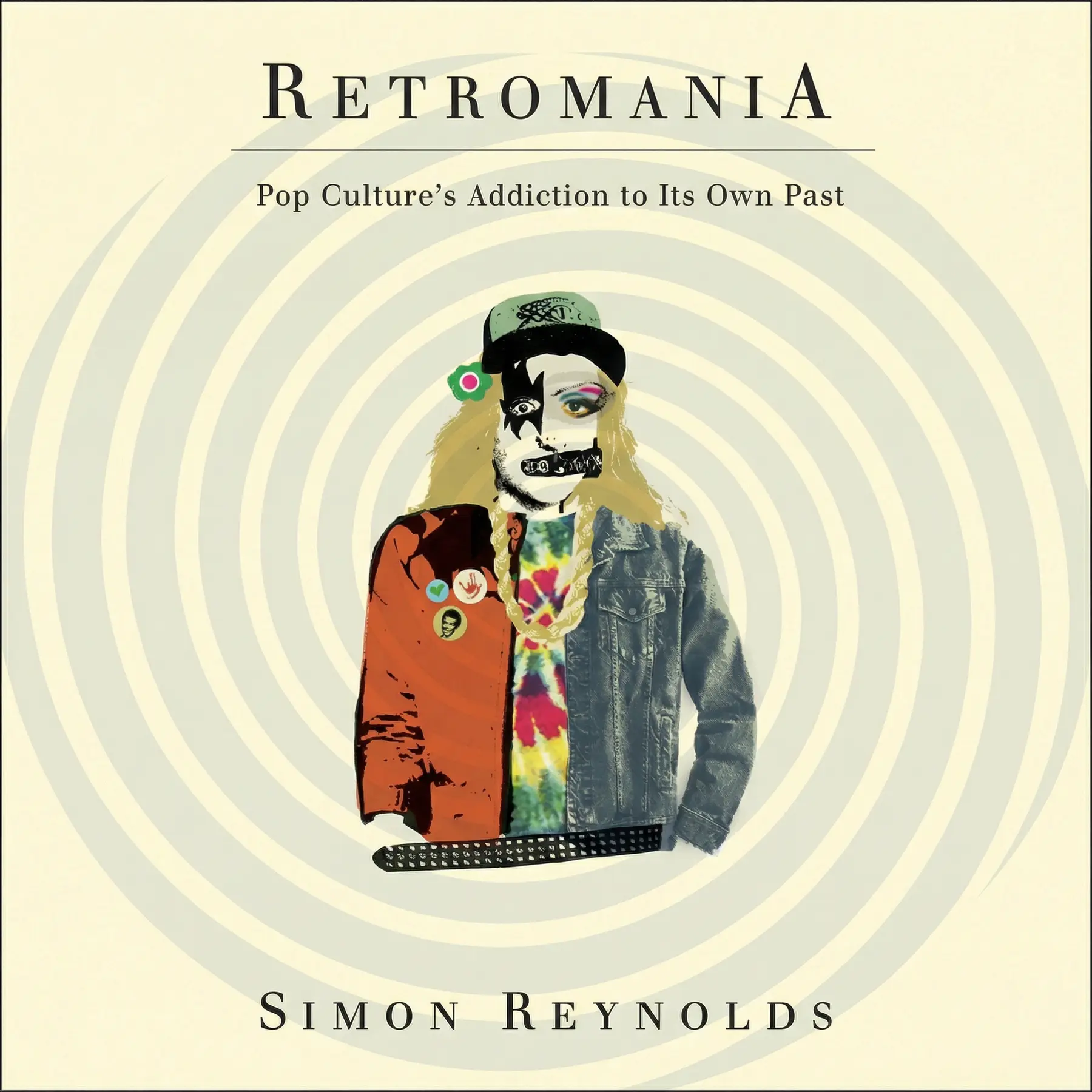
Retromania: Pop Culture’s Addiction to Its Own Past
Retromania investigates why modern music is obsessed with its past. Simon Reynolds explores the shift from musical innovation to digital curation, questioning if we have traded a creative future for nostalgic recycling.
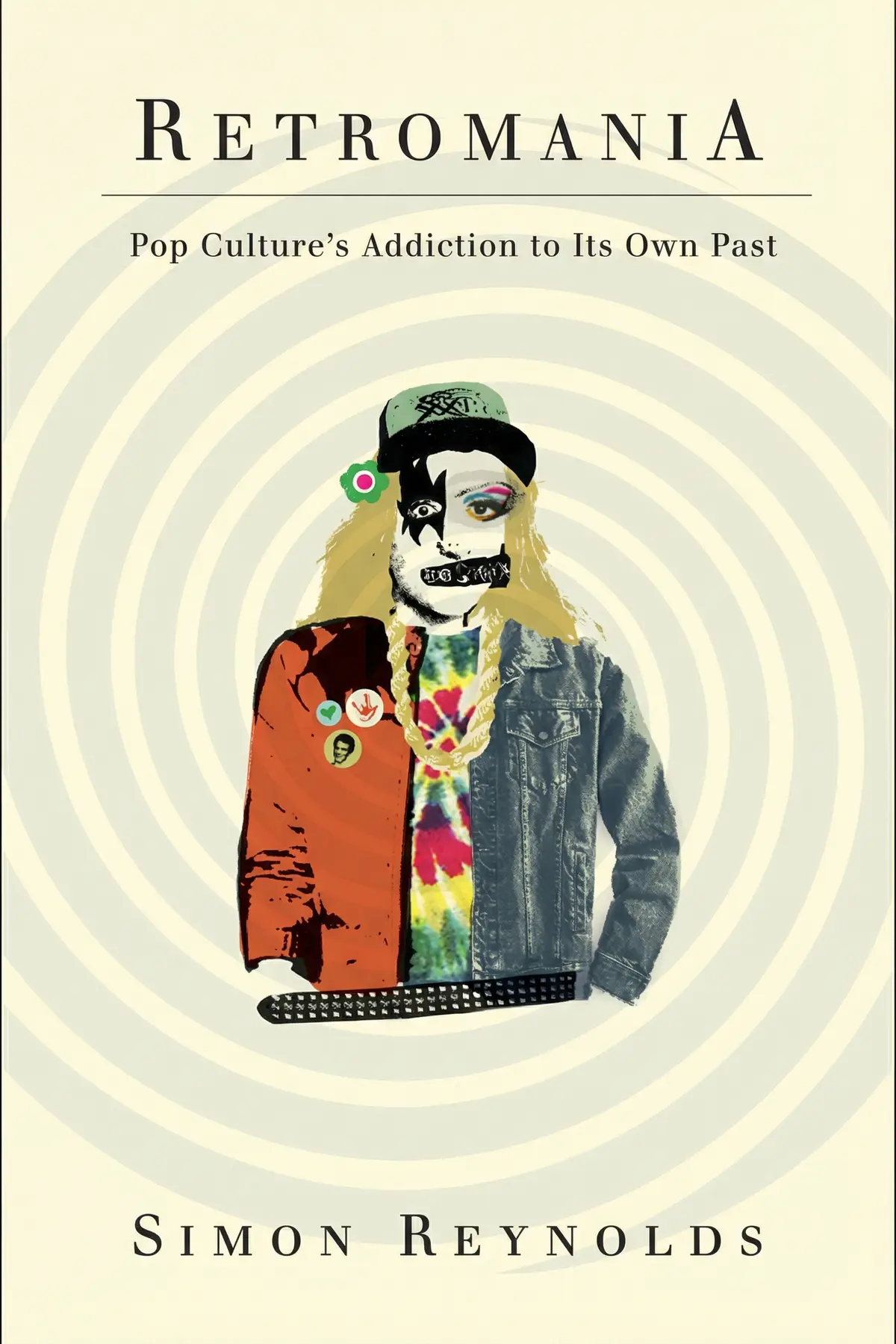
Table of Content
1. Introduction
1 min 34 sec
Have you ever found yourself listening to a modern hit and thinking it sounds like something your parents might have played? Or perhaps you’ve noticed that the biggest trends in fashion and music seem to be loops of the 1970s, 80s, or 90s. We often hear older generations grumble that music was ‘better in the old days,’ but what if that isn’t just a sign of aging? What if it’s a measurable cultural reality? This is the central provocation offered by Simon Reynolds in his exploration of what he calls our ‘retromania.’
For most of the 20th century, pop culture was defined by its relentless push toward the future. It was a time of constant reinvention, where each decade sought to kill the one that came before it to build something entirely new. But as we crossed the threshold into the new millennium, something changed. The forward momentum seemed to stall. Instead of inventing the next big thing, we became obsessed with the ‘last’ big things.
In the pages that follow, we are going to look at why the first decade of the 2000s felt so different from the creative explosions that preceded it. We will explore how our relationship with technology has fundamentally altered the way we consume and create, and why our massive digital archives might be acting as an anchor rather than a sail. This isn’t just about complaining that things aren’t what they used to be; it’s about understanding the shift from a culture of production to a culture of curation. By the end of this journey, you’ll see why our addiction to the past might be the very thing preventing us from building a meaningful future.
2. The Great Creative Stagnation of the New Millennium
2 min 05 sec
While the 1990s were marked by explosive new movements like rave and techno, the turn of the century brought a surprising lack of original innovation.
3. Tracing the Decades of Rapid Invention
2 min 04 sec
From the folk-rock of the 60s to the grunge of the 90s, the late 20th century was an unparalleled era of constant musical evolution.
4. The Golden Age and the Myth of Authenticity
2 min 01 sec
Modern artists often look back to the 1960s not just for their sound, but for a sense of purpose and authenticity they feel is missing today.
5. The Failure to Rebel and the Trap of the Archive
1 min 47 sec
In previous eras, youth culture thrived on rejecting the past; today, the ease of access to history makes it nearly impossible to ignore.
6. Technology as the Real Modern Innovation
1 min 45 sec
Innovation hasn’t disappeared; it has simply shifted from the music itself to the platforms we use to find and share it.
7. From Production to Post-Production in a Digital World
1 min 43 sec
The rise of the DJ as the ultimate modern artist reflects our broader shift toward a white-collar, service-based economy.
8. Conclusion
1 min 25 sec
As we have seen, the phenomenon of ‘retromania’ is much more than just a simple case of nostalgia. It is a fundamental shift in the way our culture operates. For decades, the engine of progress was a desire to break with the past and invent a new future. But today, that engine has been replaced by a massive, digital archive that keeps us circling the same familiar sounds.
The 2000s marked a turning point where innovation moved away from the art itself and into the technology we use to consume it. We have become incredibly skilled at archiving, remixing, and reviving, but we have struggled to find a voice that belongs uniquely to the present. By looking at everything from the ‘Golden Age’ myths of the 1960s to the rise of the DJ as a post-production specialist, it becomes clear that we are living in a time of cultural recycling.
This matters because a culture that only looks backward risks losing its ability to imagine anything new. While the past is a rich and wonderful resource, it shouldn’t be a prison. The challenge for the next generation of creators is to use the incredible tools we have—not just to curate the best of what has been—but to finally create the ‘new’ that we have been missing. It is time to stop being the editors of history and start becoming the authors of the future. Let the music of the coming years be remembered for its own spirit, rather than just the device it was played on.
About this book
What is this book about?
Have you ever felt like the new music coming out today sounds strangely familiar? In Retromania, renowned music critic Simon Reynolds argues that this isn't just a personal feeling, but a defining characteristic of our time. He examines how the first decade of the 2000s saw a sharp decline in musical innovation, replaced by a deep-seated obsession with the sounds and styles of previous decades. Reynolds takes us through the high-water marks of 20th-century creativity—from the experimentalism of the 1960s to the explosive rave culture of the 1990s—and contrasts them with the present day's reliance on recycling, remixing, and revivals. He explores how technology has transformed us from creators into curators, and how our digital archives have become a trap that keeps us looking backward. This book promises a provocative look at the psychology of nostalgia and its impact on the future of global culture.
Book Information
About the Author
Simon Reynolds
Simon Reynolds is a British music critic and journalist. After working for the magazine Melody Maker in the 1980s, he became a regular contributor to the Village Voice and the Guardian and wrote several books on the history of music.
Ratings & Reviews
Ratings at a glance
What people think
Listeners find the book's substance valuable, with one person pointing out the wide array of subjects explored. The author's prose style, however, prompts varying responses from listeners.
Top reviews
Pichaya
Simon Reynolds has managed to articulate that nagging feeling I've had while scrolling through Spotify's endless, algorithmically-driven discovery playlists. He explores the idea that we have entered a period of 'evaluation' and reprocessing rather than one of genuine creation. His interviews with artists like Daniel Lopatin provide a fascinating glimpse into how modern musicians view the vast archive of the past as a sublime landscape. This is a wonderfully dense book that goes into incredible depth on subcultures I had never even heard of. The writing is sharp, erudite, and perfectly captures the anxiety of influence that permeates today’s musical landscape. I finished this feeling both enlightened and a little bit mourned for the 'shock of the new' that used to define pop. It is, without a doubt, the most important music book of the last two decades.
Show morePairot
Wow, what an exhaustive and essential map of our current cultural stagnation. Reynolds is easily the most astute thinker on music we have, and here he is at the height of his powers. He perfectly distinguishes between 'nostalgia'—the memory of a time and place—and 'retromania,' which is the structural reliance on the past for creative fuel. Every page is packed with 'did-you-know' facts that actually serve a greater philosophical point about the end of linear progress. Even when he talks about genres I don’t particularly love, his enthusiasm and hipster elan keep the narrative moving. This isn't just a book about music; it's a book about how we experience time in the digital age. A masterpiece.
Show moreCha
The chapter on hauntology alone makes the entire 400-plus page journey worth the price of admission. Reynolds explores how artists like Ghost Box use British 'municipal retro' to create a sense of lost utopianism that feels incredibly poignant. I loved his breakdown of how the internet has changed our relationship to tracks, making us 'hoarders' rather than listeners. The book is admittedly dense, but that is because the subject matter requires a high level of erudition to navigate properly. He managed to make me rethink my entire record collection and the way I consume media on a daily basis. It is a rare book that changes your perspective on your own hobbies while providing a macro-level theory of history. Truly a fantastic achievement for any music lover looking for a brand-new sound in a world of repeats.
Show moreOmar
Finally got around to reading this classic, and it feels even more relevant in the era of TikTok 'core' aesthetics than it did upon release. Reynolds identifies a fundamental shift where we moved from a 'Renaissance' of recording into a period of endless evaluation. His prose is sharp and manageably intellectual, even when he's diving into the deep end of French theory. I appreciated the way he connects the dots between 60s garage rock revivals and the current digital 'everything-always' archive. The detail is staggering, but for a true music nerd, that's the main selling point rather than a drawback. It’s a book that invites you to argue with it, to look up every band mentioned, and to question why we are so afraid of the future. I cannot recommend it highly enough for the 'poor old music lover' seeking truth.
Show moreAnucha
Frankly, Reynolds is a master of the deep dive, even if he occasionally forgets to come up for air during the process. This book provides a staggering analysis of how digital culture and YouTube have turned us all into amateur curators of our own nostalgia. I particularly loved the sections on record collecting and the 'fetishization' of reissues; it made me feel seen and slightly attacked at the same time. He manages to balance high-level cultural theory with a genuine love for the grit of rock history. There are moments where the sheer density of the prose makes it a slow crawl, but the intellectual rewards are worth the effort. If you have ever felt that music has reached a point of 'next to no brand-new sounds,' this will confirm your suspicions. It is a dark, brilliant look at why we can't stop looking back.
Show moreRotjanee
As someone who collects vinyl and obsesses over reissue culture, this was a difficult mirror to look into. Reynolds writes that the box set is often where an old enthusiasm goes to die—a band frozen into an indigestible, tombstone-like chunk. That line alone stayed with me for weeks because it perfectly captures the morbidity of our current 'archival' obsession. The book is knee-deep in examples of cultural recycling, which is ironic considering Reynolds' own encyclopedic tendencies. While I don't always share his pessimism or his longing for a 'Modernist' breakthrough, I respect the rigor of his thinking. The final chapters tie everything together with a heavy dose of cultural theory that makes the previous cataloging feel more purposeful. It is a demanding read, but one that anyone serious about pop culture needs to tackle eventually.
Show moreHugo
Ever wonder why every 'new' band today sounds like a carbon copy of a group from 1979? Reynolds tackles this head-on, arguing that pop is essentially eating itself by endlessly recycling old tropes rather than inventing new futures. While the premise is brilliant, the execution is a bit of a mixed bag for me. Some chapters read like isolated essays that don't quite connect to a larger through-line, particularly the deep dives into Northern Soul or 50s revivals. His prose style successfully combines academic respectability with a certain hipster elan, but the sheer volume of niche fads eventually becomes exhausting. I really enjoyed his insights on the 'end of the future,' yet I found myself skimming the middle sections. It is a very good book for music obsessives, though perhaps a bit too bloated for its own good.
Show moreChanon
Look, the first hundred pages of this are absolutely electric. Reynolds sets up a compelling argument about how modernity became so obsessed with its own immediate pop culture past. Unfortunately, as the book progresses, it devolves into a detailed inventory of obscure niche fads that don’t seem to add much to the core story. I found it odd that despite the subtitle, the focus remains almost entirely on music with only brief glimpses of fashion or cinema. The pieces don't always add up once pulled together, and the scholar-to-fanboy shift in tone can be jarring. It would have made a world-class long-form magazine article, but it struggles to justify a 500-page runtime. If you're a music tragic, read the chapters that resonate with you and feel free to skip the rest.
Show moreWorawit
This book feels like a lavish box set that desperately needed a disc-remover. Reynolds’ knowledge is undoubtedly expansive, taking the reader on a dizzying cultural tour of every backward-looking music fad from the 1950s until 2005. It is genuinely fascinating for about 150 pages, but then it starts to feel like he is simply showing off his mental library. The narrative becomes a pile of dense details without a clear, sustaining direction. He seems principally concerned with cataloging so-called 'Retromania' while only sandwiching an actual hypothesis about our love of the past into the final few pages. Frankly, it is a lot of archival work with very little payoff for the casual reader. Ultimately, I found this to be an interesting but deeply unsatisfying read that could have used a much heavier editorial hand.
Show moreA
Not what I expected given the subtitle’s promise of a broader look at modern life and popular culture. This is a music book through and through, which would be fine if it didn't get bogged down in endless lists of bands. Reynolds trips on his own vast knowledge and loses the premise that justified the book's existence in the first place. Why do we live obsessed with the past? He asks the question early on but then spends 300 pages listing record labels and reissue dates instead of answering it. The writing style fluctuates between overly academic jargon and casual rock-crit slang in a way that feels inconsistent. To be fair, he is a talented writer, but this project felt like it lacked a strong editorial voice to keep him on track. I felt more bored than enlightened by the end.
Show moreReaders also enjoyed
A Room of One’s Own
Virginia Woolf
Abolish Rent: How Tenants Can End the Housing Crisis
Tracy Rosenthal
Abortion: Our Bodies, Their Lies, and the Truths We Use to
Jessica Valenti

Afropean: Notes From Black Europe
Johny Pitts
All About Love: New Visions
bell hooks
AUDIO SUMMARY AVAILABLE
Listen to Retromania in 15 minutes
Get the key ideas from Retromania by Simon Reynolds, plus 5,000+ more titles in English and Thai.
- 5,000+ titles
- Listen as much as you want
- 7-day free trial
- Cancel anytime







