

A Biography of Loneliness: The History of an Emotion
Fay Bound Alberti
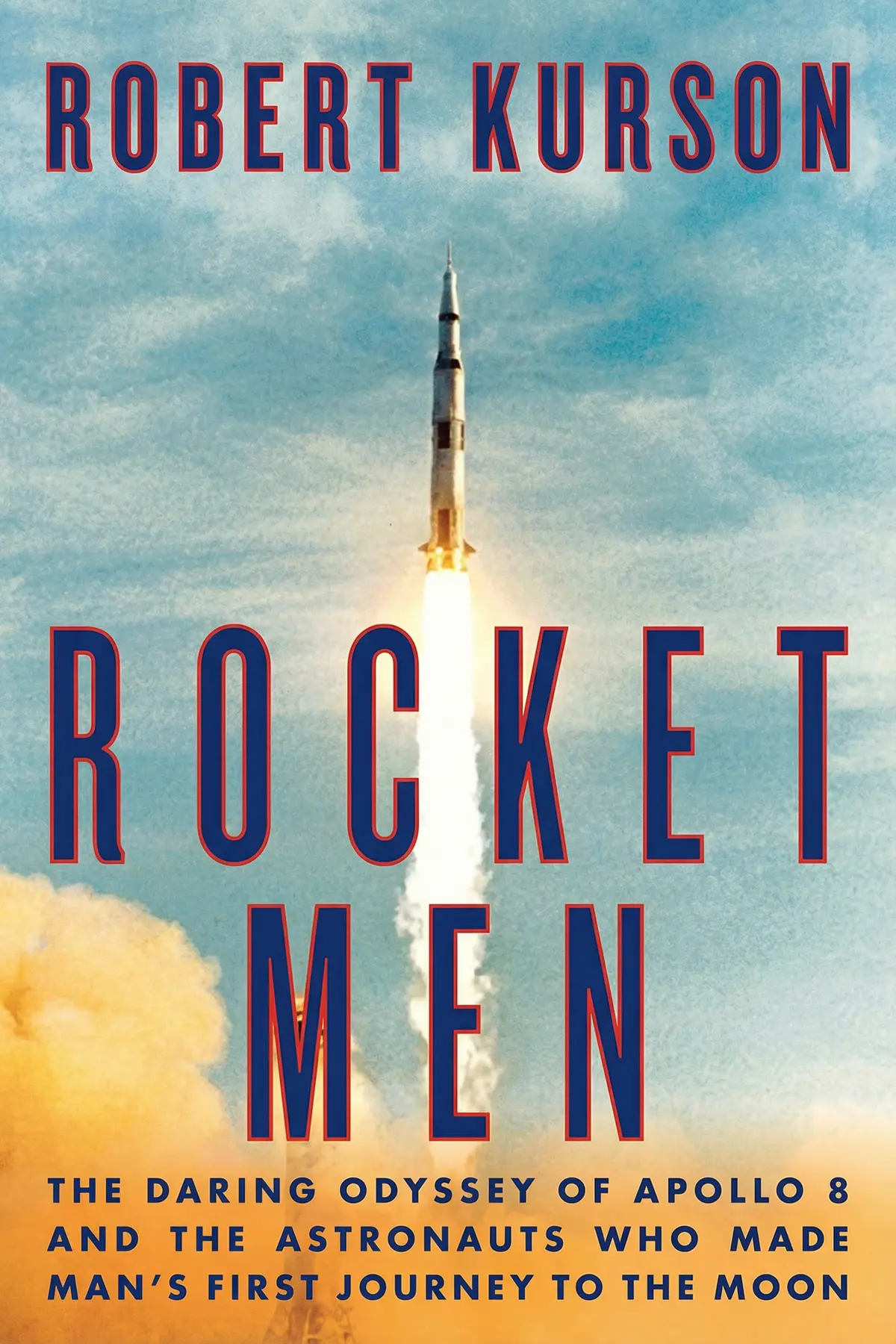
Rocket Men chronicles the high-stakes Apollo 8 mission, detailing the incredible bravery of three astronauts who performed the first lunar orbit and provided a fractured nation with a moment of unity.
1 min 49 sec
The vastness of space has always captured our imagination, often depicted in fiction as a frontier that is easily crossed with the right technology. We see starships gliding through the void and explorers visiting distant worlds as if it were a simple Sunday drive. But the reality of space exploration is far removed from the ease of science fiction. It is a story written in sweat, high-stakes mathematics, and an almost unbelievable level of human courage.
In this exploration of Rocket Men, we step back into a time when the moon was not just a destination, but a symbol of national survival. In the late 1960s, the United States was caught in a grueling competition with the Soviet Union, a rivalry known as the Space Race. For a long time, it looked like the Americans were losing. The Soviets had launched the first satellite and the first human into orbit, leaving NASA to scramble in their wake.
But in 1968, a year defined by social unrest and political tragedy, a group of scientists and three brave men decided to make a gamble that would change history. They weren’t just aiming for orbit; they were aiming for the moon itself. This is the story of Apollo 8—the first manned mission to leave the gravity of Earth and orbit our celestial neighbor. It is a narrative about a four-month sprint to do the impossible, about the families who waited in fear, and about how a cold-war competition ended up giving humanity a brand-new perspective on our home.
As we walk through these events, you will discover the intense pressure the crew faced, the technical miracles required to keep them alive, and why a single photograph taken from lunar orbit did more to unite the world than any treaty ever could. It’s a journey that reminds us that while we may be divided by borders and ideologies, we are all inhabitants of the same fragile, beautiful blue marble.
2 min 19 sec
Discover how a post-war rivalry transformed into a high-stakes technological battle that saw the Soviet Union take an early, commanding lead.
2 min 16 sec
Explore why the Apollo 8 mission became a beacon of hope for an American public fractured by war, assassinations, and civil unrest.
2 min 17 sec
Learn how NASA made the radical decision to jump straight to a lunar orbit, bypassing years of planned testing to stay ahead of the Soviets.
2 min 29 sec
Meet the three very different men who made up the Apollo 8 crew and discover how their unique personalities fueled their success.
2 min 08 sec
Understand the terrifying precision required to enter lunar orbit and why the far side of the moon was the ultimate test of nerves.
2 min 03 sec
Reflect on the often-overlooked courage of the astronauts’ families and the thousands of ground crew members who made the journey possible.
2 min 18 sec
Relive the moment the crew saw Earth from the moon’s orbit and discover how a single image changed our understanding of our place in the universe.
1 min 27 sec
The story of Apollo 8 is a powerful reminder of what is possible when human ingenuity and courage are pushed to their absolute limits. It began as a desperate attempt to catch up in a high-stakes geopolitical race, but it transformed into an event that transcended politics entirely. By deciding to take a massive leap into the unknown, NASA and the three men aboard that capsule didn’t just reach the moon; they reached back to Earth and touched the hearts of millions of people who were searching for hope in a dark time.
We see in this journey that the technical challenges—the incredible math of the lunar orbit and the terrifying heat of reentry—were only half the story. The other half was the human resilience of the crew and the families who supported them. It shows us that even in our most divided moments, we are capable of achieving something that unites us all.
As we look back on the legacy of Rocket Men, the most important takeaway is the perspective shift that occurred when we first saw our home from a distance. It taught us that our planet is a single, interconnected system, a lonely but beautiful outpost in the vastness of space. The courage of the Apollo 8 crew invites us to keep looking upward, not just to find new worlds, but to better understand and cherish the one we already inhabit. Their journey was a daring odyssey that proved that while the stars may be far away, the spirit of exploration is what truly brings us together.
Rocket Men is a deep dive into one of the most pivotal moments in human history: the journey of Apollo 8. While many people focus on the first moon landing, this narrative centers on the first mission to actually leave Earth's orbit and circle our celestial neighbor. It is a story of incredible technical prowess, but more importantly, it is a human story about the people who made it happen. The book promises to transport you back to the tumultuous year of 1968, a time when the world seemed to be falling apart, and shows how a single, daring mission provided a glimmer of hope. You will learn about the three astronauts who piloted the craft, the wives who supported them from the ground, and the thousands of NASA employees who worked under impossible deadlines to beat the Soviet Union. Ultimately, it is a testament to the power of human ingenuity and the perspective we gain when we look back at our own planet from the vastness of space.
Robert Kurson is an award-winning writer whose work has been published in the New York Times Magazine, Rolling Stone and Esquire.
Listeners find this narrative to be a gripping experience that flows like a novel, providing a superb chronicle of the Apollo 8 journey and exceptional insights into its preparation. The prose is expertly written, and listeners value the deep historical context, particularly regarding the year 1968. They describe it as an absorbing adventure that embodies human bravery and spirit, while maintaining a perfect harmony between the mission’s technical details and its personal elements.
1968 was a year of absolute chaos, and Kurson manages to capture that tension perfectly within the framework of a space mission. Most people focus on the Apollo 11 moon landing, but this book argues convincingly that Apollo 8 was the more daring feat. I was moved by the juxtaposition of the Vietnam War and civil rights protests against the quiet, terrifying solitude of three men orbiting the moon. The writing is so cinematic that I often forgot I was reading nonfiction. While the technical bits are present, they never bog down the emotional core of the story. It’s a testament to the human spirit during a time when everything seemed to be falling apart. Truly a must-read for history buffs.
Show moreWhy did it take me so long to read this? I’ve always been fascinated by NASA, yet I knew surprisingly little about the specific risks involved in the Christmas 1968 mission. Kurson doesn't just focus on the men in the capsule; he gives significant space to their wives—Susan Borman, Marilyn Lovell, and Valerie Anders. Seeing the mission through their eyes added a layer of anxiety and groundedness that many space books lack. The reality of their domestic lives, lived under the shadow of potential tragedy, was heartbreaking. To be fair, some of the political context felt a little repetitive if you're already familiar with the 60s. However, the description of the 'Earthrise' photo alone makes the whole book worth it.
Show moreHonestly, this is one of the few books that actually made me hold my breath during chapters where I already knew the outcome. Kurson has a gift for building suspense out of historical facts that should be common knowledge. I was particularly struck by the 'Genesis' reading on Christmas Eve and how that moment impacted a fractured world. The book does a great job illustrating how thin the margin for error was for these men. If one engine didn't fire at the exact right second, they were lost in space forever. It’s a terrifying thought that keeps you turning pages late into the night. It isn't just a book about NASA; it’s a book about what it means to be brave when the world is watching.
Show morePicked this up on a whim and was completely blown away by the depth of the personal interviews. It's rare to get this level of candid detail from Borman and Lovell so many years after the fact. The stories about the physical toll of spaceflight—including the less glamorous parts like space sickness—made the astronauts feel like real people rather than untouchable icons. I loved how the book highlighted the precariousness of the technology they were using. They were essentially flying a giant tin can powered by computers less sophisticated than a modern calculator. It’s a gripping reminder of what can be achieved through sheer collective will. Highly recommended for anyone who loves a good underdog story.
Show moreAs someone who usually finds military or space history a bit dry, I was surprised by how much I loved this. It reads exactly like a thriller novel, with short, punchy chapters that keep the momentum moving forward. The way Kurson ties the mission to the assassinations of MLK and RFK creates a powerful emotional arc. It gives the Apollo 8 journey a sense of purpose that goes beyond just beating the Russians. Truth is, I teared up a little during the final chapters when the 'Earthrise' photo is described. It was a moment of unity in a year defined by division. This is easily one of the best nonfiction books I've picked up in years.
Show moreNot what I expected at all, but in the best way possible. I thought this would be a dry recitation of dates and flight paths, but instead, it’s a deeply moving portrait of three families. The courage of the wives, waiting by their 'squawk boxes' for any news of their husbands' survival, was just as compelling as the flight itself. Kurson's writing is elegant and descriptive, painting a picture of the lunar surface that feels hauntingly beautiful. It’s a great balance of science, politics, and heart. Even if you aren't 'into' space, you should read this for the historical perspective on 1968. It is a brilliant reminder that even in our darkest times, we are capable of reaching for the stars.
Show moreAfter hearing so much praise for the audiobook, I finally dove into Ray Porter's narration, and wow, he really brings these astronauts to life. I’ll be the first to admit that rocket science isn't usually my thing, but the way Kurson explains the 'Trans-Lunar Injection' made sense even to a layman like me. The pacing is relentless, feeling more like a high-stakes thriller than a history text. My only minor gripe is that the author’s tone can lean a bit heavily into hero worship at times. Still, the level of research is undeniable, especially the interviews with Borman, Lovell, and Anders. This is exactly the kind of inspiring story we need right now.
Show moreThe chapter on the decision to change the mission from an Earth orbit to a Lunar orbit was fascinating. It shows the sheer guts of the NASA leadership, specifically Chris Kraft and Bob Gilruth, who pushed for this when the Soviets were gaining ground. I've read several books on the space race, but none have captured the bureaucratic gamble quite like this one. Kurson balances the math with the humanity of the astronauts perfectly. My only complaint is that the epilogue felt a bit rushed compared to the meticulous detail of the launch prep. Nevertheless, the storytelling is top-tier. It makes a complicated piece of history accessible to anyone with an interest in adventure.
Show moreEver wonder what it actually felt like to be inside the Command Module during the first lunar orbit? This book is probably the closest most of us will ever get to that experience. The technical descriptions are vivid without being confusing, and the human drama is front and center. I particularly appreciated the focus on the families back in Houston, as their perspective is often sidelined in these types of accounts. Frankly, the book is quite long and the middle section regarding the training can drag a little bit if you aren't a hardcore space nerd. But once they launch, the tension never lets up until they splash down in the Pacific.
Show moreWhile I appreciate the amount of research that went into this, the narrative voice felt a bit too 'rah-rah' for my personal taste. Don't get me wrong, the Apollo 8 mission was an incredible achievement of engineering and bravery, but the prose sometimes veers into melodrama. I found myself skimming some of the more flowery descriptions of the American spirit to get back to the actual mission specs. It’s a solid history, but I think I prefer nonfiction that maintains a more objective, clinical distance from its subjects. If you want a story that reads like a Tom Clancy novel, you'll love it. For me, it was just okay.
Show moreFay Bound Alberti

Ben Macintyre

Ron Chernow
Philip Freeman
Michael Axworthy

Tom Standage

Ishmael Beah
AUDIO SUMMARY AVAILABLE
Get the key ideas from Rocket Men by Robert Kurson, plus 5,000+ more titles in English and Thai.







