
Coming Up Short: A Memoir of My America
Robert B. Reich
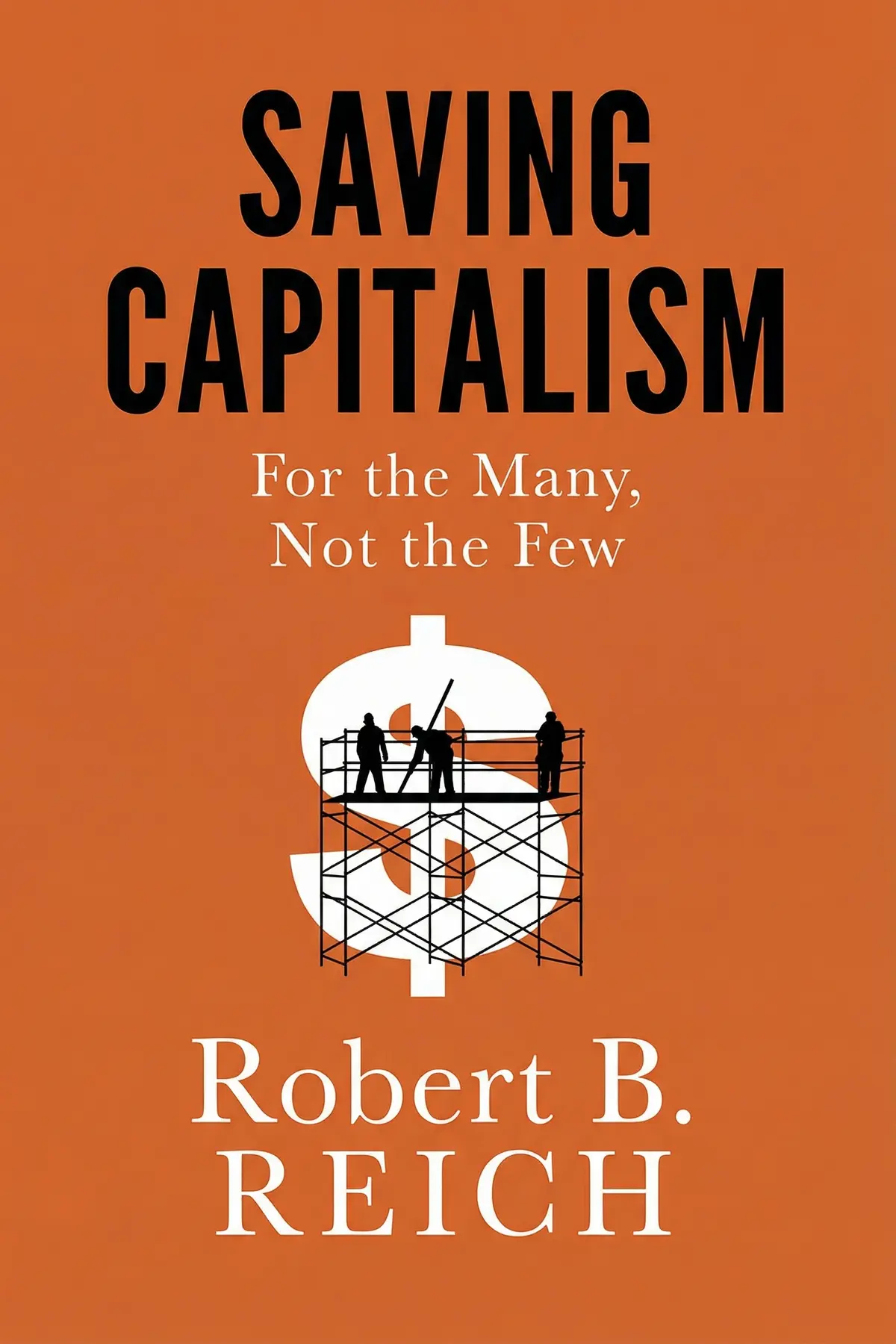
A deep dive into how modern economic rules have been rewritten to serve a tiny elite, and a call to action for restructuring capitalism to benefit the entire community.
1 min 48 sec
When we talk about the economy today, we often hear it described as if it were a force of nature—a storm that blows through our lives or a tide that rises and falls of its own accord. We are told that there is a ‘free market’ out there, and that any attempt to guide it or regulate it is an unnatural interference. But what if that entire premise is a distraction? What if the market isn’t a natural phenomenon at all, but a human construction built on a foundation of specific choices and rules?
This is the starting point for Robert B. Reich’s exploration of the modern American landscape. As someone who has sat at the highest levels of government, serving as the Secretary of Labor, Reich has seen firsthand how the machinery of capitalism is put together. His core argument is both startling and necessary: capitalism is currently being run for the few rather than the many, but this isn’t an inevitability. It is the result of how we have decided to organize our society.
In the following minutes, we are going to look at the invisible architecture of our economy. We will see how rules that seem technical and boring—laws about patents, bankruptcy, and contracts—are actually the levers of power that determine who gets rich and who struggles to stay afloat. We will explore why the middle class has lost its voice and why the old labels of ‘liberal’ and ‘conservative’ might be obscuring the real conflict at the heart of our system. More importantly, we’ll look at the throughline of Reich’s work: the idea that capitalism must be saved from its own excesses if it is to survive at all. This isn’t just about economics; it’s about the very health of our democracy and the promise of a system that works for everyone, not just those at the top.
2 min 10 sec
Discover why the debate over government intervention is a distraction from the reality that markets cannot exist without a framework of laws and enforcement.
1 min 56 sec
Explore the structural building blocks of our economy and how they have been subtly reorganized to concentrate wealth at the top.
1 min 54 sec
Learn how the definitions of ownership, particularly in the pharmaceutical industry, often prioritize corporate profits over the health and welfare of the public.
2 min 00 sec
Understand how the legal system allows the elite to walk away from debt while trapping ordinary citizens in unfair agreements.
2 min 04 sec
Question the deeply held belief that income is a perfect reflection of personal worth or ability in a rigged economic system.
1 min 56 sec
Examine how the erosion of unions and worker protections has led to stagnant wages and decreased influence for the majority of Americans.
1 min 51 sec
Investigate the modern phenomenon where full-time employment is no longer a guarantee of a life above the poverty line.
1 min 53 sec
Analyze why extreme wealth concentration isn’t just unfair, but a direct threat to the trust and purchasing power required for a healthy economy.
1 min 54 sec
Explore actionable solutions, from campaign finance reform to reinventing the corporate structure, to ensure a fairer future for all.
1 min 40 sec
As we’ve seen, the challenges facing our modern economy are deep and structural, but they are not insurmountable. The central takeaway from Robert B. Reich’s analysis is that the ‘market’ is not a force that exists outside of our control. It is a set of rules that we have the power to change. For too long, we have allowed those rules to be written by and for a small elite, resulting in a system where the middle class is shrinking, the working poor are expanding, and the very foundation of our democracy is being tested.
But the throughline of this journey is one of hope and action. By recognizing that the ‘free market’ vs. ‘government’ debate is a myth, we can focus on the real work: rewriting the rules of property, monopoly, contracts, and bankruptcy to serve the common good. We can demand a meritocracy that actually values social contribution, and we can rebuild the collective bargaining power that once ensured shared prosperity.
Saving capitalism doesn’t mean destroying it; it means holding it to its original promise—a system that rewards innovation and hard work while ensuring that the benefits are distributed broadly across society. It requires a new kind of politics, one that is driven by the voices of the many rather than the wallets of the few. As you move forward, consider the rules that govern your own life and work. Remember that the economy is a human creation, and because we built it, we have the power to rebuild it into something better, fairer, and more sustainable for everyone.
The central premise of this work is that the current struggle is not between the free market and the government, but rather over who the market rules are designed to serve. Robert B. Reich argues that the myth of a 'free' market distracts us from the reality that every market is constructed by government-enforced rules. Over the last several decades, these rules—covering property, monopolies, contracts, bankruptcy, and enforcement—have been systematically tilted in favor of large corporations and the wealthy. The result is a middle class with dwindling bargaining power, a rise in the working poor, and a concentration of wealth that threatens the stability of democracy itself. The book promises a roadmap for reclaiming the economy through political mobilization and corporate reform.
Robert B. Reich is the Chancellor’s Professor of Public Policy at the University of California at Berkeley. Prior to this, he served in three presidential administrations, most recently as labor secretary under former US President Bill Clinton.
Robert B. Reich
Robert B. Reich
Listeners describe the work as thoroughly researched and exceptionally well-crafted, with one listener mentioning it remains approachable regardless of one's background in economics. Furthermore, the text is packed with data, and listeners value how the stimulating material encourages a broader perspective on potential solutions. The prose also earns praise; one listener points out the use of clear, straightforward language, while another listener draws attention to the book’s effective three-part organization.
Robert Reich masterfully dismantles the false choice between the 'free market' and 'government intervention' by proving the former can't exist without the latter. Most of the book provides a data-driven autopsy of how the rules of the game have been rigged by those at the top. It’s incredibly accessible. He avoids dense jargon while still managing to be profoundly thought-provoking for readers at any level of expertise. I appreciated how he explains that the market isn't a natural phenomenon like gravity, but a set of human-made laws that can be changed. While the ending felt a bit rushed compared to the deep-dive analysis of the problem, the core message remains vital. It’s a wake-up call for anyone who thinks the current concentration of wealth is just a byproduct of hard work or natural merit.
Show moreEver wonder why the rich keep getting richer while your paycheck stays the same for a decade? Reich explains the 'pre-distribution' of wealth that happens inside the market before we even talk about taxes. It’s a quick read that cuts through the noise of partisan bickering to show how lobbyists have quietly rewritten the rules. I love how he uses real-world examples like the big bank bailouts versus student debt to illustrate the double standards in our current system. It's not about being 'anti-capitalist,' it's about making sure the system actually functions for everyone, not just the top 1 percent. This is definitely a helpful little book to keep by the dinner table if you need to win an argument during Thanksgiving.
Show moreWow. This book completely changed how I view the debate over 'big government' vs. 'small government.' Reich makes it clear that the size of government isn't the issue—it's who that government is working for. The way he breaks down the five building blocks of capitalism—property, monopoly, contract, bankruptcy, and enforcement—is brilliant. It reveals how the deck is stacked against the average person through subtle changes in the law rather than just overt corruption. Personally, I found the discussion on 'benefit corporations' like Patagonia and Seventh Generation to be a rare glimmer of hope. We need a system that values stakeholders, not just shareholders, if we want to avoid total social collapse. This should be required reading for every American citizen.
Show moreFinally got around to reading this and I’m kicking myself for waiting so long. Reich’s analysis of the 'meritocratic myth' is one of the most important things I’ve read in years. It’s so easy to believe that people earn exactly what they deserve, but that ignores the massive structural advantages built into our system. The book is filled with facts that demonstrate how our current version of capitalism is actually stifling innovation by concentrating too much power in monopolies. Not gonna lie, the statistics about educational funding disparity in the US compared to other nations are depressing. But Reich’s optimism is infectious, and he makes a strong case that we’ve fixed the system before and can do it again if we find common cause.
Show moreThis book is a masterclass in clear communication. Reich doesn’t just yell about inequality; he shows you the specific gears and levers that have been shifted over the last forty years. I was particularly struck by the sections on how bankruptcy laws treat large corporations versus how they treat struggling homeowners and students. It’s a glaring example of the 'rigged' rules he talks about throughout the text. While some reviewers think the solutions section is too short, I think he provides enough of a framework to spark real conversation. In my experience, most people need to understand the problem first before they can even begin to agree on a fix. This is essential reading for anyone trying to make sense of our current political climate.
Show morePicked this up after seeing 'Inequality for All' and found the three-part structure really helpful for organizing my own thoughts on the economy. Reich is a genius at taking complex topics and making them feel like common sense, which is a rare gift in this field. Truth is, about 80% of the text is spent describing the dire state of the middle class and how we got here. It’s a compelling read, though it does get a bit repetitive after the first hundred pages or so. I was hoping for more granular, step-by-step instructions on how to actually reclaim power from the corporate elites in the final chapters. Still, for a primer on why the 'free market' is a myth, you won't find a better or more fact-filled resource.
Show moreAfter hearing Reich speak on his podcast, I knew I needed to dive into the full text of his arguments. The book is excellently written and avoids the dry, academic tone you might expect from a Berkeley professor. He does a fantastic job explaining how 'merit' is often just a cover for inherited advantage and political influence. Look, the statistics regarding CEO pay versus average worker wages are absolutely staggering and will make your blood boil. My only gripe is that the 'countervailing power' he predicts feels more like a hope than a certainty. While he draws parallels to the Gilded Age, our modern technological landscape makes the fight for reform look much more daunting today than it was during the New Deal.
Show moreAs someone who hasn't touched an economics textbook since college, I found this remarkably easy to follow and digest. Reich uses simple language to explain how 'freedom' is often used as a shield by those who already hold all the cards. The three-part layout keeps the momentum going, even when the data on wealth inequality starts to feel a bit repetitive. It’s definitely a liberal-leaning perspective, but he backs his claims with enough historical context to make even a skeptic think twice about the status quo. Frankly, the chapter on the decline of labor unions as a counterweight to corporate power was the most eye-opening part for me. It’s a solid, thought-provoking introduction to the structural issues facing our country right now.
Show moreNot what I expected given the high praise, as I felt the book spent far too much time admiring the problem and not enough time solving it. For the first two-thirds, I was totally on board with his breakdown of how the rules for property and bankruptcy favor the wealthy. The facts and data are indisputable and, frankly, quite terrifying when you see them laid out so clearly. However, the last section felt like a laundry list of idealistic wishes that didn't account for our current political gridlock. Reich is an excellent writer, but I finished the book feeling just as hopeless as when I started. It’s a great diagnosis, but the prescription feels a bit like wishing upon a star without a map for how to get there.
Show moreThe truth is, this felt more like a political manifesto than a serious economic study, despite all the citations and charts. Reich starts with the assumption that the system is 'rigged' and then cherry-picks data to support that narrative throughout the entire book. While he is certainly a gifted writer, his arguments often ignore the benefits of globalization and the complexities of modern markets. I found the 'pre-distribution' concept to be a clever way of reframing standard redistributionist policies without using the word 'taxes.' If you already agree with his politics, you'll love it, but if you're looking for an objective analysis, keep looking. It’s way too simplistic for such a massive and nuanced topic.
Show more
Andrew Ross Sorkin
James Comey
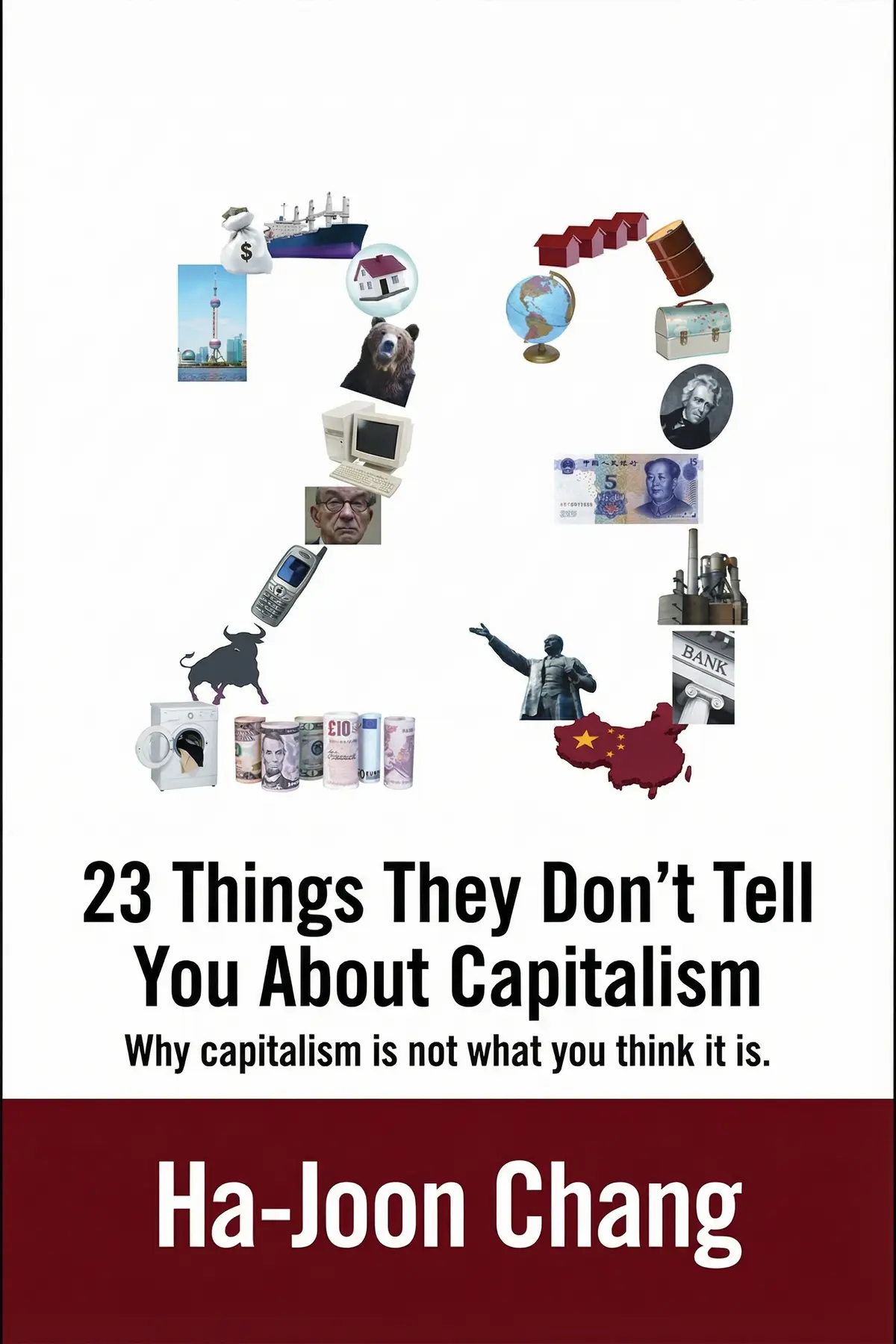
Ha-Joon Chang
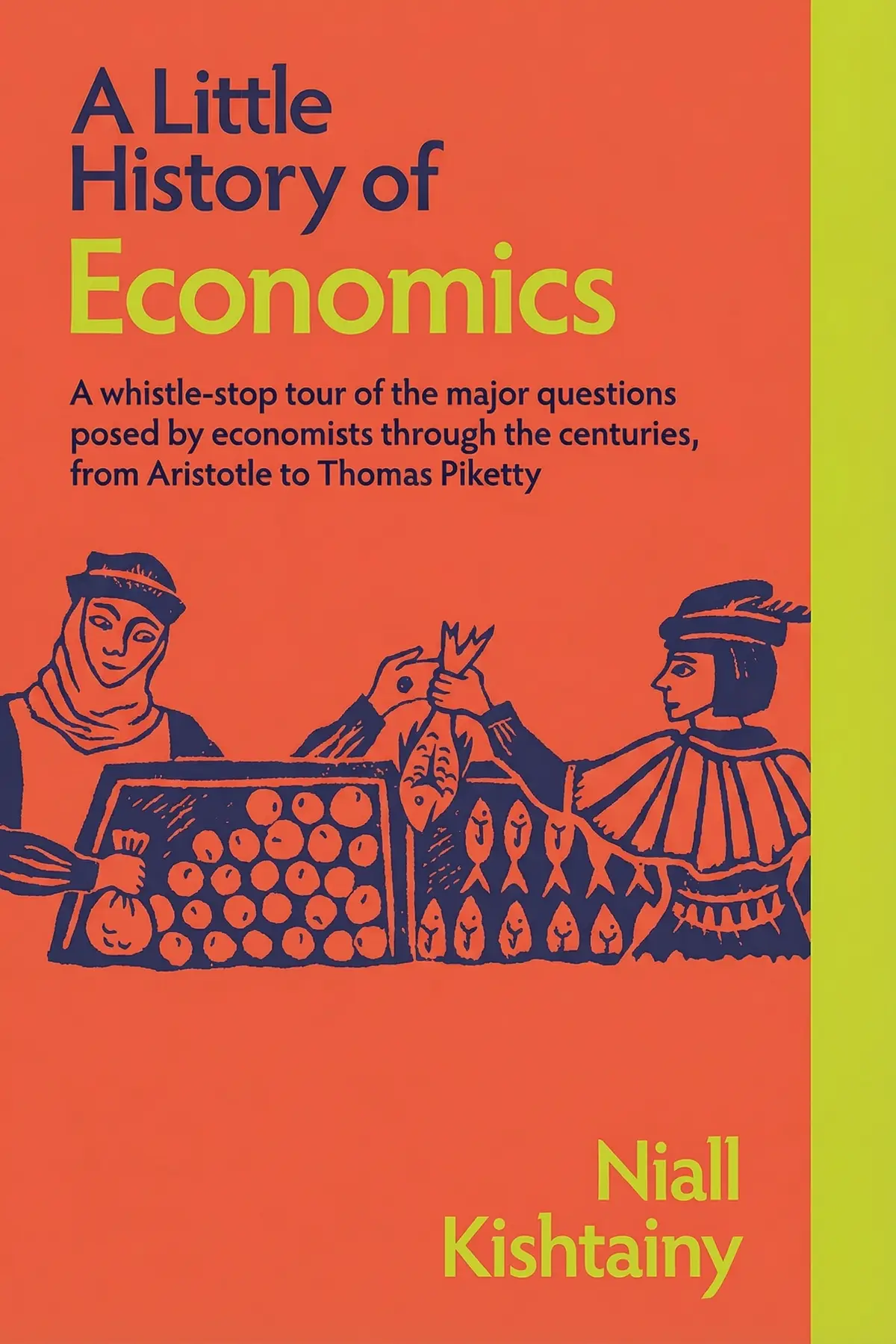
Niall Kishtainy
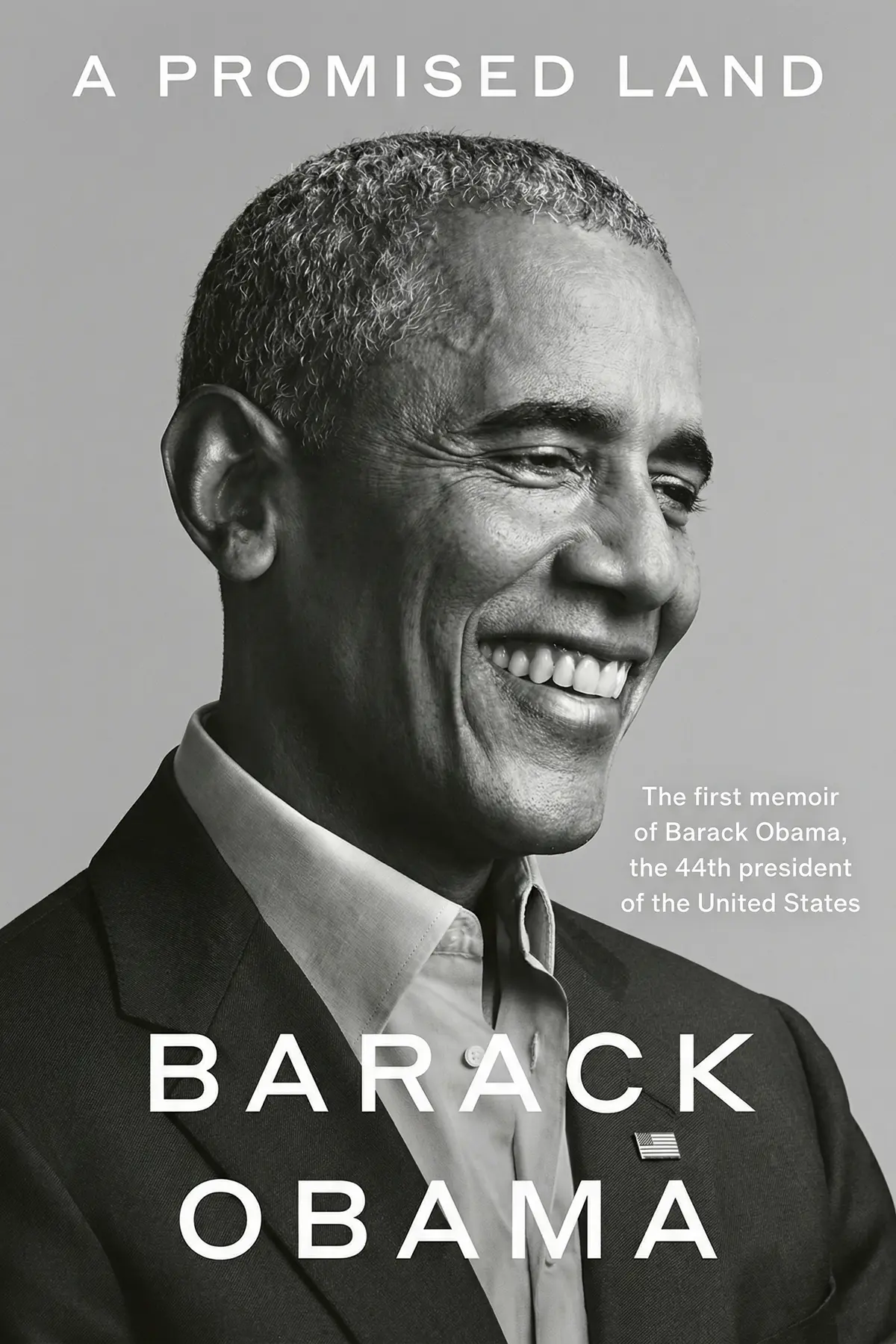
Barack Obama

Masaji Ishikawa
AUDIO SUMMARY AVAILABLE
Get the key ideas from Saving Capitalism by Robert B. Reich, plus 5,000+ more titles in English and Thai.







